Georgia Buck Age Structure
Georgia buck age structure reveals deer herd health, hunting pressure, and habitat quality across different ecological zones.
Know what you’re after.
Big game, small game, upland birds, and waterfowl — identification, behavior, rut and migration timing, and how each species moves through the season.
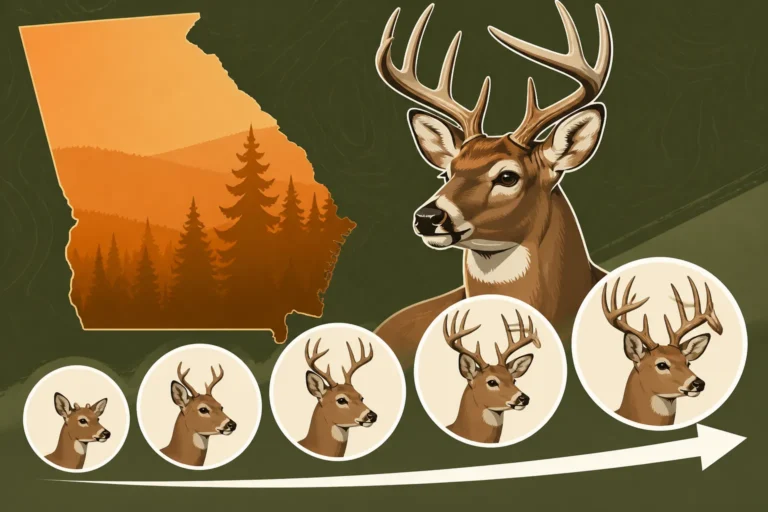
Georgia buck age structure reveals deer herd health, hunting pressure, and habitat quality across different ecological zones.
Georgia whitetail deer breeding peaks at different times across the state, from mid-October in mountain regions to November in the Piedmont.
The Georgia Deer Record Book explains score criteria, weapon categories, and how to get trophy whitetails officially recognized.
Georgia Boone and Crockett whitetails require specific typical or non-typical minimum antler scores to enter the record books.
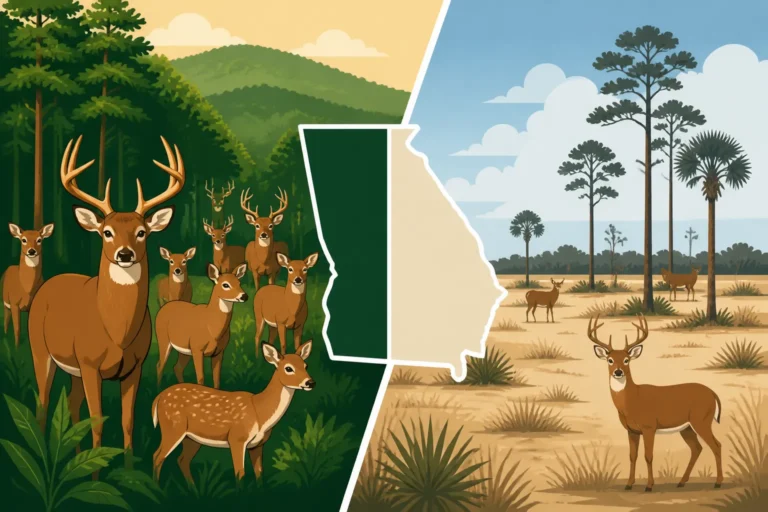
Georgia deer density comparisons between the Piedmont region and the Coastal Plain explain varied white-tailed habitats and populations.
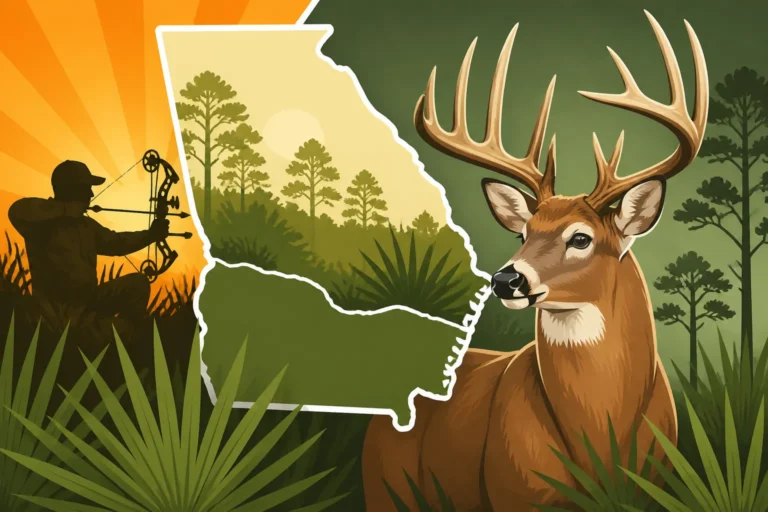
Georgia Coastal Plain pine plantations and agricultural crops provide deer with consistent year-round nutrition that produces older bucks.
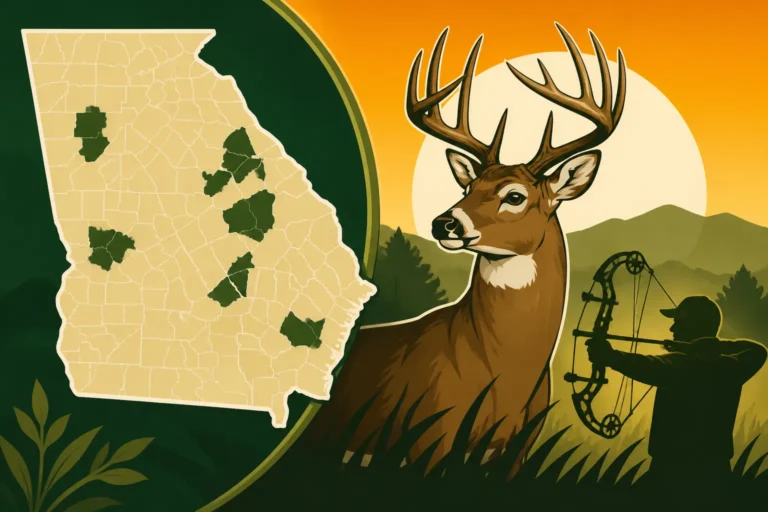
Georgia counties with agricultural nutrition, mature age structures, and quality management consistently produce trophy big bucks.
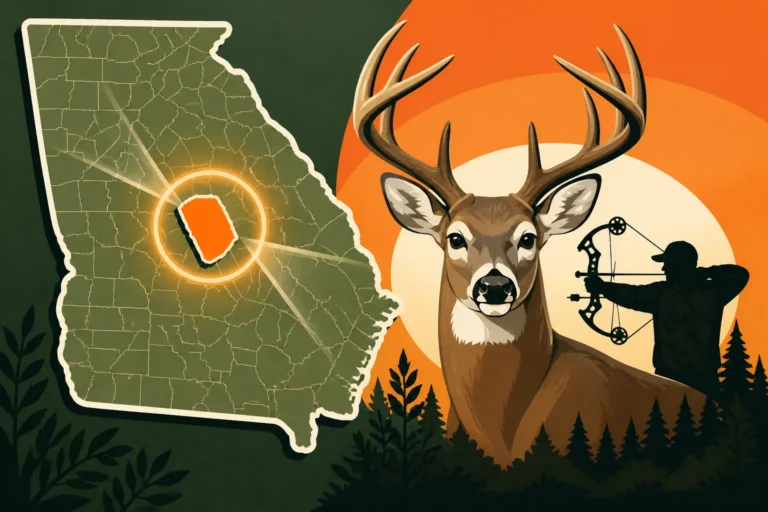
Georgia deer harvest data and Game Check reports explain county deer totals and public versus private land contributions.
Georgia annual deer harvest data explains whitetail population health, collection methods, and reporting rules for hunters.
Georgia wildlife biologists estimate state deer herd size using harvest data, spotlight surveys, and infrared camera surveys.