Ware County Public Land Access
Finding accessible and productive public hunting land in Georgia can sometimes feel like a treasure hunt, especially when you're focusing on a specific area like Ware County. It's easy to feel overwhelmed by maps or the sheer size of some areas, wondering if you'll ever find a spot that truly offers a rewarding outdoor experience. This guide is here to cut through that confusion, focusing on the key public land opportunities within Ware County and providing actionable insights to help you make the most of your hunting trips.
Exploring Ware County's Core Public Hunting Opportunity: Big Hammock WMA
When you're looking at public land hunting in Ware County, one name consistently rises to the top: Big Hammock Wildlife Management Area (WMA). This isn't just a patch of woods; it's a significant portion of habitat offering diverse opportunities for the diligent hunter. Understanding its unique characteristics is the first step to a successful outing.
The Landscape and Habitat of Big Hammock WMA
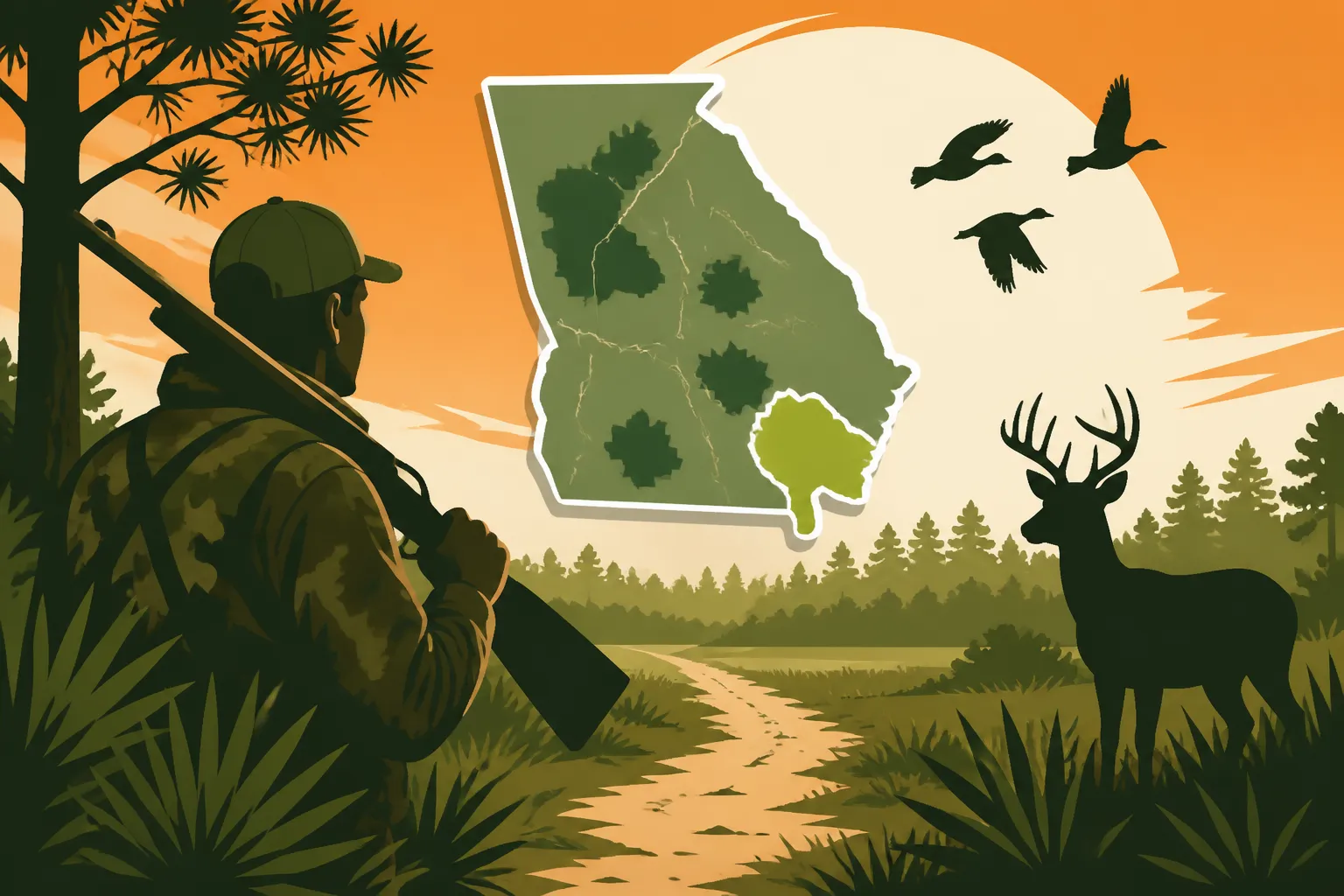
Big Hammock WMA, managed by the Georgia Department of Natural Resources (DNR), encompasses thousands of acres of what many envision as classic South Georgia wildlands. Picture this: vast expanses of flat pine forests, often dotted with cypress swamps and sloughs, especially near the river systems that course through the area. You'll find dense thickets of palmetto and gallberry, interspersed with areas of more open pine savanna. This mosaic of habitat types is precisely what makes it appealing for a variety of game species.
The dominant feature is often the longleaf pine ecosystem, which, through prescribed burns and active management, provides crucial habitat. These flatwoods transition into rich bottomlands along the Satilla River and its tributaries, forming corridors of hardwood trees and dense undergrowth that are vital for wildlife movement and bedding. Hunters venturing into these areas will encounter everything from dry, crunchy pine straw underfoot to wet, muddy terrain in the cypress sloughs. This diverse terrain directly influences how game moves and where they choose to feed and bed throughout the year. If you're keen on exploring these water-laden environments, our article on Hunting Georgia Swamp and River Bottom Deer offers more in-depth strategies.
Primary Game Species and Hunting Seasons at Big Hammock
Big Hammock WMA is a popular destination for several key game species, making it a versatile choice for hunters throughout the year. Deer hunting is, without a doubt, a major draw. The whitetail population here thrives in the mix of pine plantations, dense swamps, and hardwood drains. Hunters can expect to find deer using the thick cover for bedding and moving between different habitat types to feed on acorns, pine mast, and various browse. While not known for producing record-book bucks on every corner, the WMA offers consistent opportunities for harvesting deer.
Wild turkeys also inhabit Big Hammock, offering an exciting challenge during the spring season. These birds will often roost along the edges of the swamps or in mature pines, venturing into more open areas or hardwood bottoms to feed during the day. Their elusiveness in the dense cover makes for a truly engaging hunt. Feral hogs are another prevalent species, providing year-round hunting opportunities as they are considered a nuisance species. These intelligent animals can be found almost anywhere on the WMA, especially in the swampier areas where they root for food and create wallows.
Beyond the big game, Big Hammock also provides opportunities for small game hunting. Squirrels are abundant in the hardwood areas, and rabbit hunting can be productive in areas with thick briars and brushy cover. Specific seasons for these animals, along with deer and turkey, follow Georgia's statewide regulations but always remember to check the specific WMA regulations, as they can have unique dates or restrictions compared to general statewide seasons. For a broader understanding of how the seasons are structured, check out Georgia Deer Season Structure Explained and Spring Turkey Hunting in Georgia.
Essential Tools and Tactics for Navigating Ware County Public Lands
Hunting public land, especially in a geographically diverse state like Georgia, demands more than just a keen eye and a steady hand. It requires preparation, the right tools, and an understanding of how to use those tools to your advantage. Ware County's Big Hammock WMA is no exception, with its sprawling acres and varied terrain presenting unique challenges and rewards.
Leveraging Mapping Technology for Effective Scouting and Navigation
In today's hunting world, digital mapping applications are no longer just a luxury; they're an absolute necessity, especially when you're delving into a new or complex public land area like Big Hammock WMA. Apps like onX Hunt and GoHunt have revolutionized how hunters approach scouting and navigation. Before you even set foot in the woods, these platforms allow you to conduct extensive "e-scouting" from the comfort of your home. You can zoom in on high-resolution satellite imagery to identify potential bedding areas, feeding zones, water sources, natural funnels between cover, and subtle elevation changes that might indicate deer travel routes.
These apps also clearly mark property lines, which is invaluable on public land where boundaries with private property can sometimes be unclear. Knowing exactly where you stand, literally, can prevent accidental trespassing and ensure a smooth hunt. Furthermore, many of these apps allow you to download maps for offline use, which is a lifesaver in areas with spotty or no cell service – a common occurrence in remote sections of WMAs. Imagine walking deep into a cypress swamp, only to lose your signal. Having your route, waypoints, and the WMA boundary readily available on your device, even without internet, is a game-changer. Our guide on Scouting With the Georgia Outdoors App provides more details on using these digital tools effectively, and Using Georgia Outdoors Without Cell Service highlights how to prepare for those off-grid moments.
Understanding Hunting Pressure and Finding Secluded Spots
Public land, by its very nature, is accessible to everyone, and that often means hunting pressure, particularly during opening weekends of popular seasons. Big Hammock WMA, being one of the primary public hunting areas in Southeast Georgia, will undoubtedly see its fair share of hunters. This isn't a bad thing, but it means you need a strategy to find those less-pressured areas where game might feel more comfortable moving during daylight hours.
One of the most effective tactics is simply walking further. Many hunters will stick close to roads and established trails, so venturing a mile or two deeper into the WMA can often put you in areas that see significantly less human disturbance. Use your mapping app to identify sections of the WMA that are furthest from easy access points or are protected by natural barriers like wide swamps or dense thickets that discourage casual hikers. Hunting mid-week, if your schedule allows, is another excellent way to avoid the crowds that typically flock to public lands on Saturdays and Sundays.
Additionally, paying attention to the specific WMA regulations can sometimes reveal underutilized opportunities. Certain zones might be archery-only, or have specific restrictions that deter some hunters, opening up possibilities for those willing to adapt. Understanding Hunting Pressure on Georgia Public Land and actively seeking out Finding Ground Others Walk Past are crucial mindsets for consistent success on WMAs like Big Hammock. Don't be afraid to put in the extra steps or to explore areas that look "too thick" or "too wet" on a map – often, that's exactly where the deer and hogs are seeking refuge.
Maximizing Your Success and Staying Safe in Ware County's Outdoors
Hunting in Ware County's public lands, particularly Big Hammock WMA, presents a unique set of challenges and rewards. The warm climate for much of the hunting season, combined with the dense vegetation and varied terrain, means that adapting your strategies and being well-prepared are paramount to both success and safety.
Adapting Hunting Strategies to Ware County's Unique Terrain
The flat pine woods and extensive swamp edges of Ware County require a different approach than hunting mountainous terrain or open agricultural fields. Still-hunting, moving slowly and deliberately through the pine flats, constantly scanning for movement, can be incredibly effective here. The dense undergrowth often limits visibility, so focusing on small pockets of open ground, transition lines, or subtle elevation changes can be key. When considering stand placement, look for natural funnels – narrow strips of dry ground between two swamps, a break in a dense thicket, or even a logging road that acts as a travel corridor. These pinch points can concentrate game movement, increasing your odds. For more in-depth advice on this technique, check out Still-Hunting South Georgia Pine Flats and Hunting a Funnel Between Two Swamps.
Understanding wind direction and thermals is always important, but in flat country, prevailing winds often play a more consistent role than drastic thermal shifts. Always hunt with the wind in your favor, positioning yourself downwind of where you expect game to appear. In terms of gear, prepare for the environment. Snake boots are not just recommended, they're essential when walking through thick cover in South Georgia, particularly from spring through fall. The constant humidity and insects also mean that good quality bug repellent is a must, especially during early archery season. Layering lightweight, breathable clothing is important for comfort, as temperatures can fluctuate, but the overall climate remains warm for a significant portion of the hunting calendar. Don't underestimate the importance of robust footwear and effective insect protection; our articles on Snake Boots for Coastal Plain Walking and Bug Repellent That Holds Up in a Tree Stand offer practical advice.
Adhering to Regulations and Responsible Hunting Practices
Hunting on any public land in Georgia means strictly adhering to all state and WMA-specific regulations. These rules are in place for safety, conservation, and to ensure fair chase opportunities for all hunters. Before every trip to Big Hammock WMA, take the time to review the most current WMA hunting guide provided by the Georgia DNR. Pay close attention to season dates, legal weapons, bag limits, and any special restrictions unique to that specific WMA. For instance, some areas may have archery-only periods, or specific sign-in requirements.
Harvest reporting is another critical responsibility. After you successfully harvest a deer or turkey, you are required to report it through Georgia's game check system. This data is vital for wildlife biologists to monitor populations and manage the resource effectively for future generations. Moreover, during firearms seasons, remember Georgia's blaze orange requirements. Wearing the appropriate amount of visible blaze orange (or pink) is not just a legal mandate; it's a crucial safety measure that helps ensure you are seen by other hunters. Details on these requirements can be found in Georgia Blaze Orange Requirements.
Beyond the written rules, responsible hunting also encompasses ethical practices. This means respecting wildlife, the environment, and your fellow hunters. Practice good woodsman-ship: leave no trace, pack out everything you pack in, and dispose of game carcasses responsibly. If you encounter another hunter, offer a friendly greeting and maintain a respectful distance. Passing on smaller animals to allow them to grow, taking clean shots to ensure quick, humane kills, and proper game care are all part of being a responsible steward of Georgia's natural resources. If you're new to hunting or need a refresher, remember that Georgia Hunter Education Requirements are in place for a good reason – to ensure everyone understands these vital principles.
Hunting Ware County's public lands, particularly Big Hammock WMA, offers a fantastic opportunity to connect with Georgia's wild side. With careful planning, the right tools, and a responsible approach, you can have a truly rewarding experience.
Here's a quick summary of key aspects for Big Hammock WMA:
| Game Species | Typical Habitat | Recommended Hunting Methods | Key Considerations |
|---|---|---|---|
| White-tailed Deer | Pine flats, swamp edges, hardwood bottoms | Still-hunting, stand hunting on funnels | Pressure management, wind direction, thick cover |
| Wild Turkey | Mature pine forests, swamp fringes, hardwood | Roost hunting, run-and-gun calling | Locate roosts, adapt to bird movement, patience |
| Feral Hogs | Dense swamp thickets, creek bottoms, feeders | Still-hunting, opportunistic, thermal | Year-round opportunity, destructive, move in groups |
| Small Game | Brushy areas, hardwood stands, clearcuts | Walk-up hunting, still-hunting | Check specific WMA seasons, focus on dense cover |
Disclaimer
This article is for general informational purposes only and does not constitute professional advice. Laws, prices and regulations vary by location and change over time. Consult a qualified professional for guidance on your specific situation.