Why Managed Pine Helped Georgia Quail Rebound
For many years, the distinct whistle of a bobwhite quail covey rising from Georgia's fields and pine stands became an increasingly rare sound, leaving many hunters and conservationists disheartened. The extensive decline of these iconic game birds was a real blow, frustrating those who remembered a time when coveys were plentiful. This guide delves deep into the reasons behind the bobwhite's struggle and, more importantly, explains how the strategic implementation of managed pine forests has become a critical lifeline, helping Georgia's wild quail populations begin to rebound from the brink.
The Historical Decline of Bobwhite Quail in Georgia
To truly appreciate the comeback, we first need to understand the fall. The wild bobwhite quail, once a staple across Georgia’s rural landscape, experienced a drastic and prolonged decline starting in the mid-20th century. It wasn't just one thing that caused it; it was a perfect storm of environmental shifts and agricultural changes that chipped away at their existence. If you've spent any time talking to older hunters, they'll tell you stories of fields boiling over with quail, tales that almost sound mythical to today's generation.
Habitat Loss and Fragmentation
One of the biggest culprits in the quail's disappearance was the relentless march of habitat loss and fragmentation. Think about the Georgia of decades past: a patchwork of small farms, hedgerows, fallow fields, and open pine woodlands. This diverse landscape was a haven for quail, providing everything they needed within a small home range. However, as agriculture industrialized, smaller farms consolidated into larger monoculture operations. Row crops stretched for miles, often cleared right up to property lines, eliminating the crucial edges and thickets that quail depend on for food and cover.
Beyond agriculture, suburban development crept further and further into rural areas. What were once sprawling timberlands and open fields became subdivisions, shopping centers, and new roads. Each new development acted like a barrier, isolating remaining quail populations and making it harder for them to move, find mates, and establish new coveys. Imagine trying to survive when your grocery store, bedroom, and safe haven are all suddenly separated by busy highways or concrete jungles. That's essentially what happened to our quail. This fragmentation didn't just reduce the amount of habitat; it reduced the quality and connectivity of what was left, which is just as important. For a deeper dive into this historical context, you might want to read Georgia Wild Quail Decline Since the 1960s.
Changes in Timber Management Practices
Another major factor in the quail's decline, often overlooked by those not immersed in forestry, was a significant shift in timber management. Historically, the vast pine forests of Georgia, especially the longleaf pine ecosystems, were naturally open and park-like due to frequent, low-intensity wildfires. This created a diverse understory of grasses, forbs, and legumes – perfect quail food and cover.
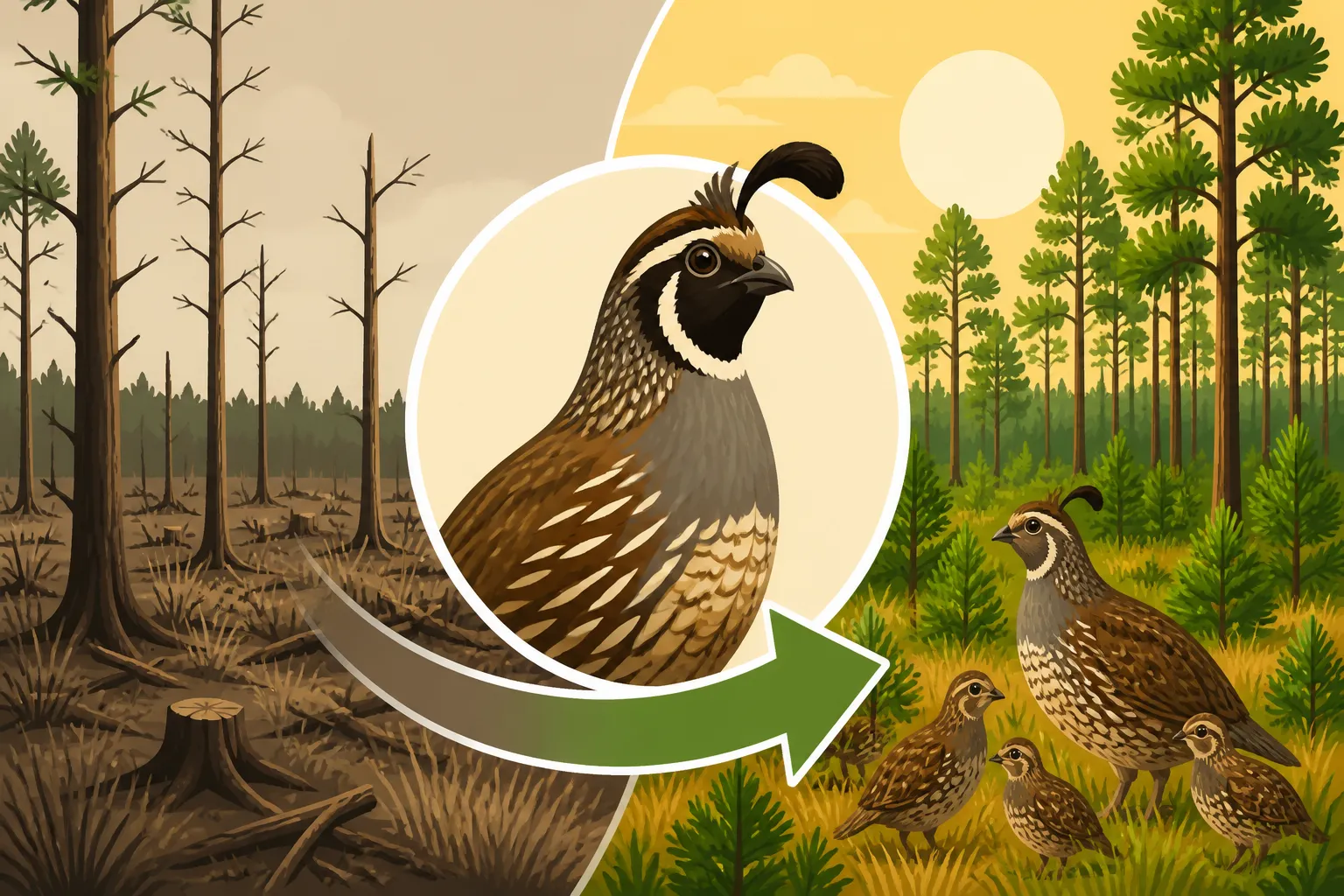
However, in the mid-20th century, modern forestry practices often prioritized maximum timber yield and fire suppression. Forests were planted densely, sometimes with species like loblolly pine, which grow quickly but create a thick, shaded canopy. Without sunlight reaching the forest floor, the diverse understory vegetation, so vital for quail, was choked out. The trees grew tall and close together, creating what's often called a "pine desert" for quail – beautiful for timber, but utterly devoid of the food, nesting sites, and escape cover these birds require. Fire, a natural and essential component of the longleaf ecosystem, was actively suppressed, leading to an accumulation of fuels and a further loss of the open, grassy understory. This created a cycle where the very environment that once supported thriving quail populations slowly became inhospitable.
What is "Managed Pine" for Quail Habitat?
The good news is that conservationists, biologists, and progressive landowners recognized these issues. The concept of "managed pine" isn't just about planting trees; it's about intentionally managing forests, primarily pine, to create and sustain optimal habitat for bobwhite quail. It’s a holistic approach that seeks to mimic the natural processes that historically kept these ecosystems healthy and productive. This isn't about letting the woods just grow wild, nor is it about industrial timber farms; it's a careful balance.
Longleaf Pine Restoration
Central to many managed pine efforts is the restoration of longleaf pine (Pinus palustris). Why longleaf? Because it's the native pine species that once dominated much of the Southeastern Coastal Plain, and its ecological characteristics are perfectly suited for quail. Longleaf pine is fire-resistant, has a long "grass stage" during which it develops a robust root system, and, critically, it grows in a naturally open stand structure. This allows plenty of sunlight to penetrate the canopy, encouraging a rich and diverse herbaceous understory – the exact habitat quail thrive in.
Restoring longleaf involves more than just planting seedlings. It means carefully planning planting densities, often much lower than typical commercial timber operations, to ensure that the forest floor receives adequate light. It's a long-term investment, as longleaf grows slower initially than some other pines, but the ecological benefits for quail and countless other species are undeniable. You can learn more about this specific habitat in Longleaf Pine and Quail Habitat.
Prescribed Fire as a Cornerstone
If longleaf pine is the foundation, then prescribed fire is the architect of managed pine for quail. Fire is not a destructive force in these ecosystems; it's a regenerative one. Regular, controlled burns, typically on a 1-3 year rotation, are essential for maintaining the open understory that quail require. These fires accomplish several critical tasks:
- Removes Competing Vegetation: Fire burns off dense woody shrubs and leaf litter that would otherwise shade out beneficial grasses and forbs.
- Stimulates New Growth: After a burn, sunlight reaches the soil, stimulating the growth of tender new shoots, wildflowers, and legumes. These plants provide crucial seeds and insects, which are high-protein food sources for quail, especially chicks.
- Controls Pests and Diseases: Periodic fire can help control tick populations and certain plant diseases, leading to a healthier overall ecosystem.
- Enhances Visibility: An open understory makes it easier for quail to move around, forage, and detect predators.
Without fire, even a well-thinned pine stand will eventually become overgrown and unsuitable for quail. It's a fundamental tool that mimics nature's own processes and is absolutely non-negotiable for serious quail management. Understanding why this practice is so vital can be explored further in Why Georgia Foresters Burn Longleaf Pine.
Thinning and Stand Management
Beyond choosing the right pine species and implementing fire, strategic thinning and stand management are crucial. In a managed pine forest aiming for quail habitat, trees are planted and then aggressively thinned over time to reduce stand density. This isn't just a one-time thing; it's an ongoing process.
The goal of thinning is to ensure ample sunlight reaches the forest floor. When trees are too close together, their canopies interlock, casting dense shade that prevents groundcover from growing. By removing a certain percentage of trees, foresters open up the canopy, allowing light to penetrate. This light then fuels the growth of the grasses, forbs, and legumes that provide food and cover for quail. Thinning also encourages larger, healthier individual trees, which can still provide timber value, showing that quail habitat and timber production don't have to be mutually exclusive. In fact, many successful operations blend both goals.
Consider a forest that starts with 800-1000 trees per acre. Over time, through a series of thinnings, that number might be reduced to a final stand of 50-80 widely spaced longleaf pines per acre. This gives the appearance of an open park, perfect for quail.
Table: Managed Pine vs. Dense Pine for Quail Habitat
| Feature | Dense Pine Plantation (Commercial Timber Focus) | Managed Pine (Quail Habitat Focus) |
|---|---|---|
| Tree Density | Very high (hundreds to thousands per acre) | Low to moderate (tens to hundreds per acre) |
| Species Emphasis | Fast-growing, often loblolly | Native, slow-growing longleaf preferred |
| Canopy Closure | Dense, blocks most sunlight | Open, allows abundant sunlight |
| Understory | Sparse, shaded, little diversity | Rich, diverse grasses, forbs, legumes |
| Fire Regime | Fire suppressed | Frequent prescribed burning |
| Quail Suitability | Poor | Excellent |
| Timber Goal | Maximum volume/quick rotation | Sustainable harvest, high quality wood |
How Managed Pine Benefits Quail Directly
It’s one thing to talk about forest management practices, but it's another to see how these actions directly translate into thriving quail populations. The beauty of managed pine is that it creates the entire suite of habitat components a bobwhite quail needs to survive and reproduce, all within its typically small home range.
Ideal Foraging Grounds
For a quail, food is life, and managed pine stands are veritable buffets. After thinning and prescribed burns, the forest floor erupts with a wide variety of native grasses, legumes, and forbs. These plants produce the seeds and insects that are absolutely critical for quail survival, especially during the lean winter months and for growing chicks. Think about partridge pea, lespedeza, ragweed, and various native grasses – these aren't weeds to a quail; they're essential sustenance.
The diversity of plant life means a consistent food source throughout the year. Different plants mature and produce seeds at different times, ensuring that quail don't face periods of scarcity. This rich understory also supports a robust insect population, which is crucial for young quail. Chicks, in particular, need a high-protein insect diet to grow rapidly in their first few weeks of life. Managed pine provides this in abundance, turning a once barren forest floor into a vibrant, living ecosystem. This is why Hunting Managed Pine for Wild Quail can be so rewarding; you're hunting in a prime food zone.
Cover and Nesting Opportunities
Quail are small birds, and they need constant cover to hide from predators like hawks, owls, foxes, and coyotes. Managed pine provides a complex mosaic of cover types. The open understory, while allowing for easy movement, still offers sufficient herbaceous cover for concealment. Thick clumps of native grasses provide excellent nesting sites, camouflaging eggs and incubating hens from prying eyes.
Beyond low-level cover, the scattered nature of managed pine trees, along with any occasional thickets left unburned, offers escape cover. When a hawk swoops down, quail need immediate overhead protection. These varied cover options, from dense ground cover to scattered woody shrubs, create a safe environment where quail can live without constant stress from predators. Effective management ensures that nesting cover, brooding cover, and escape cover are all within close proximity, making life easier and safer for the covey.
Insect Abundance for Chicks
The first few weeks of a bobwhite quail chick's life are precarious. They are tiny, vulnerable, and grow incredibly fast, requiring a diet rich in protein. Insects provide this essential protein. In a dense, unmanaged pine plantation, the shaded, sparse forest floor offers little insect life. However, in managed pine with its open canopy and diverse herbaceous understory, insect populations explode.
Prescribed fire, in particular, stimulates the growth of tender young plants that attract a wide array of insects. Grasshoppers, beetles, spiders, and caterpillars thrive in these conditions, becoming readily available "fast food" for growing quail chicks. A hen can easily lead her brood through this open understory, allowing them to forage efficiently without expending too much energy. This abundance of insects directly contributes to higher chick survival rates, which is the cornerstone of a healthy and growing quail population. If the chicks don't make it, the covey can't grow. This aspect of the ecosystem is so vital that it's often a key metric for evaluating successful habitat management.
Broader Ecological Benefits and Challenges
The beauty of managing pine forests for quail extends far beyond just one species. It's an approach that creates healthier, more resilient ecosystems, benefiting a whole host of other wildlife, while also facing its own set of challenges. It's not a silver bullet, but it's a powerful tool in the conservation arsenal.
Biodiversity and Other Species
When you manage a longleaf pine forest with prescribed fire and thoughtful thinning for bobwhite quail, you're not just helping quail. You're revitalizing an entire ecosystem. This type of habitat benefits countless other species that depend on open, fire-maintained pine savannas. Think about:
- Gopher Tortoises: These keystone species dig burrows that provide refuge for hundreds of other animals, and they thrive in open longleaf habitats.
- Eastern Diamondback Rattlesnakes: Though sometimes feared, these apex predators are a natural part of healthy pine ecosystems.
- Bachman's Sparrows: A secretive bird often found in open longleaf forests with a dense grassy understory.
- White-tailed Deer: Deer benefit from the increased browse and forb production in the understory.
- Wild Turkeys: Turkeys also utilize these open areas for foraging and brood rearing. Spring Turkey Hunting in Georgia often takes place in similar environments.
Essentially, by bringing back the conditions that favor quail, you're restoring a foundational habitat type that supports a vast array of flora and fauna, many of which are endangered or in decline. This makes managed pine not just a quail management strategy but a broader biodiversity conservation effort.
The Role of Landowners and Conservation Programs
The success of managed pine for quail rebound isn't just happening on public lands; private landowners play an absolutely monumental role. Georgia has a significant amount of private timberland, and when these landowners adopt quail-friendly management practices, the impact is huge. Many are driven by a passion for wildlife, the desire to restore their land, or an interest in hunting, as outlined in Working a South Georgia Quail Covey Rise.
Various state and federal conservation programs offer incentives and technical assistance to landowners willing to implement these practices. Programs like the U.S. Department of Agriculture's Natural Resources Conservation Service (NRCS) and the Georgia Department of Natural Resources provide cost-sharing and expert guidance for prescribed burning, longleaf planting, and thinning. These programs are vital because they help offset the initial costs and provide the expertise needed for successful long-term management. Without landowner participation and these conservation partnerships, the scale of quail recovery seen in Georgia wouldn't be possible. Tools like the GoHunt app can also help landowners and hunters locate and manage private land resources, sometimes even offering insights into suitable habitat types.
Ongoing Challenges and Future Outlook
While managed pine has proven to be a highly effective strategy, the journey to a full quail rebound is not without its ongoing challenges. Predation remains a significant factor; increased populations of mesopredators like raccoons, opossums, and coyotes can impact quail nests and coveys. Habitat quality needs constant vigilance, as even a well-managed stand can become suboptimal without continued prescribed fire and adaptive thinning.
Climate change also presents an unpredictable variable, with potential impacts on rainfall patterns, growing seasons, and the frequency/intensity of wildfires. Disease outbreaks, though less common, can also strike.
Despite these hurdles, the future for Georgia's wild quail looks brighter than it has in decades, largely thanks to the widespread adoption and refinement of managed pine forest practices. The commitment of private landowners, the support of conservation agencies, and the growing understanding of fire ecology are creating resilient landscapes where the bobwhite's iconic whistle is once again becoming a more common sound. Continued research, adaptive management, and community engagement will be key to sustaining this recovery.
Disclaimer
This article is for general informational purposes only and does not constitute professional advice. Laws, prices and regulations vary by location and change over time. Consult a qualified professional for guidance on your specific situation.