How Georgia Quail Numbers Fell Since the 1960s
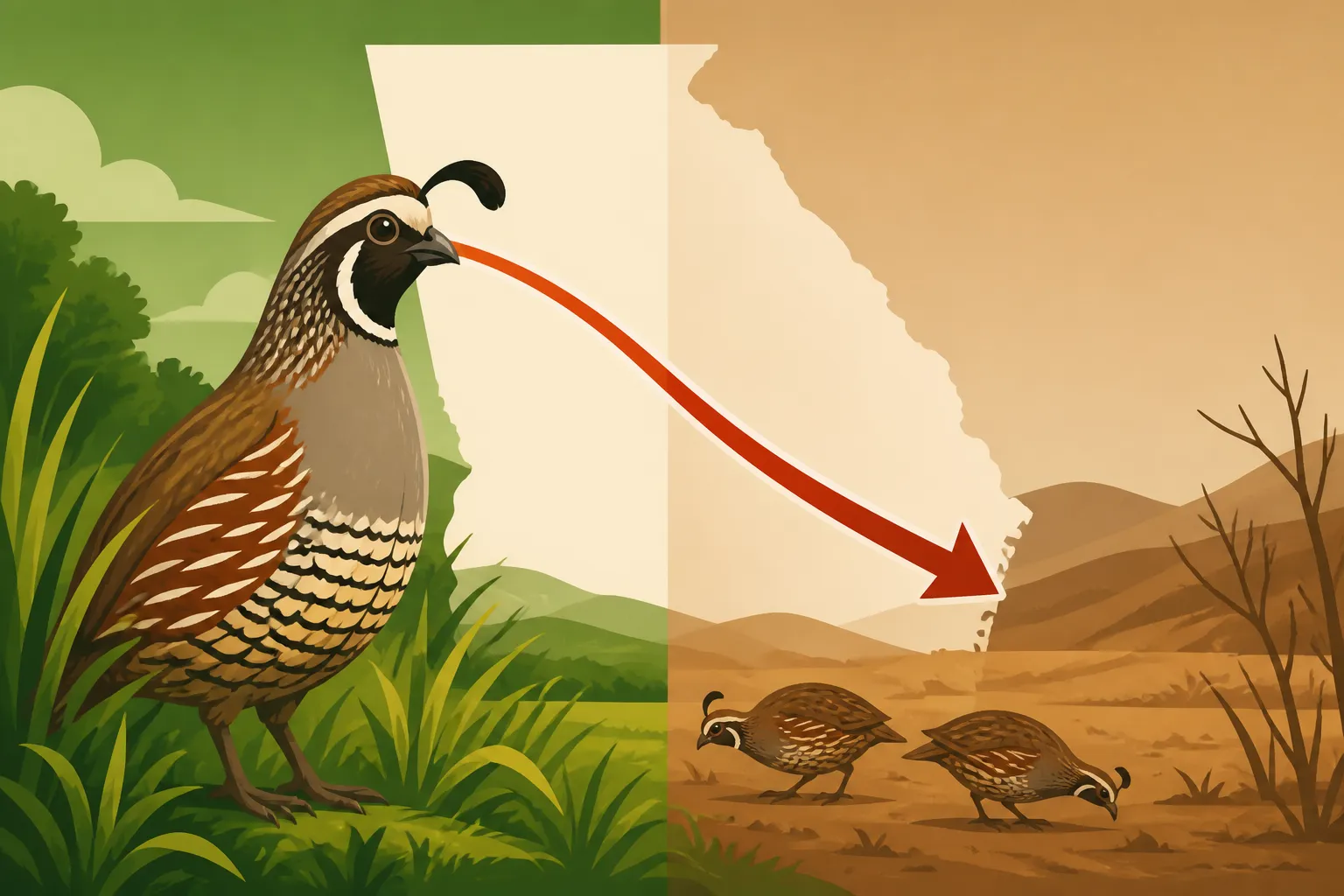
For anyone who's heard stories from their granddads or watched old hunting shows, the idea of Georgia teeming with bobwhite quail, coveys bursting from every field edge, feels like a distant dream. The dramatic decline in quail numbers since the 1960s is a stark and often heartbreaking reality for those who love this iconic bird. If you’ve ever wondered why those robust populations seem to have vanished, this guide is going to dig deep into the complex factors that led to this unfortunate situation, helping us understand what we lost and what it takes to bring them back.
The Golden Age of Quail and the Shifting Landscape
It's easy to look back with rose-tinted glasses, but the truth is, the mid-20th century really was a fantastic time for bobwhite quail in Georgia. Our state's landscape, perhaps inadvertently, offered a smorgasbord of perfect habitat. You could practically trip over coveys in certain areas, and the sound of a whistling bobwhite was as common as a buzzing cicada on a summer afternoon. This wasn't just luck; it was a consequence of widespread agricultural practices and land use that, for a time, aligned perfectly with what quail needed to thrive.
A Bygone Era of Abundance
Imagine Georgia in the 1950s or 60s: smaller family farms were the norm, often operating on a more diversified scale. These farms typically included a patchwork of crops, small woodlots, and, crucially, plenty of edge habitat. Fields weren't planted fence-row to fence-row; there were hedgerows, brushy ditches, and fallow fields left to "rest" for a season or two. This created a mosaic of cover, food, and nesting sites that quail absolutely adored. You had areas for brooding chicks, thickets for escape from predators, and open ground for feeding, all within a small, defensible territory. The sheer amount of diverse, usable habitat was astounding.
These small, mixed-use farms provided crucial year-round resources. The unkempt borders and idle lands often grew a bounty of native seeds, insects, and soft mast—all vital components of a quail's diet. Think of it as a natural buffet spread right next to their bedroom, with plenty of escape routes if a hawk came calling. Hunters often reminisce about walking up dozens of coveys in a single day, and it wasn't an exaggeration. The habitat was simply that good, fostering incredibly healthy and prolific Bobwhite Quail in Georgia populations across vast stretches of the state.
Agricultural Evolution and Its Impact
As time marched on, so did agriculture. The post-war era ushered in a push for efficiency and scale. Small family farms began to consolidate, giving way to larger, more industrialized operations. This shift fundamentally altered the landscape. Economic pressures drove farmers to maximize every inch of arable land, leading to the removal of those vital hedgerows, brushy field borders, and odd corners that were once sanctuaries for wildlife. The practice of leaving fields fallow became less common, replaced by continuous cropping.
The introduction of new herbicides and pesticides also played a significant role. While these chemicals boosted crop yields, they often had unintended consequences for quail. Herbicides eliminated the "weeds" (which were often native food plants for quail) and broad-spectrum insecticides reduced insect populations, which are a critical protein source for quail chicks. These changes didn't happen overnight, but incrementally, Georgia's agricultural landscape became less hospitable, slowly but surely chipping away at the foundation of the quail's success. It was a gradual erosion of quality habitat, often unnoticed until the coveys simply weren't there anymore.
Habitat Loss and Degradation: The Primary Culprit
When we talk about the decline of bobwhite quail, habitat loss isn't just a factor; it's hands down the most significant factor. Quail are creatures of specific needs, and when those needs aren't met across expansive areas, their numbers inevitably suffer. It's a tale as old as time in wildlife management: no habitat, no wildlife. And in Georgia, a perfect storm of land-use changes converged to strip quail of their traditional strongholds.
Intensive Agriculture and Clean Farming
Modern farming, for all its efficiency, can be brutally sterile from a wildlife perspective. The rise of "clean farming" practices meant eliminating anything that wasn't directly contributing to crop production. This included those messy, brushy fencerows that used to dissect fields, providing essential cover and travel corridors for quail. Think about it: a quail needs dense cover for nesting and protection, open areas for foraging, and pathways to move between them safely. When a tractor can plow right up to the property line, those critical transition zones vanish.
Large, monoculture fields—vast expanses of a single crop like corn, soybeans, or peanuts—offer little in the way of diversity for quail. While they might provide some food during certain times of the year, they lack the multi-layered cover and varied food sources necessary for year-round survival and successful reproduction. The sheer scale of these operations also means that any remaining suitable habitat is often isolated, creating "habitat islands" where quail populations struggle to connect and interbreed, further reducing their resilience.
Forest Management Changes
It wasn't just agriculture; forestry practices evolved too. Historically, much of Georgia’s pine forests were more open, often managed with frequent, low-intensity fires (both natural and prescribed by Native Americans and early settlers). This created a park-like savanna with a diverse understory of grasses, forbs, and legumes—perfect quail habitat. The pines provided some overhead cover, but sunlight still reached the forest floor, promoting the growth of a rich plant community.
However, the advent of intensive timber production led to denser, faster-growing pine plantations. These plantations are often planted in tight rows, allowed to grow thick, and managed for maximum timber yield. The dense canopy shades out the understory, turning what was once a vibrant ecosystem into a dark, relatively barren forest floor. While these forests are productive for timber companies, they are largely biological deserts for bobwhite quail. Without sunlight reaching the ground, the native grasses and forbs that provide food and cover simply cannot grow. Conservation efforts like those for Longleaf Pine and Quail Habitat are crucial to reversing this.
Urbanization and Development
Georgia's population has grown dramatically since the 1960s, and with that growth comes urban sprawl and suburban development. Every new housing subdivision, shopping center, road, and industrial park means another chunk of natural habitat paved over or built upon. This is an irreversible form of habitat loss, as once concrete is poured, it's rarely returned to wildlife habitat.
These developments not only destroy existing quail habitat but also fragment what remains. A once-continuous patch of prime quail country can be broken up into smaller, isolated parcels by roads and housing. This fragmentation isolates coveys, makes them more vulnerable to predation, and reduces genetic diversity. Even smaller rural developments, with their manicured lawns and non-native landscaping, offer little refuge for these wild birds. It’s a constant pressure, shrinking the available land where quail can possibly survive, making it harder for wildlife managers to find and implement large-scale solutions.
The Role of Predation and Other Factors
While habitat loss is the undisputed heavyweight champion of quail decline, it’s not the only factor. Other elements act as significant secondary punches, often exacerbated by the very habitat degradation we’ve already discussed. When quail are stressed by a lack of good cover and food, they become much more vulnerable to other pressures.
Increased Predator Populations
The landscape changes that hurt quail sometimes inadvertently benefit their predators. Consider species like raccoons, opossums, skunks, and even coyotes. Many of these animals are generalists, adapting well to fragmented habitats and even suburban environments. Without the constant pressure of trapping and hunting that was once common in rural areas, and with the availability of new food sources (like garbage or crops), some predator populations have seen increases.
When quail habitat is poor, nests are often more exposed, and adult birds have fewer places to hide from aerial predators like hawks or ground predators like coyotes. A quail trying to nest in a thin strip of cover along a clean-farmed field is far more susceptible to nest predation than one hidden deep within a thick, brushy hedgerow. So, while predators are a natural part of any ecosystem, the imbalance caused by habitat degradation can make their impact on already struggling quail populations far more devastating. Understanding Coyotes and Predators in Georgia is important for any conservation discussion. Some landowners use methods like Running a Trapline in Rural Georgia to manage local predator populations as part of a broader habitat plan.
Disease and Weather Fluctuations
Nature throws curveballs, and quail, like all wildlife, are susceptible to environmental stressors. Disease outbreaks, while not as widely studied for quail as for deer or other species, can certainly play a role, especially in stressed or localized populations. For example, parasites and pathogens can weaken birds, making them more vulnerable to other threats.
Weather, particularly extreme weather events, can also have a significant impact. Severe droughts can reduce food and water availability, while unusually cold snaps or prolonged wet periods during nesting season can devastate broods. Quail chicks are particularly vulnerable to cold and damp conditions. While these are natural occurrences, when combined with already compromised habitat and high predation pressure, they can be the final nail in the coffin for a covey struggling to survive. It's rarely a single factor but rather a synergy of multiple challenges that really hits quail hard.
The Cumulative Effect
It's crucial to understand that the quail decline isn't due to a single, easily identifiable cause. Instead, it’s a complex tapestry woven from many threads. Imagine a quail trying to survive: it needs excellent nesting cover, abundant insects for its chicks, diverse seeds for adult food, safe travel corridors, and escape cover from predators. Now, imagine a landscape where intensive farming has eliminated fencerows, dense pine plantations have shaded out the understory, and subdivisions have encroached on the edges.
In such a fragmented and degraded environment, a quail is constantly exposed. Its nests are easily found by raccoons, its chicks struggle to find protein-rich insects, and adult birds are more visible to hawks. Even if one piece of habitat is marginally acceptable, the lack of other critical components creates a cumulative vulnerability. It's the "death by a thousand cuts" scenario, where each environmental change, each predator encounter, and each weather event pushes the population further toward decline. That’s why genuine Managed Pine and Georgia Quail Recovery efforts require a holistic approach, addressing multiple issues simultaneously.
Hope for the Future: Conservation Efforts and Recovery
Despite the bleak picture of past declines, there's a glimmer of hope for Georgia's bobwhite quail. Dedicated conservationists, landowners, and hunters recognize the crisis and are actively working to restore quail habitat and populations. It's a long, uphill battle, but with renewed focus and science-backed strategies, we can start to turn the tide.
The Importance of Habitat Restoration
The consensus among wildlife biologists is clear: habitat restoration is the most effective way to bring quail back. This isn't about simply planting a food plot; it's about recreating that mosaic of diverse native plants, open woods, and protective cover that characterized the "golden age." Key strategies include:
- Prescribed Fire: Reintroducing fire to pine forests helps reduce dense undergrowth, allows sunlight to reach the forest floor, and promotes the growth of native grasses and forbs that provide food and cover. Many WMAs are actively engaged in this, though Prescribed Burns and Georgia Hunting Closures sometimes mean temporary access restrictions.
- Timber Thinning: In pine plantations, thinning trees can open up the canopy, mimicking the more open, savanna-like conditions that quail prefer.
- Native Plantings: Restoring hedgerows, field borders, and fallow areas with native grasses, wildflowers, and shrubs provides essential food sources (seeds, insects) and cover.
- Edge Feathering: Creating soft, brushy edges between forests and fields allows for a gradual transition that quail can use.
These efforts are not just beneficial for quail; they also improve overall ecosystem health, benefiting countless other wildlife species. For landowners, resources are available to help implement these practices, and platforms like GoHunt can sometimes highlight areas where successful habitat projects are underway, offering inspiration and examples.
Managed Hunting and Research
While habitat is primary, smart management of hunting seasons and populations also plays a role. Georgia has a season for quail, but strict bag limits and seasons help ensure that hunting pressure doesn't unduly harm struggling populations. Hunters themselves are often the biggest advocates and funders of conservation efforts, purchasing licenses and stamps that directly contribute to wildlife management.
Furthermore, ongoing research is critical. Biologists continuously study quail populations, monitor their health, and assess the effectiveness of different habitat management techniques. This data-driven approach helps refine strategies and ensure that conservation dollars are spent wisely. Organizations work with private landowners to conduct population surveys and share best practices for creating and maintaining quail-friendly landscapes. If you’re tracking trends or scouting areas, a detailed mapping tool like GoHunt can provide useful insights into land features that might indicate suitable habitat.
What Hunters and Landowners Can Do
If you’re passionate about bringing back the bobwhite, there are concrete steps you can take:
- Educate Yourself: Learn about quail ecology and the habitat requirements of Bobwhite Quail in Georgia. Understanding what they need is the first step toward providing it.
- Support Conservation Organizations: Groups dedicated to quail restoration rely on memberships and donations to fund their work.
- Practice Habitat Management: If you own land, even a small parcel, consider implementing quail-friendly practices like prescribed burning, planting native warm-season grasses, or leaving brushy field borders. There are often state and federal programs that can provide financial and technical assistance for these projects.
- Be a Responsible Hunter: Adhere to all hunting regulations, practice ethical hunting, and support policies that prioritize habitat restoration. Many hunters enjoy Working Pointing Dogs on Wild Georgia Quail and visiting Hunting a Managed Quail Plantation, which often prioritize habitat for these birds.
- Advocate for Quail: Talk to your neighbors, fellow hunters, and elected officials about the importance of quail habitat. Every voice helps in raising awareness and fostering a broader commitment to conservation. Tools like GoHunt can even help scout public or private lands for areas that might benefit from these efforts, or show you where some of the Best Georgia Counties for Wild Quail might still be.
By working together, we can rebuild the mosaic of habitat that once made Georgia a quail hunter's paradise and ensure that the distinctive call of the bobwhite once again echoes across our rural landscapes.
Summary of Bobwhite Quail Decline Factors
| Factor | Primary Impact on Quail Populations | Timing of Impact | Reversibility |
|---|---|---|---|
| Intensive Agriculture | Loss of diverse food sources, nesting cover, and escape routes; chemical use impacts insects/plants. | Mid-20th Century & Ongoing | Partial |
| Forest Management | Dense pine plantations eliminate understory vegetation, reducing food and cover. | Mid-20th Century & Ongoing | Partial |
| Urbanization/Development | Permanent destruction of habitat, fragmentation of remaining areas, increased human disturbance. | Mid-20th Century & Ongoing | Low |
| Increased Predation | Higher nest and adult mortality, especially in degraded habitats. | Mid-20th Century & Ongoing | Partial |
| Disease & Weather | Localized population impacts, heightened vulnerability in stressed populations. | Continual | Low |
| Lack of Fire | Dense undergrowth chokes out native plants, reducing food and cover diversity. | Mid-20th Century & Ongoing | High |
Disclaimer
This article is for general informational purposes only and does not constitute professional advice. Laws, prices and regulations vary by location and change over time. Consult a qualified professional for guidance on your specific situation.