Why Feral Hogs Spread So Fast in Georgia
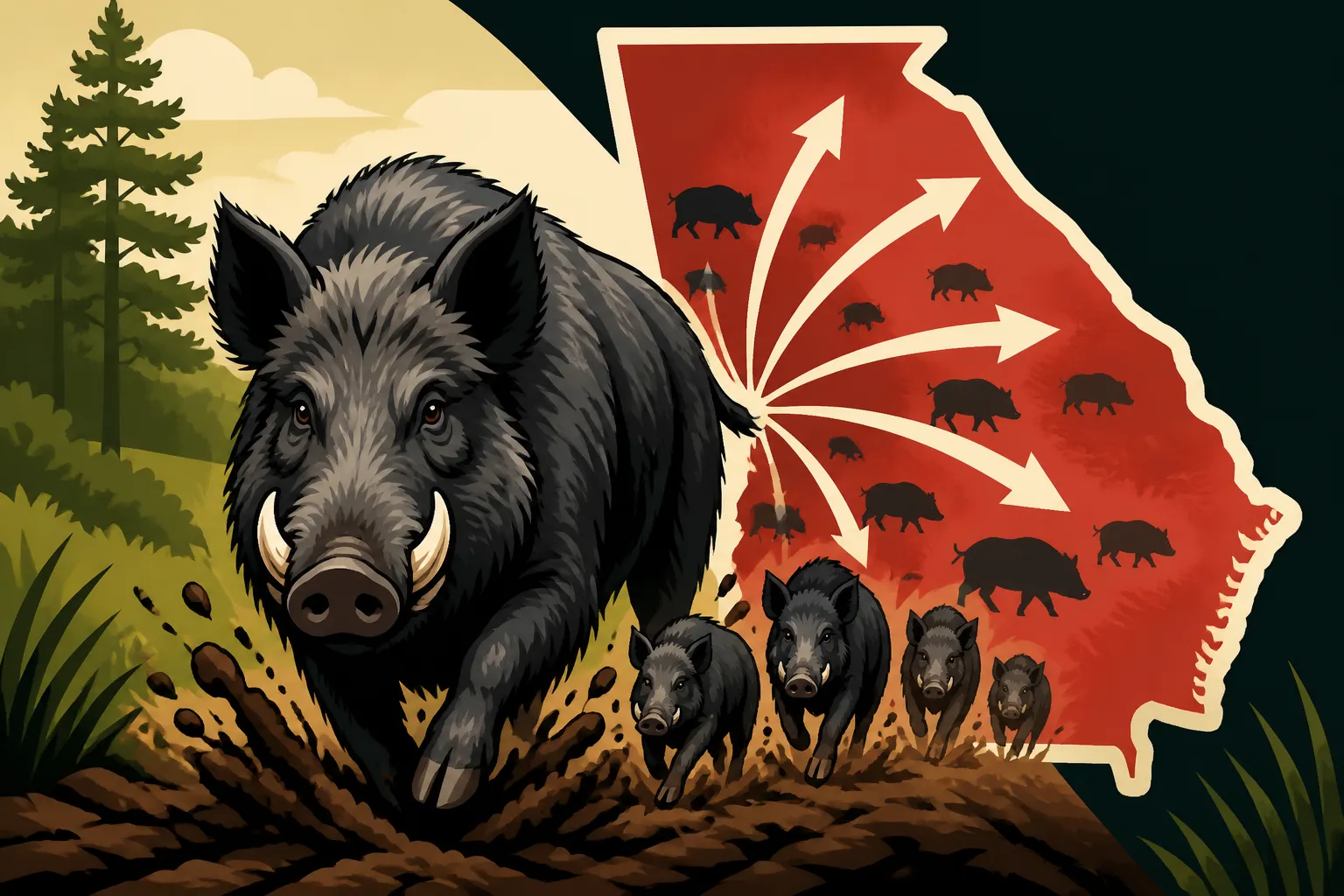
If you've spent any time hunting or simply living in rural Georgia, you've likely seen the destructive signs of feral hogs – rooted-up fields, torn-up food plots, and damaged timber. These intelligent, resilient animals seem to multiply faster than you can blink, causing massive headaches for landowners, farmers, and wildlife managers alike. This guide dives deep into the fascinating, albeit frustrating, reasons why feral hogs have managed to spread so quickly across our beautiful state, helping you understand the challenge these animals pose.
Unparalleled Reproductive Prowess: A Biological Explosion
One of the most significant factors contributing to the rapid proliferation of feral hogs in Georgia is their sheer biological capacity for reproduction. These aren't your typical deer with a single fawn once a year; feral hogs are built for population boom. Their reproductive cycle is nothing short of astounding, allowing them to outpace even aggressive hunting and trapping efforts in many areas. It’s a numbers game, and hogs consistently win because they start early and produce often.
Early Sexual Maturity in Sows
Unlike many other large game species, feral hog sows reach sexual maturity at an incredibly young age. It's not uncommon for a sow to be capable of breeding when she's only six to ten months old, sometimes even younger if conditions are particularly favorable with abundant food sources. Imagine a female deer, or even a bear, reproducing before it's even a year old – it's practically unheard of. This early onset of fertility means that new generations begin contributing to the population growth almost immediately, compounding the problem exponentially.
This rapid maturity means that a sow born in the spring can potentially be a mother by late fall or early winter of the same year. This accelerated timeline dramatically shortens the generational gap, allowing populations to rebound from setbacks with frightening speed. For hunters or landowners trying to manage hog numbers, this biological reality means that even if you remove a significant number of adults, a fresh crop of fertile young sows is already on its way to replace them, ready to start their own families. It’s a constant uphill battle against their biological imperative.
Consider a scenario in a quiet bottomland where a small group of hogs has taken root. If even one or two young sows survive their first year, they're already adding to the problem, not just growing into adults. This factor alone makes hog management a year-round, intensive effort, as discussed in Feral Hog Hunting Year-Round in Georgia. You can’t just target older animals; you have to consider the reproductive potential of every young hog on the landscape.
Large and Frequent Litters
Feral hogs are incredibly prolific, regularly birthing large litters. A typical litter size ranges from four to eight piglets, but it's not uncommon to see litters of ten or even twelve healthy young. This high fecundity means that a single sow can contribute a substantial number of new individuals to the population in one go. When you combine this with their early sexual maturity, the arithmetic of their population growth becomes starkly clear.
What's more, sows are capable of having multiple litters within a single year, often two and sometimes even three if environmental conditions are ideal. This means that a sow could potentially produce upwards of 15 to 20 piglets annually, sometimes more. This relentless production far outstrips the reproductive rates of native wildlife, giving hogs a distinct advantage in colonizing new territories and increasing their density in existing ones. This is why you might see small piglets any time of year in Georgia.
Picture a sounder moving through a mature oak grove in the Georgia Piedmont. If that sounder has several breeding-age sows, each capable of dropping two litters of six piglets in a year, you’re looking at dozens of new hogs on that property annually. Even if a few succumb to disease or predation, the sheer volume of new births makes it incredibly difficult to make a dent in the overall population without sustained, aggressive efforts.
Year-Round Breeding Capability
Unlike deer or bears that have distinct breeding seasons, feral hogs in Georgia can breed year-round. While there might be peaks in farrowing (birthing) during certain times, often correlated with favorable weather and food availability, there's no "off-season" for hog reproduction. This continuous breeding cycle ensures that new piglets are constantly being added to the population, regardless of the calendar.
This constant reproductive activity means that a hog population never truly slows down its growth, even in the colder months. While newborn piglets might be more vulnerable during harsh winter periods, the mild Georgia climate often allows for high survival rates even for winter-born litters. This contrasts sharply with many other species that time their births to coincide with spring's abundance, leaving them vulnerable during a longer portion of the year.
The ability to breed any time means that even if hunters or trappers manage to remove a significant number of hogs from an area, the remaining individuals can quickly start reproducing again, negating the impact of control efforts. It’s a perpetual cycle of growth, making consistent pressure essential to keep numbers in check. This continuous reproductive pressure is a major reason why states like Georgia face such an uphill battle against these invasive creatures.
Incredible Adaptability and Intelligence: Masters of Survival
Beyond their impressive reproductive capacity, feral hogs are remarkably adaptable and intelligent animals, attributes that further contribute to their rapid spread and resilience. They aren't picky eaters, they can thrive in almost any habitat, and they are incredibly adept at evading hunters and learning from pressure. This combination of traits makes them formidable inhabitants of the Georgia landscape.
Unselective Omnivorous Diet
One of the greatest survival strengths of feral hogs is their incredibly diverse, omnivorous diet. They are true opportunists, eating virtually anything they can find. This includes a vast array of plant material – acorns, roots, tubers, grasses, fruits, nuts, and agricultural crops like corn, peanuts, and soybeans. But their diet isn't limited to plants; they also consume insects, eggs, small mammals, reptiles, amphibians, and even carrion. This lack of dietary specialization means they can find sustenance in almost any environment, from dense swamps to suburban fringes.
This dietary flexibility is particularly problematic for Georgia's native wildlife and agricultural interests. Hogs compete directly with deer, turkeys, and other species for critical food sources like acorns. They also decimate ground-nesting bird nests, consuming eggs and young, and can wipe out entire crop fields overnight, causing millions in damages annually, as highlighted in Damage Feral Hogs Cause Georgia Farms. Their ability to switch between food sources means they are never truly limited by what's available seasonally, always finding something to eat.
Consider a hot Georgia summer when some native food sources might be scarce. While deer might struggle, feral hogs simply shift their focus. They'll root up tubers, feast on emerging crops, or even scavenge what they can find. This resilience to fluctuating food availability ensures their survival and continued population growth even when other species might be experiencing lean times.
Diverse Habitat Utilization
Feral hogs are not particular about where they live. They can thrive in an astonishing range of habitats found across Georgia, from the dense, wet bottomlands and cypress swamps of the Coastal Plain to the rugged, mixed hardwood forests of the North Georgia Mountains. They readily inhabit pine plantations, open agricultural fields, dense creek bottoms, and even the fringes of suburban developments. This versatility means they can colonize almost any part of the state where they can find food, water, and cover.
Their preferred habitat often includes thick cover for bedding and security, typically near water sources. Think dense briar patches, cane thickets, or deep swampy areas where hunters might struggle to penetrate. However, they are also comfortable venturing into more open areas, especially under the cover of darkness, to feed in fields or food plots. This ability to move between different habitat types makes them incredibly difficult to locate and contain, as they can simply move to the next suitable patch when pressured.
For hunters, this means that scouting for hog sign might require checking a variety of different terrain features. You might find rooting in a pine flat one day, then fresh tracks near a creek bottom the next. Tools like GoHunt can be incredibly valuable here, allowing hunters to study aerial maps and identify potential travel corridors, dense cover, and water sources across varied landscapes, helping to pinpoint where hogs might be hiding or feeding.
Evasive Behavior and Rapid Learning
Feral hogs are remarkably intelligent and possess strong survival instincts. They quickly learn to associate human presence, vehicles, and hunting pressure with danger. If a sounder is hunted or trapped in a particular area, they will often become nocturnal, moving and feeding primarily at night to avoid detection. They also develop keen senses of smell and hearing, making them extremely difficult to approach undetected.
Hogs learn from their experiences, and from the experiences of other hogs in their sounder. If a trap is set and some hogs are caught, the surviving members often become "trap shy," meticulously avoiding similar setups in the future. This requires hunters and trappers to constantly adapt their strategies, using different bait, different trap designs, or varying their hunting methods. It's a continuous game of cat and mouse, where the mouse often seems to be several steps ahead.
This intelligence and wariness make consistent control incredibly challenging. A group of hogs that has been hunted extensively might become almost ghost-like, only emerging from the thickest cover long after sundown. This is why tactics like Thermal Hunting Georgia Hogs at Night have become increasingly popular and effective, as they exploit the hogs' nocturnal habits and help overcome their learned aversion to daylight encounters. Their ability to learn and adapt ensures their long-term survival in the face of human pressure.
Lack of Effective Natural Predation and Management Hurdles
While their biology and behavior make them formidable, another crucial piece of the puzzle for the rapid spread of feral hogs in Georgia is the absence of sufficient natural population control mechanisms and the inherent difficulties in human-led management. They’re facing a landscape that largely favors their existence over their demise.
Minimal Natural Checks on Population Growth
In their native habitats, wild pigs have a more balanced ecosystem with natural predators that help keep their numbers in check. However, in Georgia, feral hogs have very few effective natural predators. While coyotes, bobcats, and even black bears might occasionally prey on very young piglets, they generally do not have a significant impact on adult hog populations. Adult hogs are large, powerful, and aggressive, making them a dangerous meal for most predators in the state.
The sheer reproductive output of feral hogs also quickly overwhelms any predation pressure. Even if a percentage of piglets are lost to predators, the remaining litters and subsequent births mean the population continues to grow rapidly. Without a top-tier predator capable of consistently taking down adult sows and boars, the hog population experiences virtually unchecked growth, allowing them to expand their range and density without significant natural resistance.
This imbalance means that the primary responsibility for population control falls squarely on humans. Unlike deer, where natural predation by coyotes can sometimes impact fawn survival, hogs face little threat once they reach a certain size. This biological advantage in a foreign ecosystem allows them to proliferate largely unimpeded by the natural forces that would regulate a native species.
Challenges in Eradication Efforts
Controlling feral hog populations is an immense task, fraught with challenges. The elusive nature of hogs, combined with their rapid reproduction and intelligence, means that traditional hunting methods alone are rarely enough to significantly reduce their numbers statewide. Even intensive trapping, which is often considered the most effective method for localized control, requires significant time, effort, and expertise.
Hunters often focus on specific individuals, usually large boars, or they might harvest a few hogs from a sounder. However, this level of harvest typically doesn't remove enough animals to offset their incredible birth rate. Furthermore, hogs quickly become "trap shy" after initial success, making subsequent trapping efforts more difficult. Large-scale coordinated efforts are needed, but coordinating these across diverse private and public lands is incredibly complex.
The sheer vastness of suitable habitat in Georgia also complicates control efforts. From the sprawling national forests to countless private timber tracts and farm fields, hogs have an endless supply of places to hide and breed. Wildlife agencies and landowners face an uphill battle against an animal that exploits every crack in the management strategy, often making it feel like pouring water into a leaky bucket. Understanding Georgia Feral Hog Regulations is a critical first step for anyone looking to get involved in control.
Human Influence and Unintentional Spread
While feral hogs are adept at spreading on their own, human activities have unfortunately played a significant role in their rapid distribution across Georgia and beyond. Historically, they were introduced to North America centuries ago, but more recent illegal introductions and translocation by humans have exacerbated the problem. Some individuals, often with misguided intentions, have moved hogs to new areas for hunting purposes, inadvertently establishing new populations.
The act of baiting, while legal for hunting hogs in Georgia, can also concentrate hogs and draw them to new areas, potentially accelerating their spread or increasing their density in localized areas. Activities like Hunting Feral Hogs Over Bait at Night can be effective, but they also highlight how human actions influence hog movement. Moreover, their ability to move long distances naturally, coupled with an absence of fences sturdy enough to contain them across vast landscapes, allows them to continually expand their range.
The unintended consequences of human actions, whether historical introductions or recent translocations, have given feral hogs a massive head start in colonizing Georgia. Once established in a new area, their biological advantages kick in, and they quickly become entrenched. This complex interplay of natural adaptability and human-assisted spread underscores the magnitude of the challenge in managing these pervasive animals.
Abundant Resources: Georgia's Prime Hog Habitat
Georgia, with its diverse landscapes and temperate climate, unfortunately offers a veritable paradise for feral hogs. The state provides an abundance of everything a hog needs to thrive and multiply: food, water, and extensive cover. This rich resource base forms the foundation upon which their rapid population growth is built.
Lush, Varied Ecosystems
Georgia's geography boasts an incredible variety of ecosystems, from the rolling hills of the Piedmont to the vast, flat plains and swamps of the Coastal Plain. Each of these regions, while distinct, offers ample resources for feral hogs. The mild climate means that freezing temperatures severe enough to cause significant hog mortality are rare, allowing for year-round foraging and reproduction. The long growing season ensures a consistent supply of vegetation.
Dense forests provide critical cover, especially the thick underbrush found in many of Georgia's pine plantations and bottomland hardwoods. These areas offer security from predators (human and otherwise) and shelter from the elements. This combination of abundant food, comfortable climate, and extensive cover allows hogs to establish secure territories and avoid detection, even in areas with high human activity.
Imagine a large tract of mixed timber in central Georgia. It has patches of dense pines, mature hardwoods dropping acorns, a meandering creek, and some overgrown clear-cuts. This is prime hog habitat, offering everything they need in close proximity. The diverse nature of Georgia’s wild spaces means that very few areas are truly unsuitable for hogs, allowing them to colonize nearly every corner of the state.
Agricultural Allure
Georgia is an agricultural powerhouse, producing a wide variety of crops including corn, peanuts, soybeans, pecans, and various vegetables. For omnivorous, opportunistic feral hogs, these agricultural fields represent an irresistible, concentrated food source. A standing field of corn or peanuts is essentially a giant buffet, offering high-energy sustenance that fuels rapid growth and reproduction.
Hogs are notorious for the damage they inflict on crops, often destroying far more than they consume. They root up fields, trample plants, and feed directly on mature crops, causing significant financial losses for farmers. This direct access to an abundant, easily digestible food source means hogs can maintain excellent body condition, which directly translates to earlier maturity and larger, more frequent litters.
This agricultural allure is a double-edged sword: it provides easy sustenance for hogs, but it also puts them in direct conflict with human interests. Farmers are constantly battling hogs, often employing methods like Baiting a Feral Hog Trap Site to protect their livelihoods. The presence of such readily available, high-quality food sources in many parts of Georgia acts as a major driver for localized hog population explosions.
Consistent Water Sources
Access to water is non-negotiable for all living creatures, and feral hogs are no exception. Georgia is crisscrossed by an extensive network of rivers, creeks, swamps, ponds, and wetlands. This consistent and widespread availability of water is a major boon for hogs, providing not only drinking water but also essential wallowing areas. Hogs don't sweat effectively, so wallowing in mud helps them regulate their body temperature, especially during Georgia's hot, humid summers.
These water-rich environments also often come with dense riparian vegetation, which provides excellent cover and a consistent food supply. River bottoms and swamp edges are frequently hotbeds for hog activity because they offer this perfect trifecta of water, food, and cover. Hogs can easily move along these natural corridors, expanding their range and exploiting new food sources.
Think about the extensive river systems like the Ocmulgee or Altamaha. These river bottoms are often wild, remote, and full of the thick cover and water that hogs absolutely adore. They serve as natural highways and fortresses for these animals. This abundant water, combined with everything else Georgia offers, creates an environment where feral hogs don't just survive; they thrive and expand at an alarming rate.
| Factor | Impact on Feral Hog Spread in Georgia | Comparison to Native Species (e.g., Deer) |
|---|---|---|
| Reproductive Rate | Sows breed as young as 6-10 months, average 4-8 piglets/litter, 2-3 litters/year. Year-round breeding. | Deer breed typically once a year (fall), 1-2 fawns, mature around 1.5-2 years old. |
| Dietary Flexibility | Omnivorous; eats nearly anything (plants, crops, insects, carrion, small animals). Highly adaptable to available food sources. | Primarily herbivorous; browses on leaves, twigs, forbs, acorns. More specialized diet. |
| Habitat Adaptability | Thrives in diverse habitats: swamps, forests, pine plantations, agricultural fields, suburban fringes. | Prefers mixed forests, open woodlands, agricultural edges. Less adaptable to extreme conditions. |
| Learning & Evasion | Highly intelligent; quickly learns to avoid traps, hunters, and pressure. Often becomes nocturnal. | Can learn to avoid pressure but less noted for complex evasion strategies. |
| Natural Predation | Minimal effective natural predators on adults. Piglets may be taken by coyotes, bears, but overall impact on population is low. | Fawns are vulnerable to coyotes and bobcats. Adult deer have few natural predators. |
| Human Influence | Intentional and unintentional translocations by humans have greatly expanded their range. | Primarily spread through natural dispersal. |
Disclaimer
This article is for general informational purposes only and does not constitute professional advice. Laws, prices and regulations vary by location and change over time. Consult a qualified professional for guidance on your specific situation.