Hunting Bears Over Natural Food in the Mountains
Hunting black bear in Georgia's rugged mountain country, particularly when you're relying solely on what Mother Nature provides for their dinner table, can feel like you're searching for a needle in a haystack. It’s a challenge that many Georgia hunters face – trying to understand where these elusive animals will be, when, and what they’ll be feasting on in the vast expanse of the Chattahoochee National Forest or other prime mountain bear zones. This guide is here to demystify the process, helping you pinpoint those natural food sources that draw bears in, and equip you with the knowledge to increase your chances of a successful and ethical harvest.
Understanding North Georgia Bear Behavior and Habitat
Black bears in North Georgia are fascinating creatures, and their lives revolve largely around food. Unlike their cousins in other states where baiting might be common, in Georgia's mountain regions, you're focused purely on tracking their natural dietary habits. This means understanding not just what they eat, but when and where they find it within the dense forests and steep terrain.
Seasonal Movement and Food Preferences
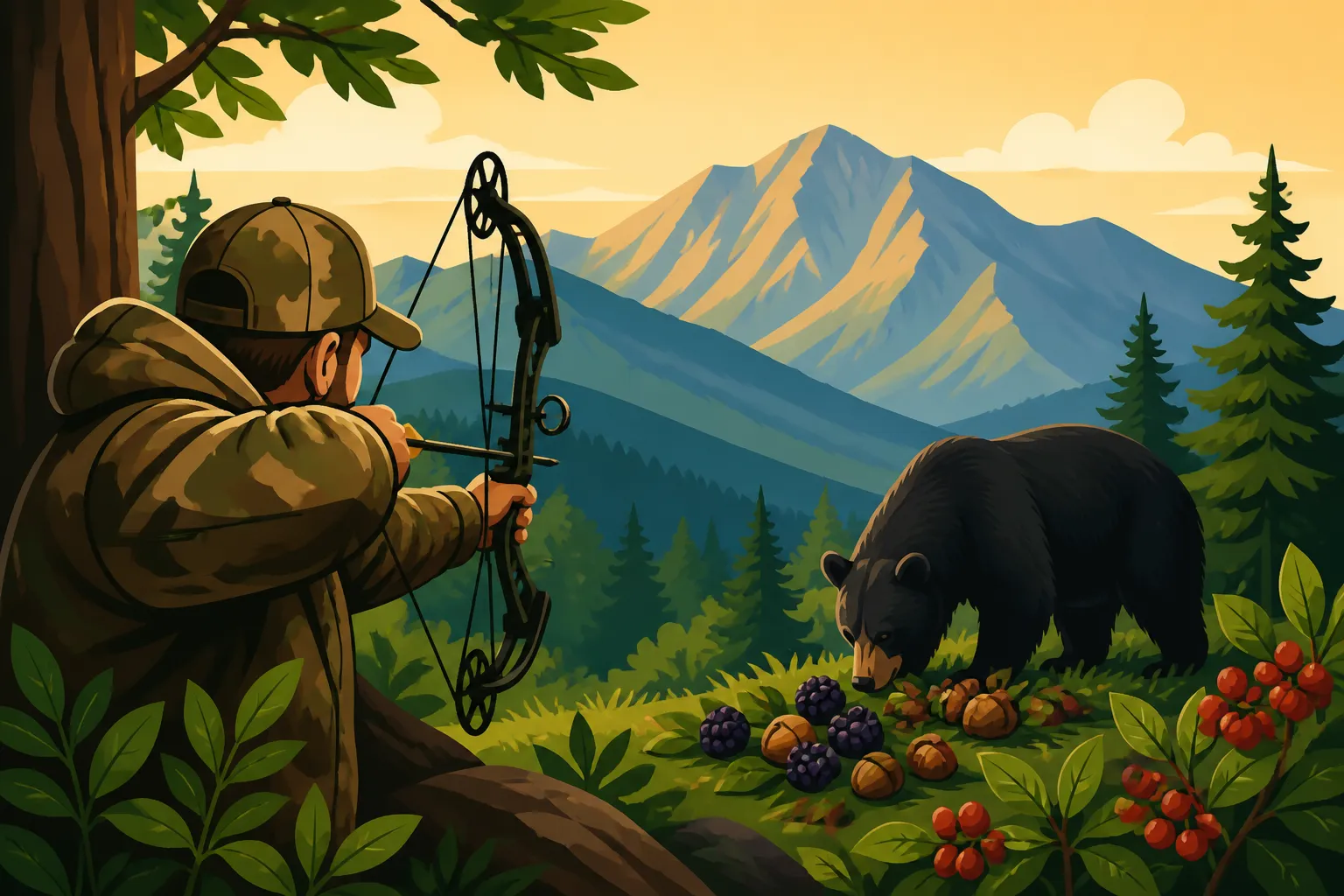
Bears are opportunists, and their diet shifts dramatically with the seasons, dictated by what's available. Early in the spring, after emerging from their dens, they're often grazing on tender green vegetation, new shoots, and sometimes even leftover berries from the previous year. As summer progresses, their focus turns to soft mast. Think blueberries, blackberries, and huckleberries, often found in sun-drenched clear-cuts, old logging roads, or along the edges of forest openings. These early-season treats provide quick energy and hydration.
However, the real game-changer for mountain bears, and consequently for bear hunters, is the hard mast crop, primarily acorns. The fall acorn drop is like a siren song to bears, drawing them from all corners of their home range. They know that packing on as much fat as possible before winter denning is critical for survival. Understanding the cyclical nature of these mast crops – knowing which years are heavy, which are light, and what specific trees are producing – is the absolute cornerstone of hunting bears over natural food. You'll often find that years with abundant hard mast spread the bears out more, while lean years concentrate them in smaller, more predictable areas where the few available acorns are.
The Influence of Terrain and Water Sources
North Georgia's mountains aren't just pretty scenery; they're a complex mosaic of ridges, valleys, and creek bottoms that profoundly influence bear movements. Bears are incredibly efficient travelers, and they'll use saddles between ridges, dense thickets along a creek, or even old logging roads as natural travel corridors. These routes often connect their bedding areas in dense cover to prime feeding spots. If you're wondering Where North Georgia Bears Range, it’s often tied directly to these terrain features and available food.
Water is another magnetic force for bears. They need it for drinking, of course, but also for cooling off, especially during the warmer early parts of the season. A spring, a seeping rock face, or a meandering mountain stream running through a patch of berry bushes or oak flats can become a focal point for bear activity. Scouting these areas, especially where water sources intersect with potential food supplies, can reveal invaluable clues to recent bear movement. The vast expanses of public land, such as the Chattahoochee-Oconee National Forest Hunting grounds, are prime examples of where these terrain and water dynamics play out on a grand scale, offering abundant opportunities for those willing to put in the legwork.
Identifying Key Natural Food Sources and Their Cycles
When you're chasing mountain bears in Georgia, you're essentially becoming a detective of the forest pantry. Knowing what’s on the menu, when it’s ripe, and where to find it is paramount. It's not just about knowing that bears eat acorns; it's about understanding the subtle nuances of different species and their production cycles.
Hard Mast: The Acorn Gold Rush
Acorns are the undisputed kings of fall bear diets in the mountains. White oaks, with their sweeter, lower-tannin acorns, are often the first to be sought out by bears as they drop earlier in the season, typically late August through September. Bears will gorge on these as long as they last. You’ll often find bear scat brimming with white oak acorn fragments during this period. Red oaks, on the other hand, produce acorns that are higher in tannins, meaning they taste more bitter, but they mature later and often persist on the ground well into winter, providing a crucial food source when other options are scarce. Black oaks fall somewhere in between in terms of palatability and drop time.
To find these crucial food sources, you need to scout well before the season, sometimes even in the summer, to assess the mast crop. Look for healthy, mature oak trees producing abundant acorns. Heavy rains in spring and early summer often lead to good mast crops. A "good mast year" can scatter bears across a wider area, as food is plentiful everywhere. Conversely, a "poor mast year" will concentrate bears to areas where even a few oaks are producing, making those specific spots absolute magnets. Bears will travel miles to find reliable food, so identifying these hotspots is critical. Understanding Georgia's Black Bear Population trends often correlates with mast crop success.
Soft Mast: Berries, Grapes, and Persimmons
Before the hard mast drops, bears turn their attention to soft mast. In the early to mid-summer, wild blueberries, blackberries, and huckleberries are vital. These fruits are often found in sun-exposed areas like powerline clearings, forest edges, and regenerating timber cuts. Bears will spend hours stripping bushes clean, leaving behind tell-tale signs like broken branches and scat full of berry seeds.
As late summer transitions into early fall, other soft mast options become important. Wild grapes, often found draped over trees along creek bottoms or forest edges, provide a significant energy boost. Bears will climb trees or pull down vines to get at these succulent fruits. Persimmons, with their bright orange, sweet fruit, are another favorite. While more common in the Piedmont and Coastal Plain, scattered persimmon trees can be found in lower mountain elevations and along river drainages. Identifying these trees and checking them for ripe fruit and fresh bear sign can be incredibly productive. Keep an eye out for tell-tale smudges on trees or bent branches, indicating a bear's ascent to reach a cluster of sweet fruit.
Strategic Scouting and Hunting Tactics
Successfully hunting bears over natural food in the mountains isn't just about knowing where the food is; it's about connecting those dots with bear activity, movement patterns, and then setting up an effective hunting strategy. This takes meticulous scouting and a keen understanding of how bears navigate their mountainous world.
Pre-Season Reconnaissance: Boots on the Ground and Technology
The work truly begins long before opening day. Get out into those mountains in late summer and early fall, when the mast crops are developing and dropping. Your goal is to locate active food sources and, crucially, fresh bear sign. Look for large, clawed tracks in soft earth near water sources, torn-up logs where bears have rooted for grubs, and rub trees—trees (often smaller evergreens) where bears rub their backs and leave hair. Perhaps the most telling sign is scat; fresh scat loaded with berry seeds or acorn fragments confirms active feeding in the area.
Modern technology can be an invaluable asset in this phase. Apps like the Georgia Outdoors app or robust mapping platforms such as GoHunt (a service that provides detailed land data) can help you identify promising areas on aerial photos. You can mark potential oak flats, old clear-cuts, or creek bottoms before you even step foot on the ground. onX Layers for Georgia Land Status can be particularly useful for ensuring you’re on public land and understanding the topography. Don’t forget to consider Scouting Georgia Public Land Before Season as part of your comprehensive strategy; the more time you spend in the woods ahead of time, the better your chances.
Reading the Mountain Landscape for Bear Sign
Beyond just finding food, you need to understand how bears use the land to get to that food. Bears will often create distinct trails, sometimes almost indistinguishable from human trails, that connect bedding areas to feeding sites, or move between different food sources. Look for these subtle pathways. Ridgelines, especially those with saddles, serve as highways for game animals, and bears are no exception. Knowing how to interpret these features, much like you would when Reading a Ridge for North Georgia Deer, is key.
Another critical element in the mountains is understanding thermals and wind. In the morning, cold air sinks into valleys, creating a downdraft, while in the afternoon, warm air rises up the slopes. This means your scent will travel differently depending on the time of day and your position. Always try to approach and set up so that your scent isn't blowing directly into the area you expect bears to be. Being mindful of Wind and Thermals on a Mountain Ridge is paramount to avoiding detection, especially with an animal as keen-nosed as a bear. Setting up a trail camera on active trails or near discovered food sources can also provide invaluable intel on bear activity patterns, confirming their presence and preferred travel times.
Effective Hunting Strategies for Natural Food Areas
Once you’ve identified active feeding areas and understand the bear movement patterns, it's time to devise your hunting strategy. Still-hunting, a slow and deliberate walk through the woods, can be effective, especially if you’re moving into the wind and paying close attention to every sound and movement. Focus your efforts in areas known to hold Georgia's Black Bear Population, particularly in the Georgia Northern Bear Zone Season Rules.
Ambush hunting from a stand or ground blind is often the most productive method. Place your stand downwind of the most active food sources or along major travel corridors leading to them. Remember that bears can be active throughout the day, but often feed most heavily during the early morning and late evening hours. Be patient. A bear might take its time approaching a food source, often circling downwind to catch any scent. Scent control is absolutely crucial; bears have an incredible sense of smell. Make sure your stand is secure and allows for an ethical shot. When the opportunity arises, accurate Shot Placement on a Georgia Black Bear is vital for a quick, humane kill. Always be prepared for the difficult task of Handling a Bear After the Shot and retrieving it from rugged terrain.
| Food Source | Type | Typical Availability (North Georgia) | Key Bear Behavior | Scouting Tips |
|---|---|---|---|---|
| White Oak Acorns | Hard Mast | Late August – September (early fall) | Highly preferred, bears gorge when available. | Look for healthy, mature trees, check ground for drops and fresh scat. |
| Red/Black Oak Acorns | Hard Mast | September – December (mid-late fall) | Last longer, important when white oaks are gone. | Identify species, check for persistent acorns, bear sign in leaf litter. |
| Blueberries/Blackberries | Soft Mast | June – August (summer) | Concentrated feeding in clearings, open areas. | Find sunny openings, old cuts, look for stripped bushes and berry-filled scat. |
| Wild Grapes | Soft Mast | August – October (late summer-fall) | Bears will climb trees or pull vines for clusters. | Check creek bottoms, forest edges, look for broken vines, climbing signs. |
| Persimmons | Soft Mast | September – November (fall) | Bears eat ripe, fallen fruit; also climb for them. | Identify trees, look for dropped fruit, signs of climbing on bark. |
| Tender Green Shoots | Vegetation | March – May (spring) | Early season food, often near den sites or fresh growth. | Look in shaded areas, along creek banks, or new growth after a burn. |
Gear Considerations for Mountain Bear Hunting
Hunting bears in North Georgia’s mountains is a physically demanding endeavor. The terrain is rugged, the weather can be unpredictable, and you’re often far from any easy access. Having the right gear isn't just about comfort; it's about safety and efficiency.
Rifles, Optics, and Essential Tools
When it comes to firearms, you'll want something with enough power to ethically harvest a bear, which are robust animals. Many hunters opt for popular deer calibers, but ensuring you have enough knockdown power is crucial. For specific advice, consider researching Rifle Calibers for Georgia Bear. A good quality, accurate rifle zeroed for the distances you expect to shoot in the dense mountain woods is a must. Remember that shots in these environments are often closer than in open country, so familiarity with your rifle at 50-150 yards is paramount.
Optics are equally important. A reliable pair of binoculars (8×42 or 10×42) will help you spot bears moving through dense cover or feeding at dusk and dawn. A quality rifle scope with good low-light performance is also vital for those prime hunting hours. Beyond your weapon and optics, a sturdy backpack capable of carrying essentials for a full day in the woods is indispensable. Include a first-aid kit, navigation tools (GPS or a reliable mapping app on your phone, possibly supplemented by a service like GoHunt which allows offline map downloads), plenty of water, high-energy snacks, a sharp knife, and a headlamp for navigating in the dark if you're walking in or out before sun-up or after sun-down.
Navigating and Staying Safe in Bear Country
The North Georgia mountains can be unforgiving. Navigation can be tricky, even with modern technology, due to dense canopy and steep, winding terrain. Always have a plan, tell someone where you're going and when you expect to return, and carry a power bank for your phone. When you're out there on public land, remember that you're not just hunting bears; you're often sharing the forest with other wildlife, including venomous snakes, so snake boots or gaiters are a smart addition, especially in early season.
Retrieving a bear from a steep mountainside can be one of the most physically challenging aspects of the hunt. Consider packing rope, a game cart if the terrain allows (though often it won't), or planning to quarter the bear for easier pack-out. Bear encounters are generally rare, but it's always wise to be "bear aware" – make noise when moving through thick brush, carry bear spray if it makes you feel more comfortable, and know that you are hunting in Where North Georgia Bears Range and should always be respectful of their territory. Being prepared for the elements and the physical demands will make your mountain bear hunt a much safer and more enjoyable experience.
Disclaimer
Please be aware that hunting regulations and seasons can change. Always consult the latest Georgia Department of Natural Resources (DNR), Wildlife Resources Division guidelines and regulations before heading into the field. This article is for informational purposes only and does not supersede official hunting laws.