Setting Up on a Piedmont Field Edge
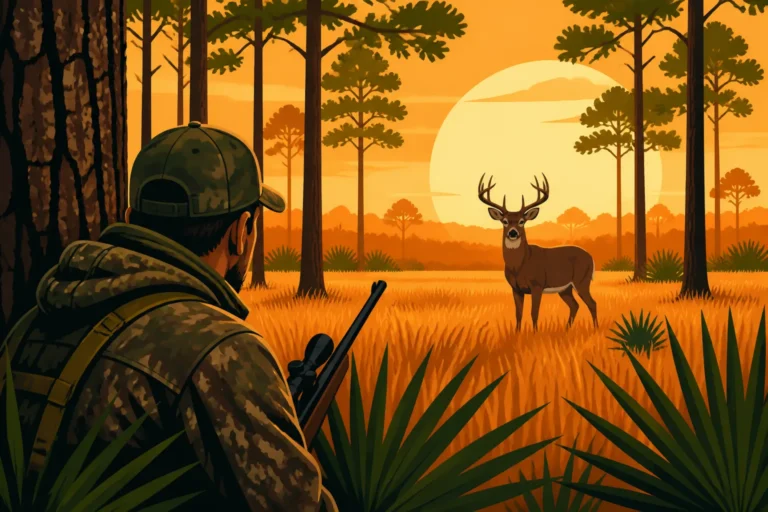
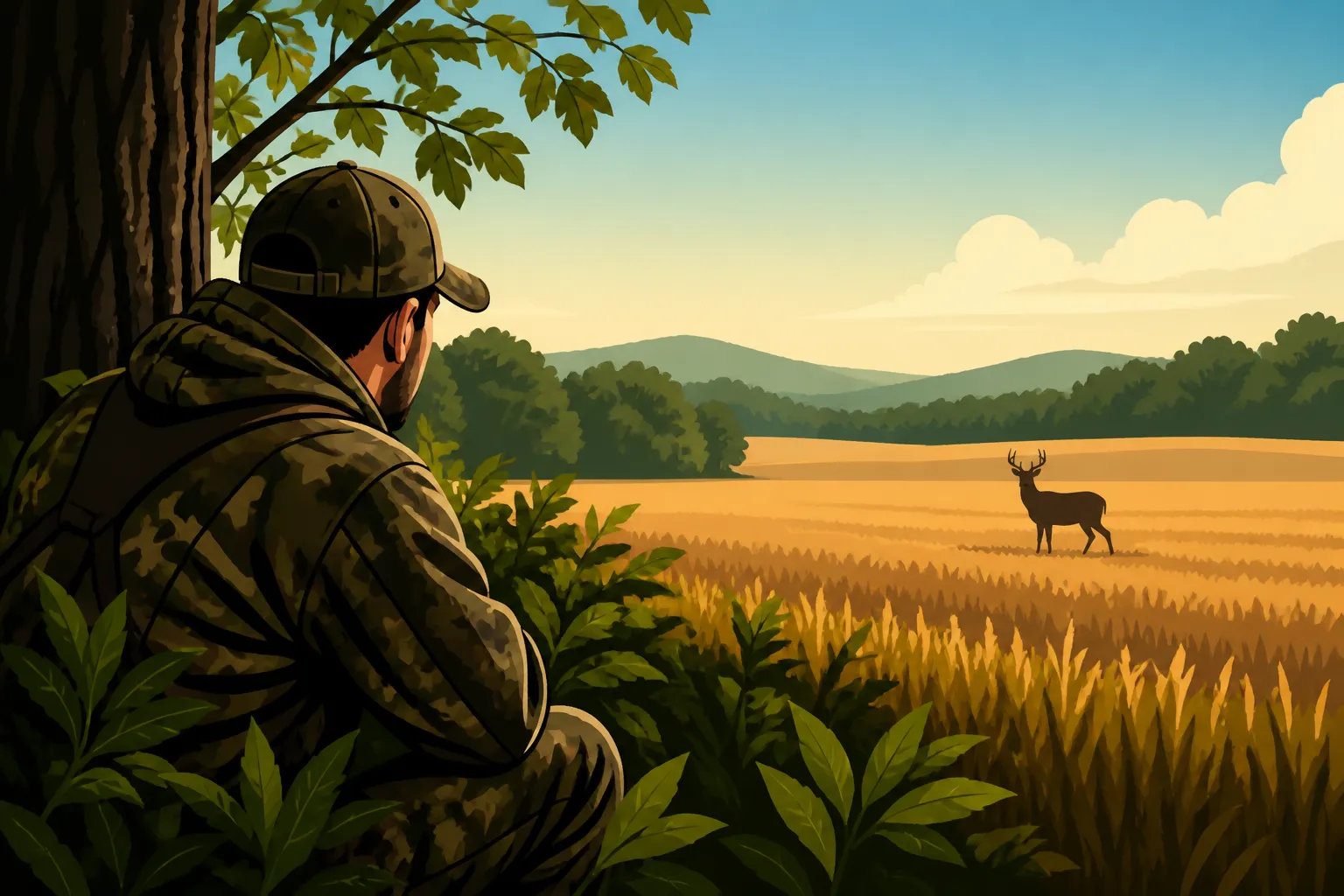
Hunting the edges of agricultural fields in Georgia's Piedmont region can feel like a game of cat and mouse. You know the deer are there, drawn to the abundant food, but actually setting up effectively without spooking them or getting busted by their keen senses? That's the real challenge. It's frustrating to watch deer pour into a field from an area you thought was perfect, only to realize your setup was just a few yards off. This guide is all about helping you master the art of choosing and executing the ideal setup on a Piedmont field edge, turning those frustrating close calls into successful hunts.
Understanding the Piedmont Landscape and Field Edges
Georgia's Piedmont region is a fascinating mix of rolling hills, timber stands, and agricultural fields. It's not the vast, sprawling plantations of South Georgia, nor the rugged, dense mountains to the north. Instead, you'll find a patchwork of hardwoods, pine timber, and cultivated land, making field edges prime real estate for whitetails. These areas offer deer a critical blend of food, cover, and safe travel corridors, but understanding how they use these edges is key to unlocking consistent success.
Key Characteristics of Piedmont Field Edges
The Piedmont is characterized by its distinct topography and land use. Unlike the flat expanses of the Coastal Plain, the terrain here is undulated, with gentle hills and valleys, often intersected by small creeks and drainages. This creates natural funnels and pinch points that deer frequently utilize. The field edges themselves are transition zones – the border where the safety and concealment of the woods meet the high-calorie buffet of agricultural crops. These edges aren't uniform; they can be abrupt, with a hard line between forest and field, or more gradual, featuring thick brush, briars, or tall grasses that provide excellent bedding and staging cover.
Deer use these edges for multiple purposes. They provide easy access to food sources like corn, soybeans, peanuts, winter wheat, or even newly planted green fields. But just as importantly, the immediate timber and thickets adjacent to these fields offer security cover for deer to bed down during the day, digest their meals, and approach the fields under the cloak of darkness or low light. The subtle contours of the land, small fingers of woods extending into a field, or even changes in vegetation density along the edge, can all serve as preferred travel routes for deer moving between bedding and feeding areas. Understanding these nuances is the first step toward predicting their movements and choosing your ideal ambush point.
Deer Movement Patterns Along Field Borders
Deer don't just randomly wander into a field. They are creatures of habit, driven by survival instincts. Their movement along field borders is usually strategic. Often, deer will stage in the timber or thick cover just inside the woods line before committing to stepping out into the open field. This "staging area" is where they'll often mill about, scent-check the air, and observe the field for any threats before venturing further. These staging areas are goldmines for hunters, as they often offer closer shot opportunities to relaxed deer.
As you observe a field edge, you'll start to notice specific entry and exit points. These might be subtle paths worn through tall grass, gaps in a fenceline, or natural breaks in the timber. During early morning hunts, deer will typically be retreating from the field back into the safety of the woods, often following the most secure routes. In the evenings, they'll reverse this, using similar routes to enter the fields. Wind direction plays a monumental role in these patterns; deer will almost always try to approach and feed with the wind in their favor, allowing them to scent any potential danger ahead. Therefore, when you're considering your setup, you need to think about how the deer will use the wind to their advantage and position yourself to negate that advantage, or even turn it into your own. For a deeper dive into understanding these aerial dynamics, check out our guide on Wind and Thermals on a Mountain Ridge, which offers principles applicable even in the rolling Piedmont.
Scouting Strategies for Piedmont Field Edges
Effective scouting is the bedrock of successful field edge hunting. You can't just show up on opening day and expect to connect. The Piedmont's dynamic landscape, with its rotating crops and varying pressure, demands a proactive approach. From digital reconnaissance to boots-on-the-ground investigation, every piece of information helps paint a clearer picture of deer activity.
Pre-Season Aerial and On-the-Ground Scouting
Before you even step foot in the woods, tools like GoHunt can be invaluable for pinpointing potential hotspots. Aerial maps allow you to identify key features: fingers of timber extending into fields, areas where different crop types meet, creek beds that offer concealed travel, and patches of dense cover adjacent to feeding zones. Look for natural funnels where deer would be constricted, like a narrow strip of woods between two fields, or a hard bend in a creek. Using the mapping features of platforms like GoHunt, you can mark these potential spots, measure distances, and plan your approach routes before you even leave the house. You might also consider using advanced mapping with layers for onX Layers for Georgia Land Status to confirm property boundaries and public access, especially if you're exploring new areas.
Once you have a few promising locations marked, it's time for boots on the ground. Walk the field edges during the off-season or well before hunting pressure begins. Pay close attention to deer trails – well-worn paths indicate consistent travel. Look for signs of feeding, like nibbled leaves, tracks in soft ground, or droppings. Examine the timber adjacent to the field for rub lines, especially along common entry points. A series of rubs on saplings or small trees leading away from the field indicates a buck's preferred exit route. These early season scouting missions, even in the heat of July or August, provide critical intelligence for when the season opens. You're trying to figure out where deer are living, where they're eating, and most importantly, how they get from one to the other safely.
Reading Deer Sign and Trail Camera Placement
Once you've identified high-traffic areas, it's time to refine your intel by reading deer sign and deploying trail cameras. Fresh tracks in the mud along a field edge or crossing a logging road are undeniable proof of recent activity. Droppings can tell you what deer are eating and how recently they've passed through. Rubs and scrapes, particularly during the pre-rut and rut phases, are key indicators of buck activity. While many hunters think of scrapes along interior trails, don't overlook finding Scrape Lines Along a Logging Road or even subtle scrapes just inside the timber along a field edge. These are often made by bucks scent-checking the field before entering.
Trail cameras are your eyes in the woods when you're not there. For field edge setups, strategically place cameras along known trails leading to and from the field, or in those suspected staging areas just inside the tree line. Position them to capture deer moving along the edge, not just straight into the field. This helps you understand patterns: when are deer moving, which specific trails are they using, and are mature bucks frequenting the area? You'll want to place cameras facing away from the rising or setting sun to avoid lens flare and ensure clear images. Remember to check local regulations concerning Trail Camera Rules on Georgia Public Land if you're hunting on public access areas. Consistent monitoring of these cameras will give you real-time data on deer behavior, helping you refine your setup location for optimal success.
Choosing Your Setup Location and Method
So you've done your scouting, identified those prime Piedmont field edges, and you've got intel from your cameras. Now comes the moment of truth: picking the exact spot and method for your hunt. This isn't just about finding a good tree; it's about orchestrating an ambush that accounts for every variable.
Optimal Stand or Blind Placement
When it comes to setting up on a field edge, wind direction is paramount. Seriously, it's the most critical factor. Deer rely heavily on their sense of smell, and if your scent is blowing into their approach or feeding area, your hunt is over before it begins. Always, always choose a setup location that puts your scent cone away from where you expect deer to approach or feed. This means knowing the prevailing wind patterns for the time of year you're hunting and having backup spots for different wind directions. If the wind shifts unexpectedly, don't hesitate to relocate or call it a day if you can't get a favorable setup. Beyond the wind, consider the sun's position. You don't want to be staring directly into the sun during prime hunting hours, nor do you want it silhouetting you.
Concealment is also vital. Whether you're in a treestand or a ground blind, you need to break up your outline. For treestands, choose a tree that offers good limb structure or foliage around your stand to help you blend in. Position yourself so you have clear shooting lanes but are not completely exposed. Look for small pockets or bends in the treeline where deer might feel more comfortable entering the field, and set up slightly downwind of those. You also want a clear view of the primary feeding and staging areas. When considering your ideal placement, keep in mind how deer use these edges for security. A small finger of woods that extends slightly into a field, creating an inside corner, can be a magnet for deer. They'll often follow these fingers before venturing into the main part of the field, offering you an excellent opportunity to intercept them.
Treestand Versus Ground Blind Considerations
Both treestands and ground blinds have their place when hunting Piedmont field edges, and the best choice often depends on the specific location, available cover, and your hunting style.
Treestands offer a significant advantage: elevation. Being elevated gets your scent off the ground and theoretically above the deer's primary detection zone, though thermals can still carry scent downwards, especially in the mornings and evenings. They also provide a wider field of view, allowing you to spot deer approaching from a distance. For areas with mature trees directly on the field edge, or slightly set back in the timber, a treestand can be ideal. Think about a ladder stand positioned discretely along a hardwood edge overlooking a soybean field, or a climbing stand used for more mobile Hanging a Stand on a Mountain Saddle style hunting (the principles apply here too). The main downsides are the need for a suitable tree, the effort of setup, and often less concealment during entry and exit compared to a well-brushed ground blind.
Ground blinds excel in situations where suitable trees are scarce, or when you need maximum concealment and comfort. They are especially effective in areas with thick brush, tall grasses, or along fence lines that offer natural cover. If you plan to set up a ground blind, make sure to brush it in thoroughly. As we discuss in Brushing In a Blind on a Field Edge, blending it seamlessly with its surroundings is crucial for fooling wary deer. Ground blinds are also great for hunting with kids or when mobility is an issue. The primary challenge with a ground blind is scent control, as you're at ground level. You'll need to be extra vigilant with your clothing, hygiene, and playing the wind. For more specific tactics, delve into Using a Ground Blind on Georgia Public Land. A useful comparison table might help you weigh your options:
| Feature | Treestand (Elevated) | Ground Blind (Ground Level) |
|---|---|---|
| Concealment | Natural camouflage from foliage, broken outline. | Fabric enclosure, requires brushing in for best results. |
| Visibility | Excellent, wide field of view, less obstructed. | Limited to shooting windows, can be obstructed by terrain. |
| Scent Control | Elevated scent cone, but thermals can still betray. | High priority for stringent scent control, at deer's level. |
| Mobility | Less mobile (fixed, ladder, or climber), needs suitable tree. | Highly mobile (pop-up), can be set up almost anywhere with cover. |
| Comfort | Varies by stand type, typically less comfortable. | Often more spacious and comfortable, protection from elements. |
| Security | Perceived safety from ground-level threats. | Physically on the ground, requires careful observation. |
| Setup Time | Can be time-consuming, depending on stand type. | Quick (pop-up) to moderate (brushing in a permanent blind). |
Entry and Exit Routes Without Spooking Deer
This is where many hunts are unknowingly ruined. You can have the perfect stand or blind location, but if your entry and exit routes aren't stealthy, you'll educate and displace deer before you even sit down. The goal is to move in and out of your spot completely undetected. This means planning your route carefully, often utilizing natural cover like creek beds, drainage ditches, or dense timber. If you're hunting an open field edge, you might need to approach from a direction opposite of where you expect deer to enter the field.
Consider the time of day. For a morning hunt, you'll be entering in the dark, and deer will likely be feeding in the field. Your route must allow you to get to your stand without alerting them. This might mean making a longer, circuitous approach that keeps you deep in the woods until you're directly at your stand location. For an evening hunt, you're entering during daylight, but deer may still be bedded or staging near the field. Your exit strategy is equally crucial. Never walk directly across the field at last light. Wait until it's completely dark, then backtrack your entry route, or use a planned, concealed path that leads you away from primary deer activity. Even if you don't spook deer, leaving a strong scent trail in their feeding area is a sure way to deter them from using that spot in the coming days. Imagine trying to make your Entry Routes Through a Standing Peanut Field or a Hunting a Standing Soybean Field without making a sound or leaving a trace – that's the level of precision needed.
Executing Your Hunt and Adapting to Conditions
You've done the homework, you've got your setup. Now, it's game time. But hunting isn't just about sitting still; it's about being observant, patient, and ready to adapt when conditions change. The Piedmont can be unpredictable, and successful hunters know how to roll with the punches.
Timing Your Hunts for Peak Activity
Piedmont deer, especially those frequenting field edges, are most active during low-light conditions. This means dawn and dusk are your prime hunting windows. For morning hunts, be in your stand or blind well before first light, giving the woods time to settle down after your approach. Deer will often be exiting the fields as light increases, heading back to their bedding areas. Position yourself to intercept them on their way out. This often means focusing on those well-used trails leading from the field into thicker cover.
Evening hunts require you to be in your spot several hours before dark. Deer typically begin to emerge from their bedding areas in the late afternoon, moving toward the fields to feed. This is often when you'll see the most activity along the field edge. Pay attention to legal shooting light and know your limits. While it's tempting to stay longer, packing up in the dark without spooking deer is just as important as your entry. The time of year also dictates peak activity. During the peak of the rut, deer activity can be more sporadic throughout the day as bucks chase does, potentially leading to encounters at unexpected times. But generally, those golden hours of twilight are your best bet for catching deer relaxed and moving into their primary feeding zones. If you're Sitting a Field Edge in Late Season, food sources become even more critical, and deer might linger longer in fields with remaining crops.
Adapting to Weather and Changing Food Sources
The weather in Georgia can be fickle, and deer behavior often changes with it. A sudden cold front, for instance, can trigger increased feeding activity as deer try to pack on calories. If you see a major temperature drop, especially after a period of warm weather, you can bet deer will be moving. Our guide on Hunting Deer After a Georgia Cold Front goes into more detail, but the principle holds true for field edges: expect movement. Conversely, a warm, drizzly rain might keep deer bedded down, or they might move during the rain itself, using the sound to mask their movements. Heavy winds, however, often suppress deer movement in open areas, as they struggle to hear and scent danger.
Perhaps the biggest variable on a field edge is the changing food source. What was a hot spot in September (say, a standing peanut field) might be a ghost town by November after harvest. You need to scout continuously throughout the season. Are the soybeans harvested? Is the corn cut? Has a winter wheat field just sprouted? Deer will quickly shift their attention to the most attractive food source available. If the field you're hunting changes, you might need to change your strategy. They might move from a harvested cornfield to an adjacent area with green browse or acorns. Understanding Late-Season Food Sources for Georgia Whitetails is critical, as many field edges offer residual crops or planted winter plots that become magnets when other food disappears. Always be observing, always be adapting, and always be thinking about what food source is currently most appealing to the deer in your area.
Disclaimer
Hunting is an inherently dangerous activity. Always prioritize safety, follow all local, state, and federal regulations, and obtain proper licenses and permits before heading afield. The information provided in this guide is for informational purposes only and should not be considered a substitute for professional instruction or official hunting regulations.