Lightweight Base Layers for October Sits
Anyone who has hunted Georgia in October knows the unique frustration of getting dressed for the deer stand. You start in the dark, shivering in the cool, crisp morning air, bundled up and feeling good. Then, as the sun climbs and the humidity kicks in, you’re suddenly sweating through your layers, feeling clammy and uncomfortable. This guide is all about tackling that common problem head-on by showing you how lightweight base layers are the unsung heroes of a comfortable and successful October hunt here in the Peach State.
The Unpredictable Nature of Georgia's October Weather
Georgia's October is a beautiful contradiction. It's often touted as prime deer hunting season, and it certainly can be. The leaves are starting to turn, the acorns are dropping, and deer activity picks up as the rut approaches. However, the weather itself is rarely consistent. You might wake up to a 40-degree chill that demands a good jacket, only for it to climb into the high 70s or even low 80s by midday. This dramatic swing, coupled with our notorious Southern humidity, creates a real challenge for staying comfortable in the woods.
The Morning Chill Versus Midday Sweat
That early morning crispness feels amazing when you’re walking to your stand, heart pounding with anticipation. You might even see your breath. This is why many hunters, myself included, often overdress. We’re so focused on beating the initial chill that we forget about what's coming. By 9 or 10 AM, when the sun starts beating down through the thinning canopy, you can feel that chill rapidly evaporating, replaced by a sticky warmth. Suddenly, those heavy layers that felt so good just hours ago are suffocating. You're trying to sit still, but every movement creates more sweat, and before you know it, you're peeling off layers, trying to be as quiet as possible, and inevitably disturbing the peace. It's a dance every Georgia hunter knows all too well.
How Humidity Exacerbates the Problem
It's not just the temperature swing; it's the humidity that truly makes October hunting in Georgia a unique beast. Even on cooler days, if the humidity is high, your sweat doesn't evaporate efficiently. This means you stay damp and clammy, which can be just as uncomfortable as being outright soaked. This lingering moisture can also make those cool mornings feel even colder if you're not properly insulated, as wet fabric against your skin saps body heat far faster than dry material. Managing moisture, not just temperature, becomes a critical part of your layering strategy. Many hunters might just throw on a cotton t-shirt as a base, but cotton is notorious for absorbing moisture and holding it right against your skin, which is the exact opposite of what you want in these conditions.
Why Lightweight Base Layers are Your October MVP
This is where lightweight base layers shine. They aren't just an extra piece of clothing; they're the foundation of an effective temperature regulation system. Think of them as your personal climate control. Their primary job is to manage moisture and provide a foundational layer of insulation that works with your body, not against it. Investing in good base layers is arguably one of the most impactful gear decisions you can make for hunting comfort, especially in Georgia's fickle fall.
Moisture-Wicking: The Key to Staying Dry and Warm
The real magic of a quality base layer lies in its moisture-wicking properties. Unlike cotton, which absorbs sweat, technical base layers are designed to pull moisture away from your skin and transfer it to the outer surface of the fabric. This process helps your body regulate its temperature much more efficiently. When you're sweating during that walk to the stand or during a burst of activity, the base layer moves that moisture away, allowing it to evaporate more quickly, either into the air or into your next layer. This keeps your skin feeling drier, preventing that clammy sensation and, crucially, helping you stay warmer when the temperatures drop again in the late afternoon or evening. For deer hunting during How Georgia's Deer Season Runs Archery to January, managing moisture is paramount to endurance.
Regulating Body Temperature in Fluctuating Conditions
A good base layer acts like a second skin, providing a thin layer of insulation without bulk. This insulation helps trap a layer of warm air next to your body. When it's cool, this warmth is retained. When you start to heat up, the fabric's breathability and wicking action prevent overheating by allowing excess heat and moisture to escape. This dynamic ability to adapt is what makes them so invaluable for Georgia's unpredictable October days. You get that initial warmth you need, but as the sun rises, you won't feel like you're baking in your own sweat. It's about maintaining a comfortable equilibrium, allowing you to focus on the hunt, not on being too hot or too cold. Many hunters spend hours Hunting a Green Field Planted for Deer, and comfort truly impacts focus.
Choosing the Right Material for Georgia's Conditions
When it comes to lightweight base layers, you're primarily looking at two main material categories: merino wool and synthetics. Both offer excellent performance, but they each have their unique strengths and weaknesses that make them better suited for different preferences and specific conditions. Understanding these differences will help you make an informed choice that best fits your hunting style in Georgia.
Merino Wool: Nature's Performance Fabric
Merino wool has become incredibly popular among hunters, and for good reason. It's a natural fiber known for its exceptional softness, breathability, and odor resistance. Unlike traditional wool, merino fibers are much finer, making them far less itchy and incredibly comfortable against the skin.
One of merino's biggest advantages in Georgia's October is its ability to regulate temperature across a wide range. It keeps you warm when it's cold but also breathes exceptionally well to prevent overheating when temperatures rise. Plus, it continues to insulate even when damp, which is a huge bonus if you get caught in a sudden shower or work up a sweat. Perhaps its most celebrated feature for multi-day hunts is its natural odor resistance; merino wool can be worn for several days without developing a strong smell, which is a godsend when you're trying to stay scent-free in the woods. Companies like GoHunt often feature reviews and comparisons of different merino wool products, giving hunters a good starting point for their research. For those long days trying to get eyes on a buck during Hunting the Rut in Mid-October, odor control can make a difference.
Synthetics: Durable, Fast-Drying, and Often More Affordable
Synthetic base layers, typically made from polyester or polypropylene, offer a compelling alternative to merino. Their main strengths lie in their durability, rapid drying times, and often more accessible price point. They excel at wicking moisture away from the skin, sometimes even more aggressively than merino, making them a fantastic choice for high-exertion activities or extremely humid conditions where fast drying is crucial.
However, synthetics generally lack merino's natural odor resistance. While many modern synthetics are treated with antimicrobial finishes to combat this, the effects can diminish over time and with repeated washing. They also tend to feel a bit cooler against the skin initially compared to merino. For hunters who prioritize quick drying, durability, and a lower cost, synthetics are an excellent choice. They are fantastic for that initial, sweaty hike into a remote stand or for pursuits where you know you'll be constantly on the move, like Run-and-Gun Turkey Tactics on Public Land. When you're trying to decide, look at your typical hunt. Are you sitting still all day, or are you constantly moving and covering ground?
A Quick Comparison: Merino vs. Synthetics
To help you decide, here's a quick breakdown of their key characteristics relevant to October hunting in Georgia:
| Feature | Merino Wool | Synthetic (Polyester/Polypropylene) |
|---|---|---|
| Comfort | Very soft, non-itchy, feels good against skin | Smooth, can feel cooler, sometimes slightly slick |
| Moisture Wicking | Excellent, pulls moisture away efficiently | Excellent, often faster drying |
| Temperature Reg. | Excellent, adapts to wide temperature swings | Good, generally breathes well, but less adaptive |
| Odor Resistance | Natural and superior, can wear multiple days | Good with treatments, but can fade over time |
| Insulation (Damp) | Insulates well even when wet | Minimal insulation when wet, but dries fast |
| Durability | Good, but can be prone to holes/snags | Very durable, resists abrasion well |
| Drying Time | Moderate | Very fast |
| Price Point | Generally higher | Generally lower |
Consider what's most important to you: the natural feel and superior odor control of merino, or the rugged durability and fast-drying performance of synthetics. Both will be a massive upgrade over a cotton base layer.
Mastering Your Layering System for October Success
A great base layer is just the beginning. The real secret to comfort in Georgia's October is understanding how to build a complete layering system around it. This isn't just about throwing on clothes; it's about strategically combining garments to maximize your comfort, whether you're battling a chilly pre-dawn fog or sweating under the midday sun. Using a resource like GoHunt's gear reviews can also give you insights into how different layers work together in real-world hunting scenarios.
The Three-Layer Principle: Base, Mid, and Outer
The classic three-layer system is your blueprint for success:
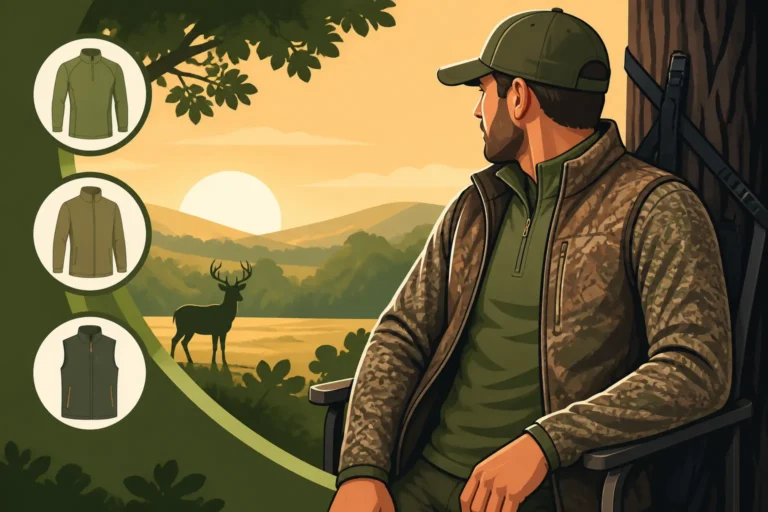
- Base Layer (The focus of this guide!): This is your first line of defense, worn directly against your skin. Its primary job is moisture management – wicking sweat away to keep you dry. It also provides a foundational, lightweight layer of insulation. For October in Georgia, you want something lightweight, like a 150-200 weight merino or a light synthetic.
- Mid-Layer: This layer provides the bulk of your insulation. Its job is to trap warm air close to your body. In October, a lightweight fleece jacket, a technical wool sweater, or a puffy vest are excellent choices. This is the layer you might shed as the day warms up or put back on if Hunting Deer After a Georgia Cold Front is in the forecast.
- Outer Layer: This is your protective shell. It shields you from wind, rain, and snags, but ideally, it should still be breathable enough to allow moisture vapor to escape. For October in Georgia, a quiet, water-resistant softshell jacket and pants are often perfect. You might start the morning with a heavier outer layer for warmth, then swap it for a lighter, more breathable one as the day progresses. The outer layer is also where you usually wear your required How Much Blaze Orange Georgia Requires.
The beauty of this system is its versatility. You can add or subtract mid and outer layers as conditions change, always keeping that crucial base layer doing its job to manage your core temperature and moisture.
Adapting to Georgia's Specific Challenges
Applying the three-layer principle to Georgia's October means making some specific adjustments.
- Prioritize Breathability: Given the humidity, every layer, from base to outer, should emphasize breathability. Avoid heavy, non-breathable fabrics that will trap sweat.
- Think in Micro-Layers: Instead of one heavy mid-layer, consider two thinner ones. This gives you more options for fine-tuning your insulation. For example, a lightweight fleece vest over your base layer, topped with a thin softshell jacket.
- Pack for Change: Always bring an extra layer or two in your pack, even if you don't think you'll need them. That midday heat can disappear quickly if a cloud cover moves in or a front passes through. Conversely, if you plan for a Cold-Weather Sitting Strategy in a Georgia January, your layering will look very different.
- Consider Early Season Bugs: While not directly gear-related, remember that even in October, especially in thicker cover, you might still encounter mosquitoes. Good base layers can help protect skin, but supplement with effective bug repellent, particularly during Bug Repellent That Holds Up in a Tree Stand.
Layering for the Walk In and the Sit
Here's a practical scenario to illustrate proper layering:
- The Walk In (Before Dawn): You're generating heat. Wear your lightweight base layer and perhaps a very light mid-layer or even just your outer shell if it's not too cold. Carry your heavier mid-layers in your Packs for a Day on Public Land. This prevents you from sweating excessively before you even get to your stand. Sweat created during the walk will be wicked away by your base layer, but minimizing it is always the goal.
- The Morning Sit (Early, Chilly): Once you're in your stand and settled, your activity level drops dramatically. This is when you put on your heavier mid-layers to retain warmth. Your base layer continues to wick any residual sweat and provide a crucial layer of insulation.
- Midday (Warm Up): As the sun rises, you'll start to feel warm. Quietly shed your outer layer, then perhaps your mid-layer. Stow them in your pack. Your lightweight base layer is now often all you need, providing sun protection and continuing to manage moisture.
- Late Afternoon (Cool Down): As the sun begins to set, temperatures will inevitably drop. Start adding back your mid-layers and outer shell, anticipating the evening chill.
This flexible approach, centered around a high-performance lightweight base layer, is how you conquer the temperamental swings of Georgia's October hunting season and stay focused on why you're really out there: enjoying the woods and, hopefully, bringing home some venison.
Disclaimer
This article is for general informational purposes only and does not constitute professional advice. Laws, prices and regulations vary by location and change over time. Consult a qualified professional for guidance on your specific situation.