Shot Size for Quail and Dove
There's nothing quite like the rush of a covey of quail exploding from underfoot, or the whistle of doves darting into a harvested field. But that exhilarating moment can quickly turn to frustration if you're not confident in your shot. Choosing the right shot size for quail and dove hunting in Georgia isn't just about knocking down birds; it's about making clean, ethical kills and maximizing your chances of success. This guide will walk you through the nuances of selecting the ideal shot for these popular game birds, ensuring your next hunt is both productive and responsible.
Understanding Shot Size Basics for Upland Birds
When you pick up a box of shotgun shells, you're immediately confronted with numbers like 7.5, 8, or even 9. For new hunters, or even seasoned folks just getting into upland birds, these numbers can feel like a secret code. But understanding what they mean is fundamental to making smart choices in the field.
What Do Shot Size Numbers Mean?
The general rule of thumb for shot sizes is simple: the larger the number, the smaller the individual lead or steel pellet. So, a No. 9 shot is made up of tiny pellets, while a No. 4 shot contains much larger ones. This might seem counterintuitive at first, but it's a standardized system that hunters worldwide recognize. Smaller pellets mean more pellets per shell, creating a denser pattern, which can be crucial for fast-flying, smaller birds. Conversely, larger pellets carry more energy and maintain their velocity better, making them suitable for larger, tougher game, or longer shots.
Lead Versus Non-Toxic Shot Considerations
Historically, lead shot was the go-to for just about everything. It's dense, relatively inexpensive, and performs well. However, environmental concerns have led to restrictions on lead shot, particularly in certain waterfowl hunting scenarios and on some public lands. For quail and dove, lead shot is generally still permissible across most of Georgia, especially on private land. But it's always smart to double-check local regulations and WMA rules, perhaps by checking the latest details on a resource like GoHunt or the Georgia DNR website, before heading out. If you're using non-toxic shot like steel, bismuth, or tungsten, remember that these materials have different densities and performance characteristics. Steel, for instance, is lighter than lead, so you often need to go up one or two shot sizes (e.g., if you'd use No. 7.5 lead, consider No. 6 steel) to achieve similar energy transfer and pattern density. This adjustment is vital for ensuring ethical kills with non-toxic alternatives.
How Shot Size Affects Pattern Density and Energy
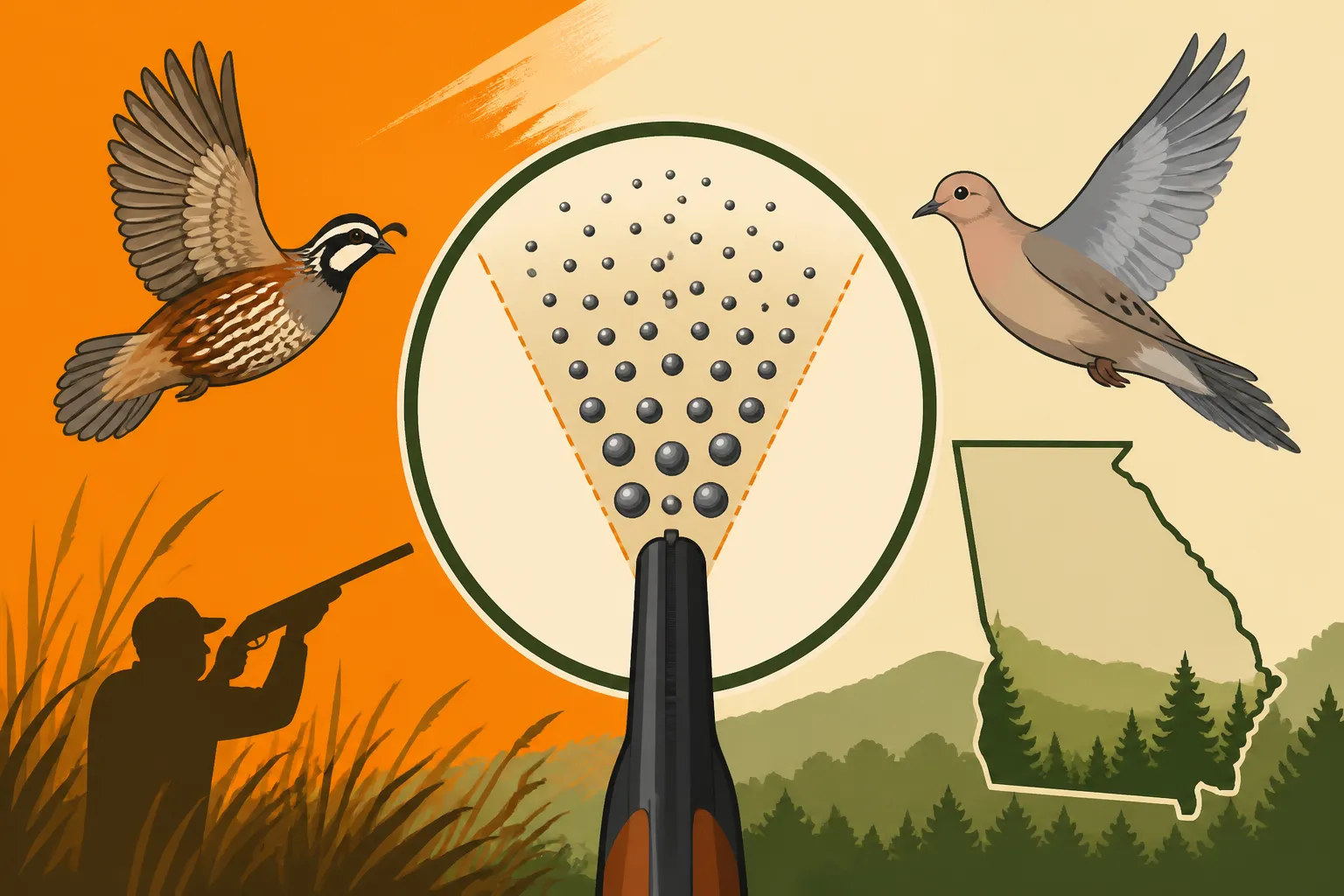
The size of your shot directly impacts two critical factors: pattern density and pellet energy. Pattern density refers to how many pellets are in a given area (like a 30-inch circle at 40 yards). Smaller shot (higher numbers) creates a much denser pattern, which increases the likelihood of hitting a small, fast-moving bird like a dove or quail. However, those individual small pellets carry less energy. A single No. 9 pellet might not have enough punch to reliably dispatch a bird unless multiple pellets connect. Larger shot (lower numbers) creates a sparser pattern but each pellet carries more energy, increasing the chance of a clean kill with fewer hits. It's a balance, and finding the sweet spot means considering the size and toughness of your target bird, as well as the typical ranges you'll be shooting.
Optimal Shot Sizes for Georgia Quail Hunting
Quail hunting in Georgia is often a fast-paced affair, whether you're Working a South Georgia Quail Covey Rise behind a good pointing dog or Hunting Managed Pine for Wild Quail in sparse cover. These birds are small, quick, and present fleeting targets.
Why Small Shot is Best for Quail
For bobwhite quail in Georgia, smaller shot sizes are almost universally preferred, and for good reason. A typical bobwhite quail is a relatively small bird, and when a covey flushes, they scatter in all directions at high speed. Your goal is to get as many pellets into that small target as possible. This is where the sheer number of pellets in smaller shot sizes shines. A dense pattern significantly increases your chances of connecting with one of these acrobatic flyers.
No. 7.5 and No. 8 lead shot are the undisputed champions for quail hunting. The fine pellets create a very tight and uniform pattern, ensuring multiple hits on a small bird even with a slight aiming error. These pellets deliver enough energy for a clean kill at typical quail hunting ranges, which are often within 20-30 yards. Using anything larger, like No. 6 shot, might leave you with too few pellets in your pattern, resulting in missed birds or wounded game, which no ethical hunter wants. For non-toxic alternatives, No. 7 steel or No. 8 bismuth might be comparable in pattern density and energy.
Scenarios for Different Chokes and Ranges
Your choke choice goes hand-in-hand with your shot size, especially for quail. When a covey flushes, you're typically looking at very close-range, rapidly expanding targets.
- Covey Rise: For the initial covey rise, an open choke like Cylinder or Skeet is often ideal. This spreads your pattern quickly, increasing your chances of connecting with one of the many birds streaking away. With No. 7.5 or 8 shot, an open choke will give you a "wall of shot" at close range.
- Singles: After the initial flush, you might pursue scattered singles. These shots can sometimes be a bit further out, but still generally within 30-35 yards. An Improved Cylinder choke offers a good balance, providing a slightly tighter pattern than Skeet but still being forgiving enough for moving targets.
- Dense Cover: If you're hunting in particularly thick cover, where shots are almost guaranteed to be close, you might even consider a Spreader choke or a very open Cylinder. However, remember that too open a choke, even with small shot, can lead to gaps in your pattern at even moderate ranges.
Always pattern your shotgun with your chosen shot size and choke to see exactly what kind of spread you're getting. Every gun is a little different, and what works beautifully for one might be less effective for another. Check out Choke Choice for Fast Covey Flushes for more on dialing in your scattergun.
Optimal Shot Sizes for Georgia Dove Hunting
Georgia Dove Season Opening Weekend is practically a holiday for many hunters. Doves, while small, offer a very different challenge than quail. They fly fast, often erratically, and shots can range from relatively close incomers to high-flying passing shots.
Recommended Shot Sizes for Doves
Just like quail, doves are relatively small birds, so pattern density is key. However, doves are often shot at slightly longer ranges than quail, and their flight can be more unpredictable. This means you need a pellet that can maintain some energy and trajectory over a greater distance, while still providing a dense enough pattern to hit these acrobatic birds.
No. 7.5 and No. 8 lead shot remain the top choices for dove hunting. The No. 7.5 is a favorite among many dove hunters because it offers a great balance of pellet count and individual pellet energy, making it effective for those typical 25-40 yard shots. No. 8 shot also works very well, especially for closer birds or when you prioritize maximum pattern density. If you're using steel shot, move up to No. 6 or No. 7 steel to compensate for the lighter weight. While No. 9 shot might be tempting for its incredible pellet count, it generally lacks the punch for consistent kills on doves beyond very close ranges, leading to more wounded birds.
Adapting to Different Dove Hunting Scenarios
Dove hunting offers a variety of shooting situations, and your choke choice, paired with your shot size, should adapt accordingly.
- Field Edges and Water Holes: When working a field edge or Pass-Shooting Doves Over a Water Hole, doves can come in fast and close, but also offer longer passing shots. A Modified choke is a fantastic all-around choice for doves, as it balances pattern density with effective range. It’s tight enough to reach out to those 35-40 yard birds but still open enough for closer opportunities.
- High-Flying Doves: If you consistently find yourself shooting at high-flying doves, perhaps due to the particular field setup or wind conditions, a Light Modified or even a Full choke might be beneficial. This will keep your pattern tighter at longer ranges, delivering more pellets on target. However, remember that a tighter choke makes hitting those close, fast-crossing birds much more challenging.
- Multiple Hunters: When hunting with a group, like when Working a Dove Field on Opening Day, it's important to consider shot fall-out and safety. Using appropriate chokes and knowing your effective range helps ensure safety for everyone.
Again, patterning your shotgun is crucial. Find a patterning board, step off 30-40 yards, and see how your chosen shells and chokes perform. This will give you confidence in your setup when the birds start flying.
Factors Influencing Your Shot Size Choice
Selecting the right shot size isn't a one-size-fits-all decision. Several factors play a role in optimizing your load for the conditions you'll face in the field. Ignoring these can lead to missed opportunities or, worse, wounded game.
Shotgun Gauge and Shell Length
The gauge of your shotgun (e.g., 12-gauge, 20-gauge, 28-gauge) and the length of your shell (e.g., 2 ¾-inch, 3-inch) significantly impact how much shot you can send downrange. A 12-gauge will hold more pellets of a given size than a 20-gauge, simply because the hull is larger. This means a 20-gauge might need to rely more heavily on smaller shot sizes (like No. 8 or No. 9) to achieve sufficient pattern density for quail and doves, whereas a 12-gauge can get away with slightly larger pellets (like No. 7.5) and still maintain a dense pattern.
It's not about which gauge is "better," but understanding how your chosen gauge influences your shot size decision. A 20-gauge with No. 8 shot is perfectly lethal for doves and quail, offering lighter recoil and a more nimble firearm, which can be a huge plus when swinging on fast birds. The important thing is to match the shot size to the payload capacity of your gauge to achieve the necessary pattern density. For example, a 1-ounce load of No. 7.5 shot in a 20-gauge might feel different and pattern differently than the same shot size in a 1 1/8-ounce 12-gauge load.
Choke Constriction and Pattern Spread
We've touched on this, but it's worth emphasizing: your choke is paramount. The choke constricts the end of your barrel, dictating how tightly your shot pattern holds together. A Full choke keeps pellets in a dense cluster for longer distances, while a Cylinder choke allows them to spread quickly for close-range work.
Here’s a general guideline for pairing chokes with shot sizes for quail and doves:
| Choke Constriction | Typical Use Case (Quail) | Typical Use Case (Dove) | Shot Size Recommendation |
|---|---|---|---|
| Cylinder / Skeet | Very close range, covey flush, dense cover | Very close incomers, decoying birds | No. 7.5, No. 8 (lead) |
| Improved Cylinder | Scattered singles, slightly longer covey shots | General field hunting, moderate range | No. 7.5, No. 8 (lead) |
| Modified | Longer singles, mixed range scenarios | All-around best for most dove hunting scenarios | No. 7.5, No. 8 (lead) |
| Light Full / Full | Very long shots (less common for these birds) | High-flying passing shots, very long ranges | No. 7.5 (lead), No. 6 (steel) |
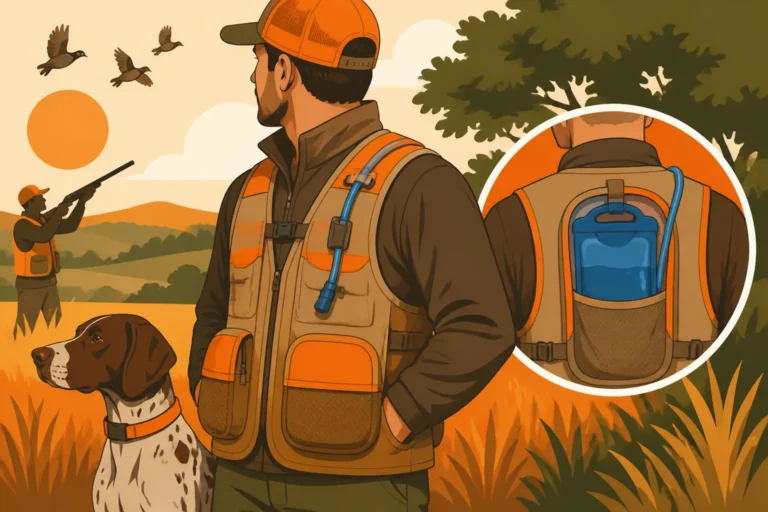
Remember, this table provides general guidance. Always pattern your individual shotgun to see how your specific choke and chosen ammunition perform. You might find your "Modified" choke performs like another gun's "Improved Cylinder," or vice-versa. Many hunters carry a few different chokes in their Upland Vests With Water Capacity and swap them out depending on the situation or the specific field they are hunting.
Expected Shooting Distance and Velocity
The distance at which you anticipate shooting your birds is a huge factor in shot selection. For quail, most shots are within 20-30 yards. For doves, that range often stretches to 25-45 yards, with occasional longer shots. Small pellets shed energy and velocity much faster than larger pellets. This means a No. 9 pellet that's effective at 20 yards might be nearly useless at 40 yards, lacking the kinetic energy to penetrate and make a clean kill.
When thinking about velocity, consider the standard field loads for upland birds. Most 12-gauge and 20-gauge shells for these birds are loaded to a velocity of around 1200-1300 feet per second. This is generally sufficient. Ultra-high velocity loads sometimes claim to increase range, but often at the cost of pattern quality and increased recoil. For quail and dove, a consistent, dense pattern with adequate pellet energy at your expected ranges is far more important than raw speed. A resource like GoHunt can help you plan your hunt, giving you an idea of the terrain and typical shot distances you might encounter on various public lands.
Ethical Considerations and Preventing Wounded Game
This is, perhaps, the most important factor of all. As responsible hunters, our primary goal is to make quick, clean, and ethical kills. Using the wrong shot size can lead to wounded birds that escape and suffer, which is something we all want to avoid. If your shot is too small for the range, it won't penetrate adequately. If it's too large, your pattern might be too sparse to reliably hit the small target, even if a single pellet would be lethal.
It's always better to err on the side of a slightly denser pattern with sufficient energy. For quail and dove, this usually means staying with No. 7.5 or 8 lead shot. If you find yourself consistently needing to take very long shots, it might be an indication that you need to improve your scouting, approach, or perhaps your shooting skills, rather than simply going to a larger shot size. Ethical hunting means knowing your limits and the limits of your equipment. Being prepared also means understanding regulations, such as those covered in Georgia Quail Season Bag Limit or Georgia Dove Season Bag Limit, to ensure a lawful and ethical hunt.
Disclaimer
This article is for general informational purposes only and does not constitute professional advice. Laws, prices and regulations vary by location and change over time. Consult a qualified professional for guidance on your specific situation.