Hunting the Georgia Rut in Mid-October
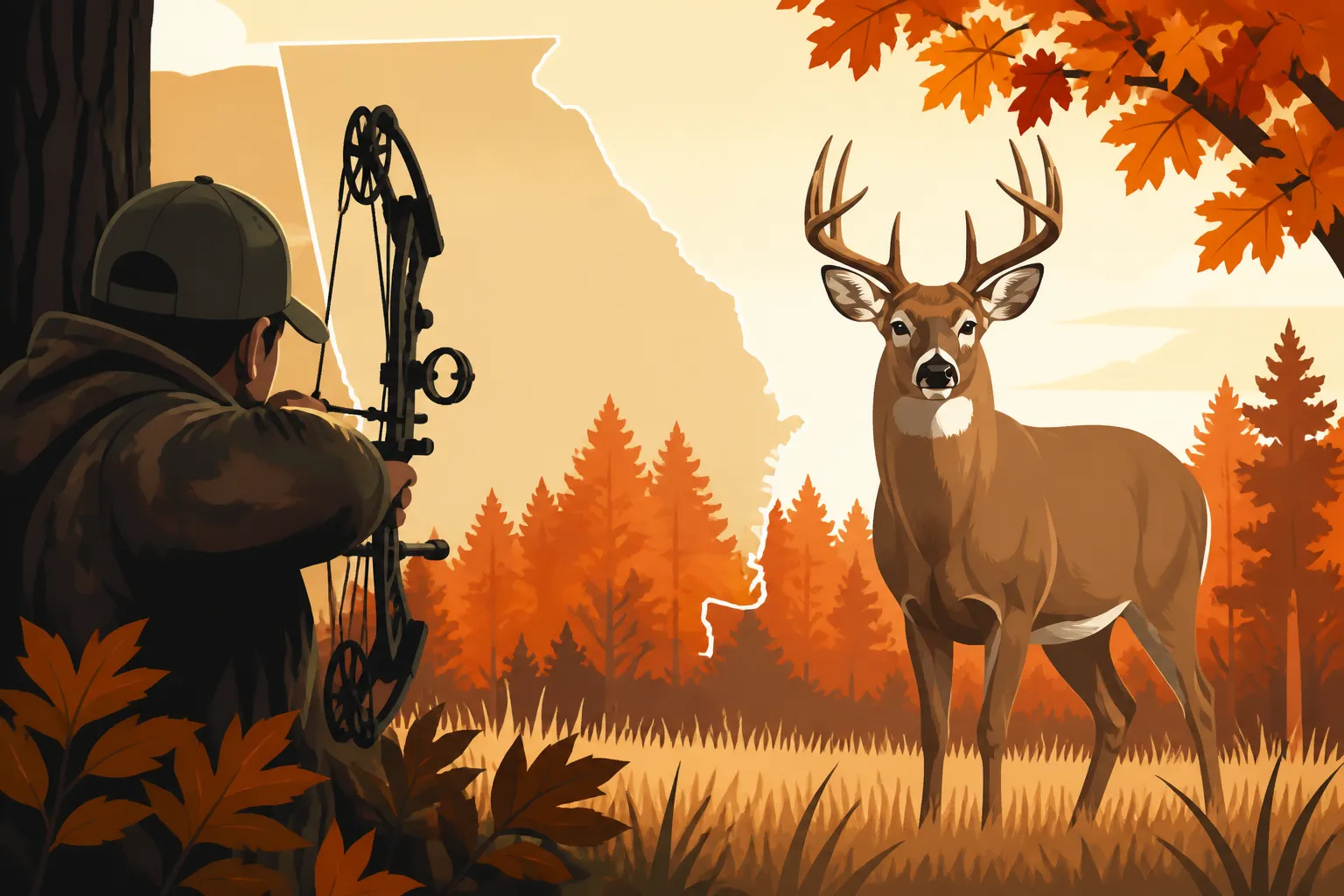
That feeling of anticipation leading up to the rut, only to find the deer seem to have vanished or are moving on their own schedule, is a frustration every Georgia hunter knows all too well. Mid-October in Georgia is a unique beast when it comes to whitetail hunting, often leaving folks scratching their heads. This comprehensive guide is designed to peel back the layers of this pivotal period, offering clear strategies to understand deer behavior and successfully hunt the Georgia rut when it kicks into gear.
Understanding the Georgia Rut's Nuances
Many hunters envision the rut as this intense, sudden burst of activity where bucks are chasing does relentlessly, all day long. While that can happen, especially in localized pockets, the mid-October period in Georgia is often far more subtle and spread out than that "textbook" definition. It's not always a full-blown chaotic chase; sometimes it’s more about understanding the underlying hormonal shifts that drive deer movement during this time.
The "Trickle Rut" Phenomenon
Georgia, particularly the southern and central regions, is known for what many call a "trickle rut." This means that instead of a distinct, short window where all does come into estrus simultaneously, the breeding activity stretches out over several weeks, even months, with different does becoming receptive at different times. In mid-October, we're typically seeing the very beginnings of this trickle. Bucks are becoming more focused on breeding but aren't yet in full-blown chase mode. They're ramping up, making scrapes, rubbing trees with more fervor, and starting to cruise larger areas in search of the first receptive does. It’s a transition period where bucks move from their summer patterns and bachelor groups into a more solitary, seeking behavior. This can make hunting challenging because deer movement might not be as predictable as it is during a tighter, more pronounced rut.
Regional Variations in Peak Activity
It's crucial to remember that Georgia is a big state, and the timing of the rut can vary significantly from north to south, and even east to west. While mid-October is a good general guideline for increased activity statewide, the "peak" of the rut, where most breeding occurs, tends to be later in the southern Coastal Plain compared to the cooler North Georgia mountains. In North Georgia, mid-October might see more intense pre-rut and early rut activity, with some does already coming into estrus. Conversely, in the deep South Georgia pine flats, you might still be seeing more of a pre-rut seeking phase, with the peak breeding happening closer to November or even December. This regional variation means you can't apply a one-size-fits-all approach. Knowing the specific rut timing for your hunting county, which you can often find through resources like the Georgia Department of Natural Resources or by scouting thoroughly, is paramount. Hunters who use tools like GoHunt often overlay historical data and local observations to fine-tune their timing for specific areas, giving them an edge.
Moon Phase and Weather Impact
While hotly debated, many seasoned hunters believe moon phase plays a role in deer movement, especially during the rut. The prevailing theory suggests that a full moon can cause increased nocturnal activity, leading to less daytime movement. However, in mid-October, many bucks are already starting to move more during daylight hours, driven by rising testosterone. A cold front, on the other hand, is almost universally welcomed. A significant drop in temperature and clear skies can act as a powerful catalyst, stimulating deer movement across the board. During mid-October, when the weather can still be quite warm, these cold fronts are golden opportunities. When one hits, deer, particularly bucks, seem to get a jolt of energy and will often move more aggressively and for longer periods during daylight. Conversely, warm, muggy weather can suppress movement, making it feel like the rut is a bust even when it's technically underway.
Key Deer Behavior in Mid-October
As the leaves begin to turn and the air gets a slight crispness in the mornings, whitetails in Georgia undergo a remarkable transformation. Their focus shifts dramatically, setting the stage for some of the most exciting hunting of the season. Understanding these behavioral changes is like having a secret decoder ring for deer movement.
Bucks Transitioning from Bachelor Groups
Earlier in the season, particularly during the summer and early archery season, you might have observed bucks running together in loose "bachelor groups." These are typically groups of males of varying ages, often seen feeding together, sometimes even with antlers still in velvet. But by mid-October, those cozy friendships are dissolving. Rising testosterone levels make bucks more aggressive and solitary. They begin to push each other around, establishing dominance hierarchies, and their primary focus shifts from food to finding does. You'll start seeing fewer groups of bucks and more individual mature bucks on the move. They're no longer content to just browse; they're actively searching, scent-checking, and laying down fresh sign. This shift means that a buck you patterned in September might be miles away in October, on a completely different mission.
Doe Estrus and Seeking Behavior
While the full peak of doe estrus might be a few weeks off for much of Georgia, mid-October is when the first few does start to come into their very brief receptive window. These early estrus does are like a siren call to bucks, triggering intense seeking behavior. Bucks will work scrape lines more diligently, check traditional doe bedding and feeding areas more frequently, and travel established travel corridors with renewed purpose. These receptive does might also exhibit some nervous or antsy behavior as they are pursued, which can sometimes be a subtle cue for observant hunters. You might see smaller bucks already trailing does, testing their readiness, even if the primary breeding hasn't yet begun. This is why targeting areas with a high density of does can be incredibly productive during this time; it's where the bucks are headed. To effectively understand and predict these movements, having detailed maps and knowledge of the terrain, like those available on the Go Outdoors Georgia platform, can be invaluable.
Increased Daytime Movement
This is perhaps the most exciting aspect of the mid-October rut for hunters. As bucks become more driven by the urge to breed, their cautious, mostly nocturnal habits begin to break down. They're simply too preoccupied to wait for the cover of darkness. You'll see bucks cruising through timber at midday, scent-checking fields in the late morning, and sometimes even running does at noon. This increased daytime activity extends to scrape and rub checking as well. A scrape that was only visited at night in September might now be refreshed in broad daylight in October. This behavior makes all-day sits in a treestand much more viable and often more successful. You can't just hunt the first and last hour anymore; the deer might decide to get up and move any time the urge strikes.
Effective Scouting and Stand Placement
You can't just blindly walk into the woods in mid-October and expect to connect with a rutting buck. This period demands focused scouting and smart stand placement. It's about putting yourself where the deer want to be, which in mid-October means where the does are, or where bucks are actively searching for them.
Identifying Fresh Sign and Travel Corridors
Mid-October is prime time for fresh rut sign. Bucks are actively making rubs – rubbing their antlers on saplings and small trees to mark their territory and shed velvet remnants. Pay close attention to the size and freshness of these rubs; larger, shiny rubs indicate a mature buck has been through recently. Scrapes are even more telling. These are patches of bare earth, typically under a low-hanging branch, where a buck paws the ground, urinates, and deposits scent. The overhanging branch, called a "licking branch," is rubbed and licked, further depositing scent. Look for active scrapes that appear wet or freshly pawed. These indicate a buck is regularly checking the area.
Beyond individual sign, you need to identify travel corridors. These are the routes deer use to move between bedding areas, feeding areas, and water. During the mid-October rut, these corridors become superhighways for bucks looking for does. Look for heavily used trails, especially those connecting different habitat types, like a dense thicket to a food plot, or a ridge top to a creek bottom. Using aerial photos from tools like GoHunt or similar mapping applications can help you identify these natural funnels and pinch points before you even set foot in the woods.
Setting Up Near Primary Doe Areas
Remember, bucks are looking for does. Therefore, your best bet for intercepting a rutting buck is to set up near areas where does congregate. This includes late-season food sources like acorn flats (if the acorns are dropping), planted food plots, or even dense bedding cover where does feel safe. Creek bottoms and swamp edges can be natural attractants for does, especially if there's good browse or water nearby. If you've been scouting throughout the year, you should have a good idea of where the does in your area spend most of their time. These are the spots where a buck, cruising for a receptive female, is most likely to encounter her, and thus, where you're most likely to encounter him. Don't be afraid to move your stand if doe patterns shift, as they often do during the early phases of the rut.
Utilizing Topography and Funnels
Deer are creatures of efficiency; they'll always take the path of least resistance or the most secure route. This is where understanding topography and natural funnels becomes critical. A funnel is any landscape feature that concentrates deer movement into a narrower area. This could be a narrow strip of woods between two open fields, a saddle on a ridgeline, a dense thicket bordered by open timber, or a creek bottom that creates a natural pinch point. In the North Georgia mountains, a saddle between two peaks or a narrow bench along a steep slope can be a phenomenal funnel. In the Piedmont, a thin wood line connecting two larger blocks of timber will draw deer like a magnet. Even subtle changes in elevation can create funnels. Bucks will often use these funnels to travel from one area to another while scent-checking for does, making them ideal ambush points. This is particularly effective during the increased daytime movement of mid-October, as mentioned earlier. Understanding how deer use these features is crucial for Hunting Piedmont Farmland Deer or even Hunting a Funnel Between Two Swamps.
Calling and Decoy Strategies for the Mid-October Rut
Mid-October is when you can really start getting aggressive with your calls and even consider using a decoy. Bucks are feeling feisty, their hormones are surging, and they're ready to assert dominance or investigate a potential rival or mate. This is not the time to be shy with your vocalizations or visual aids.
Aggressive Grunt Calling and Rattling
During the pre-rut and early rut phases in mid-October, bucks are highly responsive to both grunt calls and rattling. A deep, guttural grunt can mimic a buck trailing a doe or a buck asserting his presence, which can often pique the curiosity of a cruising buck. Don't be afraid to use a series of grunts, especially if you hear movement but can't see anything. Vary your volume, from soft, almost pleading grunts to louder, more aggressive ones.
Rattling, which imitates the sound of two bucks fighting, can be incredibly effective right now. Bucks are actively sparring and establishing dominance, so the sound of a fight can draw them in like a magnet. Start with lighter sparring sounds, but if nothing happens, don't hesitate to crash those antlers together to mimic a full-blown brawl. A good sequence might involve 30 seconds to a minute of rattling, followed by 10-15 minutes of silence, listening intently for a response, and then repeating. Remember to consider Rattling Volume in Thick Pine Cover or Grunt Calls in Mature Georgia Hardwoods based on your specific hunting environment.
Decoy Placement for Curiosity and Dominance
A deer decoy can be a game-changer in mid-October, especially if you're hunting more open terrain or food plots. The visual stimulus can often be the final piece of the puzzle to draw a buck into range when calling alone isn't quite enough.
- Buck Decoy: A buck decoy can challenge a dominant buck or draw in a curious younger buck. Place it where an approaching buck can see it from a distance, but ideally positioned so the real buck will come in downwind to scent-check, putting him within your shooting lane. Often, placing the decoy facing away from your expected approach allows the real buck to come in face-to-face, presenting a quartering-away shot.
- Doe Decoy: A doe decoy can attract bucks looking for a receptive mate. Place it alone or with a buck decoy. A combination can imply a breeding pair, which can be irresistible to a cruising buck.
Always consider your wind direction when placing a decoy. Deer will almost always try to circle downwind to scent-check, so position your decoy and stand accordingly to get a shot before they bust you. Make sure the area is clear of brush that might obscure the decoy or your shot.
Subtle Calls for Educated Bucks
While aggressive calling and rattling can be highly effective, sometimes you'll encounter bucks that are "call shy" or in areas with high hunting pressure. In these situations, a more subtle approach is warranted. Fawn bleats or soft doe bleats can often work wonders, appealing to a buck's paternal instincts or simply his curiosity about a lone doe. These calls are less threatening and can be very effective at stopping a buck in his tracks or drawing him those last few crucial yards. Sometimes a simple tending grunt, a soft, low grunt that a buck makes while trailing a doe, is all it takes. The key is to read the deer and the situation. If a buck seems hesitant, back off the aggressive calls and try something softer and more inviting. Tools like the GoHunt app often have built-in sound libraries that can help you practice and understand the nuances of different deer vocalizations.
Hunting Specific Georgia Habitats
Georgia's diverse landscape means that hunting mid-October rutting deer requires adapting your strategy to the specific habitat you find yourself in. From the rolling hills of the Piedmont to the vast southern pine forests, each environment presents unique challenges and opportunities.
Piedmont Creek Bottom Funnels
The Piedmont region of Georgia is characterized by rolling hills, hardwood forests, and numerous creek bottoms. These creek bottoms are absolute magnets for deer, especially during the rut. They offer shade, water, food sources (like acorns from oaks along the banks), and thick cover, providing safe travel corridors. Bucks will often cruise these bottoms, scent-checking for does moving between feeding areas on high ground and bedding areas in the dense underbrush.
Setting up along a creek bottom means finding those subtle pinch points where deer are funneled. This could be where the creek makes a sharp bend, where a fallen log creates a natural bridge, or where a narrow strip of dry land is bordered by swampy sections on either side. Look for fresh rubs and scrapes along the edges of these bottoms. Position your stand to overlook the most heavily used trails, paying close attention to the prevailing wind direction to ensure your scent doesn't blow into the funnel. An all-day sit in a well-chosen creek bottom stand can be incredibly productive, as deer use these routes consistently throughout the day.
South Georgia Pine Flats
Down in South Georgia, you'll encounter vast stretches of pine plantations and natural pine flats. This habitat might seem open and less conducive to traditional rut hunting, but it offers its own unique advantages. Deer in pine flats often bed in dense thickets or clear-cuts, and travel along the edges of these areas or through mature pine stands with open understories. Food sources like acorns are still important, but browse and natural forage are also key.
For mid-October in the pine flats, focus on the edges where different timber stages meet. For instance, the transition from a young, dense pine replant to a mature, open stand. Bucks will cruise these edges, scent-checking for does that might be feeding or bedding in the thick stuff. Logging roads and firebreaks also serve as excellent travel corridors. Look for scrapes along these linear features. Understanding Where South Georgia Pine Flat Bucks Bed is critical. A strategy might involve still-hunting these open pine stands, moving slowly and deliberately, or setting up a ground blind along a primary travel route or scrape line within the timber. Long-range glassing can also be effective in more open sections, allowing you to spot deer at a distance before making a move.
North Georgia Mountain Ridgelines
Hunting the North Georgia mountains during mid-October means dealing with significant elevation changes and often vast, rugged terrain. Deer here use the topography to their advantage, and so should you. Ridgelines and saddles are prime locations for rut activity. A saddle, which is a low point between two higher elevations on a ridge, acts as a natural funnel, concentrating deer movement as they travel from one side of the mountain to the other or along the ridge itself.
Deer in the mountains are highly sensitive to wind and thermals. Thermals are air currents that rise as the air warms during the day and fall as it cools in the evening. Understanding Wind and Thermals on a Mountain Ridge is paramount to success. During mid-October, bucks will cruise these ridgelines, scent-checking for does, and leaving rubs and scrapes along the way. Position your stand on the downwind side of a saddle or a prominent point on a ridge, ensuring your scent is carried away from the likely deer approach. Focusing on benches or natural terracing along steeper slopes can also be productive, as deer use these easier travel paths. Hunting here requires physical stamina and a good understanding of maps and navigation, often utilizing tools like GoHunt to mark potential travel routes and stand locations.
Common Mistakes and How to Avoid Them
Even with the best intentions and solid advice, it's easy to fall into traps that can derail your mid-October rut hunt. Many of these mistakes stem from either impatience or a misunderstanding of deer behavior during this specific, nuanced phase of the rut.
Hunting Too Passively
One of the biggest pitfalls during the mid-October "trickle rut" in Georgia is hunting too passively. If you're only hunting the first hour and last hour of daylight, or sitting on a stand that hasn't shown recent activity, you're severely limiting your chances. This isn't the dog days of summer where deer movement is solely confined to dawn and dusk. Bucks are actively seeking and cruising throughout the day.
How to Avoid: Commit to longer sits. If you can, try to stay in your stand for 4-6 hours, or even all day if conditions are right (e.g., a cold front has moved in). Bring snacks, water, and anything you need to stay comfortable and focused. Don't be afraid to move your stand if your current spot isn't producing fresh sign or deer encounters. Use your calls – don't just sit in silence hoping a buck will magically appear. Implement aggressive rattling and grunting sequences, especially during those midday lulls when other hunters are likely taking a break. Being proactive and persistent is key during this period.
Ignoring Wind Direction
This might seem like a basic hunting rule, but it's astonishing how often hunters compromise on wind direction, especially when they're excited by the prospect of the rut. A buck's nose is his primary defense, and if your scent blows into his approach path, your hunt is over before it even begins. During the rut, bucks are often cruising downwind, scent-checking for does, making it even more critical to manage your scent.
How to Avoid: Never, ever compromise on wind direction. Before you even leave the truck, check the wind. When scouting, pay attention to the prevailing winds for your chosen stand locations. If the wind isn't right for your primary spot, have a secondary or tertiary location ready that accommodates the current wind. Use scent-eliminating sprays, wash your clothes in scent-free detergent, and store them in airtight bags. But ultimately, nothing beats playing the wind correctly. A buck will almost always circle downwind to get a whiff of a potential doe or rival, so plan your stand placement and shooting lanes accordingly to intercept him before he winds you. Even small shifts in wind can make a difference, especially in varied terrain, so be prepared to adjust on the fly.
Over-Calling or Incorrect Decoy Use
While aggressive calling and decoys can be incredibly effective, there's a fine line between enticing a buck and spooking him. Over-calling, especially with repetitive or unrealistic sounds, can alert mature bucks to your presence. Similarly, an incorrectly placed or poor-quality decoy can be more detrimental than helpful. A buck might approach cautiously, see something isn't right, and bolt.
How to Avoid: Practice your calls beforehand to ensure they sound realistic. Learn to read the deer's reaction. If a buck starts to approach but then hangs up or acts wary, back off the aggressive calls and try a softer approach, or even go silent for a while. For decoys, ensure they are realistic in appearance. Always position your decoy so that an approaching buck will likely come into your shooting lane before winding you. Don't place a buck decoy directly in an area where only does frequent, as this might seem unnatural. Furthermore, avoid setting decoys too close to your stand; give the approaching buck some space to react naturally. A good rule of thumb is to place the decoy 20-30 yards from your stand, providing an ideal shot range. Remember, the goal is to draw the deer, not alarm them.
| Rut Phase (Mid-October) | Key Deer Behavior | Recommended Tactics | Calling Strategy | Decoy Strategy |
|---|---|---|---|---|
| Early Pre-Rut (Early Oct) | Bucks dispersing, making rubs/scrapes, some sparring | Scouting for fresh sign, hunting food sources | Subtle grunts, occasional light rattling | None or a single doe for curiosity |
| Primary Seeking (Mid-Oct) | Bucks actively cruising for first receptive does | Hunting travel corridors, pinch points, doe bedding | Aggressive grunts, rattling, snort-wheezes | Buck or doe decoy, positioned downwind |
| First Estrus (Late Oct) | First does receptive, bucks trailing | All-day sits, focus on known doe areas | Tending grunts, doe bleats | Buck chasing doe, or single doe (submissive posture) |
Disclaimer
Hunting is an activity with inherent risks. Always prioritize safety, adhere to all Georgia Department of Natural Resources (DNR) hunting regulations, and be aware of your surroundings. The information provided here is for educational and informational purposes and should not replace proper hunter education and personal judgment. Conditions in the field can change rapidly, and hunters are responsible for their own safety and ethical conduct.