Feral Hog Hunting Year-Round in Georgia
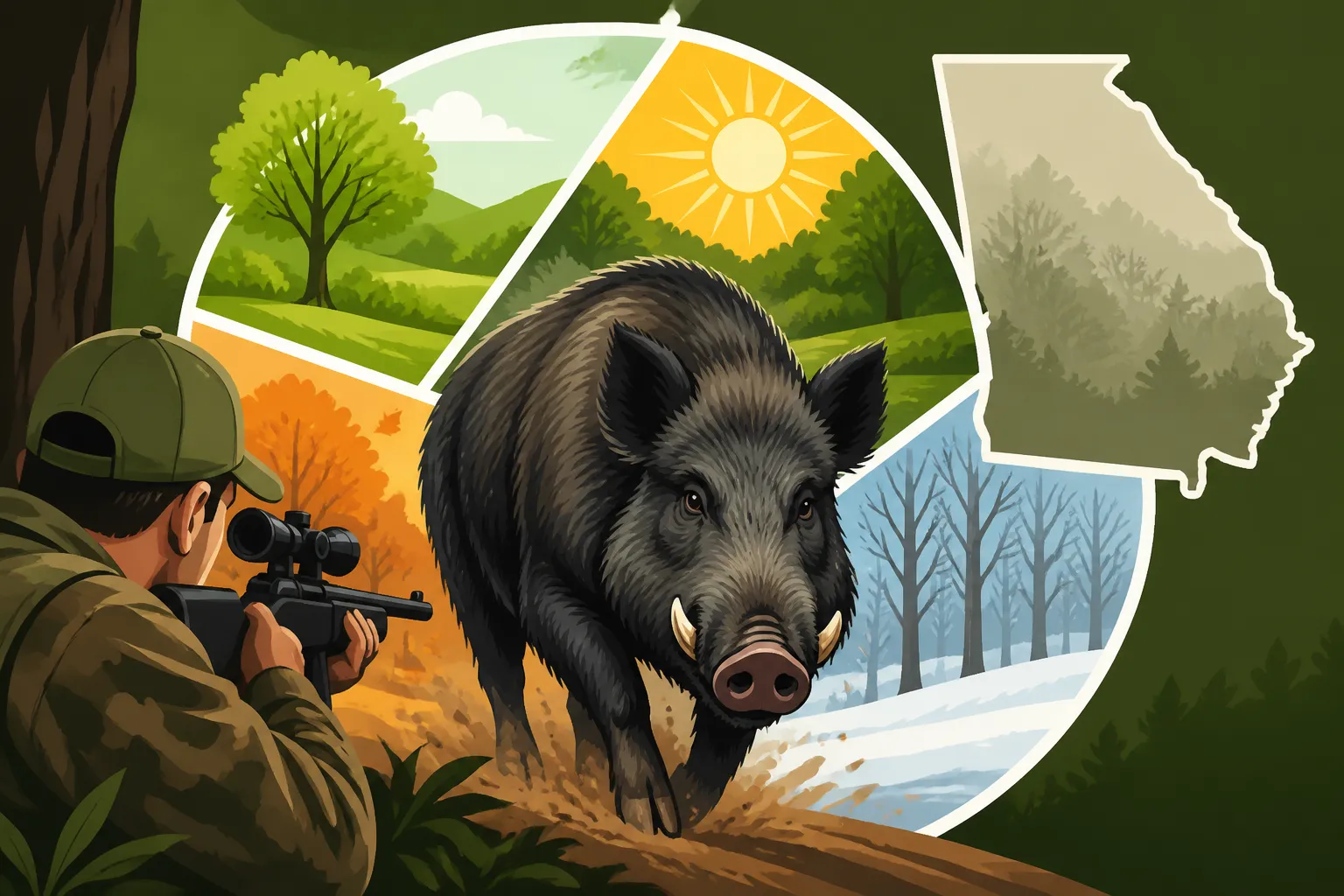
If you're a landowner, a farmer, or just a hunter in Georgia, you know the frustration. Feral hogs are an absolute menace, tearing up fields, destroying wildlife habitat, and seemingly multiplying overnight. It feels like a never-ending battle, but the good news is that Georgia offers year-round hunting opportunities to tackle this destructive force. This guide is dedicated to helping you understand these elusive, intelligent animals and equip you with the knowledge and tactics to effectively hunt them, any time of year.
Understanding the Feral Hog Problem in Georgia
Feral hogs, often called wild hogs or wild pigs, are an invasive species that have become a significant ecological and economic burden across Georgia. They are descendants of domestic pigs that either escaped or were released generations ago, and they've reverted to a wild state, adapting incredibly well to various habitats across the state. The sheer scale of their impact is something that constantly amazes, and often infuriates, those who deal with them daily.
The Devastating Impact on Agriculture and Wildlife
The damage caused by feral hogs isn't just an occasional inconvenience; it's a severe and ongoing crisis for many Georgians. Farmers see their planted fields of corn, peanuts, soybeans, and even pecans utterly annihilated overnight. Hogs root up crops, contaminate water sources, and compromise agricultural infrastructure like fences and irrigation systems. The financial toll runs into the millions of dollars annually for the state's agricultural industry, turning what should be a profitable harvest into a devastating loss. It's a frustrating reality for many hard-working farmers who are constantly battling against these destructive animals.
Beyond agriculture, the impact on Georgia's natural ecosystems and native wildlife is equally alarming. Feral hogs are omnivores, meaning they'll eat just about anything. They decimate ground-nesting bird populations, like quail and turkeys, by feasting on their eggs and young. They compete directly with native wildlife, such as white-tailed deer and bears, for crucial food resources like acorns, which are vital during the fall and winter months. Their rooting behavior also destroys delicate plant communities, spreads invasive plant species, and degrades water quality in streams and wetlands, altering entire landscapes. It’s a vicious cycle that impacts everything from small game to our prized deer herds.
Rapid Reproduction and Population Growth
One of the most disheartening aspects of managing feral hogs is their incredible reproductive capacity. It's not just a matter of removing a few here and there; it's a constant battle against an exponential growth rate. Sows can start breeding as young as six months old and can produce two litters of four to twelve piglets each year. This means a single sow could potentially contribute dozens of offspring to the population annually, and those offspring quickly reach reproductive age themselves. This biological reality means that even if you remove a significant number of hogs from an area, the population can rebound startlingly quickly if consistent pressure isn't maintained.
This rapid reproduction, combined with their intelligence and adaptability, explains why they've spread to all 159 counties in Georgia. They thrive in everything from dense swamps and river bottoms to pine plantations and suburban fringes. They learn quickly, adapt to hunting pressure, and often become nocturnal in response. This makes effective management a long-term commitment, not a one-and-done solution. Hunters play a crucial role in helping to mitigate this problem, which is why the state has such liberal hunting regulations for them. Understanding How Many Feral Hogs Georgia Has helps put this challenge into perspective.
Legal Framework and Year-Round Opportunity
Unlike nearly every other game species in Georgia, feral hogs are classified as a nuisance species. This designation dramatically changes the rules of engagement for hunters and landowners alike, granting unparalleled flexibility in how and when they can be pursued. It's an acknowledgment from the state that these animals pose a serious threat and need to be controlled with continuous effort.
Year-Round, No Limit: What It Means for Hunters
The most significant distinction for feral hog hunting in Georgia is that there is no closed season and no bag limit on private land. This means you can hunt them 365 days a year, 24 hours a day, and you can harvest as many as you can ethically and legally take. On public lands, such as Wildlife Management Areas (WMAs) and National Forests, feral hogs can generally be hunted during any open hunting season with the appropriate licenses for that specific season and area. However, the year-round, no-limit rule generally applies to private land, offering continuous opportunity. This truly sets hog hunting apart and underscores the severity of the problem.
For landowners, this flexibility is invaluable. They don't have to wait for deer season to open or worry about daily limits when trying to protect their crops. This allows for proactive management and immediate response to hog damage. For hunters seeking consistent action, it means there's always an opportunity to be in the woods, even when deer or turkey seasons are closed. It's a unique scenario that empowers hunters to become part of the solution to an ecological problem. You can learn more about specific regulations by consulting Georgia Feral Hog Regulations.
Night Hunting and Thermal Regulations
One of the most effective ways to target feral hogs, especially those that have become nocturnal due to hunting pressure, is through night hunting. Georgia allows night hunting for feral hogs on private land, which opens up a whole new realm of tactics. This is where advanced gear really comes into play, as many hogs are incredibly wary during daylight hours. However, it's crucial to understand the specifics of what's permitted. While you can hunt them at night, there are rules regarding the use of artificial lights and thermal/night vision devices.
Artificial lights and thermal or night vision equipment can be used to hunt feral hogs on private land, but you must own the land, be an immediate family member, or have written permission from the landowner. This is a critical detail that prevents unauthorized night hunting. The ability to use thermal imaging, which detects heat signatures, has revolutionized hog hunting, giving hunters a significant advantage in spotting these animals in total darkness. Many hunters combine these tools with suppressors to make multiple shots without spooking the entire sounder, a tactic detailed in Thermal Hunting Georgia Hogs at Night. It's a game-changer for control efforts, allowing you to intercept hogs when they're most active and destructive.
Permits and Licenses
While the rules for feral hogs are much more relaxed than for deer or turkeys, you still need to adhere to general hunting license requirements if you're not hunting on your own property. To hunt feral hogs on private land as a non-landowner, you typically need a valid Georgia hunting license. If you plan to hunt hogs on public lands, such as WMAs or National Forests, you'll need the appropriate licenses for that specific season, which usually includes a big game license and sometimes a WMA stamp.
It’s always a good idea to double-check the current regulations on the Georgia Department of Natural Resources (DNR) website or through their "Go Outdoors Georgia" app, as rules can occasionally be updated. For general information on what licenses you might need, check out our guide on Georgia Hunting Licenses and What They Cost. Even though hogs are nuisance animals, maintaining your legal standing as a hunter is paramount. Make sure you understand what's required before you head into the field.
Hunting Methods and Strategies
Feral hogs are incredibly intelligent and adaptable, making them challenging quarry. Their behavior changes drastically based on pressure, food availability, and habitat. This means that a successful hog hunter needs a diverse toolkit of strategies, often employing different methods depending on the situation and the time of year. What works in one area might be ineffective in another, and what works during the cool months might fail completely in the heat of summer.
Still-Hunting and Stalking in the Woods
Still-hunting and stalking are classic hunting methods that rely on stealth, keen observation, and an understanding of hog behavior. This approach is particularly effective in areas with dense cover, such as thickets, swamps, and river bottoms, where hogs feel secure. It involves moving slowly and deliberately through the woods, pausing frequently to scan and listen for any sign of activity. You're essentially trying to intercept hogs as they move between bedding and feeding areas, or as they root through the forest floor.
Success with still-hunting requires patience and a good understanding of wind direction, as hogs have an exceptional sense of smell. You'll want to move into the wind, checking for tracks, fresh rooting, and wallows. Early morning and late evening are often the best times, especially during cooler weather, when hogs are most active. While this method can be less productive than others, it offers an intimate hunting experience and can be incredibly rewarding when you successfully outwit a wary sounder. This method is often employed when hunters are also Still-Hunting South Georgia Pine Flats for deer.
Hunting Over Bait and Trapping Strategies
One of the most common and effective methods for consistent hog removal, especially on private land, is hunting over bait or through trapping. Hogs are opportunistic feeders, and they quickly key in on reliable food sources. Setting up a bait site, typically using shelled corn, can draw hogs from a wide area and concentrate them, making them easier to target. However, simply throwing out corn isn't enough; careful planning and consistent replenishment are key.
When hunting over bait, patience is crucial. Hogs often approach bait sites cautiously, especially if they've been pressured. Setting up a comfortable stand or blind overlooking the bait is essential. For even more consistent control, trapping can be incredibly effective. Modern hog traps, often large enclosures with rooter-style or saloon doors, can capture entire sounders at once. These traps require diligent monitoring and strategic placement, usually in travel corridors or near active rooting areas. Baiting the trap effectively, as detailed in Baiting a Feral Hog Trap Site, is paramount for success. Many landowners prefer trapping because it allows for the removal of multiple animals without requiring a hunter to be present for every visit, though checking traps regularly is a must.
Running Dogs on Georgia Feral Hogs
Running dogs on feral hogs is a deeply rooted tradition in many parts of Georgia, particularly in the vast, dense swamps and pine forests of the Coastal Plain. This method involves using specially trained dogs to locate, bay, and sometimes catch hogs. It's a high-energy, adrenaline-fueled pursuit that requires a well-trained pack of dogs, experienced handlers, and a good understanding of the terrain. The dogs work together to either corner a hog in thick cover or hold it at bay, allowing the hunter to move in for the harvest.
This method is particularly effective in flushing out hogs from impenetrable cover where still-hunting would be impossible, or baiting is impractical. It's not just about turning dogs loose; it involves extensive training, tracking collars, and a commitment to animal welfare. Safety for both the dogs and the hunters is paramount, as wounded hogs can be incredibly dangerous. For those interested in this historical and effective method, deeper insights can be found in our article on Running Dogs on Georgia Feral Hogs. It’s a specialized approach, but incredibly efficient for removing large numbers of hogs from an area.
Night Hunting with Lights and Thermal
As previously mentioned, night hunting has revolutionized hog control. Because hogs often become nocturnal to avoid human activity, targeting them under the cover of darkness can be incredibly productive. This strategy almost always involves specialized equipment, primarily powerful lights, night vision, or thermal optics. The quiet of night, combined with the hog's confidence in darkness, can make them less wary and more predictable in their movements.
Hunters often set up over bait sites or ambush hogs as they move through open fields or powerline cuts. The use of thermal scopes allows hunters to scan vast areas and spot the heat signatures of hogs from considerable distances, even through light cover. Once identified, a slow, silent stalk can bring a hunter within range. Suppressors are highly recommended for night hunting, as they reduce the muzzle blast and allow for quicker follow-up shots or the opportunity to take multiple hogs from a sounder before they disperse. This modern approach is highly effective and is becoming increasingly popular for dedicated hog hunters aiming to make a significant impact on local populations. You can often combine this with Night Hunting Rules for Georgia Coyotes as the regulations for lights are similar.
Gear and Equipment for Hog Hunters
Effective feral hog hunting often requires specialized gear, especially if you're aiming for consistent success or planning to hunt at night. While you can certainly harvest hogs with standard deer hunting equipment, having the right tools for the job can make a huge difference in your efficiency, safety, and overall success. The choice of gear will largely depend on your preferred hunting method and whether you're hunting during the day or night.
Firearms and Ammunition Choices
When it comes to firearms for feral hogs, versatility and knockdown power are key. Hogs are tough animals, and they can be notoriously difficult to put down, especially larger boars. Many hunters opt for popular deer calibers like the .308 Winchester, .270 Winchester, or the 6.5 Creedmoor, which offer good range and energy. For close-quarters work in thick cover, AR-platform rifles chambered in .223/5.56, .300 Blackout, or larger calibers like 6.8 SPC and .450 Bushmaster are also very popular due to their high capacity and rapid follow-up shot capability. Shotguns loaded with slugs can also be effective at shorter ranges.
Ammunition choice is equally important. You want a bullet that will penetrate thick hide and bone to reach vital organs. Bonded bullets or those designed for deep penetration are excellent choices. For instance, a .308 with a 150-grain bonded soft point will typically perform much better on a tough hog than a varmint-style bullet. Having a reliable, accurate firearm that you are proficient with is far more important than any specific caliber. Remember, the goal is a quick, humane harvest, and proper shot placement combined with adequate caliber and bullet construction ensures that.
Optics: Thermal, Night Vision, and Red Dots
Modern optics have transformed hog hunting, particularly at night. Thermal optics are arguably the biggest game-changer. They detect the heat signature of animals, allowing you to "see" hogs in complete darkness, through fog, and even through light brush that would obscure them from traditional night vision or the naked eye. While a significant investment, a quality thermal scope or monocular can dramatically increase your success rate for nocturnal hogs.
Night vision devices, which amplify ambient light, are another option for night hunting. They are generally less expensive than thermal units but can be limited by low ambient light conditions. For daytime hunting, a good quality rifle scope with sufficient magnification and a wide field of view is important, especially when stalking in varied terrain. Many hunters also use red dot sights on their AR platforms for quick target acquisition in close-range scenarios, often complementing their primary optics. When scouting or setting up, mapping tools, such as those provided by GoHunt, can integrate with rangefinding binoculars, giving you a full picture of the terrain and potential hog movements.
Trapping Supplies and Management Tools
For those focused on consistent population control rather than just sport hunting, trapping is indispensable. The essential trapping supplies include robust hog traps – typically large, heavy-duty panel traps or large cage traps that can withstand the power of a determined hog. These often feature specialized doors, such as a "rooter" gate or "saloon" style door, that allow hogs to enter but prevent escape.
Beyond the trap itself, you'll need bait, with shelled corn being the most common and effective. A reliable feeder or dispenser that slowly releases bait can help keep hogs coming back. Game cameras are also crucial tools for trap management. They allow you to monitor activity at the trap site without disturbing the area, letting you know when hogs are showing interest and when a sounder has entered. Trail cameras can connect to apps, like the one offered by GoHunt, making it easier to check photos remotely and track hog patterns. Lastly, tools for dispatching captured hogs humanely, such as a .22 caliber handgun or rifle, are necessary, along with sturdy gloves and perhaps a snout rope for larger animals if live capture and relocation is the goal (though relocation is rarely recommended for feral hogs).
Apparel and Protection
Hunting feral hogs often means traversing rough, dense terrain and dealing with unpredictable animals. Appropriate apparel and protective gear are essential for comfort and safety. Snake boots are a must-have in many parts of Georgia, particularly in swamps, thickets, and piney woods where venomous snakes are common. Hogs often frequent these same areas, increasing your risk of an encounter.
Durable, brush-resistant pants and jackets will protect you from thorns, briars, and abrasive vegetation. Layering is key for Georgia's often fluctuating temperatures, allowing you to adapt to warm mornings and cooler evenings. If you're running dogs, a protective vest or chaps can prevent injuries from aggressive hogs. For night hunting, dark, non-reflective clothing is crucial to maintain stealth. Don't forget bug repellent, especially during the warmer months and in swampy areas, as mosquitoes and ticks can be relentless. Having a sturdy knife for field dressing and a good headlamp, even for daytime hunting, can be invaluable for unexpected situations or long walks back after dark.
Finding Hog Sign and Locating Hotspots
Feral hogs leave behind a lot of evidence of their presence, but you need to know what to look for and where to find it. They are masters of using the landscape to their advantage, often sticking to dense cover during the day and emerging into more open areas to feed at night. Becoming a skilled hog hunter means becoming a skilled detective, constantly reading the clues they leave behind.
Identifying Tracks, Rubs, and Wallers
One of the most common signs of feral hogs is their distinctive rooting. Hogs use their strong snouts to dig up the soil in search of roots, tubers, grubs, and other food sources. This creates disturbed patches of ground, often looking like a rototiller has gone through the area. Fresh rooting is a strong indicator of recent activity and can tell you how many hogs are in an area and what they're currently feeding on.
Hog tracks are also fairly easy to identify. They have cloven hooves, similar to deer, but hog tracks are typically wider and more rounded, with the dewclaws often showing more prominently, especially in soft ground. Look for tracks along creek banks, muddy trails, and near water sources. Rubs, where hogs scratch themselves on trees, posts, or even concrete, especially larger boars, are another sign. Wallers, which are muddy depressions where hogs roll to cool down and remove parasites, are unmistakable. These are often found near water sources or in low, marshy areas and indicate preferred bedding or resting locations. Observing Reading Georgia Mud for Fresh Deer Movement can also help distinguish between deer and hog tracks.
Scouting Techniques and Technology
Effective hog hunting starts with thorough scouting. Simply driving around won't cut it. You need to get boots on the ground, exploring areas known for hog activity. Focus on transition zones – where different types of habitat meet, such as the edge of a pine plantation and a hardwood bottom, or a swamp edge bordering an agricultural field. Hogs often travel these corridors. Look for fresh sign, especially near water sources, as hogs need to drink frequently and often wallow to cool off.
Modern technology can be an immense help. GPS devices or mapping apps on your smartphone (like those offered by GoHunt or similar platforms) can help you mark sign, track hog movements, and identify potential ambush points. Aerial photos can reveal hidden trails, dense cover, and pinch points that hogs might use. Trail cameras are invaluable for monitoring hog activity without disturbing the area. Place them on trails, at the edge of fields, or near potential bait sites to learn their movement patterns, preferred feeding times, and the size of the sounders. This intelligence is critical for planning successful hunts.
Prime Habitats and Seasonal Movements
Feral hogs are adaptable, but they do have preferred habitats in Georgia. Dense cover is almost always a key component of a hog's home range, offering protection from predators and human disturbance. This includes thick stands of pine regeneration, palmetto thickets, dense cane breaks in river bottoms, and vast cypress swamps. These areas provide both security and often a consistent food supply.
Their movements are heavily influenced by food availability, which can change seasonally. In the fall, hogs will concentrate in hardwood bottoms to feed on acorns, competing fiercely with deer and other wildlife. In the winter and spring, they might shift to agricultural fields, feeding on planted crops or residual grains. During the hot summer months, they'll seek out cool, wet areas, often staying close to water sources and increasing their nocturnal activity. Understanding these seasonal shifts in Late-Season Food Sources for Georgia Whitetails can also provide clues for hog locations, as they often target the same forage. Recognizing these patterns allows hunters to predict where hogs will be and adjust their strategies accordingly throughout the year.
Processing and Utilizing Your Harvest
Harvesting a feral hog is only half the battle. Properly processing and utilizing the meat is crucial, especially given Georgia's often warm weather. Unlike deer, where certain parts might be discarded, nearly every part of a hog can be used if handled correctly. Respecting the animal and ensuring the meat is safe and delicious is part of the hunting tradition.
Field Dressing and Carcass Care in Warm Weather
Warm weather can be a real challenge when it comes to field dressing and preserving wild game in Georgia. Hogs spoil quickly, so prompt and efficient field dressing is paramount. As soon as you harvest a hog, get to work. Remove the entrails as quickly as possible to allow the carcass to cool internally. It’s a messy job, but essential. Make sure you have a sharp knife, gloves, and plenty of water or wipes for cleanup.
Once field dressed, the goal is to cool the carcass down as rapidly as possible. If you're close to a vehicle, get the hog into a cooler with ice, or at least get it into the shade and off the hot ground. Skinning the hog immediately will also help with cooling. If you have a long way to go, consider quartering the animal in the field and placing the quarters directly into coolers filled with ice water. This "ice bath" method is incredibly effective for rapidly dropping the meat's temperature and preventing spoilage in Georgia's humid climate. Don't let your hard-earned meat go to waste!
Butchering and Cooking Wild Hog
Wild hog meat is incredibly versatile and delicious, often leaner than its domestic counterpart and packed with flavor. Once you've successfully cooled your harvest, the next step is butchering. You can do this yourself at home if you have the tools and experience, or you can take it to a professional wild game processor. Butchering a hog is similar to butchering domestic pork, yielding cuts like chops, roasts, ribs, and ground meat.
When cooking wild hog, remember that it's leaner, so it benefits from slow cooking methods or recipes that add moisture, like brining. It's also critical to cook wild hog thoroughly to an internal temperature of at least 160°F (71°C) to kill any potential parasites, such as trichinosis. There are countless delicious recipes for wild hog, from pulled pork to sausages, stews, and roasts. Don't be afraid to experiment with different marinades and seasonings. Wild hog can also be excellent when smoked or made into cured meats if you know what you're doing.
Donating or Disposing of Carcasses
Sometimes, you might harvest multiple hogs, or perhaps you're simply helping a landowner with population control and don't intend to keep all the meat. In such cases, knowing your options for donation or proper disposal is important. Many local food banks or charities may accept donated game meat, but they often have specific requirements regarding processing and inspection. Always check with them beforehand. This is a great way to ensure your harvest doesn't go to waste and can benefit the community.
If you cannot donate or utilize the meat, proper disposal is critical to prevent the spread of disease and avoid attracting other nuisance animals. The Georgia DNR recommends burying carcasses at least two feet deep on private land or taking them to an approved landfill. Never leave carcasses exposed in public areas or along roadsides. This helps maintain a clean environment and minimizes potential health risks. If you are ever hunting inside Georgia's Chronic Wasting Disease Management Area, there are specific carcass movement restrictions to be aware of.
Safety Considerations and Ethical Hunting
Hunting feral hogs, while exhilarating and beneficial for wildlife management, comes with its own set of safety concerns. These animals can be aggressive and unpredictable, and the methods used to hunt them, especially at night or with dogs, add layers of complexity. Ethical hunting practices are also paramount, ensuring humane harvests and responsible conduct.
Hunting with Dogs and Group Safety
Hunting hogs with dogs is a specialized and potentially dangerous endeavor. The dogs themselves are at risk of injury from a defensive hog, and hunters can also be in harm's way if a hog charges. It's crucial that all participants understand the risks and follow established safety protocols. This includes wearing appropriate protective gear, carrying sidearms for close-quarters defense, and having a plan for handling wounded or aggressive animals.
When hunting in a group, clear communication is absolutely essential, especially if you're spreading out or moving through dense cover. Know where every member of your party is at all times. Use two-way radios to maintain contact, and establish clear boundaries and shooting lanes. Never shoot at sound or movement alone; always positively identify your target. The excitement of a hog hunt can be intense, but maintaining a calm and disciplined approach to safety must always be the top priority.
Handling Wounded Hogs and Aggressive Behavior
Feral hogs are incredibly tough, and a wounded hog can be extremely dangerous. Their thick hide, heavy bone structure, and sheer determination mean they can often absorb shots that would drop other animals. A wounded hog will not hesitate to charge, using its tusks (on boars) to inflict severe damage. This is why shot placement is critical, and a quick follow-up shot is often necessary.
If you wound a hog, approach with extreme caution. Watch for any signs of movement or aggression. If you're unsure, wait a safe period and then approach from an elevated position or from the side, always having your firearm ready. Never follow a wounded hog into thick cover alone, especially at night. It's far better to err on the side of caution and call for assistance than to risk a serious injury. Understanding their potential for aggression is key to staying safe.
Disease Awareness
Feral hogs can carry a number of diseases that can be transmitted to humans, domestic livestock, and other wildlife. The most commonly discussed public health concern is swine brucellosis. This bacterial disease can cause flu-like symptoms in humans and reproductive issues in livestock. While the risk of transmission to hunters is relatively low, it's important to take precautions.
Always wear gloves when field dressing hogs, especially when dealing with blood or internal organs. Avoid rubbing your eyes, nose, or mouth with contaminated hands. Thoroughly wash your hands and tools with soap and water after handling a hog. Cook all wild hog meat to the recommended internal temperature of 160°F (71°C) to kill any potential pathogens. If you notice any unusual lesions or abnormalities in a hog carcass, it’s best to avoid consuming the meat and report your findings to the Georgia DNR. Stay informed about Georgia Wildlife Disease Monitoring for any new or emerging concerns.
Advanced Tactics for Pressured Hogs
As hunters increase pressure on feral hogs, these intelligent animals quickly adapt. They become more nocturnal, more wary, and more difficult to pattern. This means that to remain successful, hunters often need to employ advanced tactics and adapt their strategies to outwit these cunning creatures. The cat-and-mouse game never truly ends, but smart hunters can stay one step ahead.
Adapting to Nocturnal Behavior
One of the most common adaptations hogs make to hunting pressure is shifting almost entirely to nocturnal activity. If you're consistently hunting an area during the day and noticing a decline in activity, it's highly likely the hogs are still there, just moving after dark. This is where night hunting becomes not just an option, but often a necessity for continued success. Investing in night vision or thermal optics is a significant step, but also understanding how to scout and move silently in the dark is critical.
When planning night hunts, focus on areas where hogs feed under the cover of darkness, such as agricultural fields, food plots, or even large acorn flats. They often use established trails to access these areas, so setting up an ambush point along a well-used travel corridor can be highly effective. Pay attention to wind direction, as hogs will still rely heavily on their sense of smell, even at night. Using a red or green light filter on your flashlight for navigating, which doesn't spook animals as much as white light, can also be beneficial. It's a different world at night, requiring heightened senses and patience.
Utilizing Suppressors and Thermal Imaging
For maximum effectiveness and minimal disturbance, especially when targeting multiple hogs from a sounder, suppressors combined with thermal imaging are unparalleled. A suppressor significantly reduces the muzzle blast of your firearm, which means that when you take the first shot, the remaining hogs in the sounder are less likely to immediately bolt. This can give you crucial seconds for follow-up shots on additional animals before they scatter into the brush. It also reduces noise pollution, making for a more comfortable hunting experience for you and less disturbance for neighbors.
Thermal scopes allow you to identify and target hogs even in complete darkness or through light cover. The ability to see heat signatures means you can pick out individual hogs in a sounder, making precise shot placement easier. When you combine the silent approach of a suppressed rifle with the detection capabilities of thermal, you create an incredibly efficient hog removal system. This is especially useful for managing Feral Hog Hunting Over Bait at Night, where multiple hogs might be congregated. While these are significant investments, for dedicated hog control, they are often considered essential tools.
Integrated Pest Management Approaches
For landowners battling persistent hog problems, a purely hunting-centric approach might not be enough. An integrated pest management (IPM) approach combines multiple strategies to achieve long-term control. This means combining hunting efforts with consistent trapping, habitat modification, and even exclusion techniques. For example, simultaneously running traps on major travel routes while also conducting night hunts over bait sites can be far more effective than either method alone.
Habitat modification might involve removing dense, impenetrable thickets that provide ideal bedding cover for hogs, making the area less attractive to them. Exclusion, such as installing hog-proof fencing around sensitive agricultural fields or food plots, can prevent damage to specific areas. The key to IPM is persistence and adaptability. Hogs are smart, and they will learn and adjust. Regularly reassess your strategies, move traps, change bait, and vary your hunting pressure to keep them guessing. Remember, for hogs, it's not a season; it's a war, and consistent pressure from every angle is the only way to win. It's also important to consider Hunting Hogs Alongside Any Other Georgia Season to maximize your time in the field.
Disclaimer
Hunting is a challenging and rewarding activity that carries inherent risks. Always prioritize safety, adhere to all local, state, and federal hunting regulations, and obtain the necessary licenses and permits. The information provided in this guide is for informational purposes only and should not be considered a substitute for professional training, official regulations, or personal judgment. Be aware of your surroundings, handle firearms safely, and respect wildlife. Always hunt ethically and responsibly.