Public Ground Near Brunswick
Finding quality public hunting land in a specific, desirable area like Brunswick, Georgia, can feel like searching for a needle in a marshy haystack, especially when you're dreaming of coastal deer, ducks, or even hogs. It's a common frustration for many hunters, trying to decipher maps and regulations to pinpoint accessible and productive spots. This guide is here to cut through that confusion, offering a detailed look at the public hunting opportunities near Brunswick and how to make the most of them, so you can spend less time guessing and more time hunting.
Understanding the Landscape Around Brunswick
The area immediately surrounding Brunswick and the Golden Isles is a unique tapestry of saltmarsh, tidal creeks, barrier islands, and river delta, far removed from the rolling hills of the Piedmont or the mountains up north. This distinctive environment dictates not only the species you'll encounter but also the hunting methods and gear required. It’s not your typical pine forest hunt, and understanding these nuances is the first step to success.
Coastal Plain Geography and Habitat
Coastal Georgia's geography is dominated by vast expanses of Spartina marsh, intricately laced with tidal creeks and rivers that eventually empty into the Atlantic Ocean. Inland from this marsh, you’ll find low-lying maritime forests, often a mix of live oaks, sweetgum, and cypress, particularly along river corridors. These areas are frequently saturated, making dry ground a premium and creating a landscape where water travel is often as important as foot travel. Deer, hogs, and numerous waterfowl species thrive in this rich, diverse habitat, but their movements are heavily influenced by tides and water levels, adding another layer of complexity for the hunter.
The transition zones, where the high marsh meets the drier uplands or where river bottoms connect to higher ground, are often hotspots for game movement. Think about areas where small islands of hardwoods rise above the marsh or where logging roads provide slivers of accessible terrain. These subtle elevation changes, even just a few feet, can act as natural funnels or bedding areas. Understanding how water influences every aspect of the ecosystem here is paramount. High tides can push game out of traditional low-lying cover, concentrating them on higher ground, while low tides expose mudflats that attract shorebirds and can create new access points for hunters.
Unique Challenges of Coastal Hunting
Hunting near Brunswick presents a distinct set of challenges that are quite different from those found elsewhere in the state. First and foremost, water is everywhere. This means dealing with tides, mud, and frequently wet conditions. Your gear needs to be up to the task – think durable, waterproof, and sometimes even buoyant. Secondly, the vegetation can be incredibly thick. Dense palmetto thickets, impenetrable marsh grass, and thorny vines make still-hunting or even walking quietly a supreme test of patience and stealth. Visibility can be severely limited, often to mere dozens of yards, even in seemingly open areas.
Navigating these coastal environments requires more than just a compass or a basic GPS. Detailed topographic maps showing subtle elevation changes and water features are invaluable. Apps like onX Hunt can be a game-changer here, allowing you to identify property lines, locate accessible higher ground, and mark productive spots even when you're deep in the marsh. Knowing how to read a tidal chart is also crucial for planning your entry and exit, especially if you're hunting areas that become submerged at high tide. It's not uncommon for hunters to find their access routes cut off if they miscalculate the tides, leading to an unplanned overnight stay or a long, wet detour. This truly is a unique environment, demanding respect and thorough preparation.
Key Public Hunting Areas Near Brunswick
While Brunswick itself is a bustling coastal city, you don't have to travel too far to find significant tracts of public hunting land. These areas offer diverse opportunities, from deer and hog hunting in river bottoms to excellent waterfowl chances in tidal marshes. Each area has its own character and rules, so always check the specific WMA regulations before heading out.
Altamaha River Wildlife Management Area WMA
The Altamaha River WMA is arguably the crown jewel of public hunting near Brunswick. This massive area, encompassing tens of thousands of acres, stretches along the Altamaha River and its delta, just a short drive north of town. It’s a haven for white-tailed deer, feral hogs, and an incredible array of waterfowl. The habitat here is a mix of bottomland hardwoods, cypress swamps, and tidal marshes, all influenced by the mighty Altamaha. Deer in this region can grow quite large, benefiting from the rich riverine forage, though they can be incredibly challenging to hunt in the dense cover.
Access to much of the Altamaha WMA is often by boat, especially for more remote sections. There are numerous boat ramps that provide entry into the river and its vast network of creeks. When planning your hunt, consider the tide schedule carefully, as some smaller creeks become impassable at low tide. For deer and hogs, focusing on higher ground within the bottomlands, especially areas with mature hardwoods that drop acorns, can be productive. Waterfowl hunters will find abundant opportunities in the marsh, particularly for wood ducks and various dabblers. Check out Altamaha River Wildlife Management Area for more in-depth information. You'll also want to look into Hunting Georgia Swamp and River Bottom Deer for strategies specific to this kind of terrain.
Jekyll Island Wildlife Management Area WMA
Jekyll Island, one of Georgia’s beautiful barrier islands, also hosts a designated Wildlife Management Area. While smaller in scale compared to the Altamaha, Jekyll offers unique hunting opportunities, primarily for white-tailed deer. The island's managed hunts are often quota-based and highly sought after, providing a chance to hunt in a truly special coastal environment. The habitat here consists of maritime forest, scrub-shrub, and saltmarsh. Deer populations can be dense, but the hunting pressure on these managed hunts means deer are often wary.
Given its island nature, Jekyll Island WMA hunting comes with specific regulations and access protocols. You'll need to pay close attention to the application process for quota hunts, typically handled through the Go Outdoors Georgia system. These hunts are generally primitive weapons or archery-only, aligning with the sensitive ecosystem of a barrier island. Success often comes down to scouting before the hunt, understanding deer movement patterns between the dense maritime forest and the marsh edges, and being prepared for relatively short shot opportunities in thick cover. This is a prime example of Coastal Georgia Barrier Island Hunts that offer an unforgettable experience.
Other Nearby WMAs and Opportunities
Beyond the Altamaha and Jekyll Island, there are other public hunting lands within a reasonable drive of Brunswick that offer additional opportunities. Sansavilla WMA, also located along the Altamaha River, shares many of the characteristics of the larger Altamaha WMA, offering more river bottom and marsh hunting. Penholoway WMA, further inland, provides a different type of habitat with more uplands, pine forests, and agricultural edges, which can be productive for deer and small game.
Each of these WMAs has its own specific hunt dates and regulations, which can vary significantly even within the same region. It's absolutely critical to consult the Georgia Department of Natural Resources (DNR) website or the Go Outdoors Georgia platform for the most current information. Don't assume that rules from one WMA apply to another, even if they're geographically close. This due diligence is part of being a responsible hunter and ensures you have a legal and successful outing. For a broader overview, you can research Georgia Wildlife Management Areas.
Navigating Regulations and Access
Understanding the local regulations and knowing how to access these unique coastal public lands are paramount to a successful and legal hunt. The coastal environment often brings with it specific rules related to tides, boat access, and the types of game you can pursue.
Specific Coastal Zone Rules and Permitting
Coastal Georgia hunting often involves additional layers of regulations, particularly for waterfowl and alligator hunting. For instance, migratory bird hunting, which includes ducks and doves, requires not only your state hunting license and a Georgia Big Game License (if you're deer hunting), but also a Georgia Migratory Bird Stamp and a Federal Duck Stamp. You also need to be HIP (Hunter Information Program) certified. These are federal requirements that apply nationwide but are especially relevant in a prime waterfowl region like coastal Georgia.
Alligator hunting in Georgia is another highly regulated pursuit, managed through a statewide quota hunt system. If you're interested in Alligator Hunting in Georgia, you'll need to apply for a permit and be drawn for a specific zone. Brunswick sits near areas with healthy alligator populations, so understanding the application process and specific zone rules is critical. These hunts are often conducted at night from a boat, requiring specialized gear and knowledge. Always remember that possessing the right licenses and stamps is the absolute foundation of any legal hunt in Georgia. Make sure you understand Georgia Hunting Licenses and What They Cost well before planning your trip.
Tools and Resources for Public Land Hunters
In today's age, technology can be a hunter's best friend, especially when tackling complex public land like that found near Brunswick. Online mapping tools and resources are essential for scouting and navigating.
Here’s a breakdown of helpful tools:
| Resource Type | Purpose | Key Benefits |
|---|---|---|
| Go Outdoors Georgia Website | Official source for licenses, permits, WMA regulations, and quota hunt applications. | Centralized hub for all official state hunting information. Ensures you have the latest rules and access to apply for specific hunts. |
| Mapping Apps (e.g., onX Hunt, GoHunt) | Detailed satellite imagery, property lines (public vs. private), topography, and ability to mark waypoints. | Invaluable for scouting remote areas, identifying accessible public land, finding high ground in swamps, and marking potential stand locations or game trails. Crucial for understanding land ownership when boundaries are unclear in dense cover. |
| Tide Charts | Predicts high and low tide times and heights for coastal areas. | Essential for planning boat access, understanding game movement in tidal areas, and avoiding getting stranded by changing water levels. Many apps and websites offer real-time tide data. |
| Weather Apps | Provides detailed weather forecasts, including wind direction and precipitation. | Helps plan scent control, anticipate game movement before/after storms, and ensure personal safety, especially when on the water. |
| Local DNR Offices | Direct access to local wildlife biologists and conservation rangers. | Can offer specific, nuanced advice about local conditions, recent game observations, and clarify complex regulations that might not be clear from general online resources. |
Using tools like onX Hunt allows you to overlay aerial imagery with property boundaries, showing you exactly where the public land begins and ends. This is incredibly helpful in areas where signage might be sparse or non-existent. You can drop pins for potential entry points, areas of game sign, or even safe spots to stash a small boat or kayak. GoHunt is another excellent resource, often providing detailed reports and analysis on specific hunt units or WMA areas, which can give you an edge in understanding historical success rates and typical conditions. These digital aids can greatly reduce the learning curve when exploring new public grounds, particularly in complex coastal ecosystems. Also, remember to look into Scouting Georgia Public Land Before Season to make the most of these tools.
Species and Strategies for Coastal Public Land
Hunting near Brunswick isn't just about deer; it's a diverse outdoor experience with opportunities for a variety of game. The coastal environment dictates specific approaches, and adapting your tactics to the terrain and the habits of the local wildlife is key to success.
Deer Hunting Tactics in the Marsh and Bottomlands
Deer hunting in Georgia's coastal marshes and river bottomlands is a game of patience, stealth, and adapting to water. Unlike hunting open pine stands, here you'll often be dealing with extremely dense cover, limited visibility, and constant scent-blowing winds off the water. Bucks often navigate along subtle ridges, high spots, or through natural funnels between sloughs and creeks. These travel corridors are your best bet for intercepting deer.
Stand placement is critical. Consider using climbing stands on the few mature trees available on higher ground, or even ground blinds brushed into thick palmetto or marsh edges. Pay close attention to wind direction, especially in areas influenced by tidal breezes, as your scent will carry far over open water. Early season archery can be productive when deer are still predictable and feeding heavily on natural browse before acorns drop. Understanding how tides affect deer movement – pushing them to higher ground during high water or allowing them to cross exposed mudflats at low tide – can be a huge advantage. Internal links like Hunting Georgia Swamp and River Bottom Deer and Reading a Tidal Marsh for a Morning Flight will provide further insights into these specialized tactics.
Waterfowl and Small Game Opportunities
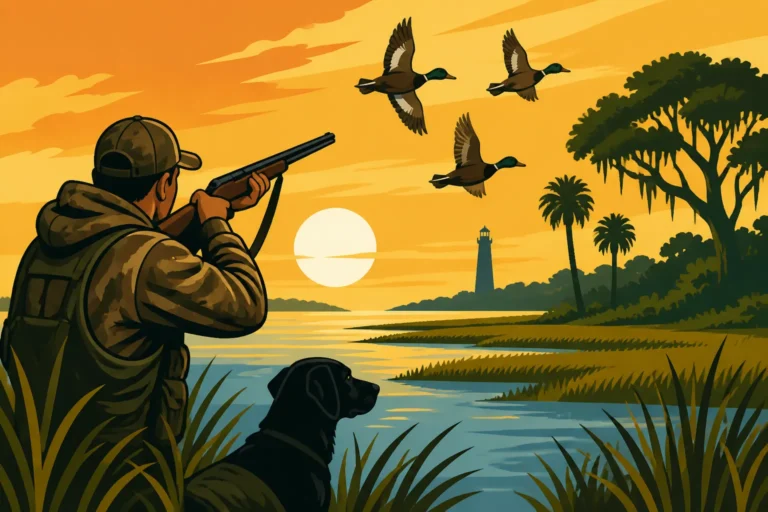
Coastal Georgia is a prime destination for waterfowl hunters. The vast salt marshes, tidal creeks, and river deltas are part of the Atlantic Flyway, attracting a wide variety of ducks, including abundant wood ducks, teal, and various divers. Jump-shooting beaver ponds and small creeks for wood ducks is a popular and exciting method. Setting up decoys in the marsh, especially in areas with good tidal flow, can also draw in migrating birds. Remember, waterfowl hunting requires specialized gear like waders, decoys, and a good understanding of choke and shot size for different species. Check out Georgia Waterfowl Hunting on Coast and Swamp for more specific details.
Small game hunting also has its place. While quail are typically associated with managed plantations further inland, rabbit and squirrel populations can be found in the maritime forests and transition zones. These hunts offer a more relaxed pace and can be a great way to introduce new hunters to the sport or to spend time afield during slower big game periods. Feral hogs are another year-round opportunity, causing significant damage to the ecosystem and crops. They thrive in the dense coastal cover and bottomlands, often feeding on acorns and rooting for tubers. Hunting hogs often involves tracking, still-hunting, or setting up on known travel corridors, sometimes even using thermal optics at night where legal.
Disclaimer
This article is for general informational purposes only and does not constitute professional advice. Laws, prices and regulations vary by location and change over time. Consult a qualified professional for guidance on your specific situation.