Which Deer Count Toward the Season Limit
It can feel like you need a law degree just to understand Georgia's deer hunting regulations, especially when it comes to figuring out exactly which deer count toward your season limit. It's a common source of confusion for new and seasoned hunters alike, and nobody wants to inadvertently break a rule. This guide is here to untangle the complexities, explaining in clear, realistic terms which deer you harvest apply to your annual bag limit in Georgia.
Understanding Georgia's Overall Deer Limit
Navigating the nuances of Georgia's deer hunting regulations can certainly feel like a puzzle sometimes. The state aims to balance hunter opportunity with sound deer management, which means there are specific rules in place regarding how many deer you can take and what kind they can be. It's not just about getting a tag; it's about understanding the entire framework that governs your harvest.
The Statewide Annual Bag Limit
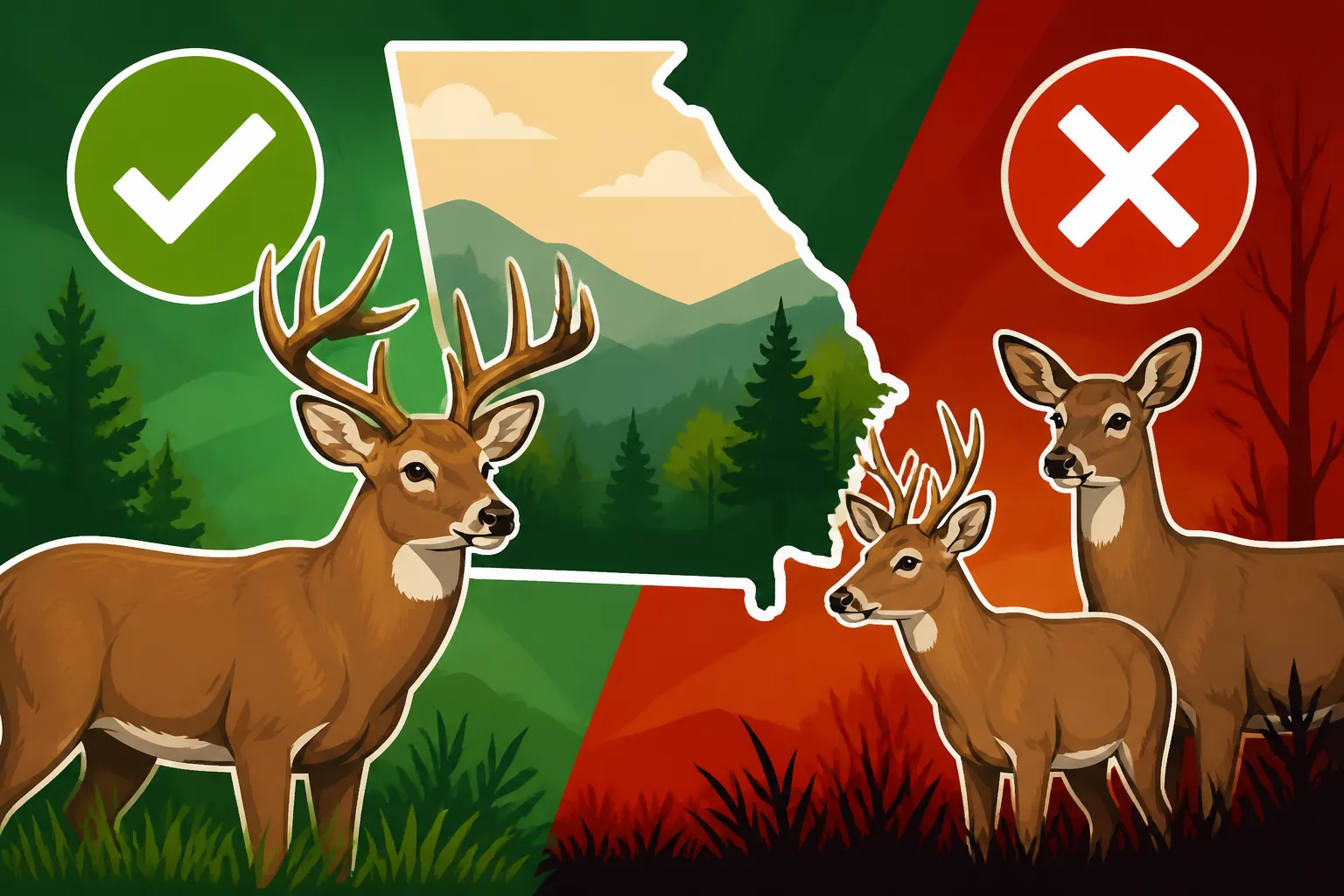
First things first, let's talk about the big picture: Georgia has a generous statewide annual bag limit for deer. Most hunters can take a total of twelve deer during the entire deer season. Now, that number sounds huge to folks from states with much tighter limits, and it truly is an incredible opportunity. But it's not simply a free-for-all for twelve animals of any kind. This twelve-deer limit is broken down into very specific categories: two antlered bucks and ten antlerless deer. Every single deer you harvest, whether it's the first buck of the archery season or the last doe of the extended southwest season, counts toward this overarching twelve-deer total. Ignoring this overarching limit can lead to unintended violations, even if you feel like you're following the individual buck and doe rules. For a complete understanding of these generous allowances, you can delve deeper into Georgia's Twelve-Deer Bag Limit.
How Seasons Affect Your Limit
One crucial point that often trips up hunters is how the different hunting seasons — archery, primitive weapons, and firearms — interact with this annual limit. The answer is straightforward: all legal deer harvests from any of these seasons contribute to that single, statewide twelve-deer maximum. There isn't a separate bag limit for archery season, and then another for firearms. It's one cumulative count from the opening day of archery through the very last day of the firearms season.
For instance, if you take an antlered buck during Bowhunting Georgia's Early Archery Season, that's one of your two allotted bucks, and one of your twelve total deer. If you then harvest an antlerless deer during the Primitive Weapons Week in Georgia, that counts as one of your ten does and one of your twelve overall. The weapon you use or the specific season you're hunting in doesn't reset or create a new set of limits. This integrated approach ensures consistent management across the entire season, regardless of how hunters choose to pursue their game. You can find a detailed breakdown of the various phases of the season in Georgia Deer Season Structure Explained.
Deciphering the Antlered Buck Limit
For many hunters, a mature buck is the ultimate prize, and Georgia offers opportunities to pursue them. However, there are very clear rules about how many antlered bucks you can harvest each season, designed to help maintain a healthy age structure in the deer herd. It's not just about whether you see a buck, but whether it fits into your legal quota.
The Two-Buck Rule in Detail
In Georgia, you are strictly limited to harvesting two antlered bucks per deer season. This is a hard limit, and it applies regardless of their size, antler configuration, or where they were harvested within the state. What constitutes an "antlered buck" in Georgia? It's defined simply as any deer with antlers measuring at least one inch long above the hairline. So, even a small spike buck with an inch of antler showing counts as one of your two. There are no minimum beam length or point requirements statewide, though some specific public lands or managed hunts might have their own unique antler restrictions, which you'd need to check before hunting those specific areas.
Many hunters strategize their buck harvests, often holding out for a mature animal for their second buck after taking an initial, perhaps smaller, buck earlier in the season. You'll hear plenty of conversations around camp about when to fill that second buck tag. This specific regulation is a cornerstone of Georgia's deer management philosophy, aiming to allow more bucks to reach older age classes. For a deeper dive into the specific rules governing antlered deer, check out Georgia Antlered Buck Limits.
Youth Deer and Special Scenarios
It's common to wonder if youth deer, or deer taken under special permits, are treated differently regarding the buck limit. For the most part, the answer is no – they still count. For example, if a youth hunter participates in the Georgia Youth Deer Weekend and harvests an antlered buck, that buck counts towards their individual two-buck limit for the season, just as it would for an adult hunter. The purpose of the youth weekend is to provide an exclusive hunting opportunity, not to grant additional bag limits beyond the season total.
Similarly, if you happen to be involved in specific nuisance deer removal programs or other very limited, specialized hunts (which are rare for the general public), any antlered deer harvested would almost certainly still count against your personal two-buck limit. The key takeaway is that the individual hunter's annual limit is paramount. It’s always best to verify specific rules for any special hunts, as regulations can occasionally have unique clauses, but the default is that all antlered bucks contribute to your two-buck maximum. Tools like the GoHunt app can be incredibly useful for quickly looking up regulations on the go, ensuring you're always informed about specific area rules.
Navigating the Antlerless Deer Tags
While bucks often get the spotlight, antlerless deer—does—are incredibly important for managing the herd and providing ample venison for hunters. Georgia's generous antlerless limits reflect a healthy deer population and the state's management goals.
The Ten-Doe Opportunity
After you've accounted for your two antlered bucks, the remaining portion of your twelve-deer annual limit is dedicated to ten antlerless deer. This means you have the opportunity to harvest up to ten does throughout the season. These tags are generally flexible and can be used across most of the state, with the exception of specific management areas or counties that might have different quotas or restrictions, though this is less common for general antlerless harvest.
Taking does is a critical component of ethical deer management, helping to control herd numbers, balance sex ratios, and prevent overpopulation, which can lead to habitat degradation and increased disease transmission. For the hunter, it also means a fantastic supply of venison for the freezer. Many hunters prioritize filling their doe tags to ensure they have enough meat for the year, and it’s a great way to introduce new hunters to success afield. You can learn more about the specifics of these tags and how they are issued in Georgia Antlerless Deer Tag Rules.
Filling Your Doe Tags
Effectively filling your ten antlerless tags can be a rewarding challenge. Does often travel in groups, especially mothers with their fawns (which, by the way, are considered antlerless for harvest purposes once weaned and capable of survival). Focusing on late-season food sources like planted winter greens, acorns (if available), or even remaining agricultural fields can be highly productive. Sometimes, just sitting on a field edge near dense cover during prime feeding times will give you ample opportunities.
For hunters who want to make the most of their doe tags, consider tactics like still-hunting through thick timber in the Piedmont, or setting up ground blinds near bedding areas in the coastal plain. If you're serious about putting venison in the freezer, understanding doe movement patterns is key. For more detailed strategies on maximizing your antlerless harvest, you might find tips in Filling Ten Antlerless Tags in a Season. Remember, every doe harvested helps manage the herd and provides sustenance, making it a truly impactful part of your hunting season. Using a platform like GoHunt can help you scout potential doe hotspots by analyzing aerial imagery and public land boundaries.
Important Considerations and Reporting
Understanding the bag limits is only half the battle; knowing how to properly report your harvest and navigate special circumstances is just as crucial. Georgia has a robust system in place to monitor deer populations, and your participation is vital.
Mandatory Harvest Reporting
This cannot be stressed enough: every single deer you harvest in Georgia, whether it's an antlered buck or an antlerless doe, must be reported. This is not optional; it's a mandatory legal requirement and a cornerstone of the state's wildlife management efforts. The Georgia Department of Natural Resources (DNR) uses the Georgia Game Check system for this purpose. You can report your harvest online through the Georgia DNR website, via their mobile app (which is fantastic for doing it right from the field), or by phone. The process is straightforward, asking for details like the county of harvest, the date, gender of the deer, and whether it was antlered or antlerless.
Reporting your deer within 72 hours of harvest, or before processing the carcass (whichever comes first), is essential. Accurate data from hunter reports helps the DNR make informed decisions about future bag limits, season lengths, and overall management strategies. Don't skip this step! It's a quick process that contributes immensely to the future of Georgia hunting. For full details on the process, consult Reporting a Deer Through Georgia Game Check. This is also where a tool like GoHunt can seamlessly integrate, allowing you to track your personal harvest data and ensuring you meet all reporting deadlines.
CWD Zone and Special Rules
Georgia has recently established a Chronic Wasting Disease (CWD) Management Area (CMA) in certain counties, primarily located in southwest Georgia, after the detection of CWD in a harvested deer. If you harvest a deer within this designated CWD Management Area, there are additional, very specific rules you must follow regarding mandatory testing and carcass movement restrictions. While these rules are critical for controlling the spread of CWD, any deer harvested in a CWD zone still counts towards your statewide annual bag limit of two bucks and ten does. The CWD regulations are additional steps, not exemptions from your regular limits. For instance, if you take a buck in a CWD county, it's still one of your two bucks and must be reported to Game Check, and it must be submitted for mandatory CWD testing.
Hunters in these areas are prohibited from moving certain parts of the deer carcass out of the CMA, unless they are specific, low-risk parts like deboned meat, clean skull plates, or finished taxidermy products. It's crucial to be aware of the boundaries of the CMA and any specific instructions from the Georgia DNR to ensure compliance. Ignorance of these rules is not an excuse, and violations carry serious penalties. Stay informed, especially if you hunt in or near these areas. You can find comprehensive information on these regulations in Georgia's Chronic Wasting Disease Management Area and specific guidance on Moving a Deer Carcass Out of the CMA.
Keeping Track with Tools
With varying limits for bucks and does, the overall twelve-deer cap, and the crucial requirement to report every harvest, it's easy to get lost in the details. Many hunters find it incredibly helpful to use digital tools to keep track of their season. Apps developed by the Georgia DNR, or third-party hunting apps like GoHunt, often provide features for tracking your harvest. These tools can help you:
- Log your deer: Record the date, location, sex, and antler status of each deer as soon as you harvest it.
- Monitor your remaining tags: Quickly see how many bucks and does you still have remaining in your limit.
- Access regulations: Have the most up-to-date regulations at your fingertips, even when out in the field.
- Facilitate reporting: Some apps can even streamline the official reporting process, or at least remind you when and how to report.
Staying organized is key to enjoying your season without worrying about compliance. These tools can be invaluable for ensuring you remain within your legal limits and fulfill all reporting obligations.
Here's a quick summary of Georgia's deer bag limits:
| Category | Limit Per Season | Details | Reporting Required? |
|---|---|---|---|
| Total Deer | 12 deer | Cumulative limit across all seasons (archery, primitive, firearms). | Yes |
| Antlered Bucks | 2 bucks | Any buck with at least one antler 1 inch or longer above the hairline. | Yes |
| Antlerless Deer | 10 does | Any deer without antlers, or with antlers less than 1 inch. | Yes |
| CWD Zone Deer | Counts toward limits | Additional mandatory CWD testing and carcass rules apply if harvested in CMA. | Yes (plus CWD test) |
Disclaimer
Please remember that hunting regulations can change. While this guide provides a comprehensive overview based on current information, it is your responsibility as a hunter to consult the most recent official regulations published by the Georgia Department of Natural Resources (DNR) before heading afield. Always verify season dates, bag limits, and specific area rules to ensure compliance.