Georgia Feral Hog Regulations
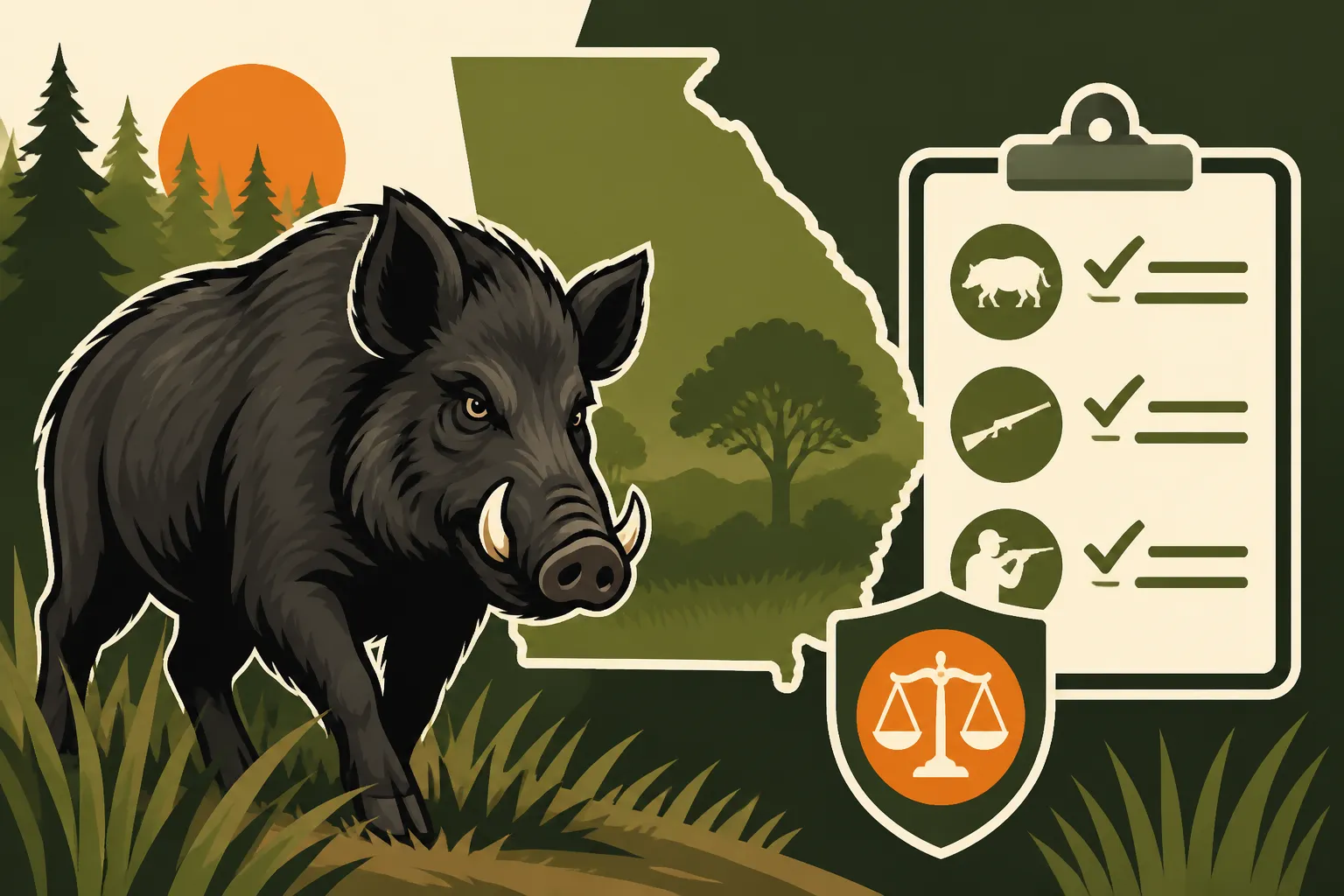
The problem of feral hogs in Georgia is a headache for countless landowners, farmers, and even other hunters. These destructive animals tear up fields, ravage crops, and compete with native wildlife, leaving a trail of frustration and economic damage that feels impossible to contain. Understanding Georgia's feral hog regulations is crucial for anyone looking to help manage their populations, and thankfully, the rules are designed to give hunters maximum flexibility in this ongoing battle.
Understanding the Feral Hog Problem in Georgia
Feral hogs are a menace, plain and simple. If you've ever dealt with them on your property or seen the devastation they can wreak on a field, you know exactly what I'm talking about. They're not native to Georgia, and their unchecked proliferation has become one of the biggest challenges for wildlife management and agriculture across the state. They breed incredibly fast, adapt to almost any environment, and their destructive feeding habits leave deep scars on the landscape.
The Economic and Ecological Damage Caused by Hogs
It's hard to overstate the damage these animals cause. Farmers lose millions of dollars annually in Georgia due to hogs rooting up planted crops like corn, peanuts, and soybeans. Imagine spending months preparing a field, planting your livelihood, only to wake up one morning and find it looking like a rototiller went wild overnight. It's soul-crushing. Beyond agriculture, feral hogs are ecological bulldozers. They compete directly with native wildlife like deer, turkey, and quail for food sources, eating acorns, fawns, turkey poults, and even destroying nests. Their rooting behavior degrades habitat, pollutes water sources, and can spread diseases. Frankly, they're a disaster waiting to happen in every corner of the state where they exist. Understanding the true scope of the problem is essential to grasping why our state wildlife agencies have adopted such a liberal approach to their control.
Beyond the immediate crop losses, there's the hidden cost of soil erosion, damage to sensitive ecosystems, and the potential for disease transmission to domestic livestock. It's a continuous, uphill battle, and every effort to reduce their numbers makes a difference. The more hunters we have actively pursuing hogs, the better chance we have of mitigating some of this widespread destruction. If you're looking for more details on the scope of the problem, a quick look at the Georgia Feral Hog Population Estimate can paint a pretty clear picture.
Why Georgia's Approach to Hogs is Unique
Unlike many other game species in Georgia, feral hogs are classified as an exotic, non-game species. This is a critical distinction because it fundamentally changes how they are regulated. Essentially, they are viewed as an invasive pest, not a resource to be managed for sustainable harvest. Because of this classification, the Georgia Department of Natural Resources (DNR) wants them removed from the landscape whenever and wherever possible. This means the typical rules for seasons, bag limits, and methods of take that apply to deer or turkey simply don't apply to hogs. The goal isn't conservation; it's eradication or, at the very least, significant control.
This unique approach reflects the urgency and severity of the feral hog issue in our state. The DNR understands the immense pressure these animals put on landowners and the environment, and they've empowered hunters to be a primary line of defense. This flexibility is a huge advantage for hunters, allowing for year-round pursuit and a wide array of tools at their disposal. It also removes some of the common frustrations associated with strict season dates and limited opportunities you might encounter with other species.
General Rules for Hunting Feral Hogs
If you're looking to help control the feral hog population in Georgia, you're in luck because the rules are surprisingly straightforward and permissive. The state encourages hunters to take every opportunity to remove these destructive animals, recognizing that every hog removed is a win for native wildlife and agricultural interests. This liberal regulatory framework is a direct response to the significant challenges posed by their rapid reproduction and widespread damage.
No Closed Season or Bag Limits
This is the big one, the golden rule for feral hog hunting in Georgia: there is no closed season and no bag limit for feral hogs. Yes, you read that right. You can hunt feral hogs 365 days a year, day or night, and there's no limit to how many you can take. This stands in stark contrast to virtually every other game animal in the state. For instance, if you're out Hunting the Rut in Mid-October for deer, and a group of hogs comes by, you can ethically and legally take them without worrying about disrupting your deer hunt or breaking any rules.
This flexibility is a blessing for hunters. It means you don't have to wait for a specific season to open, nor do you have to stop hunting once you've reached a certain number. If you have access to land with a hog problem, you can literally hunt them whenever you have the time and opportunity. This continuous pressure is vital in trying to keep their numbers in check, as they can reproduce at an astonishing rate. It's a true "anytime, any place" scenario when it comes to pursuit.
License Requirements and Exemptions
While the season and bag limits are wide open, you generally still need a valid Georgia hunting license to pursue feral hogs. If you're a resident, this typically means a Resident Hunting License, or a more comprehensive option like the Georgia Resident Sportsman License Bundle. Non-residents will need a Nonresident Hunting License. However, there are some important exemptions to be aware of, particularly for landowners.
If you are hunting feral hogs on land that you own or lease, or on land where you have permission from the landowner, and you are hunting solely for hogs that are causing damage to agricultural crops or other property, you might be exempt from needing a license. This specific exemption is primarily for landowners and their immediate family members, or those acting directly on their behalf to address nuisance situations. It's always best practice to check the most current Georgia hunting regulations through the official Georgia DNR website or a reliable hunting app like GoHunt to ensure you meet all requirements. When in doubt, carrying a general hunting license is the safest bet to avoid any misunderstandings.
Legal Methods of Take and Equipment
Georgia's relaxed regulations on feral hogs extend to the methods you can use and the equipment you can employ. This liberality is a direct acknowledgment of how difficult these intelligent and resilient animals can be to control, and it provides hunters with a wide arsenal to tackle the problem effectively. You're not restricted to traditional daylight hunting methods, which is a huge advantage given hogs' nocturnal habits.
Approved Firearms, Archery, and Trapping Methods
When it comes to taking feral hogs, nearly any legal firearm is permitted. This includes rifles, shotguns (with any shot size, though slugs or buckshot are common), handguns, and muzzleloaders. There are no caliber restrictions, so whether you prefer a small caliber like a .223 for headshots or a larger round for body shots, you're generally good to go. Archery equipment, including traditional bows, compound bows, and crossbows, is also perfectly legal. This means you can even pursue hogs during Bowhunting Georgia's Early Archery Season alongside deer if the opportunity arises.
Beyond direct hunting methods, trapping is an incredibly effective and widely used tool for managing feral hog populations, especially on private land. Large corral traps, often baited with corn or other attractants, can catch multiple hogs at once. Snare traps are also legal but require careful placement to avoid non-target animals. These methods are particularly useful for removing large numbers of hogs that have become wary of direct hunting pressure. For those interested in trapping, learning about Baiting a Feral Hog Trap Site can be incredibly helpful for maximizing your success.
Using Lights, Night Vision, and Thermal Devices
This is where hog hunting in Georgia gets really interesting and effective. Feral hogs are largely nocturnal, meaning they do most of their damage and movement under the cover of darkness. Recognizing this, Georgia regulations permit the use of artificial lights, night vision devices, and thermal imaging equipment when hunting feral hogs. This is a game-changer for control efforts, allowing hunters to actively pursue hogs during their peak activity times.
You can mount lights directly on your firearm or use handheld lights to illuminate hogs. Night vision and thermal scopes have become incredibly popular because they allow hunters to detect and identify hogs at long distances in complete darkness, giving a significant advantage. Brands like ATN, Pulsar, and Trijicon offer a range of reliable thermal and night vision optics that hunters widely use. However, remember to always be absolutely sure of your target and what's beyond it, especially when hunting at night. While these tools are fantastic for hog control, safety remains paramount. If you're looking into specific rules for other night hunting, you might want to compare them to Georgia Night Hog Hunting Light Rules for coyotes.
Hunting Feral Hogs on Public Lands
While the rules for feral hogs are generally very liberal, hunting them on public lands introduces a few more layers of regulation. Public lands, like Wildlife Management Areas (WMAs) and National Forests, often have specific rules that govern access, hunting methods, and even the times you can hunt, regardless of the species you're pursuing. It's crucial to understand these nuances to avoid inadvertently breaking any rules.
WMA Specific Rules and Restrictions
Georgia's Wildlife Management Areas (WMAs) are fantastic resources, but they operate under a more structured set of rules. While you can hunt hogs year-round on private land, WMAs often have specific dates when they are open for any hunting, and those dates might align with deer, turkey, or small game seasons. It's rare for a WMA to be open solely for hog hunting outside of these established periods, though some do offer special hog hunts. You'll need to consult the specific WMA regulations for the area you intend to hunt. Many WMAs also require a Georgia WMA Access Stamp in addition to your regular hunting license.
Furthermore, certain methods of take might be restricted on WMAs. For instance, while trapping is excellent for hogs, it may not be allowed on all WMAs, or it might require a special permit. The use of ATVs, specific types of firearms, or even the placement of trail cameras can vary from one WMA to another. Always check the official Georgia DNR hunting regulations booklet or use the Georgia Outdoors app, or even GoHunt's mapping features, to pull up the exact rules for your chosen WMA before heading out. This prevents disappointment and ensures you're hunting legally and safely.
National Forest and Other Public Access Considerations
The Chattahoochee-Oconee National Forest offers vast tracts of public land where hog hunting is permitted. Generally, the rules here are a bit more flexible than WMAs, often allowing year-round hog hunting so long as you possess a valid hunting license. However, you still need to be mindful of specific unit restrictions or temporary closures due to timber operations, prescribed burns, or other management activities. The use of baiting for hogs on National Forest land is typically prohibited, which is a major difference from private land.
Other public access lands, such as state parks (some have quota hunts for deer that may allow hog harvest), or lands enrolled in the Voluntary Public Access (VPA) program, will have their own specific rules. Again, the overarching advice is to always confirm the regulations for the specific piece of public land you plan to hunt. Don't assume that because it's allowed for hogs somewhere else, it's allowed everywhere. For detailed maps and rules, checking the Georgia DNR website or applications like GoHunt can save you a lot of grief. Being informed helps ensure a safe and successful outing, whether you're deer hunting in the Chattahoochee-Oconee National Forest Hunting or chasing turkeys in a Piedmont WMA.
Hunting Feral Hogs on Private Property
For many hunters and landowners, private property offers the most effective and flexible opportunities for feral hog control. Without the more restrictive timelines and methods often found on public lands, private landowners have significant leeway to manage these pests aggressively. This is where truly impactful control efforts can take place, especially when combining hunting with trapping.
Gaining Permission and Landowner Involvement
If you don't own land, securing permission from a landowner is your first step for private land hog hunting. This is crucial because Georgia's trespass laws are clear: you need permission to be on someone's property. Many landowners, especially those with agricultural interests, are desperate for help with hog control. Approaching them respectfully, offering your services, and demonstrating your commitment to safety and ethical hunting can often open doors. Discussing your methods, especially if you plan to hunt at night or use traps, is vital for maintaining a good relationship. For more general advice, consider reading up on Getting Private Land Permission in Georgia.
Once you have permission, the landowner becomes a key partner. They can provide invaluable information about hog activity, damaged areas, and local patterns. Their insights into where Damage Feral Hogs Cause Georgia Farms are most severe can directly influence your hunting or trapping strategy. Often, landowners are more than happy to allow night hunting for hogs, as this targets the animals when they are most active and destructive, and they understand the urgency of the problem.
Trapping as a Primary Management Tool
While hunting is exciting and certainly accounts for many hogs, trapping is arguably the most efficient method for large-scale removal on private land. Hogs are social animals, and well-placed, large corral traps can capture entire sounders at once. This isn't about the thrill of the chase; it's about systematic population reduction. Trapping requires dedication – regular checking of traps, proper baiting, and strategic placement in travel corridors or damaged areas.
Many landowners invest in or build their own hog traps because of the sheer numbers they can remove. You can read more about Hog Traps Worth the Investment to understand the different types and what works best. Combine trapping with regular hunting efforts, and you create a multi-pronged attack that can significantly reduce hog numbers over time. This approach allows for consistent pressure, even when you can't be out hunting every night. Remember that continuous effort is key, as these animals reproduce quickly and can rebound if pressure isn't maintained.
Ethical Considerations and Carcass Management
Hunting feral hogs, while encouraged, still comes with a responsibility to uphold ethical practices and handle the animals properly after the shot. Just because they're a nuisance doesn't mean we abandon our principles of respect for the animal and the environment. Proper handling also prevents the spread of potential diseases and ensures the meat, if harvested, is safe for consumption.
Responsible Shot Placement and Recovery
Ethical hunting demands a clean, humane kill. This means prioritizing responsible shot placement. For hogs, a shot to the ear or just behind it is often preferred for a quick kill, especially with night vision or thermal, as it hits the brain. A heart/lung shot is also effective. Due to their thick hides and often aggressive nature, especially with boars, precise shot placement is even more critical than with deer. A poorly placed shot can lead to a wounded animal that suffers or becomes even more dangerous.
Recovery of the animal is equally important. Even with a good shot, hogs can run a surprising distance. Always track thoroughly, just as you would a deer. If hunting at night, a good headlamp and careful tracking skills are essential. Hogs, especially larger boars, can also be quite aggressive when wounded, so approach with caution. Ensuring a quick and clean kill minimizes suffering and maximizes the chance of recovering your animal, whether for consumption or just removal from the ecosystem.
Disease Concerns and Carcass Disposal Best Practices
Feral hogs can carry a host of diseases, some of which are transmissible to humans (zoonotic) or domestic livestock. Brucellosis and pseudorabies are two of the most commonly discussed. While less common, they can also potentially carry diseases like Chronic Wasting Disease (CWD), although CWD is primarily a cervid disease. Given these risks, handling feral hog carcasses requires caution. Always wear gloves when field dressing and avoid contact with blood and internal organs if you have any cuts or open wounds.
When disposing of carcasses, especially if you don't intend to consume the meat, it's best to bury them deeply to prevent scavengers from spreading potential pathogens. If burying isn't feasible, check local regulations for disposal options. Never just leave carcasses exposed near water sources or populated areas. If you notice any unusual lesions or signs of disease, it's wise to contact the Georgia DNR or a local veterinarian for guidance. Safe handling protects you, your family, and other wildlife. For those concerned about diseases like CWD, understand how Georgia's Chronic Wasting Disease Management Area impacts deer and how these concerns might overlap with hog populations.
Here's a quick summary of common hog hunting methods:
| Method | Legality (GA) | Ideal Use Case | Pros | Cons |
|---|---|---|---|---|
| Rifle Hunting | Legal (most) | Open fields, long-range, night hunting | Versatile, effective at distance | Requires precision, noise can spook hogs |
| Archery Hunting | Legal | Close range, stealth, ambush | Quiet, challenging, good for sensitive areas | Shorter range, precise shot needed |
| Trapping | Legal | High numbers, landowner management | Removes multiple hogs, continuous effort | Time investment, non-target captures |
| Night Hunting | Legal | Hogs most active, effective with optics | Capitalizes on nocturnal behavior | Target identification, safety concerns |
| Running Dogs | Legal | Dense cover, baying hogs, large areas | Exciting, effective in thick terrain | Requires trained dogs, more intensive |
Note: Always verify local county ordinances and specific WMA rules as they may vary.
The Impact of Feral Hogs on Georgia's Ecosystem
The presence of feral hogs fundamentally alters Georgia's natural landscapes and agricultural productivity. Their relentless foraging and reproductive capabilities create an ecosystem imbalance that reverberates far beyond just a few trampled crops. Understanding this broader impact helps to emphasize why continuous, year-round efforts to control them are so critically important for the health of our state.
Ongoing Efforts and Hunter Impact
The battle against feral hogs is an ongoing one, and hunters are undoubtedly on the front lines. Every hog removed, whether through hunting or trapping, contributes to reducing the overall population and mitigating their destructive effects. State and federal agencies, like the USDA, also conduct control programs, often targeting specific areas with high damage or sensitive ecological concerns. However, the sheer scale of the problem means that these efforts alone aren't enough.
This is where the individual hunter's impact becomes truly significant. By taking advantage of Georgia's liberal regulations, hunters provide invaluable, sustained pressure on hog populations that would otherwise spiral out of control. Your efforts contribute directly to protecting native wildlife habitats, safeguarding agricultural livelihoods, and maintaining the ecological balance of Georgia's wild places. Keep up the good work! If you want to know more about comprehensive control, diving into Feral Hog Hunting Year-Round in Georgia provides great insights.
Staying Informed on Regulations
While Georgia's feral hog regulations are remarkably consistent and permissive, it's always smart to stay informed. Wildlife regulations can change, albeit slowly for hogs, and local ordinances (especially for things like discharging firearms or using certain traps) can vary by county. The best way to stay current is to regularly check the official Georgia Department of Natural Resources (DNR) website, review the latest hunting regulations booklet, or use reliable hunting information platforms like GoHunt that integrate up-to-date state rules.
Staying informed ensures that your efforts to control feral hogs remain legal, ethical, and effective. It also helps you understand any new strategies or initiatives that might be implemented by the state to tackle this persistent problem. Being a responsible and knowledgeable hunter not only benefits you but also supports the broader conservation goals for Georgia's diverse wildlife and natural resources.
Disclaimer
Please remember that hunting regulations can change. While this guide aims to be comprehensive and up-to-date based on current information, it is always your responsibility to consult the official Georgia Department of Natural Resources (DNR) hunting regulations prior to any hunting activity to ensure full compliance with all laws and rules.