Glassing a Powerline Cut at Last Light
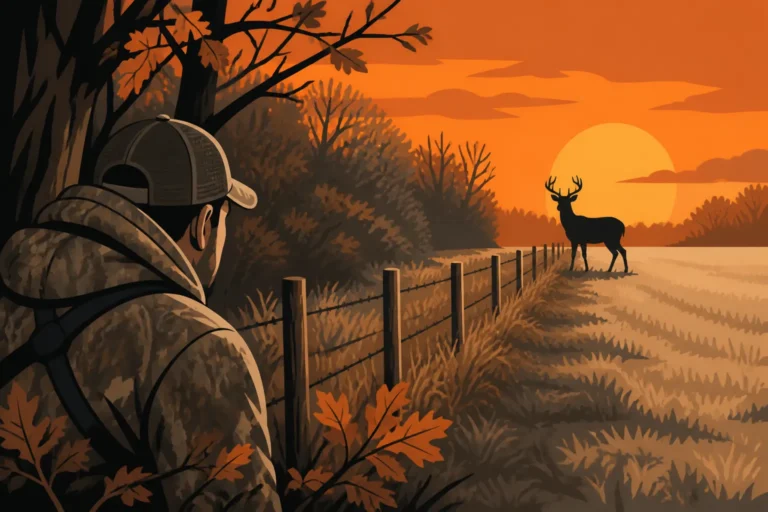
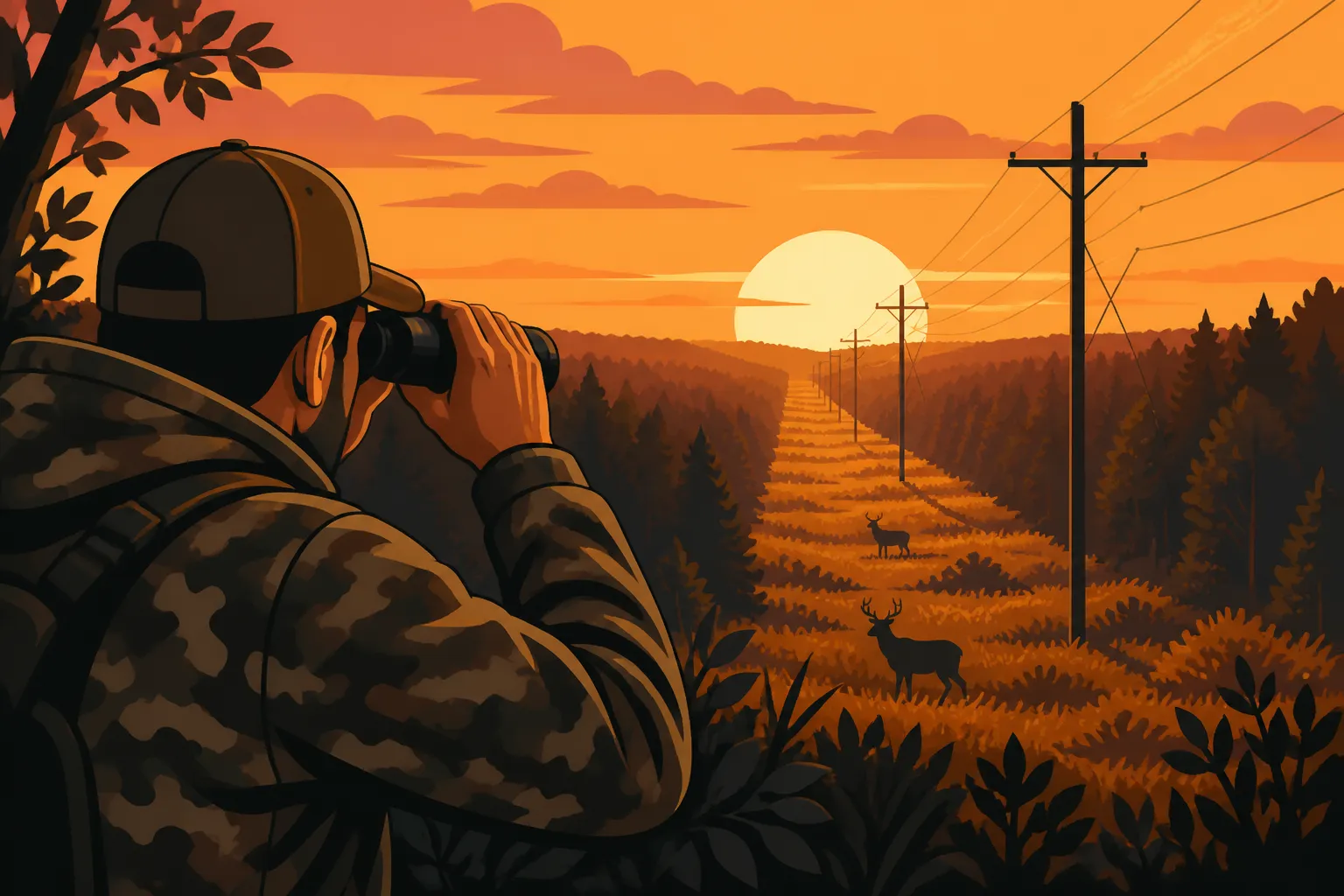
There’s nothing quite like that golden hour, the sun dipping below the horizon, when deer finally decide it’s safe to move. But often, just as they step out into an open area like a powerline cut, the light fades fast, leaving you straining to see what’s out there. This guide is all about honing your skills and gear to effectively glass powerline cuts at last light, helping you identify those elusive Georgia whitetails when they’re most active.
Understanding Why Deer Use Powerline Cuts
Powerline cuts aren't just barren strips through the woods; for deer, they can be prime real estate, especially when the day is winding down. These linear clearings offer a unique blend of resources that attract deer, making them fantastic spots for hunters who know how to observe. It's not just about an open view; it's about what those openings provide.
Thermal Cover and Edge Habitat
One of the biggest draws of a powerline cut is the abundant edge habitat it creates. Think about it: you have a stark transition from dense woods to an open, often brushy, strip. This edge provides deer with a sense of security. They can stage just inside the timber, invisible to prying eyes, before stepping out into the more exposed clearing. The thick regrowth of smaller trees, shrubs, and briars within the cut itself, often a result of constant maintenance, acts as excellent thermal and security cover. Deer love to bed in these areas during the day, soaking up the sun in cooler months or finding a breezy spot in warmer ones, then simply moving a few yards out to feed as evening approaches. This isn't just a convenient spot; it's a built-in safety zone.
Food Sources and Browsing Opportunities
Beyond cover, powerline cuts are often ecological smorgasbords for deer. The sunlight penetrating to the forest floor encourages a flush of new growth that wouldn't survive under a dense canopy. We're talking about soft mast like blackberries and wild grapes, which deer absolutely adore, and a variety of forbs and young woody browse. These are highly palatable food sources that emerge rapidly after mowing or clearing, making the cuts attractive throughout the year. As the season progresses, deer will repeatedly hit these areas, especially if other food sources, like acorns after a poor acorn year, become scarce. A keen eye, especially with quality optics, can often spot deer browsing leisurely, taking advantage of this readily available buffet right up until dark.
Travel Corridors and Staging Areas
Deer are creatures of habit and efficiency. Powerline cuts often serve as natural travel corridors, connecting different areas of their home range, such as bedding areas to feeding grounds, or even acting as funnels between two swamps. Instead of fighting through dense timber or crossing wide-open fields, a deer can utilize the slightly more open (but still offering some cover) powerline. Before committing to crossing a larger field or moving into a more exposed feeding area, deer will often stage at the edge of the powerline cut, especially at last light. They’ll stand just inside the tree line, scent-checking the wind, listening, and observing. This staging behavior is precisely what makes glassing these areas at dusk so effective – you’re catching them at a moment of transition, often pausing long enough for you to get a good look with your binoculars or spotting scope.
Essential Gear for Last Light Glassing
Trying to glass effectively at last light without the right gear is like trying to catch fish with your bare hands – nearly impossible and incredibly frustrating. The fading light presents unique challenges that demand specific tools, primarily optics that can gather every last photon and methods to keep them rock steady.
Choosing the Right Optics
This is where your investment truly pays off. For glassing powerline cuts at last light, you need binoculars or a spotting scope with excellent low-light performance. Forget the cheap stuff; you need lenses that transmit a maximum amount of light. Look for models with large objective lenses (e.g., 42mm, 50mm, or even 56mm for binoculars) and high-quality glass. Brands like Vortex, Leupold, and Maven offer fantastic options that strike a good balance between performance and price. For general use, 10×42 binoculars are a solid all-around choice, providing a good field of view and decent magnification. However, if you're trying to pick apart distant treelines or identify antler points on a buck that's barely visible, an 8×42 versus 10×42 in the woods might offer a steadier image, or even a higher magnification spotting scope, perhaps 15-45x, can be a game-changer. Remember, the goal is to resolve detail in incredibly dim conditions, so brightness and clarity are paramount. You can research different models using resources like GoHunt, which often have reviews and comparisons for optics suitable for various hunting scenarios.
Tripods and Steadiness for Clarity
Even the steadiest hands can’t hold binoculars perfectly still for extended periods, especially as your arms fatigue from constant scanning. A wobbly image negates the benefits of even the best optics, making it impossible to discern details or spot subtle movements. This is where a lightweight, sturdy tripod becomes indispensable. Attaching your binoculars to a tripod, even a compact monopod for quick setups, allows you to eliminate shake and truly maximize the light-gathering capabilities of your optics. It lets you relax and patiently scan, turning what would be a blurry, frustrating experience into a clear, enjoyable one. You'll be amazed at how much more you can see when your optics are perfectly stable. This is especially true when you are trying to pick out a deer from shadows or assess the rack on a buck at hundreds of yards as the last colors drain from the sky.
Appropriate Clothing and Scent Control
While optics are key for seeing deer, your clothing and scent control are crucial for not being seen or smelled by them. Even if you're sitting a good distance away, a sudden shift in wind can carry your scent right into the cut. Always wear clean hunting clothes, preferably treated with scent-eliminating sprays or stored in scent-proof bags. For last-light sits, layers are your friend. Georgia evenings can cool down quickly, even after a warm day, especially if you’re sitting still for an hour or more. Choose quiet fabrics that won't rustle when you adjust your position. Think about your concealment, too. While blaze orange is required during firearms season, during archery season or on private land, blending into the background is critical. Consider a lightweight leafy suit or effective camouflage patterns that break up your outline against the fading light and surrounding foliage. Remember, deer are scanning for movement and unusual shapes, even more so as visibility decreases, so remaining still and concealed is paramount.
Strategic Glassing Techniques at Dusk
Simply pointing your binoculars down a powerline cut isn't enough. To truly maximize your chances of spotting deer at last light, you need a methodical approach that leverages both your position and your patience. This is where the art of observation really comes into play, combining knowledge of deer behavior with effective scanning strategies.
Positioning for Optimal Visibility
Your setup is everything. Before you even think about lifting your binoculars, consider your vantage point. You want a position that gives you a commanding view of the powerline cut, ideally overlooking a good stretch of it. Think about the angle of the setting sun; you don't want it directly in your eyes, creating glare and obscuring your view. If possible, position yourself so the last rays of sun are at your back, illuminating the distant cut for you. This often means being on the east side of the cut in the evening. Also, consider the wind. Always try to set up so your scent is blowing away from where you expect deer to emerge. You might be sitting on a knoll overlooking a large cut, or even Reading a Ridge for North Georgia Deer that provides a clear line of sight into a lower powerline. Don't be afraid to scout these areas beforehand, perhaps using an app like GoHunt to mark potential glassing locations on an aerial map during Scouting Georgia Public Land Before Season. This pre-hunt preparation can dramatically increase your chances of success.
Grid Searching and Slow Scanning
Once you're in position, resist the urge to haphazardly sweep your optics. A systematic approach will help you spot deer that might otherwise go unnoticed. Employ a "grid searching" technique: start at one end of the cut, scan horizontally in small, overlapping sections, then drop your view slightly and scan back across. Repeat this process until you've meticulously covered the entire area. Pay extra attention to the edges where the timber meets the open cut – this is where deer often first appear, stepping out cautiously. Don't rush. Slow, deliberate scans are far more effective than quick sweeps. Look for subtle movements: a flick of an ear, a swish of a tail, or the slight shift of a shadow that wasn't there a moment ago. As the light fades, those small details become harder to pick out, but your patient, thorough scanning will train your eyes to catch them.
Interpreting Deer Behavior Before Dark
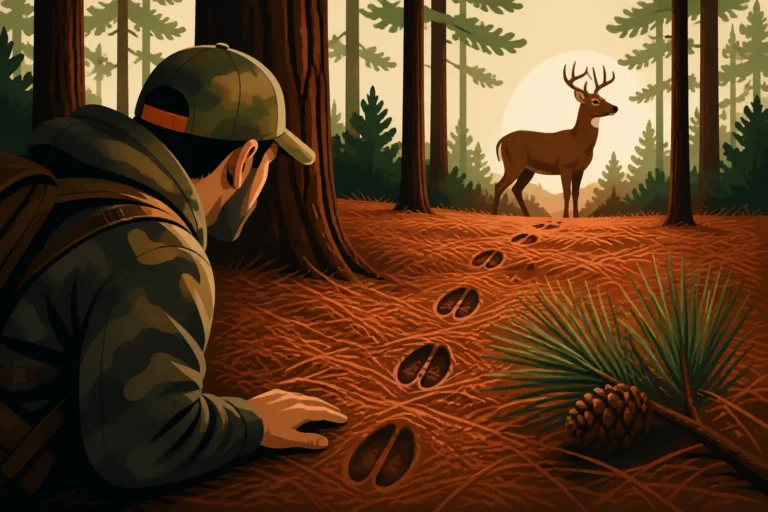
As you glass, observe not just if deer are there, but how they are behaving. Are they walking with purpose, suggesting they're heading to a specific food source? Are they nervous, constantly looking around, indicating pressure or the presence of a predator? Or are they relaxed, browsing casually, perhaps even bedding down briefly in a thicket? This observational skill, honed over many hours with your optics, will help you understand deer patterns in the area. You might notice a consistent entry point, or a specific cluster of bushes they always check. If you see deer lingering at the edge of the woods before stepping into the main cut, you've identified a staging area. If you see multiple deer, especially does and fawns, feeding calmly, a buck might be following close behind, or they might be establishing a pattern you can exploit on a future hunt. This also helps you decide if a deer is just passing through or if it's settled in for the evening, giving you vital clues for future hunting strategies, particularly during Hunting the Rut in Mid-October when bucks are constantly on the move looking for does.
Planning Your Exit Strategy
Spotting a deer at last light is exciting, but the hunt isn't over until you've safely exited the woods. Moving out of a powerline cut after dark requires careful planning to ensure safety, minimize disturbance, and respect regulations. This is often the most overlooked part of a successful evening glassing session.
Safe Movement After Legal Shooting Hours
It’s crucial to know your legal shooting hours. In Georgia, these typically extend from 30 minutes before sunrise to 30 minutes after sunset. Once legal shooting light has passed, you should pack up your gear and begin your exit. Never attempt to take a shot after legal hours; it’s not only illegal but also incredibly unsafe, increasing the risk of a wounded animal and a dangerous blood trailing situation. Your priority now shifts from hunting to safe, quiet extraction. Moving through dense woods in the dark, especially after a long sit, can be disorienting. Take your time, walk slowly, and pay attention to your surroundings.
Marking Your Path and Headlamp Use
Before you even settle into your glassing spot, think about your exit. Modern technology, like a GPS unit or a reliable hunting app (like those available on GoHunt), can be invaluable here. Mark your entry point and your stand location so you have a clear path back to your vehicle. As the light fades, you’ll eventually need a headlamp or flashlight. Use it sparingly at first, only when necessary to illuminate your path directly in front of you. A red light setting on your headlamp is often preferred as it preserves your night vision and is less jarring to both your eyes and potential wildlife. Be mindful of casting long shadows or shining your light into areas where other hunters might be, especially if you’re Using a Ground Blind on Georgia Public Land or in a popular spot. Your goal is to be as stealthy as possible, minimizing your impact on the area for future hunts.
Respecting Property Boundaries
Powerline cuts often traverse multiple properties, both private and public. It's absolutely critical to be aware of property lines, especially when you're exiting in the dark. If you're on public land, ensure you're not inadvertently crossing onto private property where you don't have permission. This might mean having to walk a little further on public land to get back to your vehicle, rather than taking a shortcut across someone's posted field. If you are hunting a small private tract in Georgia, make sure your exit route doesn't disturb neighbors or pass too close to their homes. Use your mapping app to verify your location and stick to known paths. Being a responsible hunter means respecting boundaries, both physical and ethical, at all times, not just during daylight hours.
| Optics Type | Magnification/Objective | Best Use Case | Pros | Cons |
|---|---|---|---|---|
| Binoculars | 8×42 | All-around, wider field of view | Stable image, good light gathering, easy to handhold | Less detail at extreme distances |
| 10×42 | Good balance, more magnification for slightly longer range | More detail than 8x, still relatively easy to handhold | Slightly more handshake, narrower field of view | |
| 10×50 / 12×50 | Enhanced low light, longer range | Superior light gathering, excellent for last light | Heavier, larger, often requires a tripod for steady long-term glassing | |
| Spotting Scope | 15-45×60 / 20-60×80 | Extreme long-range observation, detail resolution | Unmatched detail, high magnification, perfect for distant bucks | Requires tripod, limited field of view, bulky, not for quick scans |
Disclaimer
Hunting is an inherently dangerous activity. Always prioritize safety, adhere to all local and state regulations, and ensure you have the necessary licenses and permits. The information provided here is for educational purposes and should not replace professional guidance or personal judgment. Be aware of your surroundings, respect wildlife, and know your physical limitations.