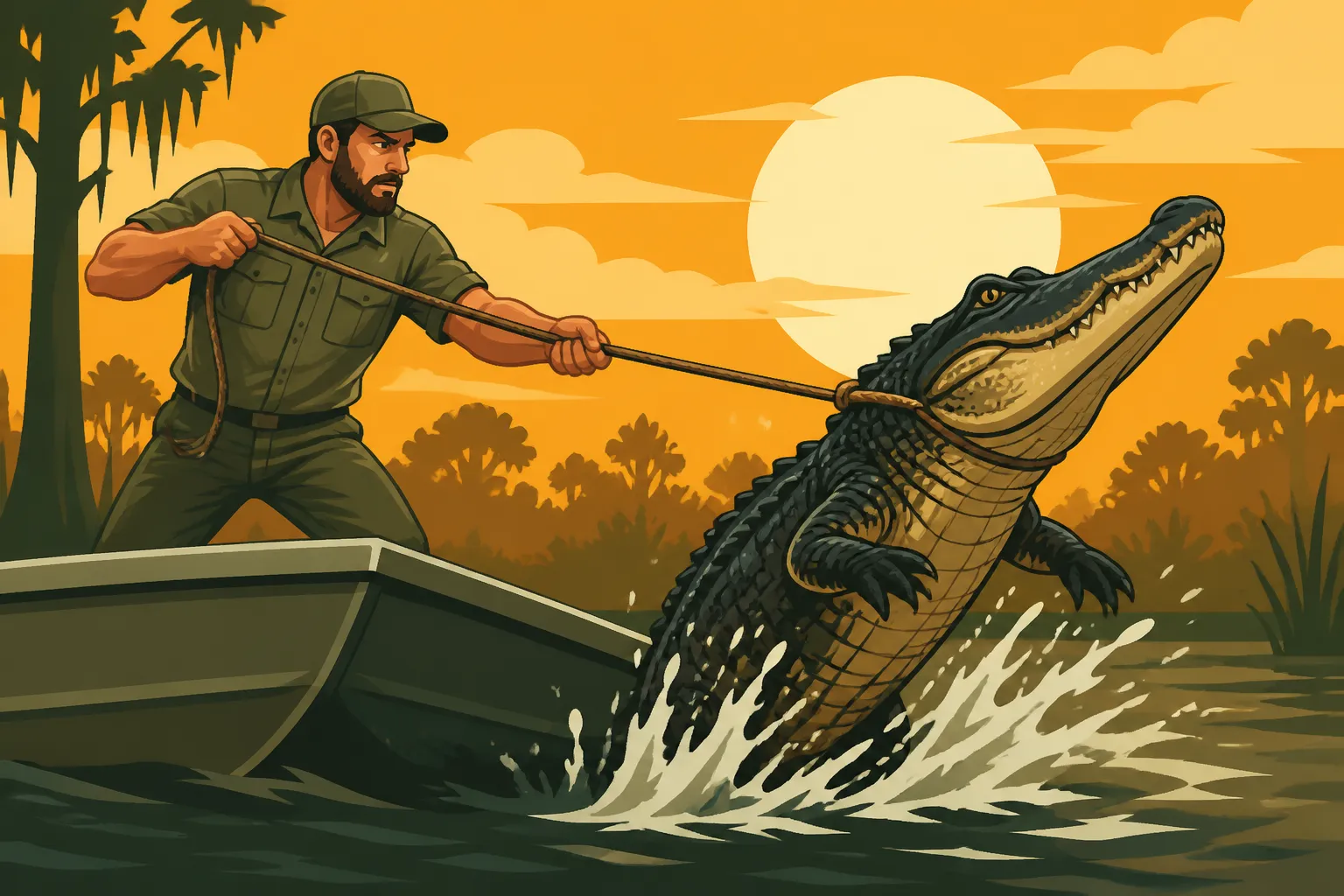
Landing an Alligator From a Small Boat
Alright, let's talk about one of the most intense experiences in Georgia hunting: bringing a full-sized alligator alongside a small boat. It’s a moment of pure adrenaline, often in the dead of night, where a powerful, prehistoric reptile is mere feet from you in a confined space. This guide isn't just about the mechanics; it's about understanding the immense challenge, minimizing risk, and ensuring a safe, successful harvest when you're facing down a Georgia gator.
Preparing Your Small Vessel and Crew for the Hunt
Landing an alligator, especially a large one, from a small boat isn't a task to be taken lightly. It demands meticulous preparation, the right gear, and a crew that knows their roles like the back of their hand. The Georgia swamps and rivers where these giants live are no place for improvising when you’ve got a hooked gator putting up the fight of its life.
Choosing the Right Small Boat for Alligator Hunting
When you're dealing with an animal that can be over ten feet long and weigh hundreds of pounds, your vessel becomes an extension of your hunting strategy. While dedicated alligator boats exist, many Georgia hunters use a standard jon boat or a flat-bottomed boat that they’ve adapted. Stability is paramount. You need a wide, stable platform that won't capsize easily when a thrashing gator pulls hard on a line, or when two grown adults are leaning over the side to secure it.
Consider the length and beam of your boat. A minimum of 16 feet is often recommended, but longer can be better for stability and working room, especially if you plan on targeting larger animals. The boat needs a good, flat floor space to work from, and it should be free of clutter. Any ropes, tackle, or other gear lying around can become a tripping hazard or get tangled in lines during the chaos of landing a gator. Remember, you'll be performing this often in low light or complete darkness, making clear deck space critical. For those considering their options, exploring specific advice on Choosing a Boat for Night Alligator Hunts can provide even more tailored insights.
Essential Gear and Safety Considerations
The gear you bring is your lifeline. First and foremost, you'll need at least one, preferably two, sturdy harpoons with break-away heads. These are designed to penetrate the gator's tough hide and allow you to attach a heavy-duty line, typically at least 300-500 pound test, to a float. Beyond the harpoon, you'll want extra lines, at least one or two snare poles or "snatch hooks" for securing the animal once it's alongside the boat, and stout gaffs for control.
Safety is non-negotiable. Personal flotation devices (PFDs) for every crew member are a must. A bright, powerful spotlight is essential for spotting gators at night, but also for illumination during the landing process. Don't forget a backup light source! Heavy-duty gloves protect your hands from rope burn and the gator's rough hide, and snake boots are always a good idea in the marsh. Always have a first-aid kit readily accessible, charged cell phones (though service can be spotty in remote areas), and a good knife for cutting lines in an emergency. Preparing your Harpoons and Snatch Hooks for Alligators is a critical step that you won't want to overlook.
The Initial Strike and Managing the Fight
Once you've located a legal gator – usually identified by the glowing red reflection of its eyes in your spotlight – the real dance begins. The approach, the strike, and the immediate aftermath are arguably the most critical and dangerous phases of the entire hunt.
Making the Harpoon Strike
Stealth is key when approaching a gator. You'll often be using a trolling motor or sculling paddle to get within harpoon range, typically 10-20 feet, to avoid spooking the animal. Your harpooner needs to be steady, aim for the thick part of the gator's body (often just behind the head or shoulder for a good hold), and strike with conviction. This isn't a gentle toss; it's a forceful thrust to ensure the head penetrates and toggles underneath the hide. A poor harpoon set can mean a lost gator and a frustrated crew.
Once the harpoon is set, the line attached to the break-away head immediately goes to a sturdy float. This float marks the gator's position and, more importantly, provides resistance to help tire the animal out. Having multiple harpoons ready to go is crucial, because a second or third line may be necessary, especially for larger, more powerful gators that might shed a single harpoon or take you on a wild ride through the swamp. Many successful gator hunters spend time practicing their throws and approaches, even with dummy targets, to ensure precision when the pressure is on. This preparation is a stark contrast to casual hunting and highlights the specialization of Applying for a Georgia Alligator Quota Hunt.
Handling the Initial Run and Line Control
The moment that harpoon hits, the gator is going to explode. It's a primal, powerful response, and it's why a stable boat and careful line management are paramount. The gator will make powerful runs, often diving deep, rolling, and thrashing. Your crew's job is to let the floats do their work, tracking the gator's movements and slowly wearing it down. Never try to hold onto a main line directly, as you risk severe rope burn or being pulled overboard. The floats absorb the shock and keep the gator from sounding out of sight indefinitely.
As the gator tires, it will become less frantic and spend more time near the surface. This is when you can begin to slowly retrieve the floats, bringing the gator closer to the boat. This process can take anywhere from twenty minutes to several hours, depending on the size of the gator and its fighting spirit. The goal is to bring the gator alongside the boat, not directly into it. Remember the raw power you're dealing with; even a "tired" gator can unleash a burst of energy if it feels threatened.
Securing and Subduing the Alligator
Getting the gator alongside the boat is one thing; safely subduing it is another challenge entirely. This phase requires precise teamwork, clear communication, and a healthy respect for the animal's capabilities.
Bringing the Gator to Hand and Snaring
Once the gator is within reach, usually brought in by retrieving the harpoon lines, the next step is to secure its head. This is where the snare pole comes into play. A long, sturdy pole with a loop at the end, the snare is slipped over the gator's head and cinched tight behind its powerful jaws. This provides crucial control over the most dangerous part of the animal. Some hunters prefer using multiple snares, one behind the head and another farther down the body, to ensure maximum control.
This is a high-risk maneuver, often done in the dark. The gator might still snap, roll, or thrash, and maintaining balance in the boat while reaching out with a snare pole is challenging. Clear communication between the crew members handling the lines, the snare, and the boat's movement is absolutely vital. One person needs to be the designated "caller" to give instructions and ensure everyone is working in sync. Before heading out, make sure you understand Handling Rope and Restraint Gear for Gators fully.
Securing the Jaws and Immobilizing the Animal
With the head snared and under control, the next critical step is to secure the gator’s jaws. Alligator jaws are incredibly powerful when closing, but relatively weak when opening. The best way to secure them is with electrical tape, heavy-duty zip ties, or a specialized jaw rope that is wrapped multiple times around the snout. This must be done quickly and firmly. Once the jaws are taped, the immediate threat of biting is neutralized, making the rest of the process much safer.
After the jaws are secured, the gator typically needs to be dispatched quickly and humanely. Georgia regulations dictate the legal methods for dispatching an alligator, often including a bangstick or a small caliber firearm to the brain. This is a precise shot that requires calm nerves, even after the fight. The goal is to render the animal unconscious or deceased as quickly as possible, ensuring both safety and ethical harvesting. Remember to consult the Georgia Alligator Quota Hunt Rules for the latest legal dispatch methods.
Post-Capture Handling and Transport
Even after the gator is secured and dispatched, the work isn't over. Getting a large, heavy animal into or onto a small boat presents its own set of challenges.
Getting the Gator Into the Boat
This is where the true test of strength and teamwork comes in. For smaller gators, you might be able to muscle them over the side. For larger ones, especially those exceeding 8-10 feet, it's often a matter of getting them alongside the boat and securing them there for transport back to the landing. If you do plan to bring it aboard, you'll need a clear path and careful coordination to avoid damaging the boat or injuring yourselves. Many hunters will try to get at least the head and shoulders in, keeping the rest of the body submerged but secured to the boat to reduce the immediate strain.
You might use a gaff or a rope around the tail to help guide and lift the gator. Remember that a dead gator is still incredibly heavy and unwieldy, and the scutes (bony plates) on its back are sharp. Always wear gloves and take your time. There's no rush once the animal is dispatched. Having a plan for how you'll maneuver the bulk of the gator, whether into the boat or towed alongside, is something to discuss with your crew well before the hunt begins. Using a robust mapping tool like the one in the GoHunt app can also help you plan your extraction route from the swamp back to the boat ramp.
Measuring, Tagging, and Reporting Your Harvest
Once the gator is secured, whether in or alongside the boat, it's time for the legal requirements. You'll need to measure the gator to ensure it meets the Minimum Legal Alligator Length in Georgia. Georgia’s DNR regulations stipulate specific minimum lengths, usually 48 inches for head-to-tail tip. Your harvest tag must be immediately attached to the gator in a conspicuous manner, usually through the tail. This tag, issued with your quota hunt permit, is your proof of legal harvest.
The hunt isn't officially over until you report your harvest. Georgia requires alligator hunters to report their harvest to the DNR within a specific timeframe, often online or by phone. This is crucial for wildlife management and helps the state track population numbers and harvest success. Make sure you understand the full reporting process before you even cast a line. Tools like the GoHunt app or simply checking the official Georgia DNR website before your Georgia Alligator Season Opening Date can keep you informed.
Final Thoughts on a Georgia Gator Hunt
Landing a Georgia alligator from a small boat is an unforgettable adventure, but it's one that demands respect, preparation, and a commitment to safety. From the moment you decide to pursue this ancient reptile, through the intense moments of the strike and the exhausting work of subduing it, every step is a testament to careful planning and teamwork. The reward isn't just the harvest itself, but the incredible experience of challenging yourself in the wild and navigating the unique environment of Georgia's gator country.
| Task Category | Essential Gear | Safety Considerations | Key Action Points |
|---|---|---|---|
| Vessel & Crew Prep | Stable jon boat (16ft+), PFDs, strong spotlight | Clear deck, PFDs worn, communication plan, first-aid kit | Inspect boat, organize gear, brief crew roles |
| Harpoon & Fight | Harpoons (2+), break-away heads, floats, heavy line | Never hold lines directly, maintain balance, backup lights | Accurate strike, deploy floats, track movement, tire gator |
| Subdue & Secure | Snare poles, electrical tape/zip ties, bangstick/firearm | Secure head first, jaws immediately, precise dispatch | Snare behind head, tape jaws securely, humane dispatch |
| Handling & Report | Gaffs, game bags (optional), measuring tape, harvest tag | Watch for sharp scutes, teamwork for lifting, proper tagging | Measure, tag gator, report harvest to GA DNR timely |
Disclaimer
Hunting and outdoor activities inherently involve risks. This guide provides general information and recommendations. Always prioritize safety, adhere to all local, state, and federal regulations, and obtain proper licenses and permits before engaging in any hunting activity. The author and publisher are not responsible for any incidents or injuries that may occur.