Upland Guns for Quail Plantation Walks
The crisp air, the whir of wings as a covey explodes, the scent of pine and damp earth – there's nothing quite like a quail hunt on a Georgia plantation. But when it comes to picking the right gun for those fast-flushing bobwhites, many hunters find themselves wrestling with tradition versus practicality, wondering which shotgun truly sings in their hands when a covey rise catches them by surprise. This guide is here to walk you through the nuances of upland guns, helping you choose a shotgun that feels like an extension of yourself as you stroll those beautiful pine flats and field edges.
The Enduring Allure of Break-Action Shotguns
There's a reason why break-action shotguns, specifically side-by-sides and over/unders, are so synonymous with upland hunting. They possess a classic elegance, a balance that feels right, and a simplicity of operation that many hunters cherish. For many, these aren't just tools; they're heirlooms, passed down through generations, each one carrying stories of memorable covey rises and successful days afield.
Side-by-Side Shotguns: The Quintessential Upland Classic
For many traditionalists, the side-by-side shotgun is the only true upland gun. Its horizontal barrel configuration gives it a wide, flat profile that feels incredibly natural in hand, making it a joy to carry through the endless rows of managed pine and broomstraw. The way it mounts to the shoulder, the instinctive pointing, and the rapid follow-up shot from the second barrel make it a formidable choice for fast-flushing birds. There’s a certain romance to carrying a classic double gun, a feeling of connection to a hunting heritage that runs deep in Georgia's plantation country.
However, this traditional design comes with its own considerations. The barrels can be wider, making it a little less nimble in dense thickets compared to some other options. Weight can also vary significantly, with some older models being quite hefty. For long days of walking, especially when working a pointing dog that might lock up a dozen times, a lighter gun is often preferred. The key is finding one that balances well for your swing and shooting style, ensuring it doesn't feel like a burden by the afternoon. Many hunters appreciate the simplicity and robust nature of these guns, requiring less intricate cleaning than some modern semi-automatics.
Over/Under Shotguns: Modern Elegance and Performance
The over/under shotgun takes the classic double-barrel concept and refines it with a vertical barrel configuration. This design often results in a slimmer fore-end and a single sight plane, which many shooters find makes aiming more intuitive and precise. For many, an over/under offers the best of both worlds: the reliability and immediate second shot capability of a double gun, combined with a slightly more modern feel and often better pointability, especially for those accustomed to a single-barrel sight picture.
Over/unders are incredibly versatile, popular not just for upland hunting but also for clay target sports, which speaks to their accuracy and smooth swing. They tend to have very robust actions, built to withstand tens of thousands of rounds, making them a lifelong investment. Like side-by-sides, they are typically quick to reload and easy to check for safety since the action breaks open, visibly exposing the breech. While generally lighter and sleeker than many side-by-sides, some over/unders can still be on the heavier side, especially those designed for trap or sporting clays. But for plantation quail hunting, many manufacturers offer lighter "field" models specifically designed for ease of carry over miles of walking.
The Practical Power of Repeating Shotguns
While break-action shotguns are steeped in tradition, repeating shotguns—namely semi-automatics and pumps—offer their own set of advantages, particularly when it comes to recoil management and shot capacity. For some hunters, especially those new to upland pursuits or sensitive to recoil, these guns can be a game-changer, allowing for more comfortable shooting and potentially higher confidence on those critical second and third shots.
Semi-Automatic Shotguns: Speed and Reduced Recoil
Semi-automatic shotguns offer a distinct advantage for upland hunting: the ability to fire multiple shots quickly with significantly reduced recoil. The gas-operated or inertia-driven systems in these guns absorb some of the recoil energy, making them much more comfortable to shoot over an entire day. This reduced felt recoil can be a huge benefit when you're taking several shots in quick succession or if you're prone to flinching from heavy loads. Plus, the extra shot or two in the magazine can sometimes make the difference between a clean miss and a retrieved bird, especially on larger coveys.
Modern semi-autos are often very reliable and can handle a wide range of loads, from light target shells to heavier field loads, without a hitch. However, they do tend to be a bit heavier than many break-action guns, which can be a factor on those long Quail Hunting Georgia Plantation Country treks. Maintenance also needs to be a consideration; gas-operated semi-autos, in particular, require more thorough cleaning to ensure consistent operation, as carbon and powder residue can build up in the gas system. This isn't a deal-breaker, but it's something to be aware of for a hunter who prefers less fuss with their firearm.
Pump-Action Shotguns: Unrivaled Reliability and Affordability
The pump-action shotgun is a workhorse, renowned for its rugged reliability and affordability. It's the truck of the shotgun world—it might not have the polished elegance of a fine double gun, but it will get the job done, day in and day out, no matter the conditions. For many, a pump shotgun was their first hunting firearm, and its mechanical simplicity and robust nature make it a fantastic choice for the demanding conditions of chasing quail through varied cover.
While they don't offer the recoil reduction of a semi-auto, a hunter can become incredibly fast and proficient with a pump action with practice. The ability to cycle a fresh round quickly becomes second nature, and the distinct sound of the action can even be a psychological comfort to some. The main drawback is the need for manual operation between shots, which can be slower than a semi-auto or break-action, potentially leading to missed follow-up opportunities if not practiced. However, for a hunter who values unbreakable reliability and a budget-friendly option that can withstand bumps and scrapes without a second thought, a pump gun is an excellent choice for Working a South Georgia Quail Covey Rise.
Gauge and Choke: Optimizing for the Exploding Covey
Choosing the right gauge and understanding how choke tubes affect your shot pattern are crucial for success in quail hunting. Georgia's bobwhite quail are small, fast, and often found in dense cover, demanding a swift and effective shot. Getting these elements right means you're not over-gunned for the bird or under-patterned for the challenge.
Understanding Shotgun Gauge for Quail
For quail, lighter gauges are generally preferred due to their lighter weight for carrying and the adequate power for smaller birds. The most common gauges you'll see on a Georgia quail plantation are the 20 gauge and the 28 gauge, though some experienced hunters still love a good 12 gauge, and the .410 bore has its niche.
The 20 gauge is arguably the most popular choice for quail. It offers a great balance of light recoil, ample shot payload to ensure a dense pattern, and a lightweight platform that's easy to carry all day. It's effective out to typical quail distances and is forgiving enough for many hunters. When discussing shotgun gauge choice for Georgia quail, most will point to the 20 gauge as the sweet spot.
The 28 gauge is often called the "gentleman's gauge" for upland hunting. It’s incredibly pleasant to shoot, with very light recoil, and the guns built around it are often incredibly trim and light, making them a joy to carry. Despite its smaller payload, it patterns remarkably well and is perfectly sufficient for quail at reasonable distances. Many experienced quail hunters swear by the 28 gauge for its elegance and effectiveness on these smaller birds.
A 12 gauge can certainly be used, but it's often considered overkill for quail. The guns tend to be heavier, and the recoil can be more significant, especially if you're shooting a lot. However, if it's your only shotgun or you're used to it, a light 12 gauge load with an open choke can still be effective.
The .410 bore is the smallest practical shotgun gauge and is best left to truly expert shooters. Its tiny shot payload means a very small pattern, demanding extreme precision. While incredibly light and with negligible recoil, it's not forgiving and can lead to more missed birds or poorly hit game.
Choke Tube Selection for Fast Flushes
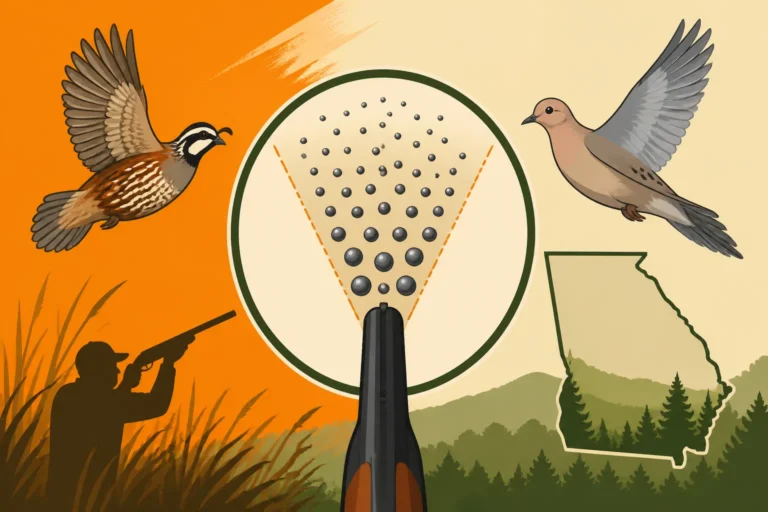
Choke tubes are essential for tailoring your shotgun's pattern to the specific hunting scenario. For quail, which often flush in a chaotic burst at close to medium range, you want a wide, quickly spreading pattern to maximize your chances of hitting a fast-moving target.
Cylinder and Skeet chokes offer the widest patterns, spreading the shot quickly after it leaves the barrel. These are fantastic for very close-range flushes, which are common when dogs are working tight cover or in thick pine plantations where visibility is limited.
Improved Cylinder is a versatile choke that offers a slightly tighter pattern than cylinder or skeet, making it effective for slightly longer shots while still being open enough for close-range action. Many hunters choose an Improved Cylinder in their first barrel for the initial covey flush, followed by a Modified choke in the second barrel for any stragglers that fly out further.
Modified choke provides a tighter pattern, good for birds that get out a bit further before you can get a shot off. For a double gun, a common setup for Choke Choice for Fast Covey Flushes might be Improved Cylinder in the first barrel and Modified in the second.
Avoid anything tighter than Modified, like Full or Extra Full, as these patterns are too constricted for the rapid, close-range shooting that quail hunting typically demands. They are designed for longer range shots on larger birds like turkey or waterfowl.
The Critical Importance of Shotgun Fit
You could have the most expensive, beautifully engraved upland gun in the world, but if it doesn't fit you, you'll struggle to shoot it effectively. A shotgun is meant to be an extension of your body, pointing naturally to where your eyes are focused. Unlike rifles, where sights allow for precise aim, shotguns are pointed, not aimed, and proper fit is paramount for consistent performance on those lightning-fast quail.
Dimensions That Dictate Fit
Several key dimensions determine how well a shotgun fits an individual shooter. Understanding these can help you evaluate a gun off the rack or inform adjustments needed by a qualified gunsmith.
Length of Pull (LOP): This is the distance from the trigger to the middle of the buttstock. If the LOP is too short, you might find your thumb hitting your nose on recoil or your head craning forward. Too long, and it'll feel awkward to mount, catching on your clothing. The ideal LOP allows for a smooth, unhindered mount and comfortable cheek weld, bringing your eye directly down the rib.
Drop at Comb and Heel: These measurements refer to how much the stock drops from the line of the barrel. The "comb" is where your cheek rests, and the "heel" is the top of the buttstock. Proper drop ensures your eye naturally aligns with the rib when the gun is mounted. If the drop is too much, you'll be looking over the rib; too little, and you'll be looking at the back of the action.
Cast: This refers to the horizontal deviation of the stock from the center line of the barrels. Most people are right-handed (and right-eye dominant), so stocks often have a slight "cast-off" to move the stock slightly to the right, aligning the right eye better with the rib. Left-handed shooters might need "cast-on."
Pitch: This is the angle of the buttstock relative to the barrel. It affects how the recoil is felt and how the gun sits in your shoulder pocket. An improper pitch can cause discomfort or cause the gun to print high or low.
The Try Before You Buy Philosophy
While measuring these dimensions can give you a starting point, nothing beats physically shouldering and swinging a shotgun. If possible, try to swing the gun in a simulation of flushing a bird. Pay attention to how it feels. Does it come to your shoulder smoothly? Does your eye naturally align with the rib without having to crane your neck or adjust your head? Does it feel balanced, or is it too muzzle-heavy or butt-heavy?
If a gun doesn't fit perfectly off the shelf, don't despair! Many stocks can be adjusted by a competent gunsmith. Length of pull can be modified by adding or removing spacers, or changing the recoil pad. Comb height can be raised. Even cast can sometimes be altered. Investing in a gun that truly fits you will pay dividends in comfort, confidence, and ultimately, success in the field, making those Working Pointing Dogs on Wild Georgia Quail moments even more rewarding.
Crucial Considerations for Georgia's Upland Environment
Hunting quail in Georgia, whether on a pristine plantation or wild covey country, presents specific environmental challenges. The weather can be warm, even in late fall and winter, and the terrain can be varied, from open pine stands to dense thickets. Your gear, including your upland gun, needs to be up to the task.
Weight and Carry Comfort for Long Walks
Quail hunting, especially on managed plantations, involves a lot of walking. You'll be covering miles over varied terrain, often through knee-high broomstraw or even thicker cover. A heavy shotgun quickly becomes a burden, leading to fatigue and diminished performance. This is why lighter guns, often in 20 or 28 gauge, are so highly prized in the upland world.
Consider the gun's overall weight and its balance. A gun that feels heavy in the store can feel like a lead pipe after a few hours of walking. A good balance point, often slightly forward of the receiver, makes the gun feel more nimble and less fatiguing to carry and swing. If you're planning on long days afield, perhaps even several days in a row, prioritizing a lightweight and well-balanced gun will significantly enhance your experience. Even when researching potential managed hunts or accessing private land, tools like GoHunt can provide topographical insights, giving you a better idea of the terrain and whether a lighter gun might be a better companion for the day's adventure.
Durability and Weather Resistance
Georgia weather can be unpredictable. A crisp, sunny morning can quickly turn into a damp, drizzly afternoon. Your upland gun needs to be able to handle these conditions without seizing up or rusting overnight. While beautifully blued steel and walnut stocks are traditional, they do require diligent care.
Many modern upland guns feature more weather-resistant finishes on their metal parts, such as stainless steel or various corrosion-resistant coatings. Synthetic stocks are also an option, offering ultimate durability and resistance to moisture, though they lack the classic aesthetic. If you opt for a traditional wood and steel gun, be prepared for regular cleaning and oiling, especially after a damp hunt. Pay particular attention to the internal mechanisms of semi-automatics, which can be more susceptible to fouling and moisture ingress. Properly maintaining your firearm is key to its longevity and reliable performance, ensuring it’s ready for the next Hunting a Managed Quail Plantation outing.
Recoil Management for Multiple Shots
While quail are small birds, a day of shooting can involve many shots, especially if you're flushing numerous coveys. If you're sensitive to recoil, or simply want a more comfortable shooting experience, considering how your gun manages recoil is important.
As mentioned, 20 and 28 gauge shotguns inherently have less recoil than a 12 gauge. Semi-automatic shotguns, with their gas or inertia systems, significantly reduce felt recoil. Even within break-action guns, some designs and stock materials can help dissipate recoil better than others. Adding an aftermarket recoil pad can also make a significant difference, turning a jarring experience into a much more pleasant one. Remember, reduced recoil means less flinching, better follow-through, and more accurate second shots, which are often critical on a scattered covey.
| Shotgun Type | Pros | Cons | Typical Weight (Field) | Recoil Management |
|---|---|---|---|---|
| Side-by-Side | Classic feel, good balance, simple, light | Wide profile, can be expensive | 6-7.5 lbs | Moderate |
| Over/Under | Sleek profile, durable, versatile | Can be heavy, can be expensive | 6-8 lbs | Moderate |
| Semi-Automatic | Reduced recoil, faster follow-up shots | Heavier, more complex cleaning, more parts | 6.5-8.5 lbs | Low |
| Pump-Action | Rugged, reliable, affordable | Manual operation, higher felt recoil | 6.5-8 lbs | High |
Accessories and Training for the Upland Hunter
Beyond the shotgun itself, a few key accessories and a commitment to practice can elevate your quail hunting experience significantly. The right gear helps you stay comfortable and efficient, while regular training ensures you're ready when the moment of truth arrives.
Essential Upland Hunting Accessories
Having the right supporting gear can make a big difference in your comfort and effectiveness on a quail hunt.
Upland Vest: A good upland vest is indispensable. It should be lightweight, breathable, and have plenty of pockets for shells, a water bottle, and a bird bag big enough for your limit. Look for vests with a comfortable fit that doesn't impede your gun mount. Many vests come with blaze orange panels for safety, which is always a good idea in any hunting scenario. For information on specific gear, you might check out Upland Vests With Water Capacity.
Snake Boots: Depending on the time of year and the specific terrain in Georgia, snake boots are a wise investment. They offer protection from snakebites, which are a real concern in warm weather and brushy habitats. Even if you don't encounter a snake, the added ankle support and durability are beneficial for all-day walking.
Eye and Ear Protection: This might seem obvious, but it's often overlooked in the field. Always wear eye protection to guard against stray shot, twigs, or debris, and ear protection to prevent hearing damage from repeated gunshots. Small, comfortable earplugs or electronic earmuffs that amplify sounds (like dog bells or calls) while cutting out harmful gun noise are excellent choices.
Ammunition: Choose appropriate shot size for quail. Typically, 7.5 or 8 shot in lead is preferred. Consider quality ammunition that patterns consistently in your chosen shotgun. Also, consult resources like Shot Size for Quail and Dove for more detailed recommendations.
Practice Makes Perfect: Sharpening Your Skills
No matter how perfectly your shotgun fits or how elegant it looks, consistent practice is what truly makes a great upland shooter.
Skeet and Sporting Clays: These clay target sports are designed to simulate bird hunting scenarios, making them ideal for practicing your swing, lead, and follow-through. Skeet is excellent for rapid, close-range shots, mimicking covey flushes, while sporting clays offers a wider variety of targets at different angles and distances, preparing you for diverse field conditions.
Mounting Practice: Even without live birds or clay targets, simply practicing mounting your unloaded shotgun in front of a mirror can significantly improve your muscle memory. Focus on a smooth, consistent mount that brings the gun to your shoulder and your eye naturally onto the rib every time. This speed and fluidity are crucial when a covey bursts from underfoot.
Gun Familiarity: Spend time with your chosen upland gun. Learn its balance, how it swings, and how to operate its safety and action instinctively. The more familiar you are with your firearm, the more confident and effective you'll be when that moment arrives to make a clean shot on a rising quail.
Disclaimer
This article is for general informational purposes only and does not constitute professional advice. Laws, prices and regulations vary by location and change over time. Consult a qualified professional for guidance on your specific situation.