Climbing Sticks for Mountain Hardwoods
Hunting Georgia's vast mountain hardwoods can be a real challenge, full of steep climbs, thick rhododendron patches, and often, a surprising lack of obvious deer sign until you're right on top of it. One of the biggest frustrations for many hunters is trying to get into an elevated position quietly and efficiently when you're miles from the truck, especially when you need to be adaptable. This guide is all about tackling those uphill battles and sparse cover by equipping you with the knowledge to choose, use, and master climbing sticks for your next mountain hunt in the Peach State.
Why Climbing Sticks are Essential for Georgia Mountain Hardwoods
When you picture hunting in Georgia, many folks immediately think of sprawling pine plantations or agricultural fields in the Piedmont and Coastal Plain. But up in the Chattahoochee National Forest, it's a completely different ballgame. We're talking about rugged, steep terrain covered in mature hardwoods, and that environment demands a specific approach if you want to be successful and, more importantly, stay safe. Climbing sticks are absolutely vital for anyone serious about hunting these parts.
Navigating Steep Terrain and Sparse Cover
Let's be honest, hunting the North Georgia mountains is a workout. You're hiking up and down steep slopes, crossing rocky creeks, and pushing through dense undergrowth. Unlike lower elevations where thickets and brush might offer some natural ground-level concealment, mountain hardwoods often have a much cleaner understory, especially after the leaves have fallen. This makes finding a spot to hide on the ground, let alone get a good vantage point, incredibly difficult.
Trying to hunt from the ground in such open conditions puts you at a huge disadvantage. Deer have an incredible ability to spot movement, and without much natural cover, you're practically silhouetted against the forest floor. That's where climbing sticks come in. They allow you to quickly and quietly ascend a tree, getting you above that line of sight. This elevation not only hides your profile but also helps you see further, spotting deer moving through the timber long before they'd ever catch a whiff or glimpse of you on the ground. It’s about leveraging the vertical dimension to compensate for what the horizontal landscape lacks in terms of natural concealment.
Adaptability for Changing Conditions
One of the truisms of mountain hunting is that conditions can change on a dime. A wind direction you planned on can shift, a thermal current might swirl unexpectedly, or a previously hot travel corridor can go cold overnight as deer alter their patterns. If you're relying on a permanently set stand or a bulky ladder stand, you're pretty much stuck. You've invested too much time and effort to move it quickly.
Climbing sticks, coupled with a lightweight hang-on stand, offer unparalleled adaptability. They are designed to be mobile. You can pack them in, set up for a morning hunt, and if the action isn't there or the wind shifts unfavorably, you can take them down and move to a completely new location for the afternoon or the next day. This ability to relocate quickly is crucial in the mountains where deer can be spread out, and their movements are heavily influenced by mast crops, hunting pressure, and, of course, the Wind and Thermals on a Mountain Ridge. This nimbleness allows you to follow the deer, react to changing conditions, and stay in the game rather than being locked into a suboptimal spot. Think of it as your portable, elevated ambush platform that can be deployed wherever and whenever the deer sign dictates.
Minimizing Scent and Maximizing Visibility
Deer in the mountains are smart, wary animals. They've evolved with predators, and they use their senses, particularly their nose, to stay alive. Getting above a deer's line of sight is one thing, but getting above their scent cone is equally, if not more, important. While no elevation can entirely eliminate your scent, a good 20-25 feet up significantly disperses it, making it much harder for a deer to pinpoint your location, especially when combined with favorable wind conditions.
Beyond scent, visibility is drastically improved from an elevated position in hardwood timber. From the ground, your view is often obstructed by saplings, brush, and the subtle undulations of the terrain. Once you're up a tree, you can often see much further into the woods, picking up on subtle movements or faint deer trails that would be invisible from below. This enhanced visibility is not just about spotting deer but also about understanding their travel patterns, identifying pinch points, and anticipating their next move. In the often-open canopy of a mountain hardwood forest, an elevated position gained with climbing sticks can mean the difference between seeing a deer pass by unawares and having it walk right under your stand, giving you ample time for a shot opportunity.
Different Types of Climbing Sticks and Their Features
The market for climbing sticks has exploded over the years, and for good reason. Hunters are demanding lighter, more efficient, and safer ways to get into the trees. When you're looking at climbing sticks for hunting Georgia's mountain hardwoods, understanding the various types and features is crucial to making an informed decision. Not all sticks are created equal, and what works great in a flat pine forest might not be ideal when you're scaling a steep mountainside.
Single-Section vs. Multi-Section Sticks
Climbing sticks generally come in two main configurations: single-section units or multi-section (often three, four, or even five-piece) stackable/collapsible units.
Single-section sticks are usually quite robust and offer a fixed height per stick, often around 20-30 inches. They are very sturdy and have fewer moving parts, which can be a real plus for durability and ease of use in cold weather or when wearing thick gloves. The downside? They can be cumbersome to carry. Imagine strapping three or four individual 30-inch sections to your pack; they'll likely extend well above and below, making it difficult to navigate through dense brush or even walk quietly without snagging. They might be a good choice if you're not hiking far or if you prioritize absolute rigidity over packability.
Multi-section sticks are the darlings of the mobile hunting community, especially for mountain hunters. These sticks are designed to either nest inside each other or stack neatly together, creating a much more compact package that's easier to carry on your pack. For example, a four-pack of 20-inch stackable sticks might form a single unit that's only 40-50 inches long, easily fitting below the top of most larger hunting packs. This compact nature significantly reduces snags, minimizes noise, and makes those long, strenuous hikes into remote mountain areas far more manageable. The trade-off can sometimes be a slight increase in weight due to more attachment points and mechanisms, or a perceived (though often negligible with quality sticks) decrease in rigidity compared to a solid single piece. However, for sheer portability and ease of navigation through Georgia's rugged mountain terrain, multi-section sticks are generally the preferred choice.
Attachment Methods and Stability
How a climbing stick attaches to a tree is paramount for both safety and silent operation. You don't want a stick to slip mid-climb, and you certainly don't want it creaking or groaning every time you shift your weight.
Most sticks use a strap system, but there are variations. Cam buckle straps are very common. They are quick to deploy and tighten, allowing you to secure the stick firmly against the tree. However, it's crucial to ensure the strap is fed correctly through the buckle and pulled as tight as possible to prevent any slippage. Some hunters prefer rope-based systems, often using a "Rope Mod" or a specific design that incorporates a single piece of rope or a series of knots to cinch the stick tight. These can be incredibly secure and often lighter than cam buckles, but they can take a bit more practice to master for quick, silent deployment.
The key to stability, regardless of the attachment method, is a tight, snug fit against the tree. You want the stick to become an extension of the tree itself, with no wobbling or play. The standoffs – the small arms that push the stick away from the tree trunk – also play a critical role. They should be long enough to provide ample foot clearance, but not so long that they create excessive leverage, which can make the stick feel less secure. When choosing, consider the types of trees you'll encounter. Smooth bark, like on a young poplar, will require a tighter strap than rough, furrowed bark found on mature oaks. Practicing your setup in different tree types at home before hitting the woods is invaluable.
Materials, Weight, and Portability
The material from which climbing sticks are constructed directly impacts their weight, durability, and ultimately, your comfort during those long mountain treks.
- Aluminum: This is by far the most common material. Aluminum sticks offer an excellent balance of strength and light weight. They are durable enough to withstand the rigors of mountain hunting, including bumps and scrapes against rocks and trees. Most high-quality multi-section sticks are made from aluminum tubing. They generally provide a good value for their performance and longevity.
- Steel: While not as prevalent for climbing sticks specifically (more common in ladder stands or heavier hang-on stands), steel sticks do exist. They are incredibly strong and virtually indestructible, but the significant increase in weight makes them less desirable for mobile hunting in the mountains where every ounce counts. Unless you're hunting an area where you can literally park at the base of your tree, steel is usually too heavy for a serious mountain hunter.
- Carbon Fiber: This is the premium, high-performance option. Carbon fiber sticks are exceptionally lightweight and very strong, making them ideal for hunters who prioritize minimal weight above all else, often those who venture deep into backcountry wilderness. The drawback, as you might expect, is the significantly higher price tag. They are also more susceptible to impact damage if dropped on sharp rocks compared to aluminum, but their weight savings can be a game-changer for extreme mobile setups.
For Georgia mountain hardwoods, where long hikes with steep elevation changes are the norm, weight is king. You want the lightest, most packable sticks that still offer adequate height and rock-solid stability. Every pound you shave off your gear means more energy for the hunt and a more comfortable journey in and out of the woods.
Choosing the Right Climbing Sticks for Your Georgia Mountain Hunt
Selecting the perfect set of climbing sticks isn't just about grabbing the first ones you see on sale. For the specific demands of hunting Georgia's mountain hardwoods, you need to think critically about how they'll perform in the field. This isn't flat ground hunting; it's rugged, often steep, and requires gear that can stand up to the challenge while remaining portable.
Matching Sticks to Tree Types
Georgia's mountain hardwoods offer a variety of tree species, from towering oaks and poplars to gnarly hickories and maples. Each tree has its own characteristics that can affect your stick setup.
- Diameter: The circumference of the tree trunk matters. Most climbing sticks are designed to accommodate a range of diameters, but some straps might be too short for exceptionally large, old-growth hardwoods, or too long to get a secure cinch on very slender saplings. Ensure the attachment system can securely grip the trees you anticipate climbing.
- Bark Texture: This is a big one. Rough, deeply furrowed bark (like on an old oak or hickory) provides excellent grip for your sticks, helping to prevent slippage. Smooth bark (like on a young poplar, beech, or even some pines) can be much trickier. For smoother bark, you'll need an attachment system that can be cinched down incredibly tight and potentially have features that dig in slightly without damaging the tree. Some sticks have integrated teeth or rubber grippers that help in these situations. Always test your sticks on various tree types at home to understand their limitations and strengths before you're out in the dark, trying to set up on a slick-barked tree.
- Straightness and Obstructions: While not directly a stick feature, the tree's straightness is crucial. Sticks are designed for relatively straight trunks. A severely leaning or crooked tree will make setting sticks difficult and potentially unsafe. Also, consider low-hanging limbs or other obstructions that might interfere with your climb or stand placement. In the mountains, finding that perfect, straight, limb-free tree can sometimes be a treasure hunt in itself. You might need to carry a small folding saw to clear minor obstructions, but avoid any tree that requires significant modification.
Considering Packability and Your Carry System
When you're hoofing it deep into the Chattahoochee National Forest, every piece of gear needs to earn its place in your pack. Climbing sticks, by their nature, are bulky. Their packability is paramount.
- Stacking vs. Nesting: As mentioned, multi-section sticks are usually the way to go. Consider how they stack or nest. Do they form a tight, rattle-free unit? Many top brands, including offerings you might find featured on platforms like GoHunt, prioritize this compact design for serious backcountry hunters. Loose sticks rattling against each other or your pack can alert deer long before you reach your desired location. Some sticks even come with integrated bungee cords or straps to hold them together securely.
- Weight Distribution: How do the sticks sit on your pack? Can you attach them vertically along the sides or securely to the back? You want the weight distributed evenly and close to your back to maintain balance, especially when traversing uneven mountain terrain. A poorly balanced load will tire you out quickly and increase your risk of a stumble or fall.
- Noise Management: This cannot be stressed enough. Metal-on-metal contact is a deer's worst nightmare (and yours, if you make it). Ensure your sticks, when packed, are silent. This might involve wrapping certain sections with camouflaged athletic tape, using bungee cords, or employing specific packing strategies to prevent them from clanking together as you walk. Even the straps themselves can sometimes flap in the wind, so ensure everything is tucked away neatly. Quiet travel is non-negotiable in the mountains.
Prioritizing Safety and Durability
Hunting from an elevated position inherently carries risks. Your climbing sticks are a critical link in your safety chain. Never compromise on safety for a few dollars or a slight weight saving.
- Weight Rating: Always check the manufacturer's weight rating for the sticks. This rating includes you and your gear. Be realistic about your total hunting weight, especially when bundled up for a Cold-Weather Sitting Strategy in a Georgia January. If you're near the limit, it's safer to size up or choose a more robust model.
- Construction Quality: Inspect the welds, joints, and overall finish. Are there any sharp edges that could fray straps or cut your hands? Do the steps feel solid, with adequate grip? Pay attention to the attachment points for the straps; these are high-stress areas.
- Durability in Field Conditions: Mountain hunting is tough on gear. Your sticks will get scraped, bumped, and potentially dropped. Good sticks are designed to withstand this abuse without bending or breaking. Look for sticks with a good reputation for durability.
- Pairing with a Safety Harness: This isn't just about the sticks, but it's critically related. You should never climb or hunt from a treestand without a full-body safety harness. Learn how to use it properly, especially how to stay tethered from the moment your feet leave the ground until they return. Platforms like GoHunt often emphasize safety, and any reputable gear company will include clear safety warnings and instructions. Your sticks get you to the height, but your harness keeps you safe at that height.
By carefully considering these factors, you can select climbing sticks that not only meet the unique challenges of Georgia's mountain hardwoods but also provide a safe, efficient, and quiet means of reaching your elevated ambush spot.
Mastering the Art of Climbing Stick Setup in the Mountains
Having the right climbing sticks is only half the battle; knowing how to set them up effectively and safely in real-world mountain conditions is where skill comes in. This isn't a parking lot drill; it's about executing a quiet, efficient setup when the stakes are high, sometimes in low light, on uneven terrain.
Scouting and Tree Selection
Before you ever pull a stick out of your pack, the hunt begins with meticulous scouting. In mountain hardwoods, proper tree selection is absolutely critical for a successful stand setup.
- Identify Key Deer Movement: Look for natural funnels, benches, saddles, and ridge lines where deer are likely to travel. Reading a Ridge for North Georgia Deer is paramount. Fresh tracks, droppings, rubs, and scrapes are all indicators. Your stand placement should intercept these natural travel corridors.
- Analyze Wind and Thermals: Understanding how wind and thermals behave on a mountain slope is vital. You want your scent to blow away from where deer will approach. Often, this means setting up on the leeward side of a ridge or high enough to get above the prevailing thermal currents. Scout with a wind checker to see how air currents behave at different elevations and times of day.
- Choose the "Right" Tree: This is often the trickiest part. You need a tree that is:
- Straight: Essential for safe and stable stick attachment and treestand hanging.
- Healthy: Avoid dead, leaning, or diseased trees that could break or fall.
- Appropriate Diameter: Wide enough for secure stick attachment, but not so wide that your sticks’ straps can't reach around it.
- Offers Cover: Even in open hardwoods, look for small clusters of pines, a larger diameter tree, or a natural fork that can help break up your silhouette.
- Allows Clear Shots: Identify potential shooting lanes for both bow and rifle. Consider the direction deer are likely to approach and depart.
- Provides a Quiet Approach/Exit: Can you get to and from the tree without alerting game? Look for natural terrain features that provide cover for your entry and exit routes. This might be a dry creek bed, a thick rhododendron patch, or simply coming in from a different ridge line than the deer are using.
Remember, the perfect tree is often a compromise. You might find a great travel route, but the only suitable tree is a little exposed. Weigh your options carefully.
Step-by-Step Installation Techniques
Once you've chosen your tree, a systematic and practiced approach to stick installation is key to staying quiet and safe.
- Clear the Base: Before you do anything, clear any leaves, twigs, or loose debris from around the base of the tree. This ensures you have solid footing and don't make crunching noises when you retrieve your sticks or stand.
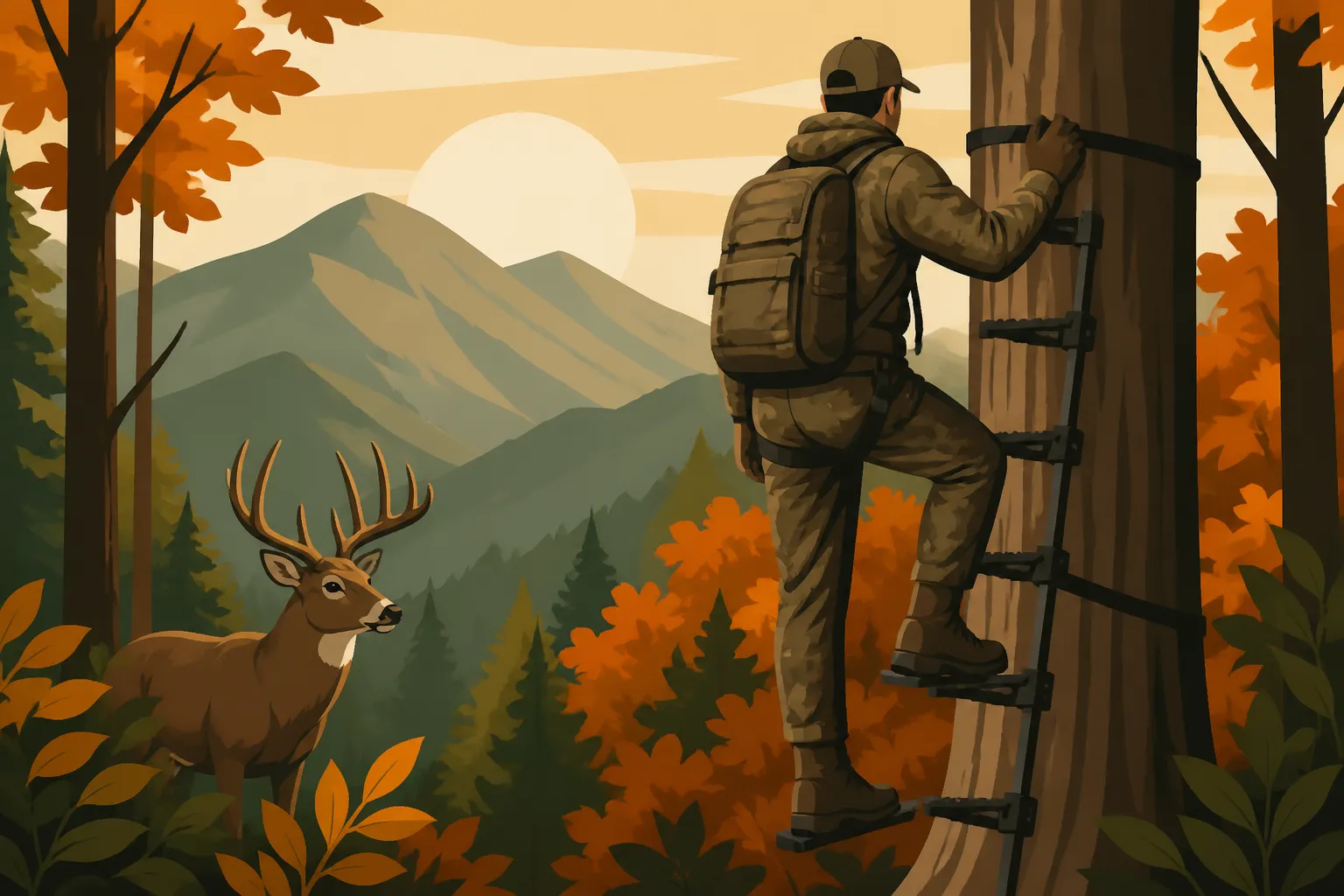
- Hang Your First Stick: Start with the lowest stick, positioning it at a comfortable height to easily step onto. Secure it tightly. Ensure it's level, or slightly angled to account for any tree lean, and that the steps are pointed away from the direction you want to climb. This first stick is your foundation.
- Attach Your Safety Harness: As soon as you step off the ground, immediately attach your lineman's belt (a component of your safety harness) around the tree. This keeps you safely tethered while you're installing subsequent sticks and your treestand. Never work aloft without being tethered.
- Work Your Way Up: With your lineman's belt secured, take the next stick. Reach up as high as you comfortably can, place the stick, and cinch it tight. The goal is to place each stick so that the top step is within easy reach from the previous stick, allowing for a smooth and controlled climb. Don't stretch or overreach.
- Maintain Proper Spacing: While climbing stick steps might be uniform, the height you gain depends on how far apart you space them. Practice at home to find a comfortable and efficient spacing that matches your stride. In the mountains, you'll want enough height to get above the critical scent zone and gain a good vantage point, usually 15-25 feet, sometimes more.
- Silent Operation: This is where practice pays off. Every movement, every strap adjustment, every step should be as quiet as possible. Avoid letting sticks bang against the tree or against each other. Some hunters will tape sections of their sticks or apply sound-deadening material to prevent metal-on-metal noise. Take your time, focus on controlled movements, and listen to the sounds you're making.
Practicing for Quiet and Efficient Ascent
Just like anything else, proficiency with climbing sticks comes with practice. You wouldn't hit the range for the first time on opening day, and you shouldn't try out a new stick setup for the first time in the hunting woods.
- Backyard Drills: Set up your sticks in your backyard or a safe area near your home. Practice the entire sequence: pulling them from your pack, clearing the base, attaching the lineman's belt, installing each stick, hanging your treestand, and then reversing the process.
- Simulate Conditions: Practice in the dark, using only a headlamp, similar to how you'll be setting up before a pre-dawn hunt. This helps you get a feel for the sticks without relying on full daylight. Wear the actual hunting clothes and gloves you'll use to understand how they might impede movement or create noise.
- Focus on Quietness: Actively listen to the sounds you make during practice. Identify any squeaks, clanks, or scuffs, and find ways to mitigate them. Can you feed the strap through the buckle more silently? Can you place your feet on the steps without scraping?
- Build Muscle Memory: The more you practice, the more intuitive the process becomes. You'll develop muscle memory, allowing you to install your sticks efficiently and quietly even under pressure. This confidence in your gear and technique will translate directly into a calmer, more focused approach when it matters most in the woods. Platforms like GoHunt often have resources or community forums where hunters share tips and tricks for silent setup.
Integrating Climbing Sticks with Your Treestand and Hunting Strategy
Climbing sticks are rarely used in isolation. They are typically the means to an end: getting your hang-on treestand into position. The real art of mountain hunting with sticks involves seamlessly integrating them with your chosen stand and overall hunting strategy to maximize your chances of success.
Compatible Treestand Types
While there are many types of treestands, climbing sticks are almost exclusively paired with hang-on stands, sometimes called fixed-position stands. This combination is the epitome of mobile hunting, offering flexibility that other stand types simply can't match in rugged terrain.
- Hang-on Stands: These stands consist of a platform and a seat, designed to be strapped securely to a tree after your climbing sticks have been installed. They are generally lightweight and compact, making them ideal for packing into remote mountain locations. The beauty of a hang-on stand is its versatility; you can hang it at almost any height you desire, and you can orient it in any direction around the tree for optimal shooting lanes. Many models feature adjustable platforms to compensate for leaning trees, a common scenario in the mountains. When you're constantly adapting to game movement, Scouting Georgia Public Land Before Season, and changing wind patterns, a lightweight hang-on stand coupled with climbing sticks is your best friend. This setup allows you to set up quickly in a new area, hunt it, and then move on with minimal fuss.
Ladder stands and traditional climbing stands generally aren't practical for deep mountain hunting. Ladder stands are too heavy and cumbersome to transport far from a vehicle, while climbing stands often struggle with the irregular, limby trees found in many mountain hardwood stands.
Strategic Placement for Optimal Shot Opportunities
Getting up the tree is one thing; making sure you're in a position for a clean shot is another. Strategic placement of your sticks and stand is paramount.
- Shooting Lanes: Before you even start climbing, visualize your shooting lanes. Where do you expect the deer to come from? Where are they likely to go? Position your stand so that your primary shooting lanes are as clear as possible. You might need to make some minor limb trimming (check WMA rules first!) but avoid excessive clearing that could make your stand too obvious. Remember, the goal is often a 15-30 yard shot with a bow, or a 50-100 yard shot with a rifle in the mountains, so your lanes need to be clear within those ranges.
- Tree Orientation: Consider the sun's position throughout the day. You don't want to be staring directly into the sun during prime hunting hours, nor do you want your silhouette highlighted by it. Also, position your stand on the side of the tree that offers the most concealment from the likely approach direction of deer.
- Entry and Exit Routes: Your stand location should also facilitate a quiet and undetectable entry and exit. Consider how you will approach your tree in the dark and how you will depart after the hunt without disturbing game. This might involve using terrain features as a screen or following a specific game trail that leads away from core deer activity. For example, if you're Hunting a Ridge-Top Saddle for Rutting Bucks, you'll want to ensure your path to and from the stand doesn't cross the saddle itself.
- Adjusting for Terrain: Mountain terrain is rarely flat. Your sticks and stand might need to compensate for an uphill or downhill slope at the base of the tree. Many hang-on stands have adjustable platforms to help keep you level, which is critical for comfort and safety.
Dealing with Mountain Weather and Thermals
Mountain weather is fickle, and understanding how climbing sticks can help you manage it is a key part of your strategy.
- Getting Above Thermals: In the mountains, thermals (air currents created by heating and cooling earth) are a huge factor. In the morning, cold air sinks, carrying your scent downhill. In the afternoon, as the sun warms the ground, air rises, carrying your scent uphill. By using climbing sticks to get 20-25 feet or higher, you can often get above the most active thermal currents, allowing your scent to disperse more effectively. This is particularly crucial during early archery season when mornings can be cool and afternoons warm, causing thermals to switch predictably.
- Wind Management: While thermals are somewhat predictable, wind can swirl wildly in mountain valleys and along ridges. Your elevated position, gained with sticks, helps your scent disperse further, but you still need to be hyper-aware of wind direction. Have multiple stand locations scouted for different wind directions, and be prepared to move if the wind shifts unfavorably. Sometimes, just a slight adjustment in your stand's angle around the tree can significantly improve your wind advantage.
- Cold Weather Considerations: If you're hunting late season, say during the Late-Season Food Sources for Georgia Whitetails period in January, you'll be dealing with colder temperatures. Climbing sticks can be cold to the touch, so consider gloves or grip tape. Your elevated position will also expose you more to the wind, so layering appropriately with good quality, breathable insulation is vital. Having a warm, stable platform that you can set up quickly helps minimize exposure during the setup process.
Maintenance and Longevity of Your Climbing Sticks
Your climbing sticks are a significant investment in your hunting success and, more importantly, your safety. Just like any other piece of critical gear, they require proper maintenance to ensure they perform reliably year after year in the rugged environment of Georgia's mountains. Neglecting them can lead to unexpected failures, which at worst could result in injury, and at best, a ruined hunt.
Post-Season Inspection and Cleaning
Once the last leaves have fallen and the hunting season wraps up, it's time for a thorough post-mortem on your gear. Don't just toss your sticks in the garage until next year.
- Visual Inspection: Go over every single stick section, paying close attention to the welds, pivot points, and attachment hardware. Look for any signs of cracks, bends, or deformation in the aluminum or carbon fiber. Even a hairline crack can compromise structural integrity. Check the steps for any looseness or excessive wear.
- Strap Assessment: The straps are perhaps the most critical component for securing your sticks. Inspect them for frays, cuts, abrasions, or sun damage. Look closely at the stitching where the straps connect to the stick body or buckles. If you use cam buckles, ensure they open and close smoothly and grip the strap securely without slipping. Rope-based systems need their ropes checked for wear and their knots for integrity. Even minor damage to a strap can escalate into a dangerous failure during a climb.
- Cleaning: Give your sticks a good cleaning. Mud, dirt, tree sap, and moisture can hide damage and accelerate corrosion. Use a mild soap and water solution, a brush, and then rinse thoroughly. Make sure to get into all the nooks and crannies.
- Lubrication (if applicable): If your sticks have any moving parts or pivot points (common on some nesting designs), apply a light lubricant like silicone spray or dry lubricant. Avoid oil-based lubricants that can attract dirt or degrade plastic components.
Performing this routine inspection not only prolongs the life of your gear but also gives you peace of mind knowing that your equipment is sound for the next season.
Replacing Worn Components
Even the best climbing sticks will experience wear and tear over time, especially with frequent use in abrasive mountain environments. Knowing when and how to replace components is part of responsible gear ownership.
- Straps and Buckles: These are often the first components to show significant wear. If straps are frayed, cut, or if cam buckles are no longer gripping firmly, they absolutely must be replaced. Many manufacturers offer replacement strap kits. It's crucial to use manufacturer-approved replacements to ensure compatibility and maintain the stick's original safety specifications. Do not try to jury-rig a fix with generic straps or rope if it's not designed for it; your life literally depends on these connections.
- Rubber or Plastic Grips: Some sticks have rubber coatings on the steps or rubber feet to help with tree grip. These can wear down or tear. While not as critical for safety as straps, worn grips can make climbing less comfortable and potentially less secure. Replace them if they're severely damaged.
- Hardware: Periodically check all bolts, pins, and rivets. Ensure they are tight and free from corrosion. If any show signs of bending or stress, contact the manufacturer for replacement parts or advice.
It's a good idea to keep a spare set of straps on hand, especially if you hunt frequently or far from home. A small repair kit with a spare strap could save a hunt, or prevent a dangerous situation, if a primary strap is damaged in the field.
Storing Sticks to Prevent Damage
How you store your climbing sticks during the off-season can greatly impact their longevity. Proper storage protects them from environmental damage and ensures they're ready to go when hunting season rolls around again.
- Dry Environment: Store your sticks in a cool, dry place. Humidity and moisture can lead to corrosion on metal parts, even aluminum. A shed, garage, or dedicated gear closet is ideal, as long as it's not prone to extreme temperature fluctuations or dampness.
- Out of Direct Sunlight: UV rays from the sun can degrade straps and any plastic or rubber components over time, making them brittle and weak. Avoid leaving your sticks outside or in a spot where they'll be exposed to prolonged direct sunlight.
- Organized and Protected: Store your sticks in a way that prevents them from being bumped, bent, or having heavy items stacked on them. Many multi-section sticks come with specific carrying bags or straps to keep them nested and secure. This also helps prevent accidental damage to other gear. If you don't have a dedicated bag, bundle them together tightly with bungee cords or Velcro straps to prevent them from clanking around or getting separated. Some hunters might even hang them from a pegboard or rack to keep them off the floor and away from potential hazards.
By being diligent with post-season inspection, proactive with component replacement, and mindful of proper storage, your climbing sticks will be a reliable part of your Georgia hunting arsenal for many seasons to come, helping you access those elusive mountain bucks year after year.
Disclaimer
This article is for general informational purposes only and does not constitute professional advice. Laws, prices and regulations vary by location and change over time. Consult a qualified professional for guidance on your specific situation.