Finding Ground That Sees Fewer Hunters
It’s a frustrating reality for many Georgia hunters: you scout diligently, wake up before dawn, and hike into what you think is a prime spot, only to find another truck already parked at the access point, or worse, someone already sitting in your ideal treestand location. It feels like every good hunting spot is constantly hammered by pressure. This guide is all about helping you outsmart the crowds and find those quiet, less-pressured pockets where the deer, turkeys, and other game can truly act naturally.
Why Most Hunters Flock to the Same Spots (and How to Spot Them)
We've all been there, drawn to areas that just look good on a map or have a reputation. It's human nature to seek convenience and follow perceived wisdom. But in hunting, especially on public land in Georgia, convenience and popularity often come at a cost: intense hunting pressure. Understanding why these spots are popular is the first step to finding the places others overlook.
The Common Traps: Easy Access and Obvious Features
Think about the typical hunter's approach. Most of us, after a long week of work, want to minimize the effort to get to our stand. This means areas with paved road access, well-maintained forest service roads, or even just a short walk from a pulloff, become magnets. Similarly, obvious features like easily identifiable food plots, clear-cut edges, or prominent creek crossings, while great for game, are also quickly discovered by every hunter with an aerial map. On opening day, especially for firearms season, these spots are often a parade of orange vests. It’s not that these areas don’t hold game; it’s that the game in these areas quickly learns to adapt to human presence, making them incredibly challenging to hunt effectively.
Consider a WMA that has a few well-known parking areas and a grid of old logging roads. You can bet that within a quarter-mile of those roads, the deer have seen plenty of orange and heard plenty of footsteps. The deer that survive in these areas become nocturnal almost immediately, moving only under the cover of darkness. This means your prime morning or evening sit might yield nothing but squirrels and songbirds. Recognizing these "pressure points" on any piece of land, public or private, is crucial. If it's easy for you to get to, it's easy for everyone else too.
How Pressure Shapes Game Behavior
Game animals, especially mature deer and wild turkeys, are incredibly intelligent and adaptive. They survive by recognizing and avoiding threats. When faced with consistent human pressure, their behavior changes dramatically. What was once a daytime feeding area might become a strictly nocturnal destination. Bedding areas shift from open, accessible timber to the densest, nastiest cover they can find. Turkeys, which might have gobbled aggressively from the roost and pitched down into an open field earlier in the season, will become silent and fly down deep into the woods, wary of every call and movement.
This behavioral shift is why hunting pressured areas can be so frustrating. You might be hunting what looks like a textbook funnel or a perfect turkey roost, but the animals simply aren't there during legal hunting hours. They’ve learned to use different routes, different bedding thickets, and different feeding times. They might even leave the immediate area entirely, seeking sanctuary on adjacent private land or deep within overlooked public acreage. Understanding this helps you appreciate why finding ground that sees fewer hunters isn't just about avoiding people, it's about finding animals that are acting like wild animals, not ones constantly dodging hunters.
Your Digital Toolkit for Uncovering Secluded Georgia Hunting Ground
In today's world, technology is your best friend when it comes to finding those hidden gems. Gone are the days of relying solely on paper maps or hearsay. Digital mapping applications offer an incredible advantage, allowing you to scout vast areas from your living room and identify potential low-pressure zones before you ever set foot in the woods.
The Power of Advanced Mapping Applications
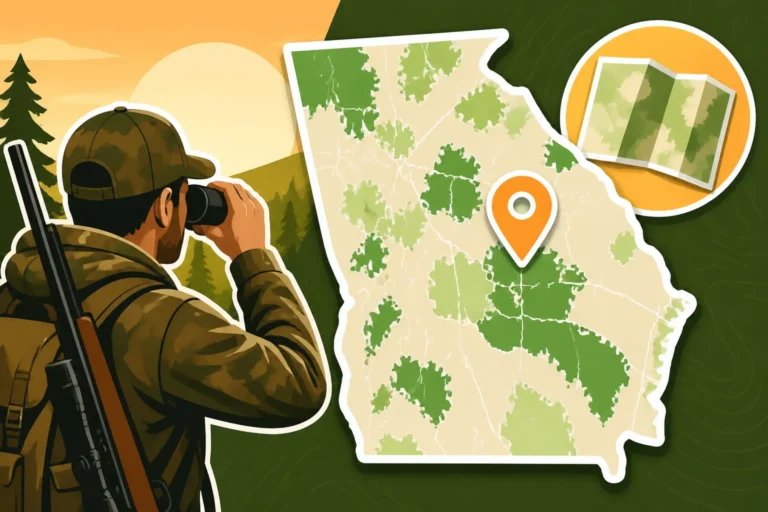
Tools like onX Hunt have revolutionized how we approach scouting. With layers showing public land boundaries, private property lines, landowner names, and detailed satellite imagery, you can quickly analyze vast swaths of Georgia terrain. The first step is to zoom out and look for large blocks of public land, such as parts of the Chattahoochee-Oconee National Forest or larger Wildlife Management Areas (WMAs). Then, instead of just focusing on the familiar access roads, start looking for parcels or corners that are isolated from main roads. Maybe there’s a small finger of public land extending into a large private tract, or a section of WMA that requires crossing a creek or navigating dense swamp. These are the kinds of features that deter casual hunters.
Don't just look for "green" public land; really study the landscape. Look for natural barriers like rivers, large swamps, or steep, rugged terrain that make access difficult. These aren't always immediately obvious from a basic map but become clear with detailed satellite views and topographic overlays. Another great resource is the Using the Georgia Outdoors Map Tool which can give you a quick overview of WMA boundaries and access points, but combine that with more detailed apps to find the nitty-gritty details. If you're a serious data hound, platforms like GoHunt can provide even more granular detail and analysis for hunt planning, helping you cross-reference potential spots with biological data or past harvest trends if available.
Interpreting Topography and Access Points
Topographic maps are your secret weapon for finding unpressured ground, especially in the North Georgia mountains. Most hunters stick to creek bottoms or ridge tops because they're easier to traverse. However, the true gems often lie on those steep, gnarly side hills, deep ravines, or overlooked saddles that require significant effort to reach. Look for abrupt changes in elevation, tight contour lines indicating steep cliffs, or areas where multiple drainages converge, creating natural funnels that are tough to get to. These features can act as natural barriers, keeping most hunters out. Reading a Ridge for North Georgia Deer is a great skill to develop here.
When examining access points, don't just look for roads. Consider hiking trails, old logging paths that are overgrown, or even power line cuts. Then, critically evaluate how difficult it would be to reach a specific hunting spot from these access points. Are there swamps to cross? Thick briar patches? Extremely steep climbs? The harder it looks to get there, the less likely it is to be heavily hunted. Remember, even a small, isolated patch of public land that requires a 45-minute walk through thick brambles might hold undisturbed game, simply because few people are willing to make the trek. This strategy is about finding where the physical effort creates a buffer from other hunters.
The Art of the Hunt: Beyond the Beaten Path
Once you’ve identified potential low-pressure areas on your map, the next step involves old-fashioned footwork and smart scouting. This is where you transform theoretical knowledge into real-world success, putting in the effort that most hunters simply aren't willing to exert.
Walking Further to Find Undisturbed Pockets
This is perhaps the most fundamental and effective strategy for finding ground that sees fewer hunters: get away from the roads and easily accessible trails. The vast majority of hunters on public land don't venture more than a quarter to a half-mile from their vehicle. If you're willing to go a mile, two miles, or even further, you dramatically increase your chances of finding unpressured game. This means donning a comfortable pack, wearing durable boots, and preparing for a strenuous hike. When you're considering How Far to Walk From a Forest Road, think past what feels comfortable and push yourself a little more.
As you move deeper into the woods, pay close attention to the amount of human sign you encounter. If you're still seeing boot tracks, old flagging tape, or discarded water bottles a mile in, keep going. You're looking for areas where the only tracks are from deer, hogs, or turkeys. These deeper pockets often provide sanctuary for mature animals that have learned to avoid closer encounters. It's a commitment, both physically and mentally, but the reward of encountering unpressured game that behaves naturally is truly worth the effort.
Scouting Smart for Unpressured Game Sign
Scouting isn't just about finding rubs and scrapes; it's about interpreting the quality and location of that sign in relation to human activity. In pressured areas, you might find rubs along a well-used trail, but they're often older, made at night, or by younger bucks. In unpressured areas, you'll find fresh sign deeper in the woods, often in thick cover, and sometimes during daylight hours. Look for heavy trails leading to and from thick bedding areas that are far from any road. Reading Georgia Mud for Fresh Deer Movement can tell you if game is using a specific area, and how recently.
When scouting for turkeys, listen for distant gobblers that aren't being hammered by calls, or look for fresh scratchings in secluded creek bottoms or dense pine thickets. For deer, search for large tracks, big rubs on bigger trees, and clusters of fresh droppings in areas that feel remote and untouched. These are indicators that the resident game feels secure enough to move freely. Also, consider the seasonal aspect of scouting. Scouting Georgia Public Land Before Season is critical, but late-season scouting after deer season closes can also reveal new patterns. Don't be afraid to look into nasty, overgrown clear-cuts or swamp edges; these areas provide excellent cover and are often avoided by hunters.
Timing Your Entry for Solitude and Success
Beyond where you hunt, when you hunt can also make a huge difference in avoiding other hunters. While opening day on public land often resembles a tailgate party, the middle of the week, especially Tuesday through Thursday, typically sees a dramatic drop in hunter numbers. Most people hunt weekends, so if you have the flexibility, take advantage of those quieter weekdays. Similarly, the mid-season slump, after the initial frenzy of the opening weeks but before the late-season push, can offer excellent opportunities. Hunting the Late-Season January Rut Lull is a perfect example of a time when many hunters have given up, but big bucks are still moving.
Weather conditions also play a significant role. A rainy, cold, or windy day will deter many fair-weather hunters, leaving the woods largely to those dedicated enough to brave the elements. While it might not be the most comfortable hunt, these are often the days when deer are most likely to be up and moving, especially if the pressure is low. Consider hunting during periods when the weather is less than ideal; you'll not only encounter fewer people but often find game more active. Early morning and late evening are always prime times, but pushing into mid-day in an unpressured area can also be surprisingly productive when deer feel safe to move.
Unlocking Overlooked Public and Private Land Opportunities
Finding ground that sees fewer hunters isn't just about avoiding popular spots; it's about actively seeking out those underutilized corners of Georgia, whether on public land or through careful cultivation of private landowner relationships.
Niche Spots on Public Land
Georgia has a fantastic array of public hunting land, but not all of it sees equal pressure. While the large, well-known WMAs get a lot of attention, consider looking for smaller, more isolated parcels that are harder to find or access. These might be small fragments of National Forest land surrounded by private property, or obscure corners of a WMA that are hemmed in by water or extremely dense cover. Hunting Piedmont Creek Bottom Funnels or Hunting Okefenokee Swamp Fringe Deer are examples of specific habitat types that can be incredibly productive but also challenging enough to deter the casual hunter.
Don't overlook areas that might be less "pretty" or harder to traverse. Thick, overgrown clear-cuts from a few years back, impenetrable laurel thickets, or deep cypress swamps might seem like too much work, but these are precisely the places mature deer and wary turkeys will seek refuge from hunting pressure. Utilize your mapping apps to find these green or brown blobs on the map that don't have easy roads or trails leading into them. It takes a different mindset—one that sees difficulty as an opportunity rather than a deterrent. Sometimes, the nastiest, most snake-infested corners are exactly where you'll find unpressured game.
Earning Private Land Access Off the Radar
Gaining access to private land can be a game-changer for avoiding crowds, but even private land can be heavily hunted if it's leased or owned by a large group. To find truly unpressured private ground, you need to think outside the box. Instead of large timber companies or well-known hunting clubs, focus your efforts on smaller landowners, especially those who might not actively hunt or have a relationship with other hunters. Farmers, in particular, often appreciate help managing wildlife that causes crop damage.
Start by identifying smaller tracts of land adjacent to public land or areas that look like good habitat but aren't part of a large, obvious timber lease. Then, simply Knocking on Doors in South Georgia Farm Country can be surprisingly effective. Approach landowners respectfully, clearly state your intentions, and offer to help them with issues like feral hog control or coyote reduction. Coyote Calling in Georgia Farm Country can be a valuable service you offer to a landowner, making you an asset rather than just another hunter asking for permission. Building a relationship, offering assistance, and being a responsible, respectful hunter can open doors that are closed to everyone else. These smaller, unleased tracts often harbor surprisingly large, unpressured game because they've never seen significant hunting pressure.
When it comes to finding unpressured ground, it truly boils down to effort and strategy. The more effort you're willing to put into scouting, hiking, and building relationships, the greater your chances of finding those elusive spots where the game moves freely and the only sounds you hear are those of the Georgia wilderness.
Comparison: High-Pressure vs. Low-Pressure Hunting Spots
To help you visualize the difference and identify the characteristics of less-pressured areas, here’s a quick comparison:
| Characteristic | High-Pressure Spot | Low-Pressure Spot |
|---|---|---|
| Access | Paved roads, well-maintained forest roads, short walks from vehicle. | Difficult terrain, long hikes, natural barriers (swamps, steep hills), overgrown trails. |
| Human Sign | Frequent boot tracks, flagging tape, trash, visible treestands. | Minimal to no human sign, only game tracks visible. |
| Game Behavior | Largely nocturnal, wary, quick to flee, using dense cover. | More daytime movement, less wary, using varied habitat. |
| Game Sign | Older rubs/scrapes near trails, scattered droppings, smaller tracks. | Fresh, abundant sign (large rubs, heavy droppings) in remote areas. |
| Terrain | Easily navigable, open timber, flat ground, obvious funnels. | Steep, rugged, dense thickets, deep swamps, natural chokepoints requiring effort. |
| Competition | High, especially on weekends and opening days. | Low, you may not see another hunter all day. |
| Best Hunting Time | Early morning/late evening, specific weather windows. | Can be productive all day, especially with active game. |
Disclaimer
This article is for general informational purposes only and does not constitute professional advice. Laws, prices and regulations vary by location and change over time. Consult a qualified professional for guidance on your specific situation.