How Far to Walk From a Forest Road
It's a familiar scene for any Georgia hunter: you pull up to a forest road on public land, eager to hit the woods, only to see half a dozen other trucks already parked along the shoulder. The immediate question that nags at us isn't just if we'll find deer, but where we'll find deer that haven't already seen a parade of bright orange vests. This guide is all about tackling that exact frustration, helping you understand how far to walk from those easily accessible forest roads to significantly increase your chances of encountering unpressured game.
The Pressured Zone: Why Hunters Stick to the Roads
Let's be honest, we've all been there. It's early morning, still dark, and the idea of strapping on a heavy pack and slogging a mile or two through rough terrain before daylight isn't exactly appealing. It’s natural to want to take the path of least resistance, especially when you’re dealing with the demands of work, family, and limited hunting time. This universal human tendency creates what I like to call the "pressured zone" around every accessible forest road.
The Convenience Trap: Easy Access vs. Unpressured Game
Think about it: most hunters operate on limited time. They want to get in, hunt, and get out, all within a reasonable timeframe. This often means parking the truck and walking only a few hundred yards before picking a spot, hanging a stand, or starting a still-hunt. The convenience is undeniable. You don't have to carry your gear nearly as far, recovery is simpler, and you're back at the truck quicker.
However, this convenience comes at a cost. Deer and other game animals are incredibly intelligent and quickly learn to associate human scent, noise, and visual disturbance with these easy-access areas. They might be present, especially during times of low pressure or specific feeding patterns, but they’re often more wary, move primarily at night, or simply filter out of these zones when hunting pressure peaks. You might see tracks or rubs right off the road, which can be exciting, but those tracks might belong to a nocturnal buck that's long gone by sunrise. Relying solely on these convenient spots can lead to frustratingly quiet hunts, validating the feeling that all the "good spots" are taken or that the deer just aren't moving.
Visible Sign vs. Hidden Sanctuaries
It's common to find immediate deer sign – tracks, rubs, scrapes – within sight of a forest road. This can be misleading. While deer certainly use these areas, especially under the cover of darkness, heavy pressure tends to push mature animals into less disturbed locations during daylight hours. The visible sign you encounter might be from deer that have already adapted to human presence, moving through the area quickly or after hours.
True sanctuaries, where deer feel safe enough to move during the day, are often found by those willing to push past the obvious. These are the places where deer relax, browse, and sometimes even bed down close to their food sources without constant interruption. You might find less initial sign right at the edge of these sanctuaries because the deer aren't constantly filtering through high-traffic areas, but the sign you do find deeper in the woods is often indicative of relaxed, day-active animals. It's not about finding any sign, but finding meaningful sign that suggests a deer is comfortable and present during legal shooting light. This is why Scouting Georgia Public Land Before Season is so crucial, to identify these deeper sanctuaries before you ever step foot in the woods with your bow or rifle.
Finding the "Edge": Where Most Hunters Stop
So, how far is far enough? There's no magical number, but a wealth of anecdotal evidence and common sense suggests there's a psychological and physical "edge" that most hunters won't cross. Understanding this boundary is key to finding less pressured game.
The Half-Mile Myth: Is There a Magic Number?
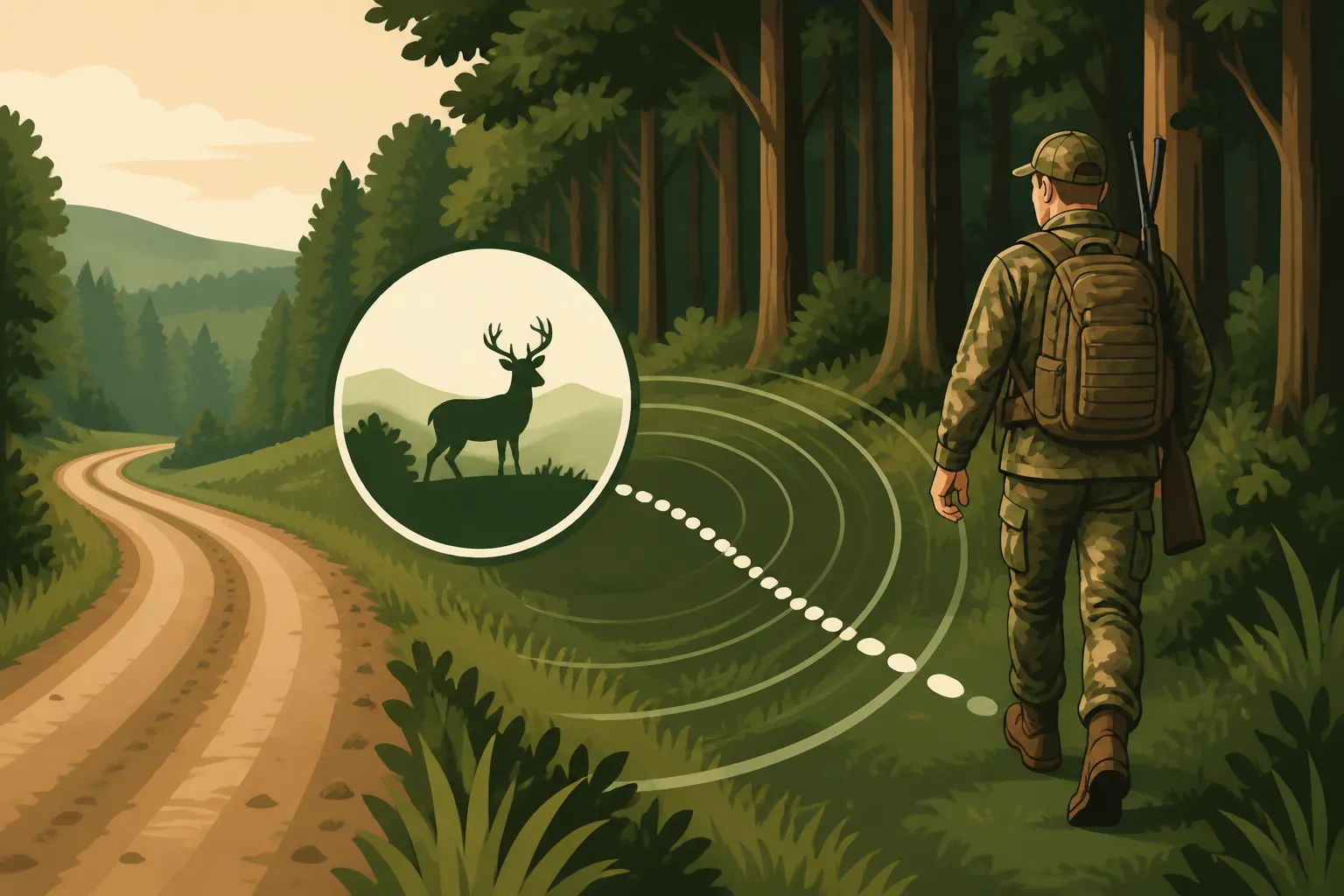
Many seasoned public land hunters talk about the "half-mile rule" or the "mile rule." The idea is that if you can get half a mile to a mile away from an easily accessible road or parking area, you'll start to encounter significantly less pressure. Is this a hard and fast rule? Not exactly. A half-mile walk through flat, open woods is very different from a half-mile traverse up a steep, briar-choked ridge in the North Georgia mountains.
However, these rules of thumb hold weight because they represent a significant increase in effort. For many hunters, the mental and physical barrier of pushing beyond a few hundred yards is real. Once you start getting into the 600-yard to 1-mile range, the number of hunters willing to put in that effort drops dramatically. This creates a buffer zone where deer can often feel more secure. It’s not just about the linear distance, but the perceived difficulty of access. If you look at aerial maps, you'll often see distinct clusters of hunting activity closest to roads, with activity thinning out the further you get. This is why having a robust mapping app, like onX Hunt, can be a game-changer for visualizing these potential pressure points and identifying the paths less traveled.
Reading the Terrain: Natural Barriers and Funnels
The "edge" isn't always a fixed distance; it's often dictated by terrain. Georgia's diverse landscapes offer plenty of natural deterrents that act as psychological and physical stop signs for many hunters. These are your opportunities!
- Creek and River Crossings: A wide, muddy creek or a small river without a bridge will often deter hunters. While some might wade or use a small boat, many will simply stop at the water's edge. The land on the other side can be a treasure trove of unpressured activity. Hunting a Funnel Between Two Swamps often involves identifying these hydrological features.
- Thick Laurel or Briar Thickets: Anyone who has tried to push through a dense stand of briars or a jungle of laurel knows the pain. These areas are miserable to traverse, noisy, and offer poor visibility. Most hunters will skirt them or avoid them entirely. Deer, however, love them for bedding and escape cover. The fringes of these thickets, especially those deep within the woods, can be incredibly productive.
- Steep, Rocky Ridges: In the North Georgia mountains, a brutally steep climb is often enough to thin out the crowds. Hunters tend to stick to the easier contours or gentler slopes. The gnarlier the climb, the less competition you'll face.
- Logging Debris and Clear-Cuts: Fresh logging cuts can be a tangled mess of downed trees, sharp stumps, and dense regrowth. While deer thrive in the subsequent cover and browse, hunters often find these areas difficult to navigate and hunt efficiently. A clear-cut from a few years back, now choked with head-high saplings, can be a formidable barrier. Hunting a Clear-Cut Regrowth Edge can be incredibly rewarding, but it demands effort.
These natural barriers essentially create "pressure shadows." Even if the linear distance from the road isn't extreme, the difficulty of covering that distance makes it feel further, pushing the "edge" closer to the road for other hunters, and opening up opportunities for you.
Beyond the Crowd: Tactics for Deeper Penetration
Once you've wrapped your head around the concept of hunting beyond the crowd, the next step is developing the tactics and mindset to actually do it. It requires planning, the right gear, and a willingness to embrace the discomfort that comes with pushing deeper into the wild.
Gear for the Long Haul: Lightening Your Load
If you're planning to walk a mile or more into the Georgia woods, every ounce counts. A heavy pack will sap your energy, make you sweat, and increase the likelihood of calling it quits before you reach your prime hunting area.
Consider the following gear adjustments:
- Minimalist Pack: Ditch anything non-essential. Carry only what you absolutely need for the day: water, snacks, first-aid, field dressing kit, calls, binoculars, and your weapon. Leave the heavy camp chair or extra changes of clothes at the truck.
- Lightweight Treestand or Saddle: If you use a treestand, invest in a lightweight aluminum model or, even better, consider saddle hunting. Saddle hunting systems are incredibly compact and weigh a fraction of traditional stands, making deep penetration much more feasible. Paired with lightweight climbing sticks, you can become much more mobile. Hanging a Stand on a Mountain Saddle requires minimal gear and can be set up in remote spots.
- Quality Boots: This is non-negotiable. Good, comfortable, broken-in boots that offer support and protection are paramount. Whether you prefer snake boots for the South Georgia swamps or sturdy hikers for the mountain trails, your feet are your primary mode of transport. Blisters or sore feet will cut your hunt short.
- Layered Clothing: Georgia's weather can be notoriously unpredictable, especially during hunting season. Layering allows you to adjust to temperature changes without carrying bulky extra clothing. Start with a moisture-wicking base layer and add or remove outer layers as needed.
The goal is to move efficiently and quietly. The less you're struggling with your gear, the more you can focus on the hunt itself and conserve energy for the walk back, especially if you're lucky enough to be dragging a deer.
Utilizing Mapping Tools and Satellite Imagery
In the age of technology, physical maps are giving way to powerful digital tools that can literally transform how you scout and hunt. For identifying those deep, unpressured zones, these are indispensable.
Apps like onX Hunt and GoHunt allow you to do detailed scouting from your couch. You can overlay satellite imagery with public/private land boundaries, topographical maps, and even timber harvest data. Here's how to leverage them:
- Identify Access Points and Roads: Pinpoint all forest roads, logging trails, and old two-tracks. These are your starting points.
- Look for Terrain Features: Scan the map for those natural barriers we discussed: major creek drainages, swampy areas, steep contours, and dense timber blocks. These are the funnels and hideouts that deter other hunters. Use the topo lines to find saddles, benches, and ridge lines that might be overlooked. Reading a Ridge for North Georgia Deer benefits immensely from this.
- Measure Distances: Use the app's distance measuring tool to gauge how far these features are from known access points. Look for areas that are, say, 700 yards or more from the nearest road, but that also feature a difficult creek crossing or a steep climb.
- Identify "Un-huntable" Sections: Look for areas that appear so thick or rugged that most hunters would simply pass them by. These are often the spots deer gravitate to for security.
- Mark Waypoints: Once you identify potential deep-woods spots, mark them as waypoints. You can even drop pins where you think bedding areas, food sources, or travel corridors might be.
- Plan Your Route: Use the app to plan your entry and exit routes, minimizing noise and maximizing stealth. This is where onX Layers for Georgia Land Status helps you understand what's public versus private, and how to navigate those boundaries. Remember, Finding Ground Others Walk Past is often about accessing areas others deem too difficult.
These tools allow you to virtually scout vast areas, saving you countless hours of unproductive walking. They empower you to find those secluded pockets that hold mature, less-pressured game, making your deep woods efforts pay off.
Tailoring Your Walk: Different Georgia Landscapes
Georgia is a state of incredible topographical diversity, from the Appalachian foothills in the north to the sprawling coastal plains in the south. The "how far" you need to walk, and the type of walk it will be, varies wildly depending on which part of the state you're hunting.
North Georgia Mountains: Elevation is Your Friend
Hunting the North Georgia mountains, like those in the Chattahoochee National Forest, presents unique challenges and opportunities. Here, "how far to walk" isn't just about horizontal distance, but vertical feet climbed.
- Embrace the Climb: Most hunters will stick to the lower elevations, river bottoms, or the gentler slopes of primary roads. If you're willing to make the climb up a steep ridge, you'll often leave the crowds behind. Deer will use these higher, steeper areas for bedding and travel, especially during the rut. Look for benches, saddles, and small pockets of mature oaks high up on the mountain sides. Wind and Thermals on a Mountain Ridge are critical to understand when setting up in these areas.
- Ridge-Top Sanctuaries: Deer often feel safe on or near ridge tops, where they have a commanding view and the wind patterns are more consistent. If you can push past the initial accessible slopes and reach a high, remote ridge, you're likely to find significantly less pressure. These areas require careful planning of your route, acknowledging that a mile walk on flat ground is vastly different from a mile up a mountain.
- Water Sources and Funnels: Even in the mountains, deer need water. Look for remote seeps, small springs, or creek heads that might be a long walk from any road. These can act as magnets for deer, especially during dry spells.
The mountains are tough, no doubt. But the reward for that extra vertical effort is often a more solitary hunt and a better chance at a mature animal that hasn't been constantly harassed.
Coastal Plain and Piedmont: Swamps, Thickets, and Clear-Cuts
Moving south into Georgia's Piedmont and Coastal Plain regions, the terrain flattens out, but the cover becomes incredibly dense. Here, "how far to walk" shifts from elevation gain to pushing through thick, often wet, vegetation.
- Swamp and River Bottom Refuges: The Altamaha River, the Okefenokee Swamp fringes, and countless smaller creek bottoms across the state are deer magnets. These areas offer dense cover, consistent food, and often standing water that deters human travel. A long walk into a cypress swamp or a winding river bottom can yield incredible results. Deer will often bed deep in these inaccessible areas, only moving out to feed in nearby agricultural fields or pine plantations at dusk. Hunting Georgia Swamp and River Bottom Deer is a unique challenge that rewards persistence.
- Thick Pine Plantations and Regenerating Clear-Cuts: As mentioned earlier, areas of dense pine regeneration or choked clear-cuts are often avoided by hunters due to their difficulty. However, these are prime bedding and security areas for deer. If you can navigate these thickets – and it's often a noisy, difficult affair – you can find pockets of deer that rarely see human presence during daylight. These areas often benefit from still-hunting tactics, moving slowly and deliberately, taking advantage of any slight opening for a shot.
- Finding Hidden Food Sources: While agricultural fields might be visible from the road, look for hidden pockets of acorns, persimmons, or honeysuckle thickets deep within public land. These secluded food sources, especially if they are a substantial walk or require navigating a significant barrier, will hold deer that are less accustomed to pressure. Where South Georgia Pine Flat Bucks Bed often correlates to nearby, less disturbed food sources.
In these flatter regions, your "long walk" might be measured less in elevation and more in the sheer effort of pushing through dense cover or wading across muddy sloughs. Snake boots become critical here, as does an appreciation for bug spray. But for those willing to put in the work, the Coastal Plain and Piedmont offer vast tracts of public land where unpressured game can still be found well beyond the easy access points.
Disclaimer
This article is for general informational purposes only and does not constitute professional advice. Laws, prices and regulations vary by location and change over time. Consult a qualified professional for guidance on your specific situation.