ATV Rules on Georgia Forest Roads
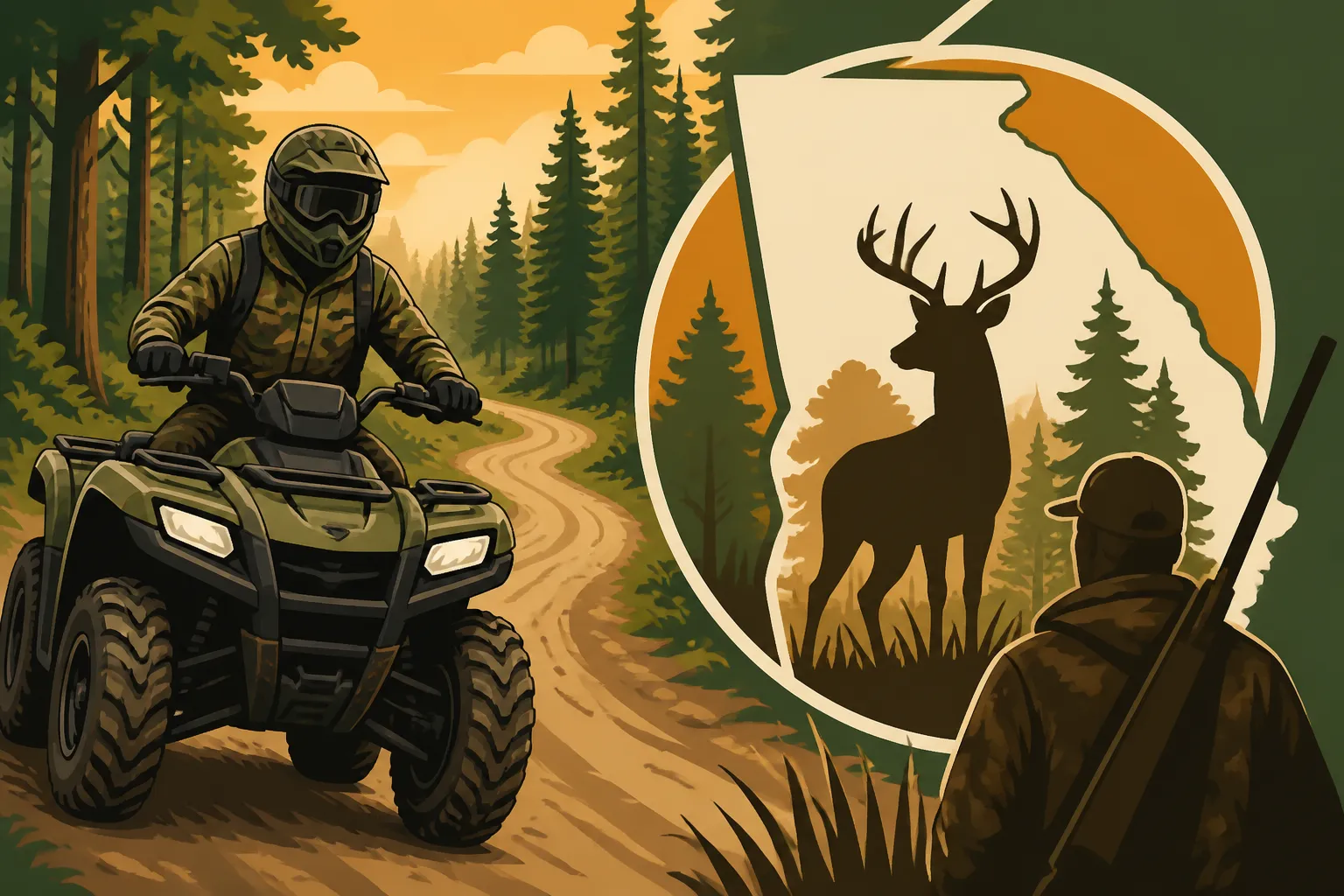
There’s nothing quite like the thrill of exploring Georgia’s vast and beautiful backcountry, but if you’re planning to do it on an All-Terrain Vehicle (ATV), the rules can feel like a tangled thicket. Many riders and hunters find themselves scratching their heads, wondering exactly where they can and cannot legally operate their ATVs on Georgia's forest roads. This comprehensive guide is here to untangle that confusion, providing clear, actionable information so you can enjoy the trails responsibly and legally.
Understanding Georgia's Forest Road Network
Georgia boasts an incredible amount of public land, from the rolling hills of the Piedmont to the majestic peaks of the North Georgia mountains and the expansive coastal plain. Within these diverse landscapes lies a complex network of forest roads, ranging from well-maintained gravel paths to primitive, unpaved tracks. However, the accessibility of these roads for ATVs isn't uniform, and understanding the different classifications is crucial before you even load up your machine.
Types of Forest Roads and Their Access Rules
Not all "forest roads" are created equal, and their designation often dictates what kind of vehicle can use them. Generally speaking, forest roads fall into a few broad categories. You have your main arterial roads, often graveled and maintained, that are typically open to licensed street-legal vehicles. These might be county roads that simply pass through national forest land or designated forest service roads built to a certain standard. Then there are secondary roads, often less maintained, and primitive roads or trails that might only be suitable for high-clearance 4×4 vehicles or, in very specific circumstances, ATVs.
The key distinction for ATV users is whether a road is designated for "licensed vehicle use" or "Off-Highway Vehicle (OHV)" use. Roads designated for licensed vehicles explicitly mean cars, trucks, and SUVs that are street legal and tagged. Your ATV, by its very nature, isn't typically street-legal in Georgia, meaning it's generally restricted from these primary roads. The frustration comes when a road looks like a perfectly good ATV trail, but it's actually part of the licensed vehicle network. Always assume a forest road is closed to ATVs unless explicitly signed otherwise for OHV use. This simple rule can save you a lot of grief and potential fines.
The Role of National Forests and WMAs in ATV Regulations
In Georgia, the major players in land management for public use are the U.S. Forest Service, which oversees the Chattahoochee-Oconee National Forest Hunting, and the Georgia Department of Natural Resources (DNR), which manages the numerous Georgia Wildlife Management Areas. Both entities have distinct, and sometimes overlapping, regulations regarding ATV use, which adds another layer of complexity for the uninitiated.
The National Forests, particularly in North Georgia, often have specific trails or areas designated for OHV use. These are usually well-marked and maintained specifically for such vehicles. Outside of these designated areas, ATVs are generally not permitted on forest service roads or any other undesignated trails. The Forest Service's primary goal is often conservation and sustainable multiple use, which means minimizing environmental impact. Unauthorized ATV use can lead to trail degradation, erosion, and habitat destruction, which they take very seriously. You might find some Forest Service roads are accessible to licensed vehicles but strictly off-limits to ATVs, even if they appear passable.
Georgia's WMAs, on the other hand, can have slightly different approaches. Many WMAs might allow ATV use on designated administrative roads or specific trails, often for the purpose of accessing hunting areas or retrieving game during certain seasons. However, this is rarely year-round and is almost always restricted to specific, signed routes. The rules for each WMA can vary, so what’s allowed on one might be strictly prohibited on another. It’s not a one-size-fits-all situation, and this is where many hunters get caught out. They might assume that since they're hunting, ATV access is implied, but that's a dangerous assumption to make without checking the specific WMA regulations.
Specific ATV Regulations on Public Lands
Understanding the nuances of ATV regulations on public lands is paramount for anyone planning to hit the trails in Georgia. It's not just about knowing where you can ride, but how you can ride, and what equipment you need to have in order to stay legal and safe. Ignoring these specifics can lead to fines, damage to your machine, or even serious accidents.
Where ATVs Are Permitted or Not
Let's cut right to the chase: most forest roads in Georgia are not open to ATVs. This might be a tough pill to swallow for some, especially if you're used to riding on private land without many restrictions. On public lands, particularly within the Chattahoochee-Oconee National Forest, ATV use is generally restricted to specifically designated and marked Off-Highway Vehicle (OHV) trail systems. These trail systems are often maintained with ATV use in mind, sometimes even requiring a special permit or fee to access, which helps fund their maintenance. If a trail isn't explicitly signed as an OHV trail, assume it's off-limits. This includes old logging roads, unmaintained tracks, and even many gravel forest roads that might otherwise seem inviting. The Forest Service takes a firm stance on this to protect natural resources and prevent damage to undesignated areas.
For Georgia's Wildlife Management Areas (WMAs), the rules are often even more specific and seasonal. Many WMAs will open certain administrative roads or designated trails to ATVs, but often only during specific hunting seasons or for the purposes of retrieving harvested game. These access periods are usually outlined in the WMA's specific regulations, which are published annually by the Georgia DNR. It's critical to remember that "administrative roads" are generally for official use, but during open hunting seasons, they might be temporarily accessible to hunters for specific purposes. Again, if it's not explicitly stated in the WMA regulations or clearly marked on site, you cannot assume ATV access. The phrase "check before you go" really cannot be stressed enough here. This includes checking maps that might show access points for hunters, which is often crucial for activities like Deer Drives on Georgia Public Land.
Licensing, Registration, and Safety Gear
Unlike street-legal vehicles, ATVs in Georgia generally do not require state registration or a driver's license for operation on private land. However, when you step onto public lands, even designated OHV trails, there can be additional requirements. While Georgia does not have a statewide ATV registration system for public land use like some other states, specific OHV parks or National Forest designated trail systems might require their own permits or passes. It’s always best to check with the managing authority of the specific area you plan to visit. For instance, some trail systems might require a special annual pass that helps fund their maintenance.
Safety gear is where things become universally important. Helmets are almost always mandatory for ATV operators and passengers under a certain age (often 16), and frequently for all riders regardless of age, on public lands. Eye protection, gloves, long pants, and over-the-ankle boots are also highly recommended, if not required, to protect against potential injuries. Think about it: you’re on an off-road machine, often traversing uneven terrain; scrapes, bumps, and unexpected falls are part of the game. Having the right gear isn't just about avoiding a citation; it's about protecting yourself and your riding partners. The state takes safety seriously, and you should too.
Seasonal Restrictions and Special Conditions
ATV access on Georgia's public lands is frequently subject to seasonal restrictions and special conditions. This is particularly true for WMAs, where ATV use often coincides with specific hunting seasons. For example, a WMA might allow ATVs on designated roads only during the firearms deer season or for limited periods during primitive weapons season to aid in game recovery. Outside of these windows, the same roads may be closed to all motorized vehicles except those authorized for administrative use. These restrictions are put in place for several reasons: to reduce disturbance to wildlife during sensitive periods, to prevent trail damage during wet conditions, and to manage overall user impact.
Furthermore, weather conditions can play a significant role. Heavy rainfall can make certain roads impassable or extremely susceptible to erosion, leading to temporary closures. It's not uncommon for forest service roads or WMA access points to be closed after prolonged periods of rain to prevent ruts and long-term damage. Fire danger can also prompt closures, especially during dry seasons. Always check the official websites of the Georgia DNR and the U.S. Forest Service (for the Chattahoochee-Oconee National Forest) for the latest updates on closures and access restrictions before you head out. A quick check can prevent a wasted trip and ensure you're not unknowingly violating any rules. For example, knowing the terrain for Hunting the North Georgia Mountain Bear Zone or Hunting the Ocmulgee Bear Zone might mean checking road statuses carefully.
Navigating and Planning Your Ride
Planning is half the battle when it comes to successful and legal ATV riding on Georgia's public lands. It’s not enough to just know the general rules; you need to know the specific details for your chosen destination. Modern technology offers incredible tools to help with this, but combining them with old-fashioned diligence is key to a smooth and enjoyable experience.
Using Mapping Tools for ATV-Friendly Routes
Gone are the days when you had to rely solely on paper maps that might or might not be up-to-date with current ATV regulations. Today, digital mapping tools are an absolute game-changer. Applications like onX Hunt have specific layers that can show public land boundaries, roads, and often even designate which roads are open to specific vehicle types, including ATVs, on certain public land parcels. This can be invaluable for pinpointing legal access points and designated OHV trails. Similarly, GoHunt offers detailed mapping solutions that can help identify topography, potential obstacles, and legal routes.
When using these apps, make sure you download offline maps, especially if you're venturing into remote areas where cell service is spotty or nonexistent. There's nothing worse than getting deep into the woods only to realize your map has stopped loading. These mapping tools can also help you understand the lay of the land, showing you contour lines, water features, and vegetation types, which can be useful for both riding and for related activities like Scouting Georgia Public Land Before Season. Always cross-reference the information on these apps with official sources, as rules and designations can change.
Checking for Current Conditions and Closures
Even with the best maps, you need to verify current conditions. Forest roads, especially those in more remote areas, can be impacted by weather, maintenance, or even emergency closures. Before you even leave home, make it a habit to check the relevant managing agency's website. For National Forests, that means the U.S. Forest Service website for the Chattahoochee-Oconee. For WMAs, the Georgia DNR website and specific WMA pages are your best resource. These sites will often post alerts, temporary closures, or changes to access policies.
A quick phone call to the local ranger district or WMA office can also be incredibly helpful. Park rangers and WMA managers are often the most up-to-date sources of information on local conditions, and they can clarify any ambiguities you might find online. Imagine driving for hours only to find the road you planned to take is temporarily closed due to heavy rain, or a wildfire, or even a prescribed burn. Taking a few minutes to check beforehand can save you significant time, fuel, and frustration. This is especially true for Vehicle Rules on Georgia Public Land, which can change on short notice.
Respecting Boundaries and Minimizing Impact
Responsible ATV use extends beyond just following the legal rules; it also involves minimizing your environmental footprint and respecting other users of public lands. Stick to designated trails. Going off-trail, known as "cross-country travel," is almost universally prohibited on public lands and can cause severe damage to fragile ecosystems, spread invasive species, and create erosion problems. These actions can also lead to hefty fines and land closures, impacting access for everyone.
Be mindful of noise and other disturbances. While ATVs are inherently noisy, try to operate them respectfully, especially near campgrounds or areas where other recreationists might be present. Always yield to hikers, horseback riders, and mountain bikers, as they often have the right-of-way. Pack out everything you pack in, leaving no trace of your visit. This "Leave No Trace" ethic is crucial for preserving the beauty and accessibility of Georgia's wild spaces for future generations. Remember, you're not just riding; you're a steward of these incredible natural resources. This also applies to activities like Camping Rules on Georgia National Forest Land, where responsible behavior is expected.
A quick summary of typical ATV access on public lands is helpful:
| Land Type | General ATV Access Status | Common Restrictions/Notes |
|---|---|---|
| National Forests | Highly Restricted: Only on designated OHV trail systems | Requires specific permits; no cross-country travel; seasonal closures possible. |
| Wildlife Management Areas | Restricted/Seasonal: Only on designated administrative roads/trails | Often tied to hunting seasons for game retrieval; check specific WMA rules; no recreational riding outside of designated periods. |
| Other State/County Roads | Generally Prohibited: ATVs are typically not street legal | May cross public land, but ATVs cannot legally operate on them. |
| Private Land | Allowed with landowner permission | Owner sets rules; no public access without permission. |
Disclaimer
This article is for general informational purposes only and does not constitute professional advice. Laws, prices and regulations vary by location and change over time. Consult a qualified professional for guidance on your specific situation.