Vehicle Rules on Georgia Public Land
There's nothing quite like the feeling of hitting the road, truck loaded, heading toward your favorite patch of Georgia public land for a hunt. But let's be honest, that excitement can quickly turn to frustration when you encounter confusing signage, closed gates, or simply aren't sure if your chosen ride is even allowed down that tempting two-track. It's a common headache for many of us who just want to get to our hunting spot without breaking any rules or damaging the precious natural resources we treasure. This guide is all about untangling the sometimes-complex web of vehicle rules on Georgia's public lands, ensuring your access is smooth and worry-free.
Understanding the Lay of the Land: Types of Public Access
Georgia offers a fantastic array of public hunting opportunities, from vast national forests to smaller, intensely managed wildlife areas. The trick, however, is that each type of land often comes with its own specific set of regulations regarding vehicle use. What's perfectly fine on one might get you a hefty fine on another. It’s crucial to know which rulebook you’re playing by before you even put the key in the ignition.
National Forests and Their Specific Regulations
When you're talking about the big timber and sprawling landscapes of Georgia, you're often looking at the Chattahoochee-Oconee National Forest. These lands are managed by the U.S. Forest Service, and while they feel wild and expansive, they have very clear guidelines for vehicles. Generally, street-legal vehicles are permitted on designated, open Forest Service roads. These roads are typically marked and maintained, sometimes graded gravel, sometimes simply dirt. The real challenge comes when you see a tempting track veering off the main road – that's where you need to exercise caution. Many of these side roads are seasonally closed, permanently closed to motorized vehicles, or only open to foot traffic. It's not uncommon to find gates locked, even if they look like a well-worn path. Always assume a road is closed to motorized traffic unless it's explicitly marked as open. Understanding the specific nuances of Chattahoochee-Oconee National Forest Hunting can really help you plan your vehicle usage.
Wildlife Management Areas WMAs and Their Unique Rules
Georgia's Wildlife Management Areas (WMAs) are the jewels of our state's hunting program, managed by the Georgia Department of Natural Resources (DNR). These areas are often managed intensively for specific game species, habitat enhancement, and public access. Vehicle rules on WMAs can be even more restrictive than in National Forests. Many WMAs have designated parking areas only, meaning you might have to walk a good distance to your hunting spot. Interior roads are frequently closed to all public motorized vehicle traffic, sometimes year-round, sometimes seasonally, especially during hunting seasons to reduce disturbance and prevent damage to soft roads. The reasoning is sound: it concentrates hunters, reduces conflicts, and protects sensitive habitats. It's important to always check the specific WMA regulations for the area you plan to visit, as they can vary greatly. You can learn more about Georgia Wildlife Management Areas and their management philosophies.
Voluntary Public Access VPA Lands – A Different Set of Standards
The Voluntary Public Access (VPA) program in Georgia is a fantastic initiative that leases private land for public hunting access. These parcels offer unique opportunities, but they also come with a distinct set of rules, particularly concerning vehicles. Since these are private lands, even if temporarily open to the public, landowners often have specific requirements to protect their property. Vehicle access on VPA lands is almost always restricted to designated parking areas or specific access points clearly marked by the DNR. You won't typically find an extensive road network to drive on within these properties. The expectation is generally walk-in access after parking. Before heading out, it's absolutely vital to thoroughly review the map and guidelines for any VPA property you intend to hunt, as these can be quite specific to each parcel. Discovering Finding a Georgia VPA Parcel can sometimes lead to unexpected, excellent hunting.
Permitted Vehicle Use: What's Allowed and Where
Navigating Georgia's public hunting lands with a vehicle requires a good understanding of what "permitted" actually means. It's not just about what type of vehicle you drive, but where you drive it and how you park it. Many hunters have faced frustration, or even fines, by making assumptions that turned out to be incorrect.
Street-Legal Vehicles on Designated Roads
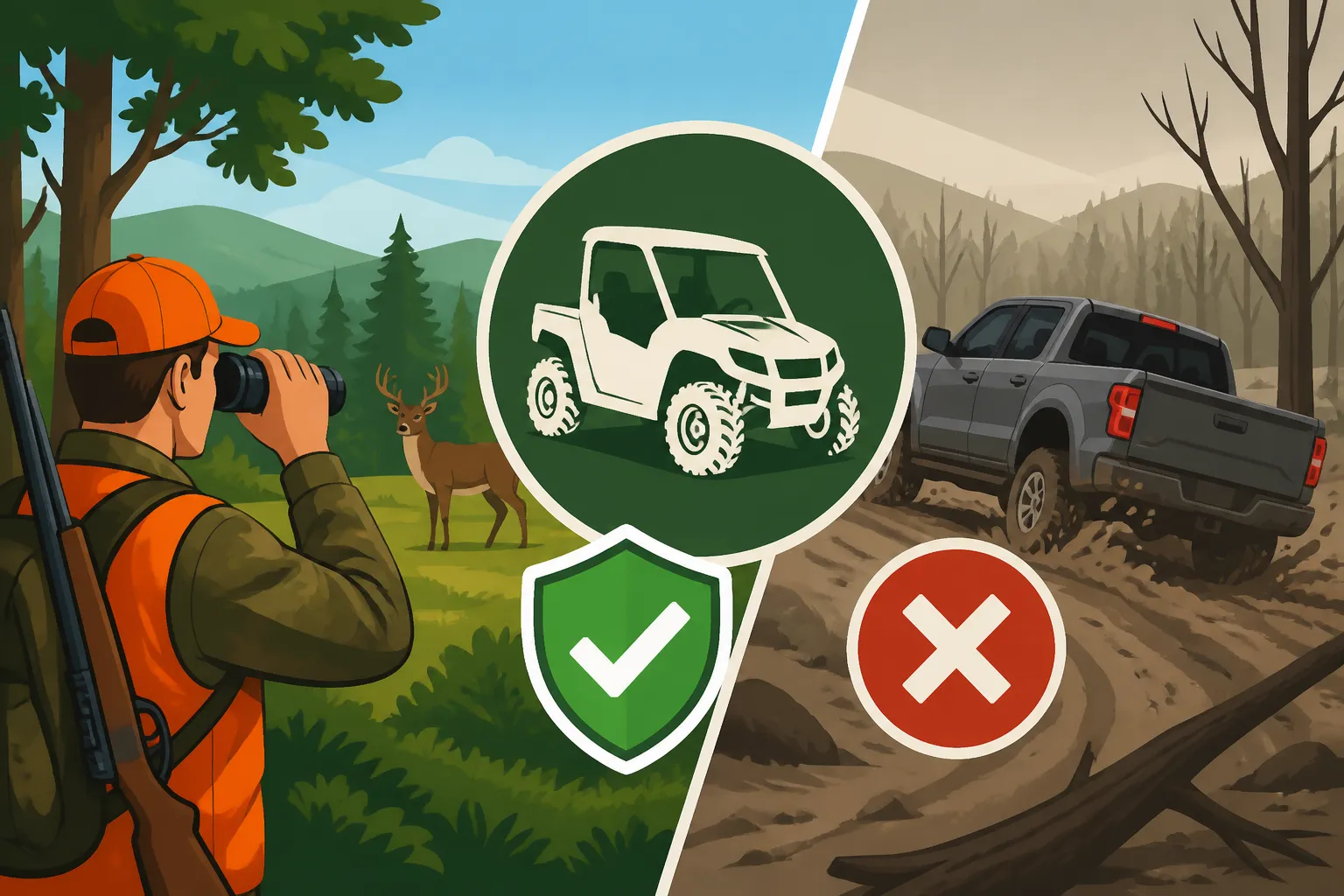
For most hunters, your personal truck or SUV is your primary mode of transport to and through public land. Generally, if a road on public land is publicly accessible and marked as open, your street-legal vehicle is allowed. This applies to most maintained Forest Service roads within the Chattahoochee-Oconee National Forest and the primary access roads into many WMAs. The key words here are "designated" and "open." If a road is gated, signed as closed, or obviously unmaintained and reverting to trail, it's a no-go for your daily driver. Even if a gate is open, look for "seasonal closure" signs or maps indicating specific dates. Sometimes, what appears to be an open road might only be passable for administrative use, not public access. Always stick to established roads, avoiding any temptation to cut new paths, even for a short distance.
All-Terrain Vehicles ATVs and Utility Task Vehicles UTVs – The Nuances
ATVs and UTVs are incredibly popular tools for hunters, offering access to areas a truck can't reach and the ability to haul gear and game. However, their use on Georgia public lands is often much more restricted than street-legal vehicles. In the Chattahoochee-Oconee National Forest, for example, ATV and UTV use is generally limited to specific, designated trails and roads that are explicitly signed for off-highway vehicle (OHV) use. This means you can't just take your side-by-side down any old logging road you find. Many WMAs have even tighter restrictions, often prohibiting ATVs/UTVs entirely on interior roads or limiting them to specific times or areas, if at all. It's not uncommon for WMAs to allow ATVs only for game retrieval during specific seasons, and even then, often only to specific points or with a permit. For detailed information on where you can and cannot ride, check out ATV Rules on Georgia Forest Roads. Always verify the specific rules for the area you intend to hunt before loading up your ATV, as violating these rules can lead to citations and even impoundment.
Parking and Roadside Access Considerations
Once you've found a legal road to drive on, the next question is often where to park. On National Forest land, you can often park on the shoulder of an open, designated road, provided you are not blocking traffic, gates, or access points, and are not damaging natural resources. Always pull completely off the travel portion of the road. On WMAs, however, parking is often strictly limited to designated parking lots or pull-offs. You might see signs indicating "Parking Area Only" or areas specifically marked for overflow parking during peak seasons. Do not create your own parking spot by driving off-road into fields or clearings unless it is explicitly marked as a parking area. Respecting these designated areas is key to maintaining good relations with land managers and avoiding vehicle damage or citations. It's a small but significant part of minimizing Hunting Pressure on Georgia Public Land.
Restrictions and Prohibited Practices
Understanding what not to do with your vehicle on Georgia public land is just as important as knowing what you can do. Many restrictions are in place for safety, environmental protection, and to ensure a fair chase experience for all hunters. Ignoring these can lead to serious consequences, from fines to loss of hunting privileges.
Closed Gates, Barricades, and Impassable Roads
This might seem obvious, but it's a common issue: a closed gate means no motorized vehicle access. Period. Even if it looks like a short walk around it, don't drive around or attempt to bypass it. Gates are closed for a reason—sometimes for seasonal habitat protection, sometimes because the road beyond is impassable, sometimes to create walk-in hunting areas. Similarly, barricades, berms, or signs indicating "No Motorized Vehicles" or "Road Closed" must be obeyed. Many hunters have gotten stuck, damaged their vehicles, or received tickets trying to force their way past such barriers. These rules are non-negotiable and are often strictly enforced by rangers and wildlife officers. It's part of the comprehensive effort to manage Public Hunting Land in Georgia.
Off-Roading and Trail Creation
One of the biggest no-nos on public land is creating new trails or driving off existing, designated roads. This includes driving through fields, cutting through woods, or even driving down what looks like an old deer trail. The environmental damage caused by unauthorized off-roading can be significant: soil erosion, destruction of sensitive plant life, disruption of wildlife corridors, and the spread of invasive species. It also degrades the natural experience for other users. Unless you are on a specifically designated OHV trail, keep your wheels on marked roads. This rule applies equally to trucks, SUVs, ATVs, and UTVs. The integrity of the habitat depends on all of us respecting these boundaries.
Environmental Impact and Wildlife Disturbance
Every time we drive a vehicle into a natural area, there's an impact. Dust from gravel roads can affect air quality and plant life. Oil or fuel leaks, even small ones, can contaminate soil and water. The noise and presence of vehicles can disturb wildlife, especially during sensitive times like nesting or fawning seasons. This is why many WMA interior roads are closed during deer season – to reduce stress on the animals and allow them to move naturally. These regulations aren't just arbitrary; they're based on sound ecological principles designed to preserve these valuable hunting grounds for future generations. Our responsibility as hunters extends beyond the harvest; it includes being good stewards of the land.
Practical Tips for Navigating Vehicle Rules
Knowing the rules is one thing, but actually implementing them in the field can sometimes feel like a puzzle. Thankfully, there are tools and practices that can make navigating vehicle rules on Georgia public land much easier. A little preparation goes a long way in preventing headaches once you're out there.
Checking Current Regulations Before You Go
This is perhaps the single most important piece of advice: always check the most current regulations for the specific area you plan to hunt. Don't rely on what you remember from last year, or what a buddy told you about a different WMA. Regulations, especially those concerning vehicle access, can change season to season or even mid-season.
Here’s how you can do it:
- Georgia DNR Website: The Georgia DNR website is your primary source for WMA regulations. Look for the specific WMA you're interested in, and download or print the "area-specific regulations" for that year. These documents will detail all vehicle restrictions, road closures, and parking rules.
- National Forest Service Website: For National Forests, visit the Chattahoochee-Oconee National Forest website. They often have maps showing open and closed roads, as well as specific OHV trail information.
- Signage at the Site: Even after checking online, pay close attention to signs at the entrance of WMAs or along Forest Service roads. Local conditions or temporary closures might not be immediately updated online. These signs are the final word once you're on the ground.
A quick check can save you from a wasted trip, a ticket, or worse, damaging the land.
Using Mapping Tools and Resources
In today's digital age, powerful mapping applications have become indispensable for hunters. Tools like onX Hunt and GoHunt can revolutionize how you understand public land boundaries, roads, and access points.
These apps often have layers that show:
- Public/Private Land Ownership: This is crucial for knowing where you can and cannot drive.
- Forest Service Roads and Trails: Many apps will denote which roads are official and may even indicate closures.
- WMA Boundaries: Clearly outlines where WMA rules apply.
- Topo Maps and Satellite Imagery: Helps you identify potential access points, parking, and roads, even if not explicitly marked.
Before you leave home, take the time to virtually scout your hunting area using these tools. Look for designated parking, identified roads, and any areas marked as closed or restricted. With onX Layers for Georgia Land Status, for example, you can get a really clear picture of where you stand and what's available. Remember that while these tools are excellent, they are not always real-time. Always cross-reference with official DNR or Forest Service information and physical signs on the ground.
The Importance of Respecting Posted Signage
Finally, never underestimate the importance of respecting posted signage. Those brown and white signs with specific rules, the locked gates, the "Road Closed" banners—they are there for a reason. They convey critical information about where you can drive, where to park, and what activities are permitted. Ignoring them isn't just a risk of getting caught; it's a disregard for the careful management that goes into preserving these lands for everyone. If you're unsure about a sign, err on the side of caution. Park your vehicle and walk, or find an alternative access point. It's a fundamental part of ethical hunting and responsible public land use. By paying attention to signs and using resources like Using the Georgia Outdoors Map Tool, you can ensure a smooth and legal hunting trip.
Let's summarize some key aspects of vehicle rules across different public land types in Georgia.
| Feature | Chattahoochee-Oconee National Forest | Wildlife Management Areas (WMAs) | Voluntary Public Access (VPA) Lands |
|---|---|---|---|
| Street-Legal Vehicles | Permitted on designated, open Forest Service roads. | Generally restricted to primary access roads and designated parking. | Restricted to designated parking areas and specific access points. |
| ATVs/UTVs | Limited to specific, designated OHV trails and roads, often signed. | Generally restricted or prohibited on interior roads; limited for game retrieval. | Typically prohibited; walk-in access after parking is standard. |
| Parking | Permitted on shoulders of open roads, not blocking traffic/gates. | Strictly limited to designated parking lots and pull-offs. | Restricted to designated parking areas. |
| Closed Gates/Barricades | Always obey; indicates no motorized access beyond this point. | Always obey; indicates no motorized access beyond this point. | Always obey; indicates no motorized access beyond this point. |
| Off-Roading | Strictly prohibited unless on designated OHV trails. | Strictly prohibited. | Strictly prohibited. |
| Regulatory Source | U.S. Forest Service website & local signage. | Georgia DNR website (area-specific regs) & local signage. | Georgia DNR website (VPA map/regs) & local signage. |
Remember, these are general guidelines, and specific rules can vary greatly. Always consult the official resources for the most up-to-date and precise information for your chosen hunting area.
Disclaimer
This article is for general informational purposes only and does not constitute professional advice. Laws, prices and regulations vary by location and change over time. Consult a qualified professional for guidance on your specific situation.