Hunting Georgia’s Piedmont Region
It's easy to get caught up dreaming of chasing mountain bucks in North Georgia or the vast swamps of the Coastal Plain, but for many of us, the reality is that we live, work, and hunt right in the heart of Georgia's Piedmont. This middle region, often seen as merely "somewhere in between," can be incredibly frustrating to hunt with its mix of suburban sprawl, smaller private tracts, and often overlooked public lands. But don't despair – this guide is here to unravel the complexities and unveil the surprising opportunities that hunting the Piedmont has to offer, turning those frustrations into successful hunts.
Understanding Georgia's Piedmont Region
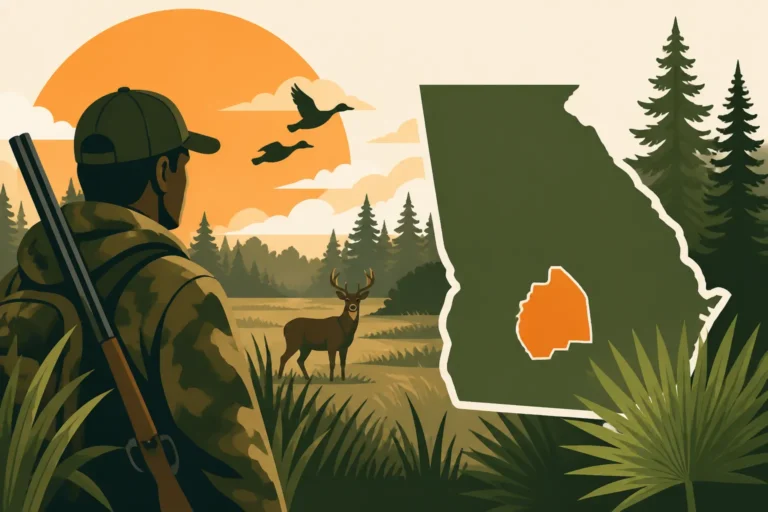
The Piedmont region of Georgia is a fascinating blend of rolling hills, mixed forests, and agricultural fields, sitting comfortably between the Appalachian Mountains to the north and the flatter Coastal Plain to the south. It's a landscape shaped by ancient geology and modern development, offering unique challenges and rewards for the dedicated hunter. For many, this is "home hunting ground," and understanding its nuances is key to consistent success.
What is the Piedmont?
Geographically, the Piedmont is characterized by its rolling topography, often presenting a stark contrast to the dramatic elevations of the mountains or the level expanses of the coastal areas. Rivers and creeks dissect the landscape, creating fertile bottoms and natural travel corridors that are invaluable to hunters. The soils here are typically red clay, a hallmark of the region, which can influence everything from timber growth to agricultural practices. This means you’ll find a patchwork of habitats, from mature hardwoods along waterways to pine plantations and open fields, often interspersed with increasing residential development. It’s not just a transitional zone; it’s a distinct and rich ecological area in its own right.
Why Hunt the Piedmont?
Hunting the Piedmont offers a unique set of advantages, especially for those who call central Georgia home. The sheer accessibility is a huge plus; many prime hunting spots are often a shorter drive compared to distant mountain or swamp areas. While public land tracts might be smaller or more fragmented than those in national forests, they are often less intensely hunted, especially if you're willing to walk a bit further or explore lesser-known corners. The deer herd here is robust, with good genetics and ample food sources, and while record book antlers might be less common than in some parts of the Coastal Plain, opportunities for mature bucks are definitely present. You’ll also find a greater diversity of game, from deer and turkey to feral hogs and various small game. It's a versatile landscape that rewards adaptable hunters.
Typical Piedmont Habitat
The typical Piedmont habitat is a mosaic. You’ll frequently encounter pine plantations in various stages of growth, from thick, young stands offering bedding and security cover to mature pines providing open understories. Mixed hardwood forests are common, particularly along creek drainages and river bottoms, providing vital mast crops like acorns. Agricultural fields, often growing corn, soybeans, or peanuts, dot the landscape, offering critical food sources. The edges where these habitat types meet—the transition lines between pines and hardwoods, or where a field meets a woodline—are absolute magnets for deer and turkey. Understanding these transitions is fundamental to Setting Up on a Piedmont Field Edge. Creeks and small rivers create natural funnels, providing water, cover, and easy travel for wildlife, often becoming natural highways even in heavily fragmented areas.
Key Game Species of the Piedmont
While Georgia is diverse, the Piedmont holds a special blend of game that thrives in its mixed landscape. Knowing what animals to expect and how they interact with the Piedmont's specific habitats will significantly improve your chances of success. It's not just about what's there, but where they're likely to be.
White-tailed Deer
White-tailed deer are the undisputed kings of the Georgia Piedmont, found throughout the region in healthy numbers. The mixed habitat of agricultural fields, pine plantations, and hardwood bottoms provides an ideal environment for them to flourish. While the Piedmont might not always produce the same antler size as some highly managed southern plantations, the opportunity to take mature, challenging bucks is definitely present. Hunters often find deer densities to be quite good, especially on properties that offer a blend of food, water, and thick cover. The rut here is often in mid-October, making that a prime time to be in the woods. Pay attention to how deer move between feeding areas in fields and bedding areas in thickets or clearcuts.
Wild Turkey
Spring in the Piedmont means one thing: gobbling turkeys. Wild turkeys thrive in the Piedmont's mix of mature hardwoods for roosting, open fields for strutting, and dense undergrowth for nesting. While turkey populations can fluctuate, the opportunities for a successful hunt are excellent, especially on properties with diverse habitat. You'll often find them roosted along creek bottoms or in mature pines, dropping down to strut in nearby fields or open woods. Public land turkeys can be highly pressured, so patience and adaptability, like knowing when to try Run-and-Gun Turkey Tactics on Public Land, are critical. The challenge of calling in a wary Piedmont gobbler is a truly rewarding experience.
Feral Hogs and Coyotes
Feral hogs are a pervasive presence across the Piedmont, offering year-round hunting opportunities with no closed season or bag limit. These intelligent and destructive animals can be found in nearly every corner of the region, from dense river bottoms to agricultural field edges. They provide exciting hunting, especially at night with thermal or night vision gear, or by running dogs. Coyotes are another prevalent predator in the Piedmont, offering a challenging hunt and contributing to wildlife management efforts. Their presence is a constant reminder of the dynamic ecosystem, and hunting them can be a great way to hone your skills and spend more time afield, often while waiting for other game or after deer season closes. They can be found almost anywhere, often following deer trails or skirting field edges.
Small Game and Waterfowl
Don't overlook the incredible small game opportunities in the Piedmont. Squirrels are abundant in hardwood bottoms and oak stands, providing fast-paced action and delicious table fare. Rabbits can be found in briar patches, fencerows, and thick cover, offering classic beagle-fueled chases. For bird hunters, mourning doves flock to harvested grain fields, especially during the early season. And for waterfowl enthusiasts, while you won't find vast coastal marshes, the Piedmont's numerous creeks, small rivers, and farm ponds offer fantastic jump-shooting opportunities for wood ducks, often providing a quick burst of action at dawn or dusk. Pass-Shooting Georgia Wood Ducks is a common and effective tactic in these areas.
Navigating Public Hunting Opportunities in the Piedmont
Public land hunting in the Georgia Piedmont can sometimes feel like a puzzle. Unlike the sprawling National Forests of North Georgia, public tracts here are often smaller, more scattered, and can be subject to higher pressure. However, with the right approach and the right tools, these lands offer fantastic access and genuine opportunities for successful hunts.
Piedmont Wildlife Management Areas
Georgia's Wildlife Management Areas (WMAs) are invaluable resources, and several are scattered throughout the Piedmont region. These WMAs are actively managed by the Georgia Department of Natural Resources (DNR) to enhance wildlife habitat and provide public hunting access. Each WMA has its own unique characteristics and regulations, so it's crucial to check the specific WMA brochure before you go. Some examples include Cedar Creek WMA or Rum Creek WMA, which offer a mix of timber, food plots, and water sources. Expect these areas to see significant pressure, especially on opening weekends. To find success, you'll need to scout thoroughly, often walking further than others, or targeting mid-week hunts. Using mapping tools like onX Hunt can be incredibly beneficial for identifying property boundaries, access points, and remote sections that might hold unpressured game.
National Forests and Corps of Engineers Land
While much of Georgia's National Forest system is in the northern mountains, the Piedmont does encompass portions of the Oconee National Forest. This land offers expansive hunting opportunities, particularly for deer and turkey. Hunting here requires understanding forest service roads, access points, and avoiding private in-holdings. Similarly, lands managed by the Army Corps of Engineers around large reservoirs like Lake Sinclair or Lake Oconee can provide additional hunting access, often in the form of strips of public land bordering the water. These areas can be overlooked, providing pockets of good hunting. Be sure to understand specific rules for each agency, as they can differ from standard WMA regulations. Look for areas where the Corps of Engineers manages land for wildlife, as these can be goldmines.
Voluntary Public Access VPA Lands
A truly valuable program for Piedmont hunters is the Voluntary Public Access (VPA) program. Through this initiative, the Georgia DNR partners with private landowners to open up their properties for public hunting access. These tracts are often smaller but can be less pressured and offer excellent habitat. Finding VPA lands typically involves checking the Georgia DNR website or using their interactive mapping tools. The key here is diligence; VPA properties can change from year to year, and access rules are strict and must be followed precisely. Think of VPA lands as hidden gems—they require a bit more legwork to find and understand, but the reward can be finding a quality hunting spot without the crowds.
| Public Land Type | Typical Size | Primary Management Focus | Hunter Pressure | Key Features |
|---|---|---|---|---|
| Wildlife Management Areas | Medium to Large | Game species, habitat | High | Food plots, managed timber, designated trails |
| National Forest (Oconee) | Large, contiguous | Multi-use, habitat | Medium | Diverse habitat, primitive camping, backcountry |
| Corps of Engineers Land | Small to Medium, fragmented | Recreation, limited wildlife | Low to Medium | Lake/river access, often linear strips of woods |
| VPA Lands | Small, scattered | Hunter access | Low | Private land feel, specific access rules |
Strategies for Successful Piedmont Deer Hunting
Deer hunting in the Piedmont requires a nuanced approach. It’s not about covering vast distances in big timber, but rather intimately understanding how deer utilize fragmented landscapes, transition zones, and available resources. Success often hinges on strategic stand placement and adapting to local conditions.
Hunting Piedmont Field Edges
Field edges are quintessential Piedmont deer habitat and often the most productive spots. Whether it's a harvested peanut field, a standing corn field, or a lush green plot, deer gravitate to these areas for food. The trick, however, is not just to set up on the edge, but to understand the deer's movement patterns along it and to it. Look for funnels, pinch points, and entry/exit trails. Deer will often stage in thick cover just inside the woods before stepping out into a field at last light. Placing your stand for the prevailing wind, and ensuring a quiet entry and exit, are paramount. Pay attention to how the thermals might be drawing your scent down into the field in the evening or lifting it in the morning. Being concealed and patient on a field edge, especially near a creek bottom, is a classic Piedmont tactic. This is where you can truly put skills like Setting Up on a Piedmont Field Edge into practice.
Creek Bottom Funnels and Transitions
Creek bottoms are natural highways for deer in the Piedmont, especially in areas with limited contiguous cover. These riparian zones often contain mature hardwoods, providing mast, water, and dense cover. Deer will use these low-lying areas to travel between bedding and feeding areas, often avoiding more open, upland terrain. Look for where a creek bottom narrows, or where it intersects with a logging road or a thick pine plantation. These are classic funnel points where deer movement is concentrated. Setting up along such a funnel, especially where a secondary drain meets the main creek, can be incredibly productive. These are the places where Hunting a Funnel Between Two Swamps principles apply, even if it's just a small creek between two pine blocks.
Timber Cuts and Regrowth
Timber cuts, particularly clear-cuts or thinned pine stands, are dynamic habitats that can quickly become deer magnets. Young clear-cuts provide incredible browse and dense security cover, while thinned pine stands allow sunlight to reach the forest floor, promoting undergrowth. Deer will feed heavily in these areas and use the thick cover for bedding. Hunting the edges of these cuts, particularly where they transition into mature timber or a food source, can be highly effective. Understanding the age and density of the regrowth is key. A few years after a clear-cut, the thick tangle can be almost impenetrable but will hold deer. Focus on the travel corridors deer create within and around these areas.
Adapting to Piedmont Hunting Challenges
Hunting the Piedmont isn't without its unique set of challenges. From dealing with other hunters to navigating changing landscapes, a successful Piedmont hunter is an adaptable one, always learning and adjusting their approach.
Pressure Management
One of the biggest frustrations in Piedmont hunting, especially on public land, is hunting pressure. It can feel like every good spot has been scouted, hunted, or has a stand already in it. To combat this, you need to think outside the box. Hunt mid-week when others are at work. Focus on areas that require a longer walk, or that are difficult to access. Use mapping tools like onX Hunt to identify overlooked pockets of public land or small, isolated parcels that other hunters might ignore. Sometimes, it's not about finding a new spot, but finding an unpressured way to hunt an old one. Pressure can change deer behavior significantly, pushing them into denser cover and making them more nocturnal. Your willingness to put in extra effort will pay off.
Access and Permission
Gaining hunting access in the Piedmont, particularly on private land, can be a challenge. With smaller tracts and increasing development, finding landowners willing to grant permission can feel like a daunting task. However, persistence and politeness go a long way. Start by building relationships in rural communities. Offer to help with chores, share a portion of your harvest, or assist with nuisance animal control. Often, it's about proving yourself reliable and respectful. This can be a slow process, but it’s immensely rewarding. If direct permission is difficult, consider joining a local hunting club or leasing property. Even though this comes with a cost, it provides guaranteed access. This is where understanding strategies like Hunting Small Private Tracts in Georgia really comes into play, as many Piedmont opportunities are on these smaller parcels.
Warm Weather and Bug Control
Georgia's hunting seasons, especially the early archery season, often coincide with significant heat and humidity. This isn't just uncomfortable; it can impact deer movement and meat preservation. Dressing in lightweight, breathable layers is essential, as is bringing plenty of water. Bugs, especially mosquitoes and ticks, can be relentless. Effective bug repellent is a non-negotiable part of your gear list. When harvesting game in warm weather, quick field dressing and proper cooling are critical to prevent spoilage. Consider carrying a quality game bag and having a plan for rapid cooling, like ice in a large cooler, especially for longer walks out. Don't underestimate the impact of heat on both you and the game, and prepare accordingly with gear like that discussed in Warm-Weather Clothing for Georgia Hunters.
Essential Gear and Tactics for the Piedmont Hunter
Having the right gear and knowing how to use it effectively can make all the difference in the diverse and often challenging Piedmont landscape. Your setup should be versatile, ready for anything from a field edge sit to a deep woods trek.
Weapon Choice
The varied terrain of the Piedmont means your weapon choice should be flexible. For firearms hunters, a versatile rifle caliber like a .308, .270, or 6.5 Creedmoor is ideal, capable of precise shots across open fields and quick shots in thick timber. Rifle Setups for Georgia Deer Hunting can offer more insights here. Shotguns with slugs or muzzleloaders are also viable options, especially in areas with specific restrictions or during primitive weapons season. For archery hunters, a compound bow or crossbow is perfect for the often-closer shots in dense woods or along creek bottoms. Remember that some suburban areas might be designated archery-only zones, providing unique opportunities where firearms are prohibited. Always check local regulations before heading out.
Optics and Mapping Tools
Good optics are critical for evaluating deer at field edges or picking out movement in dense cover. A quality pair of 8x or 10x binoculars will serve you well. A rangefinder is also invaluable for confirming distances, especially in open fields where estimates can be deceiving. More importantly, embrace modern mapping tools. Apps like onX Hunt are indispensable for navigating the Piedmont's patchwork of private and public land. They allow you to clearly see property boundaries, identify potential access points, find remote public land, and even mark potential stand sites and game sign. Programs like GoHunt can also provide valuable insights into hunting pressure and success rates in different regions, helping you scout more effectively from home. These tools are no longer a luxury; they're an essential part of a successful Piedmont hunter's kit.
Stand Types and Blinds
Given the diversity of the Piedmont, a range of stand types and blinds can be effective. Climber stands are excellent for mature pine forests, allowing for quick adjustments to find the best tree. Lock-on stands, used with climbing sticks, offer more versatility in uneven timber or mixed hardwoods. For hunting field edges, creek bottoms, or areas with limited suitable trees, a ground blind can be incredibly effective. Ensure your blind is well brushed-in and set up for the prevailing wind. It’s also wise to anchor your ground blind securely, especially if you plan to leave it out for a while, to prevent it from becoming a kite in a Georgia thunderstorm. Good advice on this can be found in Ground Blind Anchoring in Wind. The key is to match your stand choice to the specific spot you plan to hunt and the conditions you expect.
Planning Your Piedmont Hunt
A well-planned hunt is often a successful hunt, and the Piedmont, with its unique set of challenges and opportunities, rewards careful preparation. Don't just show up; strategize!
Scouting Smart
Scouting is paramount in the Piedmont. Unlike vast, unbroken forests, you're often looking for smaller pockets of prime habitat or specific travel corridors. Pre-season scouting, looking for rubs, scrapes, tracks, and bedding areas, will give you a significant advantage. Pay close attention to food sources as they change throughout the season—acorns in fall, green fields in winter, honeysuckle in spring. Use aerial maps, like those available on onX Hunt, to identify potential funnels, pinch points, and cover. During the season, use trail cameras to monitor activity and confirm patterns. Scouting Georgia Public Land Before Season is not just about finding deer, but understanding how they use the landscape in that particular area. The more you know about the local deer, the better equipped you'll be.
Understanding Seasons and Regulations
Georgia's hunting regulations can be complex, and it’s your responsibility to know and follow them precisely. This is especially true in the Piedmont where regulations might vary by county or specific WMA. Familiarize yourself with the Georgia Deer Season Structure Explained, including archery, primitive weapons, and firearms seasons, as well as the dates for turkey, small game, and migratory bird seasons. Pay close attention to bag limits, weapon restrictions, and checking requirements. Always carry your valid Georgia hunting license and any required Big Game or Migratory Bird stamps. Ignorance of the law is never an excuse, and a quick check of the Georgia DNR website before each season is always a good idea.
Respecting Private Land
The Piedmont is characterized by a high percentage of private land, making respect for landowners and property boundaries absolutely crucial. Always know where you are hunting and ensure you have permission if you are on private land. Use mapping tools like onX Hunt to avoid accidental trespass. If you retrieve game that crosses onto private property, always seek permission from the landowner before entering. Public relations are everything in hunting, and a bad experience with one hunter can sour a landowner on all hunters. Good sportsmanship and adherence to ethical standards are vital, not just for your own hunt but for the future of hunting access in the region.
Conservation and the Future of Piedmont Hunting
Hunting in the Piedmont is more than just bagging game; it's about being part of a larger conservation effort that ensures these opportunities exist for generations to come. Understanding and contributing to wildlife management practices is an essential part of the modern hunter's role.
Habitat Management
Effective habitat management is the cornerstone of healthy wildlife populations in the Piedmont. This includes practices like prescribed burns, which improve forest health and promote valuable forage for deer and turkey. Timber thinning, which can initially seem disruptive, often leads to improved habitat in the long run by allowing more sunlight to reach the forest floor. The creation and maintenance of food plots, while often on private land, provide critical nutritional supplements, especially during lean times of the year. By understanding these practices, whether on public WMAs or private leases, you gain insight into why game animals are where they are and how to better predict their movements. Supporting organizations that engage in habitat work in the Piedmont is also a great way to contribute.
Hunter Retention
The future of hunting in Georgia, and particularly in the Piedmont, depends on recruiting and retaining new hunters. This means actively introducing youth to the outdoors, teaching them not just how to hunt, but also ethical behavior, conservation principles, and respect for the land. Georgia offers youth hunting weekends and apprentice hunter licenses to make it easier for newcomers to get started. Participating in mentorship programs or simply taking a younger family member or friend along on a hunt can have a profound impact. It's about passing on the heritage and knowledge, ensuring that the hunting traditions of Georgia's Piedmont continue. Understanding and promoting Georgia Hunter Education Requirements is a first step in this vital process.
CWD and Disease Awareness
Chronic Wasting Disease (CWD) poses a significant threat to Georgia's deer herd, and hunters in the Piedmont must be vigilant. While Georgia has implemented measures to monitor and manage CWD, it’s crucial for hunters to stay informed about the disease, how it spreads, and specific regulations in place, especially regarding carcass movement. If hunting near the Georgia's Chronic Wasting Disease Management Area or if you harvest a deer that appears sick, report it immediately to the Georgia DNR. Participate in voluntary or mandatory testing efforts in affected areas. Responsible carcass disposal and avoiding the transport of high-risk parts across state or county lines are essential steps in protecting Georgia's deer. Your actions play a direct role in preventing the spread of this devastating disease.
Disclaimer
This article is for general informational purposes only and does not constitute professional advice. Laws, prices and regulations vary by location and change over time. Consult a qualified professional for guidance on your specific situation.