Blue Ridge Wildlife Management Area
For many Georgia hunters, the lure of vast public land is strong, but finding truly wild, challenging, and productive territory can feel like a constant quest. The Blue Ridge Wildlife Management Area (WMA) represents one of those rare gems, offering a sprawling expanse of mountainous terrain that promises both incredible beauty and a genuine test of skill. This guide is your deep dive into navigating, understanding, and ultimately succeeding in the unique hunting environment that is the Blue Ridge WMA, helping you unlock its potential and overcome the specific frustrations that come with hunting such rugged country.
Discovering the Blue Ridge Wildlife Management Area
The Blue Ridge Wildlife Management Area isn't just another patch of woods; it's an immersive mountain hunting experience. Tucked away in the northern part of the state, this WMA offers a dramatic contrast to the flat pine plantations or rolling piedmont farmlands often found elsewhere in Georgia. If you're looking for an adventure that pushes your physical limits and rewards diligent scouting, you've found your spot.
A Mountain Gem for Georgia Hunters
Sprawling across Fannin, Gilmer, Murray, and Pickens counties, the Blue Ridge WMA encompasses a significant portion of Georgia's Chattahoochee National Forest. This means you're not just hunting a WMA; you're often hunting within a much larger federal forest system, giving you a sense of genuine wilderness. The terrain is relentlessly mountainous, characterized by steep climbs, deep hollows, rocky outcroppings, and dense hardwoods mixed with pine stands. Rivers and creeks carve through the landscape, adding another layer of complexity and natural beauty.
What makes it special isn't just the sheer size, but the feeling of being truly removed from the everyday hustle. The views can be breathtaking, especially in the crisp air of fall or early winter. For hunters accustomed to easier access and flatter ground, the Blue Ridge WMA demands a different approach, emphasizing physical conditioning, careful navigation, and an understanding of how game uses such rugged topography. It's a place where a half-mile walk can feel like two, and finding a secluded spot free from other hunters is often a matter of how far and high you're willing to climb. This challenging environment is precisely what draws many, offering a chance to truly earn your harvest in a way that flatland hunting often doesn't.
General Rules and Regulations at Blue Ridge WMA
Venturing onto any Wildlife Management Area in Georgia comes with a specific set of rules, and Blue Ridge is no exception. It's not enough to just know the statewide regulations; you absolutely need to familiarize yourself with the WMA-specific seasons, weapon restrictions, and access requirements. The Georgia Department of Natural Resources (DNR) website is your best friend here, as details can change from year to year. Ignoring these rules isn't just bad form; it can lead to hefty fines and loss of hunting privileges.
Firstly, you'll need the appropriate hunting license, along with a Georgia WMA Access Stamp Requirement, which is a permit specifically for hunting or fishing on state WMAs. Don't forget your Georgia Hunter Education Requirements if you fall into the age categories that mandate it. Vehicle access is typically restricted to designated forest roads, and off-road travel is almost always prohibited. Camping often has specific rules, whether it's dispersed camping allowed in certain areas of the national forest or designated campgrounds nearby. Blaze orange or pink requirements are also critical during firearms seasons, ensuring maximum visibility and safety in areas that can see significant pressure. Always check the annual Georgia hunting regulations digest for the most current information for Blue Ridge WMA before you even pack your truck. Knowing these rules beforehand saves a lot of headaches and ensures you're a responsible user of this valuable public resource.
Game Species and Hunting Opportunities
The rugged and diverse habitat of the Blue Ridge WMA supports a variety of game species, offering different challenges and rewards depending on your quarry. While deer are a primary draw, the mountains also provide excellent opportunities for bear and turkey, each requiring distinct strategies tailored to the challenging landscape.
Pursuing Whitetail Deer in Mountain Terrain
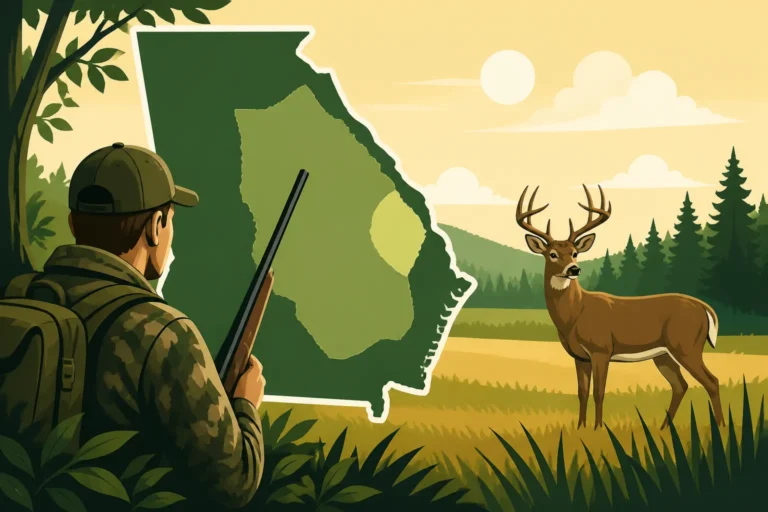
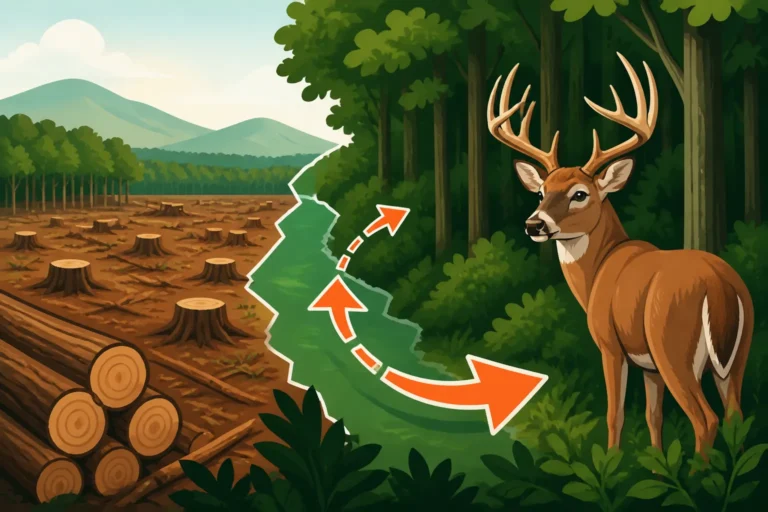
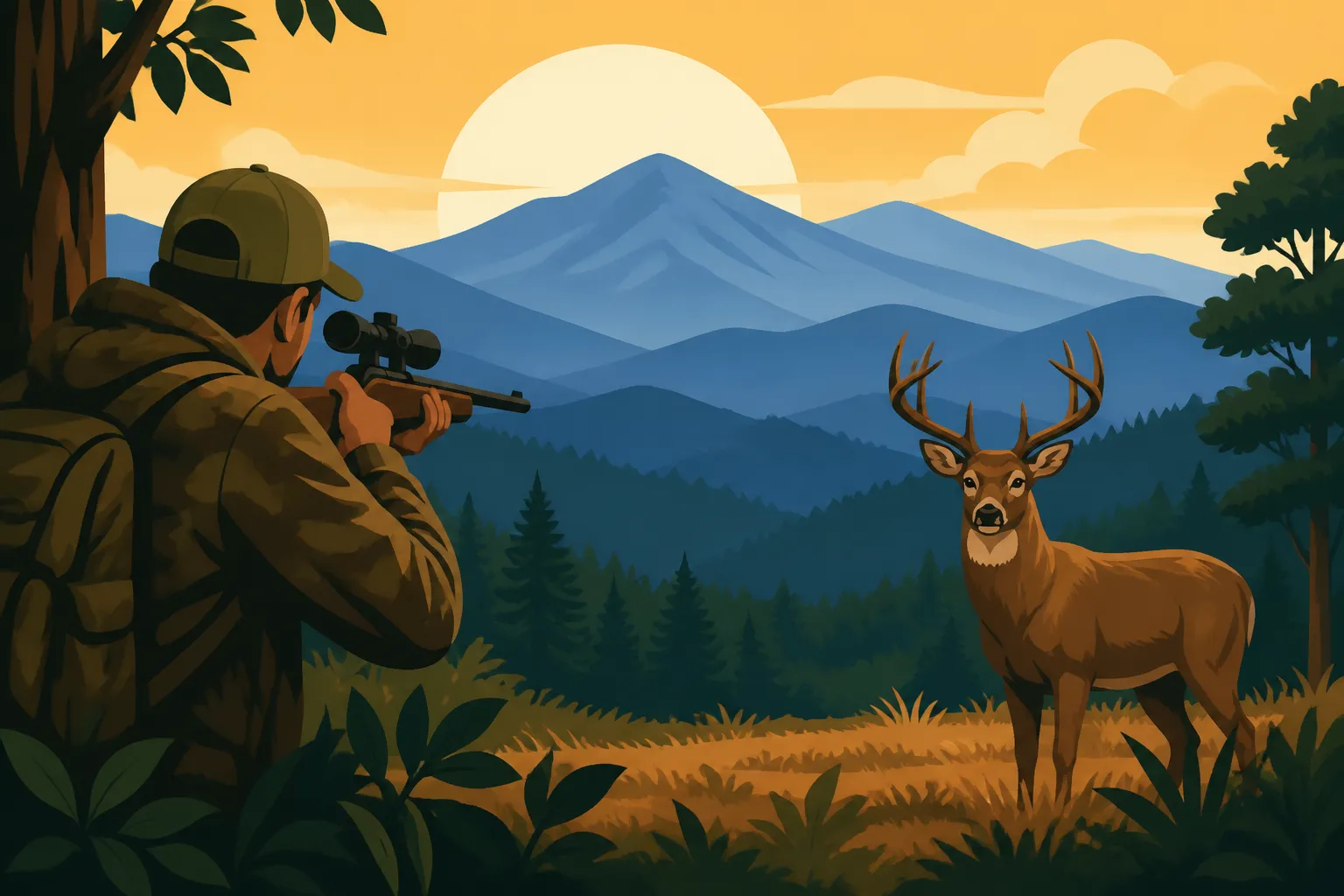
Hunting whitetail deer in the Blue Ridge WMA is a far cry from sitting over a food plot in the flatlands. The deer here aren't as numerous as in some agricultural areas, and they tend to be tougher, leaner, and more accustomed to using the topography to their advantage. Expect smaller-bodied deer on average, but don't let that deter you; a mature mountain buck is a hard-earned trophy. The steep climbs and dense cover make traditional still-hunting incredibly challenging, often favoring a slower, more deliberate approach. You'll need to develop your glassing skills, especially in areas with recent timber cuts or natural openings where deer might browse.
Focus your scouting efforts on understanding how deer navigate the ridges and hollows. Look for saddles—low points along a ridge—which act as natural travel corridors. Creek bottoms often provide water sources and thicker cover, while benches along steep hillsides can offer bedding areas. Treestand Setups in North Georgia Mountains often involve carrying lightweight climbing sticks and stands deep into remote areas, or utilizing saddle hunting for ultimate mobility. Setting up on a Hanging a Stand on a Mountain Saddle can be particularly effective, as deer frequently cross these natural funnels when moving between feeding and bedding areas or transitioning between different elevation bands. Early morning and late evening hunts demand attention to thermals, as cold air sinks into hollows in the morning and warm air rises up the slopes in the afternoon, carrying your scent with it.
Black Bear Hunting in the Northern Zone
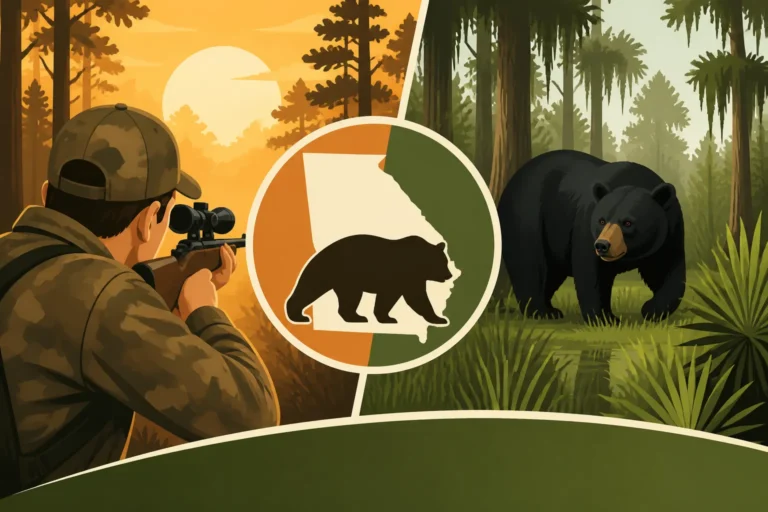
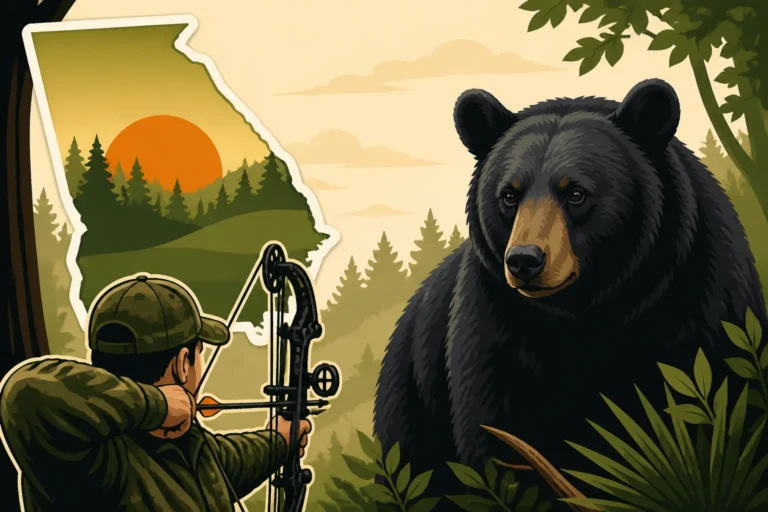
The Blue Ridge WMA is a prime location for black bear hunting, sitting squarely within Georgia's Northern Bear Zone. This means a distinct bear season structure, often including an archery and a firearms portion, with specific dates that hunters must adhere to. Bears in this region are truly wild, feeding on natural mast crops like acorns, hickory nuts, and various berries throughout the season. Successful bear hunting here relies heavily on scouting for these food sources. A year with a good acorn crop can mean bears are widely dispersed, whereas a poor crop might concentrate them in areas where food is more abundant.
Hunting bears in the mountains requires patience and the ability to cover significant ground. Many hunters will target areas where clear-cuts or recent fires have created new growth, offering prime browse, or focus on oak ridges during the fall when acorns are dropping. Because baiting is not permitted for bears in Georgia, understanding their natural foraging patterns is paramount. It's a true fair chase hunt. When planning your trip, consider the Hunting the North Georgia Mountain Bear Zone regulations carefully, as bear hunting often involves different licensing and checking requirements. Always be bear-aware; carry bear spray, make noise while hiking, and be respectful of their territory. Recovering a bear in this steep, thick terrain is an immense challenge and requires careful planning for extraction.
Spring Turkey Hunting in the Blue Ridge
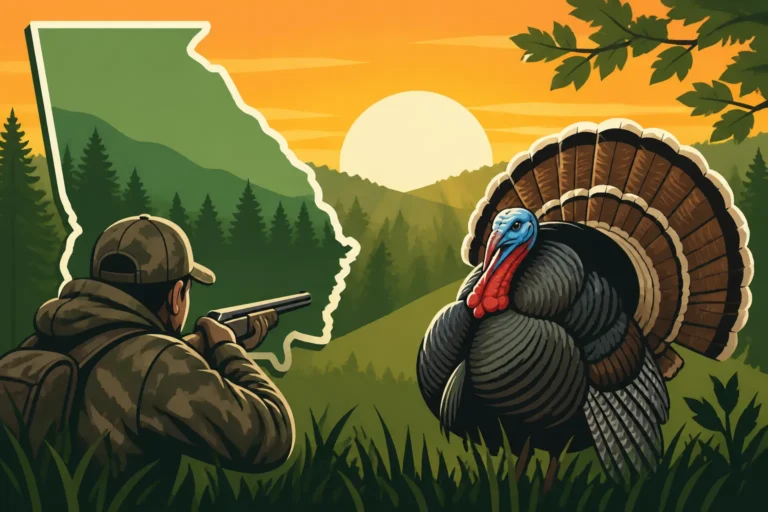
Spring turkey hunting in the Blue Ridge WMA offers an incredibly rewarding, albeit demanding, experience. Mountain gobblers are notoriously tricky—they can sound incredibly close one minute and be a quarter-mile away the next, especially when working across deep hollows. The terrain amplifies calls, making it difficult to pinpoint exact locations, and gobblers often prefer to strut on open ridge tops or benches, making them visible from afar.
Successful tactics often involve a lot of walking and listening. Roost Hunting Georgia Gobblers in the early morning is a popular strategy; listening for fly-down calls and quickly positioning yourself near their landing zone before they hit the ground can be effective. However, these birds are smart, and often prefer to drop to a lower bench and work their way up the mountain, making a direct approach difficult. Many seasoned mountain turkey hunters embrace a Run-and-Gun Turkey Tactics on Public Land approach, covering miles of ground, calling from prominent points, and listening intently for a response. When a gobbler sounds off, quickly assessing the terrain and planning a quiet approach to cut him off is key. Decoy use can be effective, but often you're playing a game of cat and mouse in thick cover where visibility is limited. Remember, Georgia typically has a conservative turkey bag limit, so every opportunity is precious.
Navigating the Challenging Terrain
The sheer scale and ruggedness of the Blue Ridge WMA are its defining features, demanding respect and preparation from every hunter who ventures into its depths. Understanding how to move through and interpret this landscape is crucial for both success and safety.
Understanding the Topography and Its Impact
The topography of the Blue Ridge WMA is characterized by sharp elevation changes, ranging from river bottoms to towering peaks. You'll encounter steep, winding ridges, deep, shaded hollows, and countless smaller draws and ravines that can disorient even experienced woodsmen. Rock outcroppings are common, and in many areas, the forest floor is covered in thick leaf litter, loose rocks, and tangled mountain laurel or rhododendron thickets, making silent movement almost impossible. The dense canopy often limits visibility, forcing you to rely more on sound and keen observation of subtle signs.
This dramatic terrain has a profound impact on hunting. Game animals, especially deer and bear, become masters of using the elevation to their advantage, often bedding on higher ground to catch rising thermals or slipping through hollows to avoid detection. Understanding Wind and Thermals on a Mountain Ridge is paramount; your scent will carry differently depending on the time of day and the specific contours of the land. In the mornings, cold air sinks into the valleys, carrying your scent downwards. In the afternoons, as the sun warms the slopes, air rises, carrying your scent upwards. Neglecting these dynamics can quickly blow your hunt. Furthermore, the physical demands are significant. Be prepared for long, strenuous climbs and descents, and know that a "short" walk on a map can translate to a grueling hour in real life. Your hunting pace will naturally slow down, emphasizing the importance of thorough scouting and patience.
Tools for Effective Navigation and Scouting
Given the complex terrain and often limited cell service in the Blue Ridge WMA, reliable navigation tools are absolutely essential. Relying solely on your phone's GPS can be a recipe for disaster if your battery dies or you lose signal. A multi-pronged approach to navigation is always best.
A dedicated handheld GPS unit or a robust mapping app on your smartphone, like onX Hunt, is incredibly valuable. onX Hunt allows you to download offline maps, so you have detailed satellite imagery, topography, and property lines even without cell service. This is invaluable for identifying potential bedding areas, connecting ridges, and ensuring you stay on public land. Many hunters find the ability to mark waypoints for their truck, potential sign, or a kill location indispensable. GoHunt can also be a useful tool for broader planning and research, though for in-the-field navigation, a dedicated mapping app like onX Hunt often shines brightest. Don't underestimate the humble compass and a physical, waterproof topographic map as a backup. Knowing how to orient yourself with these traditional tools can literally be a lifesaver if your electronics fail. Before you head out, use these tools from home to do some armchair scouting. Identify major ridges, drainages, and potential travel corridors. Look for areas away from roads that show less human activity, as these often hold undisturbed game. Reviewing aerial photos for Scouting Georgia Public Land Before Season can save you miles of walking once you're on the ground. For those times when cell service is spotty or nonexistent, knowing how to use Using Georgia Outdoors Without Cell Service with downloaded maps or a physical map is critical.
Here's a quick comparison of essential navigation tools:
| Tool | Pros | Cons | Best Use Case |
|---|---|---|---|
| Traditional Map | No battery needed, durable (if laminated), cheap | Requires interpretation, less detail, no real-time position | Backup, pre-scouting, general orientation |
| Magnetic Compass | No battery, simple, reliable | Requires map, limited for pinpoint navigation | Backup, orienting physical map, maintaining bearing |
| Handheld GPS Unit | Rugged, dedicated battery, reliable signal | Can be expensive, learning curve, not always user-friendly | Primary navigation, remote areas, no phone signal |
| Smartphone App | User-friendly, detailed maps (e.g., onX Hunt), versatile | Battery drain, signal dependent (unless offline maps downloaded) | Primary navigation (with offline maps), real-time tracking |
Essential Gear and Tactics for Blue Ridge WMA
Success in the Blue Ridge WMA isn't just about knowing where to go, but also what to bring and how to hunt effectively in its challenging environment. The right gear can make or break your comfort and ability to stay in the field, while smart tactics will increase your odds of encountering game.
Specialized Gear for Mountain Hunting
The gear you pack for the Blue Ridge WMA needs to be chosen with the mountains in mind. First and foremost, footwear is paramount. Invest in sturdy, comfortable, waterproof hiking boots with excellent ankle support and aggressive tread. You'll be climbing steep, uneven terrain, and a twisted ankle deep in the woods is a serious problem. Layered clothing is also critical, as temperatures can swing dramatically from chilly mornings in the hollows to warm afternoons on sunny slopes. Start with a moisture-wicking base layer, add insulating layers, and top with a waterproof/windproof outer shell. Consider Warm-Weather Clothing for Georgia Hunters even in cooler months due to the exertion of climbing.
Your pack needs to be comfortable and capable of carrying everything you need for a full day, or even an overnight stay if you're venturing deep. This includes plenty of water (hydration is key on strenuous climbs), high-energy snacks, a first-aid kit, emergency fire starter, a headlamp, and rain gear. Optics are also incredibly valuable here. Good quality binoculars (8×42 or 10×42) will help you pick apart distant ridges and clear-cuts for game. A small, lightweight spotting scope can also be beneficial if you plan to sit and glass large expanses. Read up on Optics for Georgia Mountains and Swamp to choose what's best for your style of hunting. Don't forget game processing tools; if you harvest an animal deep in the mountains, you'll likely be boning it out to pack it back to your vehicle.
Effective Hunting Strategies for Public Land
Hunting public land, especially in a popular WMA like Blue Ridge, requires a different mindset than private land hunting. You're going to encounter other hunters, and the game is typically more pressured. The most effective strategy is often to simply outwork other hunters. This means hiking deeper, climbing higher, and venturing into areas that others are unwilling to access. Hunting Pressure on Georgia Public Land often dissipates significantly just a half-mile or mile from the road. The best way to find Finding Ground Others Walk Past is to simply put in the miles.
Still-hunting can be productive if done slowly and deliberately, pausing frequently to listen and scan. Focus on subtle terrain features like benches, slight depressions, or saddle points where deer might be moving. Glassing clear-cuts or open hardwood ridges from a distance, especially in the mornings and evenings, can reveal deer movement that would be missed in thick timber. For stand hunters, mobile setups like climbing stands or saddle hunting gear are ideal for adapting to changing conditions and getting into remote spots. Focus your efforts during the rut, when deer are more active and less predictable. Understanding deer sign – rubs, scrapes, and tracks – in this difficult terrain is crucial for patterning animal movement. Patience is your greatest virtue; mountain hunting often means fewer encounters, but the ones you do have are hard-earned and memorable.
Safety First in the Mountains
Hunting in the Blue Ridge WMA is an adventure, but it comes with inherent risks that demand a strong emphasis on safety. Always tell someone where you are going and when you expect to return. Share your specific hunt plan, including your intended access points and the general area you'll be hunting. Cell service can be unreliable in the mountains, so don't count on being able to call for help.
Carry a comprehensive first-aid kit, fire-starting materials, a whistle, and a personal locator beacon (PLB) or satellite messenger if you're venturing into truly remote areas. Dehydration and hypothermia are real threats; pack ample water and extra layers, even if the forecast seems mild. Always be aware of your surroundings, including other hunters. During firearms season, wear the required amount of blaze orange or pink to maximize your visibility. When climbing or descending steep slopes, use caution and take your time. If you harvest an animal, make sure you have a plan for extraction, and never attempt to drag a heavy animal down an impossibly steep slope alone. Knowing your limits and being prepared for the unexpected is key to a safe and enjoyable hunt in the Georgia mountains.
Planning Your Trip and Respecting the Resource
A successful and responsible hunt in the Blue Ridge WMA requires more than just knowing where to aim; it involves careful planning and a deep respect for the land and its wildlife.
Access Points and Camping Options
Accessing the vast expanse of the Blue Ridge WMA typically involves navigating a network of forest roads managed by the Chattahoochee National Forest. Many of these roads are gravel and can be rough, so a high-clearance vehicle is often beneficial. Key access points can be found by consulting detailed maps, whether physical or digital like onX Hunt, and checking the Georgia DNR WMA map for specific entry points. Some areas may have designated parking lots, while others might simply be pull-offs along the road. Always pay attention to signage, as some roads may be seasonally closed or restricted to foot traffic only.
For those looking to extend their stay, camping options vary. Dispersed camping (primitive camping outside of designated campgrounds) is often permitted within the Chattahoochee National Forest, allowing you to camp near your hunting area, though specific rules apply. Check Camping Rules on Georgia National Forest Land for guidelines on fire restrictions, duration of stay, and leave-no-trace principles. There are also developed campgrounds operated by the Forest Service nearby, offering more amenities but usually requiring a fee. These can be a good base camp if you prefer comforts like running water and restrooms, and are willing to drive to your hunting spots. Always plan your access and camping well in advance, especially during peak hunting seasons, as popular spots can fill up quickly.
Leave No Trace Principles
As stewards of our natural resources, hunters have a responsibility to adhere to "Leave No Trace" principles, especially on public lands like the Blue Ridge WMA. This means minimizing your impact on the environment and ensuring that the land remains pristine for future generations of hunters and outdoor enthusiasts.
The most fundamental principle is to pack out everything you pack in. This includes all trash, food wrappers, spent shell casings, and anything else you bring with you. Even biodegradable items should be packed out, as they can take a long time to decompose and detract from the wilderness experience for others. When processing an animal, follow ethical practices and dispose of gut piles respectfully, away from trails, water sources, and camping areas. In warm weather, especially common in Georgia during early seasons, proper handling of game meat is crucial to prevent spoilage and is part of being a responsible hunter. Refer to resources like Field Dressing a Deer in Warm Weather for best practices. Avoid cutting or damaging live trees for stands or blind material, and stick to established trails or game trails where possible to prevent erosion. By leaving no trace, you contribute to the conservation of this incredible mountain resource and uphold the ethical standards of hunting.
Disclaimer
This article is for general informational purposes only and does not constitute professional advice. Laws, prices and regulations vary by location and change over time. Consult a qualified professional for guidance on your specific situation.