Georgia Turkey Brood Survey Results
It’s a frustrating feeling, isn't it? You head out to your favorite turkey woods, full of anticipation, only to find the woods feel a little too quiet. Fewer gobblers sounding off, fewer hens leading broods across open fields. You start to wonder, "What's going on with our turkeys here in Georgia?" This guide is all about peeling back the curtain on those very questions, diving deep into Georgia's turkey brood survey results to help you understand what they mean for the health of our wild turkey populations and, ultimately, for your future hunting seasons.
Understanding Georgia's Turkey Brood Surveys
When you hear wildlife biologists talk about "brood surveys," it might sound like a technical term, but at its heart, it's a simple, incredibly important way to take the pulse of our wild turkey populations. These surveys are the primary tool our state's wildlife agencies use to gauge how well turkeys are reproducing each year, giving us a crucial glimpse into what the future of our turkey hunting might look like. Without this vital information, managing our turkey resource would be like trying to navigate a dense fog – impossible to see where you’re going.
What is a Turkey Brood Survey and Why Does it Matter?
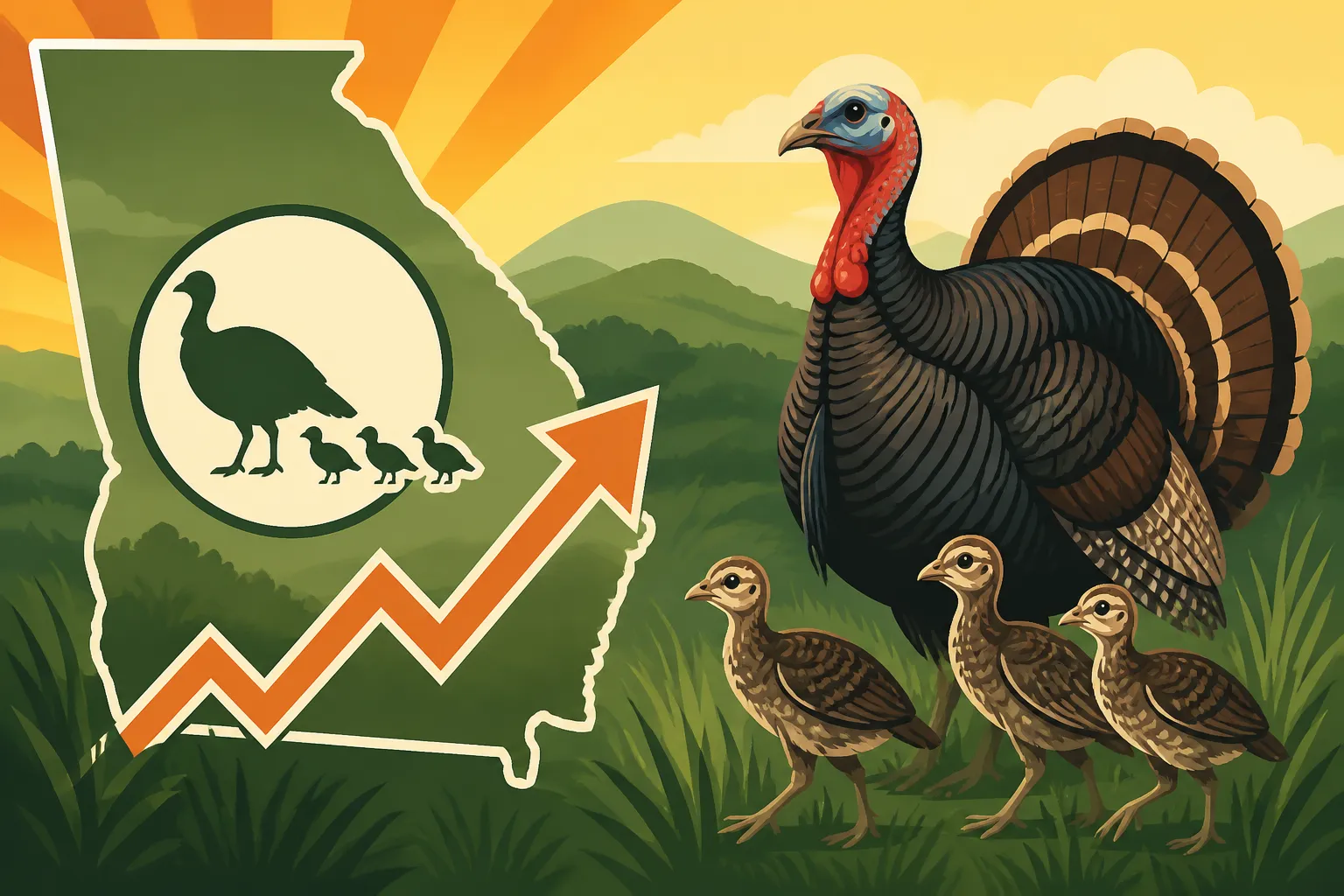
A turkey brood survey is essentially a systematic count of turkey hens and their poults (young turkeys) conducted primarily during the summer months. Think of it as a snapshot of the turkey nursery. Biologists and volunteers are looking for hens that successfully hatched a clutch of eggs and, more importantly, how many of those little poults are still alive and kicking. It's not just about seeing a hen; it's about seeing a hen with a healthy number of offspring.
This information is absolutely critical for understanding the overall health of the turkey population. A strong brood year means lots of young birds entering the population, which bodes well for hunting opportunities a year or two down the road. Conversely, a poor brood year can signal a downturn, prompting wildlife agencies to consider changes in season lengths or bag limits to protect the resource. You might wonder why DNR sometimes makes tough calls on season lengths or bag limits, and often, the answer lies squarely in these brood survey results. They are trying to ensure we have turkeys to chase for generations to come, even if it means tightening the belt a bit in the short term. It's all about sustainable management, and these surveys are the foundation of that effort.
How Georgia Conducts Its Brood Surveys
Georgia's turkey brood surveys rely on a dedicated effort from both wildlife agency staff and, importantly, volunteer citizens. The process typically involves individuals driving or walking specific routes or covering designated areas during late summer, usually from June through August. During these observation periods, participants record every hen and every poult they see. They note the date, time, location, and the number of hens and poults observed together. This consistent approach over time allows for comparisons year-to-year and across different regions of the state.
The accuracy of these surveys really hinges on consistency and participation. It's a massive undertaking to get enough data points across a state as large and diverse as Georgia. Many hunters, farmers, and outdoor enthusiasts contribute by submitting their observations, often through online portals or specialized apps. Tools like GoHunt, for instance, can sometimes provide platforms or resources that help hunters stay informed about data collection efforts or even contribute their own sightings, strengthening the overall dataset. The more eyes on the ground, the more robust the data, and the better decisions can be made to manage the future of our wild turkey flocks.
Key Metrics: Poult-to-Hen Ratios and What They Mean
When the data from all those observations comes in, one of the most significant metrics that biologists focus on is the "poult-to-hen ratio." This ratio is simply the average number of poults observed per hen. It's a direct indicator of reproductive success and, crucially, early poult survival. For instance, if you observe 10 hens and a total of 30 poults, your poult-to-hen ratio for that observation would be 3.0.
Wildlife managers use historical data and ecological understanding to determine what constitutes a "good" or "poor" poult-to-hen ratio. Generally, a ratio below a certain threshold—often around 2.0 to 2.5 poults per hen—is a cause for concern, indicating that the population might not be replacing itself effectively. A healthy, stable or growing population usually requires ratios higher than that. Monitoring this ratio over time helps track long-term trends in the turkey population. A consistent decline can signal underlying problems like poor habitat, increased predation, or adverse weather patterns during nesting and brooding. Understanding these numbers is vital because they directly correlate to the number of jakes and mature gobblers you might encounter in future seasons. For a deeper dive into this specific metric, you might want to read Poult-to-Hen Ratios and What They Mean.
What the Brood Survey Numbers Really Mean for Hunters
It's one thing to understand the science behind brood surveys, but what does it really boil down to for us, the hunters who cherish those spring mornings? The numbers aren't just for biologists; they're a roadmap for what to expect in the turkey woods and how to adapt your strategies.
Interpreting Low vs. High Poult-to-Hen Ratios
Imagine receiving the news that Georgia had a fantastic poult-to-hen ratio last summer, say, 3.5 or higher. That's excellent news! It suggests a high survival rate for young turkeys. What this means for you, the hunter, is that in a year or two, you can expect a strong recruitment of jakes and eventually two-year-old gobblers into the population. Your chances of hearing more gobbling and encountering more birds could be significantly higher. It creates a sense of optimism, knowing that the woods will likely be alive with more turkeys.
On the flip side, a low poult-to-hen ratio, perhaps consistently below 2.0, can be disheartening. It indicates that fewer poults survived, meaning fewer young birds will enter the population in the coming years. This translates to potentially tougher hunting conditions a season or two down the line, with fewer jakes and mature gobblers. In these scenarios, wildlife agencies might even consider more conservative regulations, like reduced bag limits or shorter seasons, to give the population a chance to recover. It's important to remember these are indicators, not guarantees. Local conditions always vary, but the statewide trend gives you a general idea of the population's trajectory.
Connecting Brood Success to Future Hunting Seasons
The connection between those little poults you see (or don't see) in the summer and the gobblers you hear in the spring is not immediate, but it's incredibly direct. Wild turkeys typically become sexually mature and able to breed at two years old. So, a strong brood year today means that in two springs from now, you'll likely have a healthier number of two-year-old gobblers, which are often the most vocal and responsive birds. Similarly, the jakes you see the following spring are a direct result of the previous summer's brood success.
This lag effect—the one- to two-year delay between brood success and its impact on the huntable gobbler population—is why consistent, long-term monitoring is absolutely crucial. A single bad year isn't necessarily a crisis if it's followed by several good ones. However, a trend of poor brood success over multiple years is a serious concern, as it points to a declining population that may require significant management interventions. Understanding this timeline helps us appreciate why tough decisions might be made, such as the recent reduction in bag limits for Georgia hunters. For more context on why these changes happen, check out Why Georgia Cut the Turkey Bag Limit. It all comes back to ensuring a sustainable future for our turkey hunting tradition.
Regional Differences in Georgia's Brood Success
Georgia is a massive state with incredibly diverse landscapes, from the Appalachian foothills to the sprawling Coastal Plain. It stands to reason that turkey brood success isn't going to be uniform across all these regions. What's happening in the North Georgia mountains might be completely different from the results coming out of the South Georgia pine flats or the Piedmont farmlands. These regional variations are critical for wildlife managers because they allow for more localized management strategies and help hunters understand what to expect in their specific hunting grounds.
For example, a wet, cold spring in the mountains could devastate poult survival in that region, while a more moderate spring in the Coastal Plain might lead to excellent numbers there. Habitat types also play a huge role; areas with fragmented habitat or intense agricultural practices might see different trends than vast expanses of timber or well-managed private lands. This is why it’s always a good idea to seek out specific regional reports if they are available, rather than just relying on a statewide average. It gives you a much clearer picture of your local turkey population. To learn more about where turkeys tend to thrive, you might find Where Georgia Turkeys Are Densest particularly insightful.
Factors Influencing Georgia's Turkey Brood Success
Anyone who spends time in the Georgia outdoors knows that Mother Nature has a huge say in everything. For wild turkeys, especially the delicate little poults, the elements and the environment can make or break a year's reproductive success. It's a complex interplay of weather, predators, and the quality of the habitat they call home.
Weather's Impact on Nesting and Poult Survival
We all know how unpredictable Georgia weather can be, and it plays a huge role here. The period from late spring through early summer is absolutely critical for turkey poult survival. Hens are nesting, eggs are hatching, and tiny poults are hitting the ground. They are incredibly vulnerable during this time. Too much cold, driving rain can be devastating. Poult feathers aren't fully developed yet, and they can easily succumb to hypothermia, getting chilled to the bone. Heavy rains can also flood nests, destroying entire clutches before they even hatch.
Beyond the immediate cold and wet, extended periods of rain can also reduce the availability of insects, which are a vital protein source for growing poults. Conversely, extremely dry conditions, while sometimes beneficial for poult survival in terms of staying warm and dry, can also lead to less available cover and fewer insects if prolonged into a drought. A "just right" spring and early summer with warm, mostly dry weather punctuated by gentle, brief showers is what turkey populations really need for a booming brood year.
Predation on Nests and Poults
It's a tough world out there for a turkey poult, and they face a gauntlet of predators from the moment they hatch—and even before, as eggs in the nest. Raccoons, opossums, skunks, snakes, and even some birds are notorious nest predators, making a meal out of unsuspecting turkey eggs. Once poults hatch, the threat shifts to opportunistic hunters like coyotes, bobcats, foxes, and even certain raptors. The abundance and distribution of these predators can significantly impact brood survival.
In areas where predator populations are particularly high, or where habitat fragmentation pushes turkeys into closer proximity with predators, brood success can suffer. While predation is a natural part of the ecosystem, an imbalance can hinder population recovery, especially after a tough weather year. Understanding the dynamics of Nest Predation and Georgia Turkey Hatches is crucial for appreciating the challenges wild turkeys face. Similarly, knowing about Georgia Coyote Range and Density helps highlight a significant predator pressure on poults across the state. It's a constant battle for survival, and only the strong (and lucky) poults make it to adulthood.
Habitat Quality and Its Role
Even with perfect weather and manageable predator numbers, a turkey population won't thrive without good habitat. Habitat quality is the foundation of turkey survival and reproduction. For wild turkeys, "good habitat" means a diverse landscape that provides everything they need throughout their life cycle: safe nesting sites, abundant brood-rearing areas, and secure roosting spots.
Nesting hens prefer dense cover—think thick tangles of briars, tall grasses, or shrubby undergrowth—to hide their nests from predators. Brood-rearing habitat is equally important, characterized by open woodlands with a diverse understory of insects and native plants, allowing poults to forage for bugs while still having easy access to cover from raptors. Mature trees, especially pines and hardwoods, are essential for roosting. Changes in land use, such as extensive clear-cutting without adequate regrowth management, conversion of diverse forests to monoculture pine plantations, or widespread development, can severely impact the quality and availability of suitable turkey habitat. Well-managed forests, often with prescribed burns, can create the mosaic of open areas and dense cover that turkeys need, helping them buffer against some of the challenges posed by weather and predators.
How Hunters Can Use Brood Survey Information
So, you've absorbed all this information about poult-to-hen ratios, weather, and predators. Now, how do you translate that knowledge into better hunting experiences and responsible stewardship of Georgia's turkey resource? It's about adjusting your mindset, tactics, and even your role as a conservationist.
Adjusting Expectations and Tactics
The primary benefit of understanding brood survey results is that it helps you set realistic expectations for the upcoming turkey seasons. If the surveys indicate a couple of poor brood years, you might head into the woods knowing that gobbler numbers could be lower, and birds might be harder to locate and call in. In such scenarios, instead of getting discouraged, you can adjust your tactics. This might mean covering more ground, being more patient, focusing on known turkey travel corridors, or even trying to locate birds that are less pressured in areas like dense swamps or deep public lands. Tools like GoHunt can be invaluable here, offering detailed mapping capabilities to help you scout for prime habitat and potential travel routes.
Conversely, if the surveys point to strong brood success, you can anticipate more jakes in the immediate next season and potentially more mature, vocal gobblers the year after. This might encourage you to be a bit more aggressive with your calling or to explore new areas, knowing that the population is robust. No matter the forecast, scouting remains paramount. Getting out there well before the season to listen for roosts, find tracks, and locate strut zones will always be your best bet, especially after consulting the surveys. For excellent scouting advice, consider reading Scouting Georgia Public Land Before Season.
Advocating for Sustainable Management
Being an informed hunter means you're not just a consumer of the resource; you're a stakeholder in its future. Understanding brood survey data empowers you to engage more effectively with wildlife agencies and advocate for sound, science-based management. When you see changes in regulations, like modified season dates or bag limits, you'll comprehend the "why" behind those decisions, knowing they're often driven by the very data we've discussed.
Your support for habitat improvement initiatives, whether through conservation organizations or by practicing good land stewardship on your own property, becomes even more impactful. Furthermore, accurate harvest reporting is essential. Every turkey you check through the system contributes to the data used by biologists to assess population health, which in turn influences future regulations. Organizations and platforms like GoHunt often highlight critical issues and ways hunters can get involved in conservation efforts, allowing you to stay connected and make your voice heard for the benefit of Georgia's wild turkeys.
Contributing to Citizen Science Efforts
One of the most powerful ways you can help ensure the future of Georgia's wild turkeys is by actively participating in citizen science efforts, specifically by contributing to brood surveys yourself. Wildlife agencies often rely on volunteer observations to supplement their official data. If you spend time in the woods during the summer months – whether you’re fishing, hiking, shed hunting, or just enjoying nature – you can become a valuable data collector. Reporting every hen and poult you see, noting the date, time, and specific location, provides crucial information that helps paint a more complete picture of local turkey populations.
Think of it this way: every pair of eyes on the ground adds to the scientific understanding, helping managers make better decisions. This localized information can be particularly useful in identifying specific areas with thriving populations or, conversely, those struggling. Your local observations, combined with data from thousands of other Georgians, feed into the larger analysis of Georgia Turkey Population Trends. It's a direct, tangible way for you to give back to the resource you love and ensure that the thrill of a spring gobbler hunt remains a cherished tradition for years to come.
Disclaimer
This article is for general informational purposes only and does not constitute professional advice. Laws, prices and regulations vary by location and change over time. Consult a qualified professional for guidance on your specific situation.