Wood Ducks Nesting in Georgia Swamps
The shimmering, still waters of Georgia's swamps hold a secret world, one that's particularly vital to one of our most beautiful waterfowl: the wood duck. For many hunters, just catching a glimpse of a wood duck darting through flooded timber is a treat, but understanding where and how these vibrant birds raise their young can feel like trying to untangle kudzu. It’s a challenge to pinpoint exactly where they disappear to for nesting, given the dense, often impenetrable nature of our lowland forests and swamps. This comprehensive guide aims to pull back the curtain on wood duck nesting in Georgia's unique swamp ecosystems, exploring their specific habitat needs, breeding behaviors, and how we can all contribute to their continued flourishing in our beloved wild spaces.
The Unique Appeal of Georgia's Swamps for Wood Ducks
Georgia's sprawling network of swamps, river bottoms, and flooded forests offers a perfect, if somewhat hidden, sanctuary for wood ducks. These aren't your typical open-water ducks; they are creatures of the timber, preferring the quiet, sheltered environments that these unique habitats provide for raising their broods. The very structure of our swamps, from the ancient cypress stands to the slow-moving blackwater rivers, creates an ideal setting for these birds to thrive.
Why Wood Ducks Choose Georgia's Watery Havens
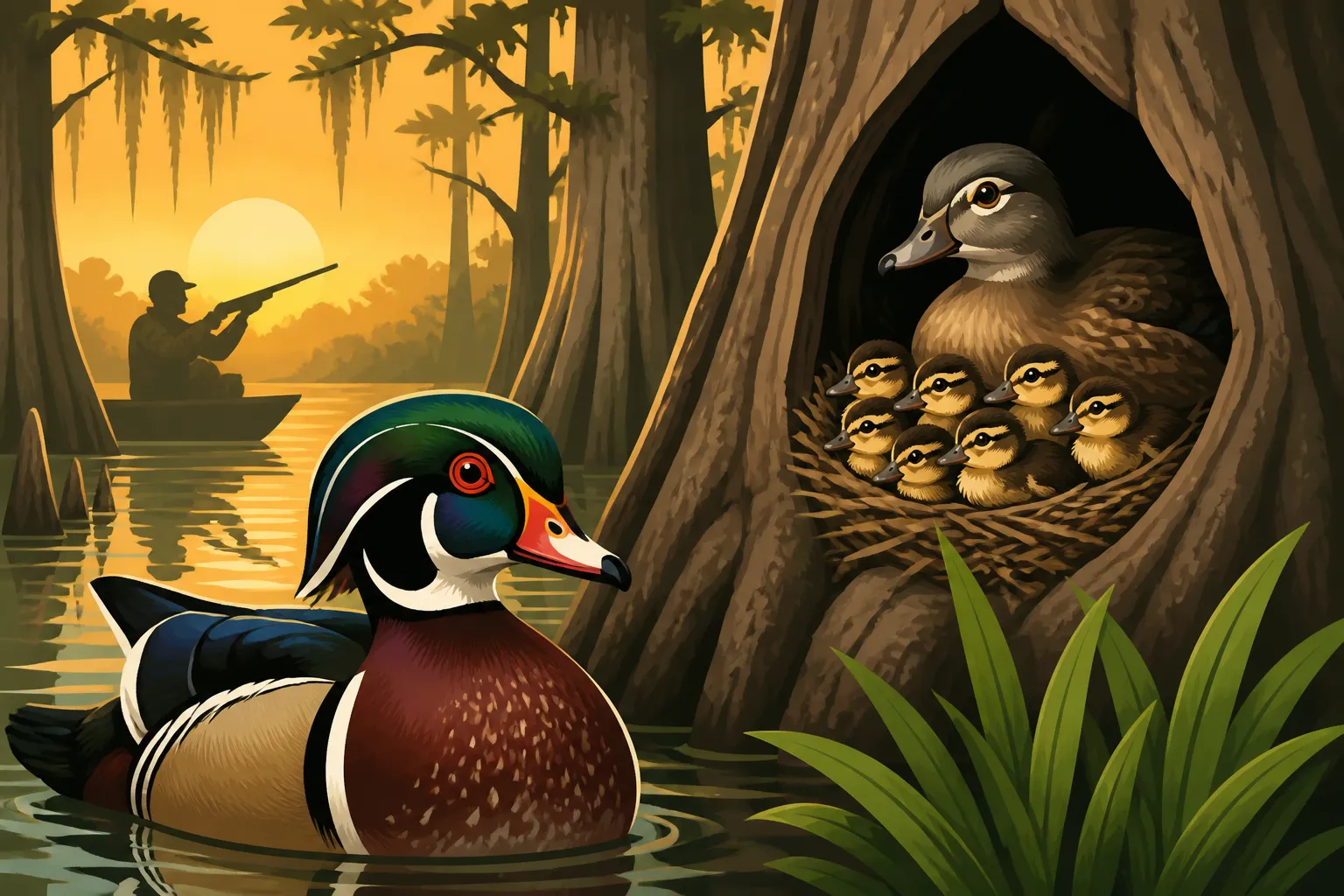
Wood ducks, often called "woodies" by those who admire them, have very specific habitat requirements, and Georgia's swamps meet them perfectly. They need standing timber with natural cavities for nesting, calm water for foraging and brood rearing, and an abundance of food sources. Think of a classic cypress-tupelo swamp, where gnarled trees rise from blackwater, their branches intertwining overhead, creating a dim, cathedral-like canopy. This is prime wood duck territory.
The flooded timber offers both shelter and sustenance. Unlike many other duck species that nest on the ground, wood ducks are cavity nesters. This means they rely on natural hollows in trees, often created by rot or abandoned by woodpeckers. Older, mature forests found in places like the Okefenokee Swamp region or along the Altamaha River Wildlife Management Area are absolutely crucial. These areas provide the large, old trees necessary to form suitable nesting cavities. The water itself, whether it's a slow-moving river, a stagnant backwater slough, or a beaver pond, is just as important, offering safe havens for ducklings once they hatch and an ample supply of aquatic insects, seeds, and acorns. Wood Ducks in Georgia Swamps are truly at home in these intricate environments.
Key Environmental Factors for Successful Nesting
Several environmental factors must align for wood ducks to successfully nest and raise their young in Georgia's swamps. Water levels, for instance, play a significant role. Stable water levels during the nesting and brood-rearing period are essential. Too much fluctuation, either floods or droughts, can either submerge nests or leave ducklings stranded and vulnerable to predators. A consistent water line around the base of nesting trees provides a critical buffer.
The type of tree species available is also paramount. Wood ducks show a strong preference for large diameter trees like cypress, various oak species (especially water oaks and willow oaks), and gum trees. These species are prone to developing the deep, spacious cavities that a hen needs to lay her clutch of eggs and keep them safe. Beyond the trees themselves, the overall structure of the swamp provides natural protection. The dense undergrowth, tangled roots, and submerged vegetation offer concealment for both nesting hens and vulnerable ducklings, shielding them from aerial and terrestrial predators. It's a delicate balance, and any disruption to these factors can have a ripple effect on nesting success.
Decoding Wood Duck Nesting Biology and Behavior
Understanding the "how" and "when" of wood duck nesting is fascinating and crucial for anyone interested in their conservation or observing them in the wild. These birds exhibit unique behaviors tied directly to their arboreal nesting habits, setting them apart from many other waterfowl species.
The Intricacies of Cavity Nesting
The wood duck's commitment to nesting in cavities is perhaps its most distinguishing trait. While natural tree cavities are their primary choice, they readily adapt to artificial nest boxes when suitable natural sites are scarce. A hen will meticulously select a cavity, often returning to the same general area year after year. The ideal cavity is typically 10 to 40 feet above the water or ground, with an entrance hole around 3-4 inches wide – just large enough for her to squeeze through, but small enough to deter larger predators. Inside, the cavity needs to be deep enough to provide insulation and security for the eggs and eventually the ducklings.
Once a site is chosen, the hen lays an average of 10-12 creamy white eggs, typically one per day. Unlike many other birds, wood ducks don't construct an elaborate nest within the cavity; they simply line the bottom with wood chips, leaves, and eventually, down feathers plucked from their own breast. A peculiar behavior known as "dump nesting" sometimes occurs, where multiple hens lay eggs in the same cavity. This can lead to unusually large clutches, sometimes too large for one hen to successfully incubate, often resulting in lower hatch rates. It's a testament to the competition for prime nesting sites in areas where cavities are limited. Utilizing resources like GoHunt's mapping features can help pinpoint areas with ideal tree cover and water access, which may indicate natural nesting areas.
The Nesting Season and Brood Rearing
The nesting season for wood ducks in Georgia typically kicks off relatively early in the spring, often beginning in late February and extending through March and April. The exact timing can vary slightly depending on weather conditions and geographical location within the state, but generally, as the days lengthen and the waters warm, hens begin their search for the perfect nesting spot.
After laying her full clutch, the hen begins incubation, a diligent process that lasts approximately 28 to 32 days. During this time, she will only leave the nest for short periods to feed, remaining incredibly secretive and camouflaged within her chosen cavity. Once the ducklings hatch, the magic truly begins. Within 24 hours of hatching, the precocial ducklings, already covered in down and capable of moving, will make their incredible leap of faith. Guided by their mother's calls from the water below, they literally jump from the cavity entrance, sometimes from heights of 50 feet or more, bouncing harmlessly off branches and landing with a splash in the water. It’s an astonishing sight to witness, and a critical moment for the survival of the brood. The hen then leads her ducklings to dense cover, often in thick vegetated areas of the swamp, where they'll spend the next 8-10 weeks learning to forage and avoid predators before they can fly. Brood survival rates face many challenges, from snapping turtles and fish to raccoons and raptors, making dense cover essential for their early weeks.
Identifying Prime Nesting Habitat for Observation and Conservation
For those hoping to catch a glimpse of these secretive nesters or contribute to their conservation, knowing how to identify prime nesting habitat is key. It's not always about stumbling upon a nest, but understanding the signs and characteristics of areas where they are most likely to be present.
Scouting for Natural Nesting Hotspots
Finding natural wood duck nesting hotspots requires a keen eye and an understanding of their needs. You’re looking for a combination of old-growth timber, especially large diameter trees like cypress, oaks, and gum, directly adjacent to or within flooded areas. Dead snags and trees with broken tops are often good indicators, as these are more likely to harbor natural cavities. Look for trees that show signs of decay or previous woodpecker activity.
During the pre-nesting and nesting season (late winter through spring), keep an eye out for tell-tale signs of wood duck activity. Seeing pairs flying low through the timber, especially around sunrise and sunset, or hens quietly slipping into a tree cavity, are strong indicators. You might also find shed feathers on the water or along the bank near potential nesting trees. For a more organized approach, you can leverage mapping tools, perhaps even using a platform like GoHunt to analyze satellite imagery. Look for areas marked by significant tree cover bordering permanent water bodies, particularly those with a history of minimal human disturbance. These digital insights, combined with boots-on-the-ground scouting, can dramatically increase your chances of finding promising habitat. Scouting Georgia Public Land Before Season is not just for deer; it's invaluable for all game species.
The Role of Nest Boxes in Supplementing Natural Cavities
While natural cavities are ideal, habitat loss due to logging, development, and natural processes means that suitable nesting sites can be limited in many areas. This is where artificial nest boxes become incredibly valuable. These boxes serve as a direct, tangible way to supplement natural cavities and provide crucial nesting opportunities for wood ducks.
Proper placement and regular maintenance are critical for the success of nest boxes. They should be mounted 10-20 feet above the water (or ground, if predator-protected) on sturdy posts or trees, preferably in or on the edge of flooded timber or over water. Crucially, each box needs a predator guard – a metal cone or sheet metal wrap around the post below the box – to prevent raccoons, snakes, and other predators from reaching the eggs and ducklings. The box itself should be constructed from durable, untreated wood or even specialized PVC, with an oval-shaped entrance hole roughly 3×4 inches to mimic natural cavities. Placing a few inches of wood shavings inside the box mimics the natural debris found in tree cavities. Regular checks, ideally once a year before nesting season, are necessary to clean out old nesting material and ensure the box is in good repair. Many conservation groups and even individual hunters participate in these programs, helping to bolster local wood duck populations.
Conservation Efforts and Hunter Involvement
The robust population of wood ducks we enjoy today is a testament to dedicated conservation efforts over the past century. Hunters, through their license fees and direct involvement, have played a pivotal role in this success story, ensuring that Georgia Waterfowl on the Atlantic Flyway continue to thrive.
Protecting and Enhancing Wood Duck Habitat
At the heart of wood duck conservation is the protection and enhancement of their unique wetland and forested habitats. This involves a multi-faceted approach, starting with responsible timber management. Selective logging practices that preserve large, cavity-prone trees, or even leaving dead snags standing near water, directly benefit wood ducks. Managing our forests with a long-term view, rather than short-term gains, ensures a continuous supply of suitable nesting sites.
Wetland restoration projects are another cornerstone. Re-establishing natural water flows, creating shallow impoundments, and planting native vegetation can transform degraded areas into prime wood duck foraging and brood-rearing habitat. Organizations and state agencies often work tirelessly on these projects across Georgia, from the upper Piedmont to the coastal plain. Controlled burns, traditionally used in adjacent upland pine forests to promote native vegetation and reduce wildfire risk, can also indirectly benefit wood ducks by maintaining healthy, diverse ecosystems that support the overall food web and hydrological cycles critical to wetland health. All these efforts create a healthier, more resilient environment for wood ducks, from the time they lay their eggs until they fly south in the fall.
How Hunters Contribute to Wood Duck Longevity
It’s a common misconception that hunters are solely about taking game. In reality, hunters are among the most passionate and effective conservationists, and their contributions to wood duck populations are immense. A significant portion of funding for wildlife management, research, and habitat acquisition comes directly from the sale of hunting licenses, stamps (like the Federal Duck Stamp), and excise taxes on hunting equipment. Every time a hunter purchases a Georgia Hunting Licenses and What They Cost or a Federal Duck Stamp, they are directly funding programs that benefit wood ducks and countless other wetland species.
Beyond financial contributions, many hunters actively participate in hands-on conservation. They volunteer their time to build and install wood duck nest boxes, monitor their success, and maintain these crucial structures year after year. These individuals often form local groups or work with state agencies to identify areas where nest boxes are most needed and ensure they are properly cared for. Ethical hunting practices, including adhering to bag limits for Georgia Duck Harvest Numbers and seasons (like during Pass-Shooting Georgia Wood Ducks outings), are also essential, ensuring sustainable populations for future generations to enjoy. The commitment of the hunting community has been, and continues to be, vital in ensuring the vibrant presence of wood ducks in Georgia's swamps. Knowing the local regulations, easily checked through resources like the GoHunt app, helps every hunter stay compliant and contribute positively to wildlife management.
| Nesting Structure Type | Advantages | Disadvantages | Ideal Location in Georgia Swamp |
|---|---|---|---|
| Natural Tree Cavity | Most natural, often well-insulated, varied sizes and depths offer choice, low long-term cost, integrated into existing ecosystem structure. | Limited availability in younger forests, difficult to monitor, prone to decay over time, exact location can be unpredictable, often high up and hard to access for observation. | Large, old-growth cypress, tupelo, water oak, or sweetgum trees directly over or very near stagnant or slow-moving water, within dense swamp interior for seclusion. |
| Wooden Nest Box | Easy to install and monitor, can be placed where natural cavities are scarce, allows for predator guards, provides consistent design for hens. | Requires annual maintenance (cleaning, repairs), susceptible to rot, can attract unwanted species (squirrels, owls), initial cost of materials and construction. | On posts or trees at the edge of swamps, flooded timber, or beaver ponds, accessible by boat or waders for regular checks, with clear flyway to entrance. |
| PVC Nest Tube | Highly durable, very low maintenance, excellent predator resistance (especially snakes and raccoons due to smooth surface), long lifespan, often lightweight. | Less natural aesthetic, specific design required for proper ventilation and drainage, may not be as readily accepted in all areas, can heat up in direct sun. | In open water areas, deeper sections of swamps where wood is scarce, often mounted on metal poles, away from easy access for terrestrial predators. |
Disclaimer
This article is for general informational purposes only and does not constitute professional advice. Laws, prices and regulations vary by location and change over time. Consult a qualified professional for guidance on your specific situation.