Georgia Night Hog Hunting Light Rules
The destructive power of feral hogs across Georgia is a headache for countless landowners and farmers, tearing up fields, destroying habitat, and impacting native wildlife. For many, the only way to even begin to manage these rampant populations is to hunt them around the clock, and that often means slipping into the darkness of night. But when you’re out there in the pitch black, the rules around using lights can feel confusing and even intimidating. This guide is here to clear up exactly what the Georgia night hog hunting light rules are, so you can hunt effectively, legally, and most importantly, safely.
The Problem with Feral Hogs and Why Night Hunting is Crucial
Before we dive into the nitty-gritty of lights, it's important to understand why night hunting for hogs is even a thing in Georgia. Unlike most other game species, feral hogs aren't native to North America. They're an invasive species, and their populations are exploding, causing millions of dollars in agricultural damage annually. From root-plowing up planted fields to competing with deer and turkeys for food sources, their impact is devastating. The Georgia Department of Natural Resources (DNR) recognizes this immense problem, which is why they've taken a much more lenient stance on how and when these animals can be hunted.
Hogs are also largely nocturnal, especially in areas with significant human pressure. They learn quickly, becoming most active under the cloak of darkness to avoid detection. This behavioral adaptation makes daytime hunting incredibly challenging and often unproductive, especially for those looking to make a significant dent in the local population. That's why being able to hunt them effectively at night, often with the aid of modern lighting and thermal technology, is not just a luxury but a necessity for real control. It’s an ongoing battle, and every tool in the toolbox helps. You can learn more about the scale of the issue in our article on Damage Feral Hogs Cause Georgia Farms.
Why Night Hunting Hogs is Permitted
The primary reason Georgia permits night hunting for feral hogs is straightforward: population control. The standard regulations that apply to deer or turkey — such as no hunting after sunset or restrictions on artificial lights — are put in place to manage those specific game populations sustainably. For hogs, the goal is the exact opposite. There's no bag limit, no closed season on private land, and almost no restrictions on methods, all because the state wants to empower landowners and hunters to remove as many as possible. It's a testament to how serious the problem has become.
Imagine a farmer watching their freshly planted cornfield get absolutely ravaged overnight. If they had to wait until sunrise, the hogs would be long gone, and the damage would continue unchecked. By allowing night hunting with lights, the state provides a crucial window of opportunity for effective intervention. This isn't about sport in the traditional sense; it's about ecological and agricultural defense. The DNR understands that conventional hunting hours simply aren't enough to curb the relentless spread of these destructive animals.
General Statewide Regulations for Feral Hogs
While the rules for hunting hogs are far less restrictive than for other species, it’s not a complete free-for-all. Hunters must always be mindful of general hunting laws, even when pursuing hogs. For instance, you still need a valid Georgia hunting license, unless you're a resident hunting on your own land. While there are no bag limits or closed seasons on private property, if you venture onto a Wildlife Management Area (WMA), you must check the specific WMA regulations. WMAs often have their own unique rules regarding open seasons, permitted weapons, and even hours, which can sometimes supersede the statewide leniency for hogs. Always carry proof of your license, know your property boundaries, and be aware of any local ordinances that might affect discharge of firearms, especially if you're close to populated areas. It’s also wise to educate yourself on Georgia Feral Hog Regulations in general, as they can sometimes be updated.
Understanding the Specifics of Light Use
Now, let's get to the heart of the matter: lights. Georgia is quite progressive when it comes to allowing hunters to use various lighting and night-vision technologies for feral hogs, recognizing their utility in combating the species. This liberality sets hog hunting apart from virtually every other hunting opportunity in the state.
Types of Lights Permitted
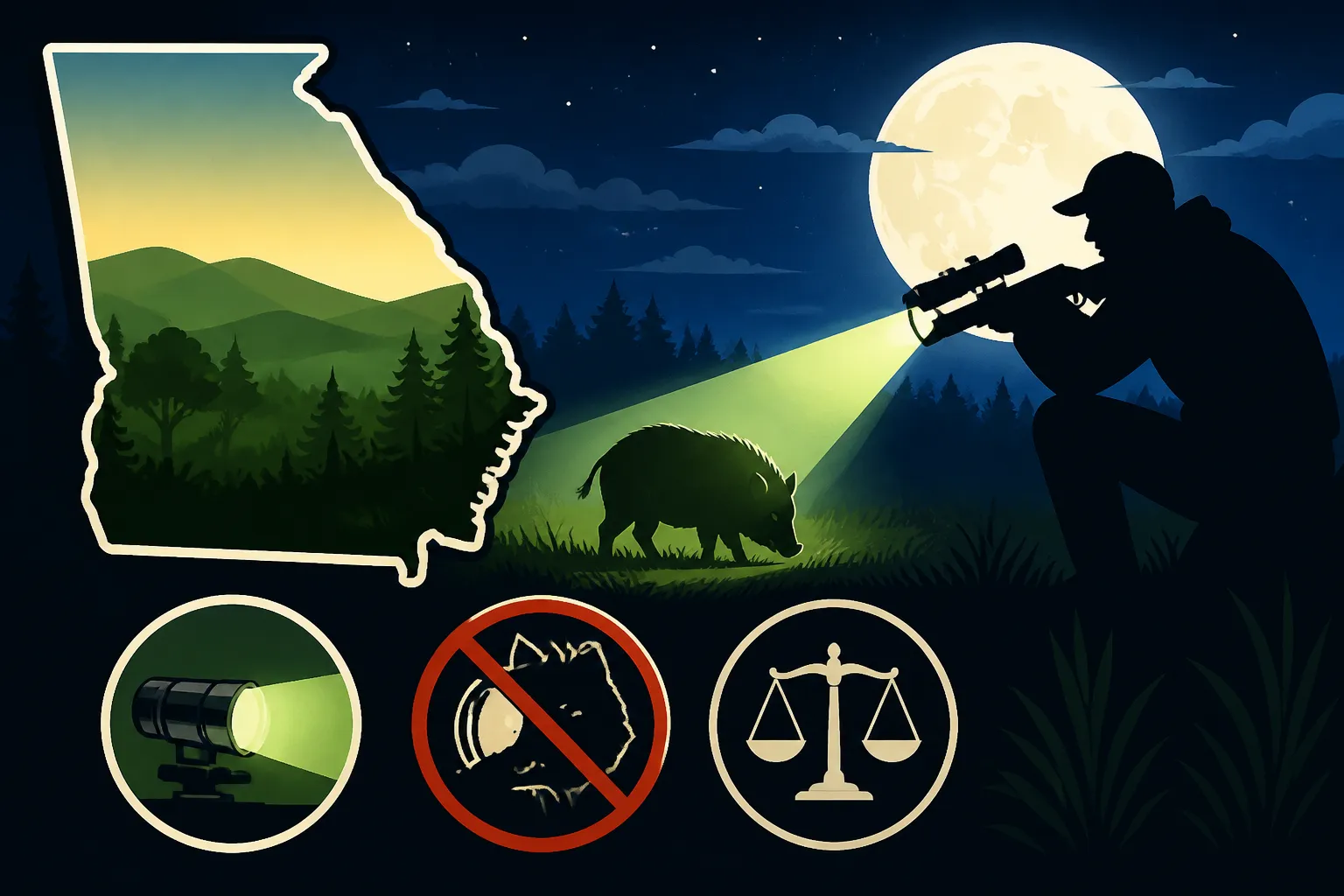
The great news for hog hunters in Georgia is that pretty much any type of artificial light is permitted when hunting feral hogs at night. This includes, but isn't limited to:
- Weapon-mounted lights: These are incredibly popular, allowing you to illuminate your target directly down the line of sight. They can be white light, red light, or green light, with no restrictions on intensity.
- Handheld flashlights: Perfect for scanning, tracking, and navigating to and from your stand or hunting location.
- Headlamps: Essential for hands-free tasks like setting up gear, field dressing, or following a blood trail (though tracking wounded hogs at night with only a headlamp can be a challenge).
- Thermal imaging devices: These are game-changers. Thermal optics detect heat signatures, allowing you to spot hogs even in complete darkness, thick brush, or fog where visible light would fail. This technology is incredibly effective for identifying animals and their movement patterns.
- Night vision devices: These amplify ambient light (like moonlight or starlight) to create a visible image. While not as effective in absolute darkness as thermal, they offer better target identification in low-light conditions where some ambient light exists.
- Vehicle-mounted lights: In many situations, particularly on large agricultural properties, landowners might use spotlights mounted on vehicles to locate hogs. However, be extremely cautious and verify local regulations regarding shooting from a vehicle, which is typically prohibited, and ensure safety measures are paramount.
The key takeaway is that the DNR explicitly permits the use of these tools for hog control. This freedom allows hunters to choose the most effective and comfortable setup for their specific hunting situation. For many, a good weapon-mounted light paired with a thermal scanner can provide the best of both worlds.
Forbidden Lighting Practices and Misconceptions
While Georgia's rules for lights on hogs are liberal, it's crucial not to confuse these with regulations for other game animals. The use of artificial lights for any other game animal (like deer, turkey, or bear) during hunting hours is generally illegal and can result in significant penalties. This is a common misconception, especially for new hunters. Just because you can use a thermal scope for hogs doesn't mean you can use it to spot a deer after legal shooting hours. It’s critical to remember that Night Hunting Rules for Georgia Coyotes might differ too, though usually they are similar to hogs due to their invasive/predatory nature.
Another important point: while using lights to hunt hogs is allowed, any actions that could be construed as baiting or harassment of other wildlife with lights could still be problematic. For example, consistently shining bright lights into deer bedding areas, even if your intention is hog hunting, could draw unwanted attention from game wardens. The intent matters. Always be able to articulate that your actions are directly related to the pursuit of feral hogs.
Table: Permitted vs. Forbidden Light Use in Georgia Hunting
| Aspect | Feral Hog Hunting (Night & Day) | Other Game Animals (Deer, Turkey, Bear, etc.) |
|---|---|---|
| Artificial Lights | PERMITTED (Weapon-mounted, handheld, thermal, NV) | GENERALLY FORBIDDEN (Unless specifically allowed, e.g., tracking wounded game after legal hours, with prior contact to game warden) |
| Night Vision | PERMITTED | GENERALLY FORBIDDEN |
| Thermal Imaging | PERMITTED | GENERALLY FORBIDDEN |
| Time of Day | Day or Night (Private Land) | Legal hunting hours only (typically ½ hour before sunrise to ½ hour after sunset) |
| Bag Limits | No statewide bag limit on private land | Strict bag limits apply |
| Seasons | No closed season on private land | Defined hunting seasons apply |
Practical Considerations for Night Hog Hunting
Having the legal right to use lights is one thing; using them effectively and safely is another. Night hunting adds layers of complexity that require careful planning and appropriate gear.
Gear for Effective Night Hunts
Beyond just your weapon and ammunition, specific gear makes a world of difference for successful and safe night hog hunting in Georgia.
- Weapon-mounted light: Look for models with adjustable beams, good battery life, and durability. Brands like Streamlight, Olight, and SureFire offer reliable options. Consider lights that offer multiple color filters (red or green can sometimes be less alarming to animals than bright white, though for hogs, it often doesn't matter as much).
- Thermal Monocular/Scanner: This is arguably the most valuable tool for night hog hunting. A thermal scanner, even a basic one, allows you to sweep large areas and detect heat signatures that would be completely invisible otherwise. It's often used for spotting, while a separate weapon-mounted light or thermal scope is used for the shot. Check out our detailed guide on Thermal Hunting Georgia Hogs at Night for more insights.
- Night Vision Scope/Binoculars: If thermal is out of your budget, good quality Gen 2 or Gen 3 night vision can also be very effective, especially on moonlit nights.
- Spare Batteries/Power Bank: No light, thermal, or night vision device is useful without power. Always carry spares or a fully charged power bank, especially for longer hunts.
- Mapping App: An app like GoHunt can be invaluable for navigating in the dark. You can pre-load maps, mark access points, stand locations, and potential hog hotspots. Trying to navigate unfamiliar terrain in the dark without GPS is a recipe for getting lost. GoHunt's detailed satellite imagery can help you identify trails and property lines even before you set foot on the ground.
- Snake Boots: Georgia swamps and pine forests are home to venomous snakes, and they don't punch out when the sun goes down. Good snake boots are non-negotiable for safety.
- Bug Spray: Mosquitoes and other biting insects are particularly active at night, especially in Georgia's humid climate. Don't underestimate how quickly they can ruin a sit.
Think about your entire setup, from how you'll get in and out silently to how you'll manage a downed animal in the dark. The article Feral Hog Hunting Gear at Night offers a deeper dive into specific equipment recommendations.
Strategic Use of Lights
Simply having a light doesn't guarantee success. How you use it plays a huge role.
- Scanning vs. Shooting: Many hunters use a handheld thermal monocular or a lower-power night vision device for scanning the landscape, reserving their weapon-mounted light or scope for when they've positively identified a target and are ready to take a shot. This conserves battery on your primary shooting optic and keeps your position less exposed until the critical moment.
- Light Discipline: While hogs are often less light-shy than deer, sudden, bright blasts of white light can still spook them. If possible, try to use red or green light for initial target acquisition or navigation if you find it spooks them less. With thermal, you're not emitting any visible light, giving you a distinct advantage.
- Approaching Wary Hogs: If you're spot-and-stalk hunting at night, a slow, deliberate approach is key. Use your thermal or night vision to keep tabs on the hogs' movements, moving when they have their heads down or are obscured. Only illuminate them with a weapon light when you are ready to shoot and have a clear, safe shot.
- Baiting and Lights: Many hunters choose to hunt hogs over bait at night, which is entirely legal in Georgia on private land. This allows you to set up strategically and use lights to your advantage when the hogs come in to feed. The article Hunting Feral Hogs Over Bait at Night explores this tactic further. Using a trail camera with night vision capabilities, perhaps from a brand like Bushnell or Browning, can also help you pattern their nocturnal movements to your bait site before you even step foot in the woods. Ensure you check the rules for Trail Cameras on Georgia Public Land if you're on a WMA, as they can sometimes have different regulations.
Remember, the goal is not just to see the hogs, but to get a clean, ethical shot. Practice using your lights and optics in varying conditions before you head out on a real hunt. Knowing how your equipment performs in different levels of darkness, fog, or rain will build confidence and improve your chances.
Ensuring Safety and Compliance
Night hunting, especially with firearms, inherently carries higher risks than daytime hunting. Visibility is reduced, and misidentification can have severe consequences. Prioritizing safety is paramount.
Identifying Your Target and Backstop
This is the golden rule of night hunting: always, absolutely always, positively identify your target and know what's beyond it. In the darkness, sounds can be deceiving, and shapes can play tricks on your eyes. Even with the best thermal or night vision, details can be obscured. Never shoot at a "blob" or a sound. Wait until you have a clear, unambiguous view of the animal and can confirm it's a hog.
Furthermore, ensure you have a safe backstop. Bullets travel significant distances, and a missed shot or an over-penetrating round could cause unintended damage or injury far beyond your immediate target. Be especially cautious in areas where houses, roads, or other structures might be in the line of fire. Terrain features like hillsides or thick tree lines can serve as natural backstops, but they're harder to discern at night. This is another area where a mapping tool like GoHunt can provide crucial topographical data, helping you visualize potential shot angles and dangers before you even arrive. Taking an extra moment to confirm your target and backstop could literally save a life or prevent property damage.
Communicating with Landowners and Neighbors
If you're hunting on private land that isn't your own, clear and thorough communication with the landowner is non-negotiable. Discuss your intentions to hunt at night, the use of lights, and what times you plan to be out. Landowners might have specific areas where they don't want shots fired at night due to proximity to neighbors or livestock. Get explicit permission for night hunting.
It's also a good practice to inform neighbors, especially if you're close to property lines or residential areas. A knock on the door or a quick phone call explaining that you'll be out hunting hogs at night, and they might hear some shots or see lights, can prevent alarmed calls to law enforcement. Most people are understanding, especially if they know it's for hog control. Transparency builds trust and avoids unnecessary stress for everyone involved. Remember, even though hog hunting rules are relaxed, noise complaints or perceived unsafe practices can still lead to investigations by local authorities or game wardens. Being a good neighbor and a responsible hunter goes a long way.
Finally, while not directly related to lights, it's worth noting that if you're planning on hunting hogs on Georgia's public lands, you'll need a Georgia WMA Access Stamp Requirement in addition to your regular license, and you must adhere strictly to the WMA's specific hunt dates, methods, and access rules. These can be found in the current Georgia Hunting Regulations book or on the Georgia DNR website.
Disclaimer
Please note: Hunting regulations can change. Always consult the most current Georgia Department of Natural Resources (DNR) hunting regulations before heading afield. This guide is for informational purposes only and should not be considered legal advice.