How Many Antlered Bucks You Can Take
Navigating the specifics of deer hunting regulations can sometimes feel like trying to untangle a spool of fishing line after a big blow-up – confusing, frustrating, and you just want a clear path forward. One of the most common questions I hear from fellow hunters, especially those new to the Peach State or even seasoned folks keeping up with changes, revolves around how many antlered bucks you can actually harvest in a Georgia deer season. This guide is here to cut through the confusion and lay out exactly what you need to know about Georgia's antlered buck limits, helping you plan your season effectively and stay within the law.
Understanding Georgia's Antlered Buck Limits
Georgia's deer hunting regulations are designed to provide ample opportunity while also promoting quality deer management. For many hunters, taking an antlered buck is the highlight of their season, and understanding the rules surrounding these harvests is paramount. It’s not just about the thrill of the hunt; it’s about responsible wildlife stewardship.
The Statewide Two-Buck Rule
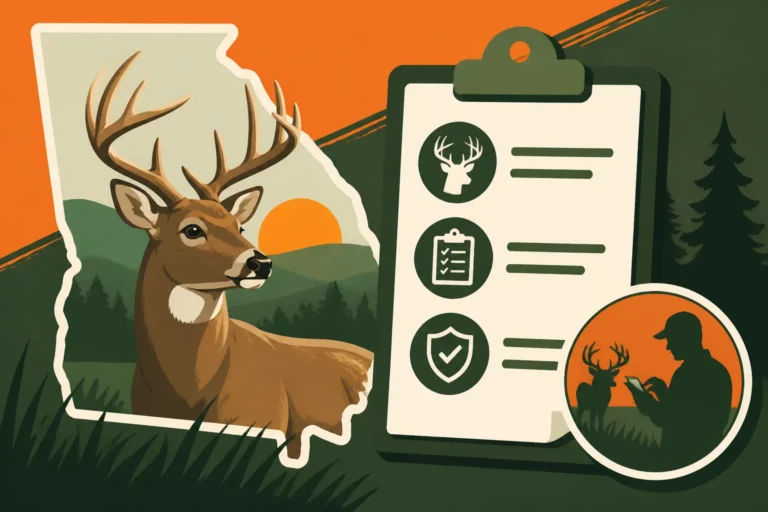
Let's get right to the heart of it: in Georgia, you are generally allowed to harvest no more than two (2) antlered bucks per deer season. This rule applies to most hunters across the state and is a cornerstone of Georgia's deer management strategy. The goal is to allow hunters to take a couple of bucks, whether for meat, a trophy, or both, while ensuring enough mature bucks remain in the population for breeding and future seasons.
This statewide limit consolidates what used to be a more fragmented approach, offering clarity for most hunters. Whether you're hunting during Georgia's Archery Season Dates, the Georgia Primitive Weapons Season Dates, or the main Georgia Statewide Firearms Season Dates, those two antlered tags are your golden tickets for the entire season. It's a system that asks hunters to be a bit more selective, especially after that first buck is on the ground. You might consider holding out for a more mature deer for your second buck, which leads to better management for the overall herd health.
Special Regulations and Exceptions
While the two-buck rule is broad, Georgia hunting regulations aren't entirely one-size-fits-all. There are specific nuances and exceptions that every hunter should be aware of, especially regarding youth hunters and certain specialized hunting areas.
For instance, youth hunters under the age of 16 are exempt from antler restrictions that apply to adult hunters, meaning they can harvest any antlered buck regardless of antler size. This encourages younger hunters to participate and enjoy the experience without the added pressure of complex antler criteria. However, even for youth, their harvested deer do count towards the overall statewide two-buck limit for the season. It’s about encouraging participation while still managing the total harvest.
Furthermore, if you plan on hunting any of Georgia's many Wildlife Management Areas (WMAs), you absolutely must check the specific WMA regulations for that particular area. Some WMAs, in an effort to manage their local deer populations more intensively or to foster specific herd characteristics, may have more stringent antler restrictions, different bag limits, or even special quota hunts that dictate specific harvest rules. Never assume that the statewide rules automatically apply to a WMA. A quick check of the Georgia Department of Natural Resources (DNR) website or using an app like GoHunt to look up WMA details before you head out can save you a lot of headache and potential violations.
Navigating the Antler Restrictions in Georgia
Beyond simply knowing you can take two bucks, it's crucial to understand what legally constitutes an "antlered buck" and any associated restrictions. Georgia implements specific antler restrictions across much of the state, a practice designed to allow younger bucks to mature, leading to a healthier age structure in the deer herd.
Defining a Legal Antlered Buck
Here's where it gets interesting and where many hunters need a clear understanding: one of your two antlered bucks must meet a specific antler criterion. For most of Georgia, this means that one of your two antlered bucks must have at least four points, one inch or longer, on one side, OR have a 15-inch outside spread. The second antlered buck you harvest may be any antlered buck, regardless of antler size. This means your second buck could be a spike or a small basket rack, as long as it has visible antlers.
This specific restriction, as clarified in the article titled Why Georgia Caps Antlered Bucks at Two, serves to protect yearling bucks and those in their prime breeding years, allowing them to reach greater maturity. Think of it as encouraging hunters to pass on those smaller, younger bucks that might grow into impressive animals in a year or two. This doesn't mean you can't take a smaller buck; it just means you need to be strategic about when you do it. If you harvest a small spike for your first buck, your second buck must meet the 4-points-on-one-side or 15-inch-spread criteria. Conversely, if you take a larger, legal buck first, your second buck can be any antlered deer. Always ensure you are clear on Which Deer Count Toward the Season Limit to avoid any confusion.
The Impact of Harvest Reporting
Harvest reporting isn't just a formality; it's a critical component of Georgia's deer management program and your personal compliance with buck limits. Every single deer you harvest in Georgia, whether antlered or antlerless, must be reported to the Georgia DNR within 24 hours of harvest. This is done through the Georgia Game Check system, accessible via the Go Outdoors Georgia website or the Go Outdoors Georgia mobile app.
When you report your harvest, you're not just providing data for biologists; you're also recording your kill against your personal license, which tracks your season limits. This digital system helps ensure hunters stay within the two-antlered-buck limit. If you fail to report a harvest, or if you misreport it, you could face penalties. It's a simple process, usually taking only a few minutes, but it's absolutely essential. Imagine the frustration of having a successful hunt, only to find yourself in trouble because you overlooked the reporting step. I've heard too many stories of hunters getting caught in that bind – it's just not worth the risk. Make it a habit the moment your deer is recovered, before you even think about processing it or hitting the road. This also ties into the general Georgia Deer Harvest Reporting Rules that cover all deer.
Strategic Planning for Your Antlered Buck Harvest
With a clear understanding of the rules, the next step is to strategize your season. The two-buck limit and antler restrictions aren't meant to make hunting harder, but rather to encourage more thoughtful and rewarding hunts.
Spreading Out Your Buck Harvest
Georgia offers a wonderfully long deer season, stretching from early archery to the late firearms season in January. This extended period gives you plenty of opportunities to fulfill your two-buck limit. Many hunters choose to spread their buck harvests across these different phases. For example, some might try to bag an early season velvet buck during Bowhunting Georgia's Early Archery Season, using those initial weeks to scout and get after a particular deer. Then, they might hold their second buck tag for the peak of the rut in mid-October or even later in the Georgia's Long Firearms Deer Season when cold weather can bring big deer out into the open.
Consider this scenario: you've been doing your homework, using tools like GoHunt to analyze maps and find potential hotspots. You might decide to fill your "any antlered buck" tag early on a management buck (a smaller buck that fits the "any antlered" criteria) if the opportunity presents itself, thereby securing some venison. Then, you can focus the rest of your season on finding that specific, mature buck that meets the 4-point or 15-inch spread requirement. This approach allows you to enjoy hunting throughout the season without the pressure of needing to fill both tags at once. Remember, patience often pays off, especially when you're waiting for that second, bigger buck.
When to Use Your Antlered Tags Wisely
The timing of your buck harvests can significantly impact your hunting experience. If you’re targeting a specific, larger deer, taking a smaller buck early in the season might mean you've used your "any antlered" tag, leaving your second tag for a buck that meets the stricter antler criteria. This can reduce the pressure to shoot any antlered buck later in the season.
Conversely, some hunters prefer to pass on smaller bucks early on, hoping for a true trophy. If they haven't seen a buck meeting the stricter criteria by late season, they might then be more inclined to take any legal antlered buck to fill one of their tags. There’s no right or wrong approach, but it’s a personal strategy that can make your season more fulfilling. Think about your personal goals: Is it primarily about venison? Is it about pursuing a trophy? Or a blend of both? Having two opportunities for antlered bucks provides flexibility. This kind of strategic thinking is especially important when you're planning your hunts on pressured public lands, where every opportunity can be precious. Effective Scouting Georgia Public Land Before Season can greatly influence when and where you decide to use those valuable antlered tags.
Common Questions and Misconceptions About Buck Limits
Even with clear rules, questions and scenarios always pop up in the field. Let's address a few common ones.
What if I Accidentally Harvest an Illegal Buck?
This is a scenario every hunter dreads, but it's important to know what to do if it happens. Let's say, in the excitement of the moment, you accidentally harvest a buck that doesn't meet the antler restrictions for the tag you intended to use (e.g., you shot a small spike when you still needed your "4 points or 15-inch spread" buck). The absolute most important thing to do is immediately contact the Georgia DNR Law Enforcement Division. Do not tag the animal, do not move it, and do not try to conceal it.
Honesty and immediate reporting are crucial here. Game wardens understand that mistakes can happen, especially in low light or dense cover. While there may still be a penalty, being upfront and cooperative can make a significant difference. Trying to hide an illegal harvest will almost certainly lead to more severe consequences, including fines, license suspension, and even potential jail time. It’s always better to face the music with integrity.
How Does the Limit Affect My Hunting Goals?
The two-antlered-buck limit and antler restrictions in Georgia definitely influence how many of us approach our hunting season. For many, it's shifted the mindset from simply "shooting a deer" to "being selective." This means hunters are often more inclined to pass on younger bucks, allowing them to grow, which ultimately leads to more mature deer in the population. It encourages quality deer management on a broader scale, leading to healthier herds and, hopefully, more impressive bucks for everyone in the long run.
This system encourages hunters to think strategically, to scout more diligently, and to practice patience. It supports the concept of letting young bucks walk to reach their full potential. For clubs and private landowners, it often reinforces voluntary quality deer management principles, where members agree to even stricter guidelines to grow bigger deer. It’s not just about filling a freezer anymore, though venison is always a welcome bonus; it’s about participating in a larger conservation effort that benefits the entire deer population. For new hunters, taking a Georgia Hunter Education Requirements course can provide valuable insights into these management goals.
Understanding License Proof and WMA Access
Remember, having your licenses and permits in order is just as important as knowing your buck limits. Always ensure you have your current hunting license, big game license, and any required WMA stamps or permits with you. Many hunters today rely on digital proof, as you can often view your licenses directly on the Go Outdoors Georgia app, making it easy for game wardens to verify your credentials. Checking on Carrying Proof of License on Your Phone before you head out is always a good practice. This also applies if you’re considering a Georgia Lifetime License Options, which consolidates many of these requirements.
Finally, always double-check specific regulations for the area you're hunting. What's legal in one county or on private land might be different on a WMA. The Georgia DNR works hard to make these regulations accessible, so take advantage of those resources.
| Regulation Aspect | Statewide Rule (General) | Important Nuances & Exceptions |
|---|---|---|
| Antlered Buck Limit | Two (2) antlered bucks per season | Youth hunters (under 16) count towards limit, but are exempt from antler size restrictions. |
| Antler Restrictions | One buck must have ≥ 4 points on one side OR ≥ 15-inch outside spread. Second buck can be any antlered. | Applies to most of the state. Some WMAs may have stricter rules. Always check WMA-specific regulations. |
| Harvest Reporting | All deer (antlered/antlerless) must be reported within 24 hours via Georgia Game Check. | Critical for tracking limits and data collection. Failure to report can result in penalties. |
| Legal Antlered Buck | Any buck with visible antlers, subject to the antler restriction for one of the two. | Visible antlers are key; definition includes spikes. |
| License Requirements | Valid hunting license + Big Game license required for deer. | WMA license required for WMAs. Proof can be digital (Go Outdoors GA app). |
Disclaimer
The information provided in this guide is intended for educational and informational purposes only and is based on current Georgia hunting regulations. Hunting regulations can change, so always refer to the most up-to-date official Georgia Department of Natural Resources (DNR) publications and laws before engaging in any hunting activities. It is the hunter's responsibility to know and obey all applicable hunting laws and regulations.