Hunting Longleaf Pine Savanna for Deer
Hunting deer in Georgia’s longleaf pine savannas can be a truly unique and frustrating experience if you’re used to the thick cover of Piedmont hardwoods or the dense swamps of the Coastal Plain. The open understory and widely spaced trees mean deer behave differently, and what works in other habitats might leave you scratching your head here. This guide will walk you through understanding this distinct ecosystem and equip you with the specific strategies needed to successfully hunt whitetails in Georgia’s beautiful longleaf pine savannas.
Understanding the Longleaf Pine Savanna Ecosystem
The longleaf pine savanna is a truly special habitat, unlike almost anything else you’ll find across Georgia. It’s an ancient ecosystem, shaped by fire and adapted to cycles of burning, and understanding these fundamental characteristics is the first step to unlocking its deer hunting potential.
What Makes Longleaf Different?
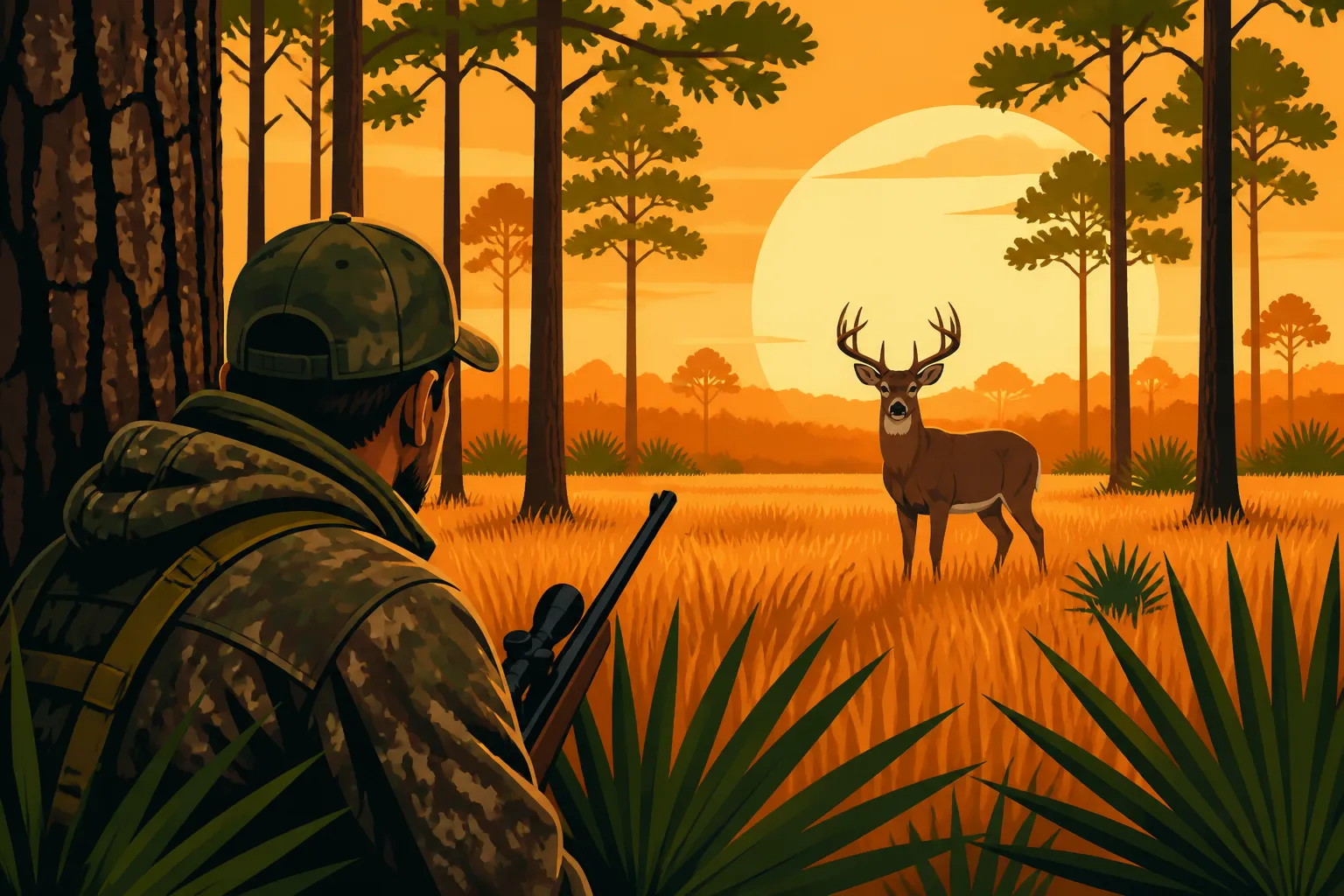
Imagine walking through a forest where the trees are tall, straight, and relatively far apart, allowing sunlight to filter through to the forest floor. That's a classic longleaf pine stand. These aren't your typical dense pine plantations; they are characterized by mature longleaf pines, Pinus palustris, with a diverse ground cover dominated by wiregrass and a smattering of palmettos, native wildflowers, and low-growing shrubs. What truly defines this habitat, however, is fire. Prescribed burns are an integral part of maintaining the health of longleaf ecosystems. These controlled fires clear out encroaching hardwoods and dense underbrush, preventing it from becoming a thick tangle. This creates incredible visibility, often allowing you to see hundreds of yards through the open woods. While beautiful, this open nature presents a unique challenge for deer hunters. It means deer can also see you coming from a long way off, requiring a much more deliberate and cautious approach.
Deer Behavior in Open Pine Country
Deer in longleaf pine savannas adapt their behavior to this open environment in fascinating ways. Unlike deer in thicker cover that might rely on dense brush for concealment, longleaf deer often use the sparse cover, subtle terrain features, and the trees themselves to evade predators. They might bed down in patches of palmettos, particularly if a slight rise in elevation offers a better vantage point. You'll often find them browsing on the tender new growth that emerges after a prescribed burn, as fire stimulates fresh forbs and grasses. Movement patterns can be less predictable, as they don't have the same "funnels" created by dense thickets. Instead, they might travel along subtle depressions, faint deer trails through the wiregrass, or even just move directly through the open woods, relying on their eyesight and hearing to detect threats. The visibility works both ways: you can glass further, but so can they. This means every movement you make needs to be slow, deliberate, and always against a backdrop of trees or other cover to break up your outline. Understanding Where South Georgia Pine Flat Bucks Bed can provide crucial insights into how these animals utilize the sparse cover to their advantage.
Scouting and Strategy for Longleaf Pines
Approaching a longleaf pine savanna without a solid scouting plan and adaptable hunting strategies is like trying to navigate a maze blindfolded. The subtleties of this habitat demand a different kind of attention to detail and a willingness to change your approach.
Reading the Open Landscape for Sign
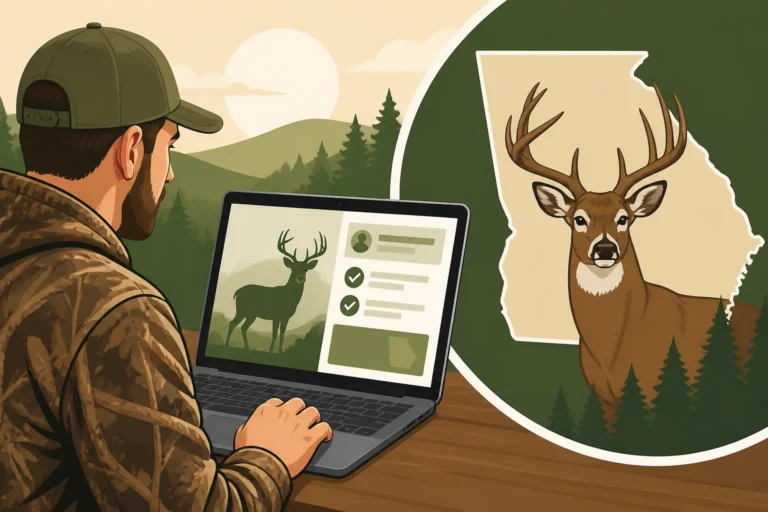
In a longleaf savanna, deer sign can be much more subtle and spread out than in a typical Georgia hardwood bottom. You won't always find obvious, heavily used trails. Instead, look for faint impressions in the wiregrass, small rubs on the slender pine saplings, or scattered droppings. Often, the best sign isn't just tracks, but an overall pattern of disturbance in the relatively clean understory. Pay close attention to subtle elevation changes, even just a few feet. A slight ridge or a shallow drain can act as a travel corridor or a bedding area, offering a little more concealment than the surrounding flat ground. Water sources, even seasonal puddles or seepages, become critical in dry, sandy longleaf areas. A great way to start your scouting, especially on large tracts, is by using satellite imagery. Platforms like GoHunt offer detailed aerial views that can help you pinpoint these subtle terrain features, potential bedding thickets (even small ones), or natural funnel points that might not be obvious on the ground. Using these digital tools to identify potential hotspots before you ever set foot in the woods can save you a tremendous amount of time and effort. When you're Scouting Georgia Public Land Before Season, prioritize finding these subtle features.
Hunting Tactics: Still-Hunting, Stands, and Blinds
Given the open nature of longleaf savannas, your hunting tactics need to be highly adapted.
Still-Hunting: This method truly shines in longleaf country. The key is to move incredibly slowly, taking only a few steps, then pausing to glass for minutes at a time. Use the widely spaced pine trees as cover, constantly putting one between you and where you expect deer to be. Think of it as a game of chess, using the trees to break up your silhouette and provide concealment. You'll want to be extra vigilant about wind direction, as your scent will carry easily across the open expanse. It's a method that rewards patience and sharp eyesight, allowing you to cover ground effectively while always being in a ready position. This slow, deliberate movement is a staple of Still-Hunting South Georgia Pine Flats.
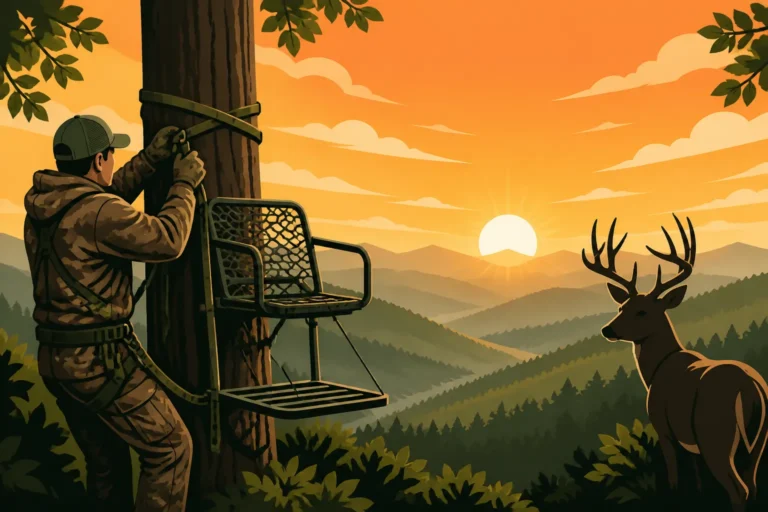
Treestand Placement: Placing a treestand in longleaf can be challenging due to the sparse cover. You'll rarely find a cluster of trees to hide in. Instead, focus on pinch points where the terrain might subtly constrict deer movement, such as between two slight rises, near a water source, or at the edge of a small, denser thicket (if one exists). Consider using a climbing stand on a straight-trunked pine, which gives you maximum flexibility to move and adapt. Height is your friend here; the higher you can get, the better your visibility and the more your scent disperses.
Ground Blinds: Ground blinds can be surprisingly effective, but they require careful setup. They need to be brushed in meticulously, using natural vegetation from the area to break up their outline. Set them up well in advance of your hunt, if possible, allowing deer to get used to their presence. A ground blind can offer excellent concealment and warmth, making it ideal for colder weather or all-day sits. Think about placing a blind along a travel corridor or overlooking an area with fresh browse or acorns (if it's an acorn year). Just remember that in such open country, any new object will stand out, so thorough concealment is non-negotiable. Understanding Using a Ground Blind on Georgia Public Land can provide more tips on effective placement.
| Tactic | Pros in Longleaf Savanna | Cons in Longleaf Savanna | Ideal Scenario |
|---|---|---|---|
| Still-Hunting | Maximizes ground covered, allows for dynamic adaptation, quiet. | Requires extreme stealth, constant vigilance, high physical demand. | Scouting new areas, covering large tracts, active deer sign. |
| Treestand | Elevated view, scent dispersal, comfortable for long sits. | Limited placement options, visibility for deer to spot setup. | Overlooking subtle funnels, water sources, post-burn browse. |
| Ground Blind | Excellent concealment, comfort, can block wind, good for kids. | Requires extensive brushing in, fixed location, deer can pattern. | Over food plots, transition zones, specific pinch points. |
Key Considerations for Success
Hunting longleaf pine savannas demands specific gear, a good understanding of access, and an appreciation for the subtle differences this habitat presents. It's not just about finding deer; it's about finding them here.
Gear and Optics for Longleaf Hunting
In this open environment, your gear choices can truly make or break your hunt. First and foremost, good optics are non-negotiable. A quality pair of binoculars, like an 8x or 10x, will allow you to scan vast distances and pick out subtle movements or parts of a deer’s body that would be missed with the naked eye. Given the clarity of the woods, you'll be glassing frequently. A rangefinder is also crucial. With deer often visible at extended distances, accurately determining the yardage can prevent a missed shot or worse, a wounded animal. You'll find these tools indispensable, as discussed in Binocular Choice for Georgia Whitetails and Rangefinders in Thick Coastal Plain Cover.
Quiet clothing is paramount. Every rustle and swish will carry far in the open pines. Choose soft, fleece or wool fabrics over noisy synthetics. And don't forget snake boots. While the undergrowth might look sparse, wiregrass can hide venomous snakes like rattlesnakes and cottonmouths, especially during warmer parts of the season. Protection is always a good idea when you're traversing undeveloped areas. When it comes to firearms, consider calibers that can handle longer shots accurately. A flat-shooting rifle like a .270, 6.5 Creedmoor, or .308 will give you confidence if a buck steps out at 150-200 yards across an open flat. GoHunt's gear reviews are an excellent resource for researching optics and clothing tailored for various hunting conditions, including those found in Georgia's diverse landscapes.
Public vs. Private Land Access
Longleaf pine savannas are a signature habitat of South Georgia, particularly within the Coastal Plain. Many of the most pristine and well-managed longleaf tracts are found on large private timber company lands or expansive hunting plantations. Securing permission on these private lands can be challenging and often involves leasing or joining a hunting club. These private areas are often managed with prescribed burns and selective timber harvesting, creating ideal deer habitat.
However, don't despair if private land is out of reach. Georgia still offers public hunting opportunities in longleaf country. Look into Wildlife Management Areas (WMAs) in the southern part of the state that actively manage their forests with prescribed fire. The Georgia Department of Natural Resources (DNR) website and their Go Outdoors Georgia app are invaluable resources for identifying these public tracts. You'll need to check specific WMA regulations, as some may have different season dates or bag limits. Keep in mind that public land often sees more hunting pressure, so getting off the beaten path is crucial. Exploring strategies for Hunting South Georgia Plantation Country can provide additional context, even if you’re focusing on public land. Remember that the same principles of reading the land and understanding deer behavior apply, regardless of who owns the deed.
Disclaimer
Always consult the official Georgia Department of Natural Resources (DNR) regulations for the most current hunting seasons, bag limits, licensing requirements, and any specific rules pertaining to Wildlife Management Areas or public lands. Hunting laws and regulations can change, and it is every hunter's responsibility to be informed and compliant.