Dragging a Deer Out of a Swamp
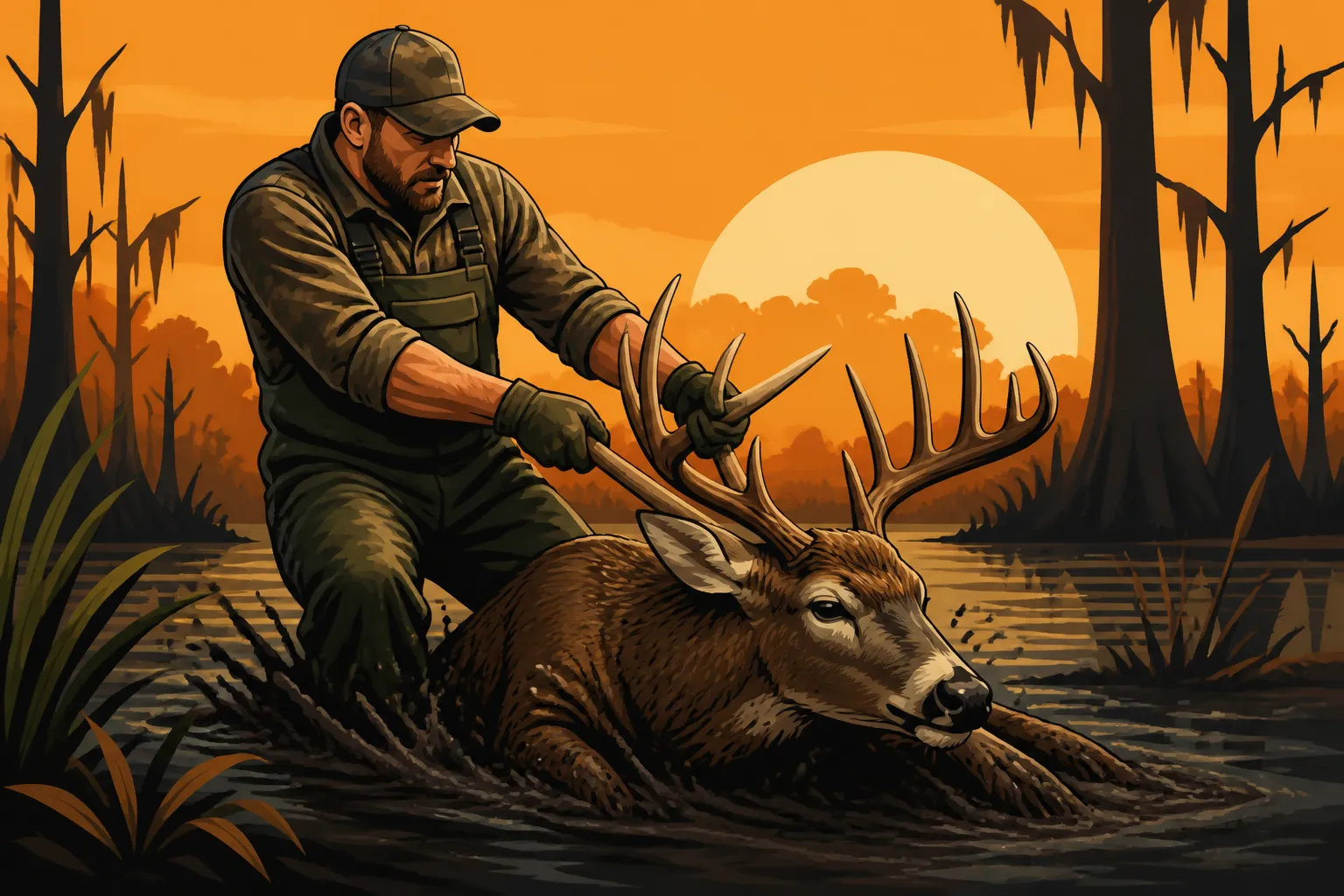
We've all been there, or at least dreaded it: you make a perfect shot, the deer runs, and then you find it right smack in the middle of a Georgia swamp. That initial rush of triumph quickly gives way to a sinking feeling as you stare at your prize, half-submerged in blackwater, surrounded by cypress knees and thick palmettos. Recovering a deer from these notoriously challenging environments is one of the toughest tests a hunter faces, but with the right preparation and techniques, it's absolutely doable. This guide will walk you through everything you need to know to safely and effectively drag a deer out of a Georgia swamp, turning that daunting task into a manageable mission.
The Pre-Shot Planning and Swamp-Specific Preparation
When you're hunting in Georgia's diverse landscapes, especially in the low-lying river bottoms and coastal plains, hitting a deer means you might be looking at a recovery in some seriously wet and tangled terrain. The secret to success often lies in what you do before you even pull the trigger. Ignoring the potential for a swamp recovery is a rookie mistake that can lead to lost game and, honestly, a lot of unnecessary frustration and even danger.
Scouting with Recovery in Mind
Before you even step into the woods, especially if you're targeting areas known for their water features like the Altamaha River basin or the fringes of the Okefenokee, you need to be thinking about recovery. It’s not just about finding deer sign; it’s about understanding the escape routes and the lay of the wet land.
The biggest frustration here is usually a lack of intel on the actual ground conditions. From a tree stand, a distant cypress thicket might look like solid ground, but on foot, it could be a knee-deep bog. This is where modern tools become invaluable. Utilize mapping applications like those provided by GoHunt. These apps often have satellite imagery that can reveal slightly higher ground, subtle ridges that run through a swamp, or even old logging roads that might provide a firmer path to the edge. Take the time to study these maps, marking potential recovery routes and drier patches that could serve as staging points. Understanding the terrain, particularly where the deeper sloughs are and where you might find a bit of solid ground, is crucial. You might even find historical data on water levels or flood plains that give you a better idea of what to expect. Think of it as mapping your escape route before you're in trouble. If you're hunting the lowlands, this pre-scouting reconnaissance is just as important as finding rub lines or scrapes. For more specific insights, take a look at our comprehensive guide on Hunting Georgia Swamp and River Bottom Deer.
Essential Gear for Navigating the Muck
Once you've done your homework on the terrain, it's time to consider the gear that will make the actual recovery possible. Forgetting a critical piece of equipment can turn an already challenging situation into an impossible one, and nobody wants to be out there wrestling with a deer in the dark without the right tools.
First and foremost, chest waders or at least knee-high rubber boots are non-negotiable for swamp hunting. Standard hunting boots, no matter how waterproof, just won't cut it when you're slogging through standing water and deep mud. You want something sturdy that can protect you from submerged branches and, frankly, whatever else might be lurking in the murky depths. The feeling of cold, muddy water seeping into your boots when you're miles from the truck is a special kind of misery that can quickly lead to hypothermia in cooler weather, or extreme discomfort any time of year. A good pair of waders, while cumbersome to walk in, keeps you dry and protected, making the whole ordeal far more tolerable. We've got more tips on selecting the right foot gear in our article on Rubber Boots for Swamp Walking. Beyond foot protection, a strong drag rope or specialized deer drag harness is a must. These aren't just for pulling; they can be invaluable for securing the deer while you maneuver it, or for helping you get leverage when trying to lift it over obstacles. A small folding saw or a sturdy machete can also be a lifesaver for clearing brush, especially if you need to cut a path through thick palmettos or briar patches. And never, ever forget a reliable flashlight or headlamp, even if you’re hunting in broad daylight. Daylight fades fast in the thick canopy of a swamp, and a recovery can easily stretch into the evening. Lastly, always carry a First Aid Kits for Remote Swamp Ground because the swamp can be unforgiving, and a small cut can quickly become a big problem in that environment.
Executing the Recovery: Practical Techniques and Challenges
The moment of truth arrives when you've confirmed your shot and you know the deer has headed into the dreaded wet stuff. This is where patience, technique, and sometimes, a little brute force, come into play. It’s never easy, but by breaking it down, you can tackle even the nastiest swamp recovery.
Tracking in Water and Thick Cover
Tracking a deer in a typical Georgia pine forest is one thing, but tracking it through a water-filled swamp or dense river bottom is an entirely different beast. Blood trails often disappear or get washed away, making traditional tracking methods far less effective. This can be incredibly frustrating, leaving you feeling like you're searching for a needle in a haystack.
Instead of just looking for drops of blood, you need to become a detective of disturbed ground and vegetation. Pay close attention to bent grass, broken twigs, or overturned leaves on slightly higher ground. In water, look for bubbles rising to the surface, stirred-up mud, or subtle changes in water clarity. The deer's hooves will often leave tell-tale depressions in the soft bottom, which can be easier to spot than a faint blood trail. Move slowly and deliberately, taking your time to scan every inch of the path ahead. Sometimes, the only sign might be a single hair caught on a briar or a slight scuff on a cypress knee. If you're familiar with Tracking a Deer Through Georgia Pine Straw, you'll notice many similarities in the meticulousness required, but the medium itself presents entirely new challenges. For situations that might push into low light or darkness, understanding the principles in Blood Trailing After Dark in Georgia will be a huge advantage, as swamp environments often mimic the low visibility of night. It’s also crucial to remember that a wounded deer in thick cover might bed down, and you could walk right past it. Take frequent breaks to listen for any sounds of movement or heavy breathing.
The Art of the Swamp Drag
Once you’ve located your deer, the real work begins: getting it out. This is rarely a solo job, and even with help, it’s going to test your endurance. The sheer physical toll of dragging a deer through knee-deep muck, over cypress knees, and through tangled vines is something that often catches hunters off guard.
Manual Dragging (Solo or Small Group): If you're alone or with just one partner, manual dragging is often your only option. The key here is to minimize friction and leverage what little dry ground you can find. First, always try to drag the deer with the grain of the terrain if possible, usually by the antlers or neck, to keep the head up and prevent it from digging into the mud. If you're going against the grain or uphill, consider using a specialized deer drag harness. These harnesses, sometimes offered by brands like GoHunt, distribute the weight across your body, saving your arms and back. They allow you to lean into the drag, using your legs and core strength more effectively. Take frequent breaks, even short ones, to avoid complete exhaustion. If the deer is particularly heavy or the terrain is exceptionally bad, you might need to field dress it in the swamp itself to reduce weight, though this presents its own set of challenges that we'll discuss later.
Using a Pulley System (With Reinforcements): When you have two or more people, a simple pulley system can be a game-changer. All you need is a sturdy rope and a small block and tackle (pulley). Find two strong anchor points, like large cypress trees or stumps, on either side of your intended drag path. Attach one end of your rope to the deer, thread it through the pulley attached to an anchor point ahead of the deer, and then back to your team. This mechanical advantage can reduce the effective weight of the deer by a significant margin. One person can guide the deer, lifting it over obstacles, while others pull on the rope. This method is especially effective for longer drags or when you need to navigate particularly dense patches of brush or deep water. While deer carts are fantastic for solid ground, they are utterly useless in a swamp; don't even think about it. For larger groups or if you plan to make a concerted effort, considering tactics discussed in Deer Drives With Three or Four Hunters might offer some inspiration for coordinating your team.
Overcoming Obstacles: Cypress Knees, Logs, and Deeper Pockets: The swamp is a minefield of obstacles. Cypress knees are notorious for snagging a deer's legs, and submerged logs can be impossible to see until you trip over them. When encountering these, don't try to power through them. Instead, pause, assess the obstacle, and plan your move. For cypress knees, you might need to lift and pivot the deer over them, or even clear a small path with your saw or machete. When dealing with logs, try to roll the deer over them or, if it’s too heavy, lift one end at a time. Be extremely wary of deeper pockets of water or sinkholes. If you encounter water that’s too deep or fast-moving, it’s time to find an alternate route. Your safety is always paramount.
Here’s a quick comparison of dragging methods:
| Feature | Manual Drag (Solo/Small Group) | Pulley System (2+ People) |
|---|---|---|
| Effort | High, very physically demanding | Moderate to high, leverages mechanical advantage |
| Speed | Slow, depends on terrain and obstacles | Faster with good anchor points |
| Gear Needed | Drag rope/harness, knife, sturdy boots | Rope, pulley, drag harness, saw |
| Ideal Terrain | Less dense cover, shorter distances | Dense cover, longer distances, many obstacles |
| Pros | Simple, minimal gear, quiet | Reduces strain, more efficient over obstacles |
| Cons | Exhausting, slow, risk of injury | Requires setup, more gear, need anchor points |
Post-Recovery Care and Safety Considerations
You’ve done it. The deer is finally out of the swamp and onto solid ground. The immediate relief is immense, but the job isn't quite finished. Proper post-recovery care for your game and continued vigilance for your own safety are critical, especially in the unique environment of a Georgia swamp.
Field Dressing and Meat Care in the Field
Once your deer is out of the water, the first priority is to get it field dressed as quickly as possible. This is particularly crucial in Georgia, where warm weather and high humidity can spoil meat at an alarming rate. Even if the deer was in water, the internal temperature can still be quite high.
Find the cleanest, driest spot you can to perform the field dressing. Elevating the deer slightly, perhaps on a log or a mound of earth, can make the process easier and cleaner. The goal is to remove the entrails swiftly to allow the carcass to cool down internally. Don't worry too much about meticulous cleaning in the field; focus on getting the heat out. If the deer was submerged for a while, its hide and fur will be soaked. Try to towel it off as best you can or allow it to air dry slightly before transport to prevent further heat retention and bacterial growth. If you had to perform a partial field dress in the swamp itself to lighten the load, now is the time to complete the process thoroughly. Always remember that regardless of where you're hunting in Georgia, understanding Handling Venison From a CWD Management Area is important for managing your harvest responsibly, especially if you're in one of the designated areas. For a more detailed walkthrough on this critical step, refer to our guide on Field Dressing a Deer in Warm Weather.
Safety First: Alligators, Snakes, and Heat Exhaustion
Swamps, while offering fantastic hunting opportunities, are also home to some serious dangers that require constant awareness. After the adrenaline rush of tracking and dragging, it’s easy to let your guard down, but this is exactly when accidents can happen.
First and foremost, alligators. In many of Georgia's southern swamps and river bottoms, especially areas like the Okefenokee National Wildlife Refuge or parts of the Altamaha, alligators are a very real presence. They are opportunistic predators, and a freshly killed deer is an easy meal. Always be aware of your surroundings, especially when near deeper water or during warmer months when gators are most active. Carrying a large stick or a firearm (if legally permitted and for self-defense) can provide some peace of mind, but vigilance is your best defense. If you're hunting in these zones, understanding specific concerns like those highlighted in Hunting Okefenokee Swamp Fringe Deer is crucial. Secondly, snakes. Georgia swamps are home to several venomous snake species, most notably the cottonmouth (water moccasin). They blend in perfectly with the dark water and muddy banks. Always watch where you step and where you place your hands. Good quality snake boots, as mentioned earlier, are not just for comfort but for critical protection. Lastly, and often underestimated, is heat exhaustion and dehydration. Georgia’s humidity, even in cooler seasons, combined with the extreme physical exertion of a swamp drag, can quickly lead to overheating. Carry plenty of water, take frequent breaks, and recognize the symptoms of heat stress: dizziness, nausea, headache, and muscle cramps. Never go into a swamp alone, and always let someone know your exact hunting and recovery plans, including an expected return time. This buddy system is invaluable for safety in such remote and challenging environments.
Disclaimer
Hunting is an inherently dangerous activity. This guide is for informational purposes only and does not substitute for proper training, adherence to all local, state, and federal regulations, or personal responsibility. Always prioritize safety, respect wildlife, and obtain all necessary licenses and permits. Conditions in Georgia's swamps can be unpredictable and dangerous; proceed with extreme caution.