Squirrel Hunting Georgia Bottomland Hardwoods
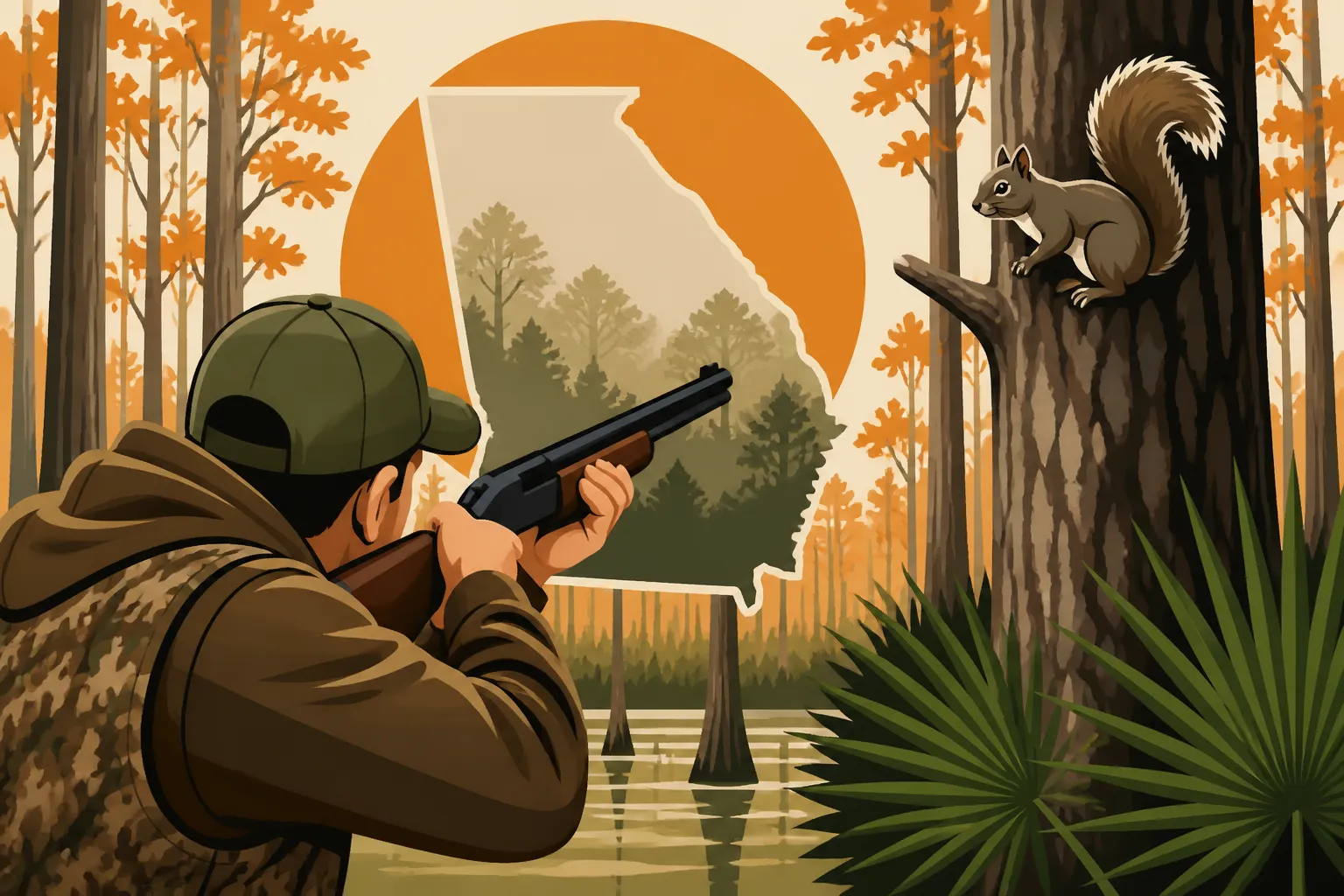
There's a special kind of magic in slipping into Georgia's bottomland hardwoods, especially when the main quarry is something as engaging and accessible as squirrels. For many of us, the frantic energy of a squirrel scampering through the trees offers a fantastic way to sharpen hunting skills, introduce new folks to the outdoors, or simply enjoy some quiet time afield when other seasons are closed or less active. This guide will walk you through everything you need to know to successfully pursue these bushy-tailed dynamos in the rich, watery ecosystems of our state.
Why Bottomland Hardwoods Are Squirrel Heaven in Georgia
When you think about where squirrels thrive, you have to think about their dinner table and their bedrooms. Bottomland hardwoods, those lush, often damp forests found along rivers, creeks, and swamps, provide both in spades. They are incredibly rich environments, teeming with life, and squirrels absolutely love them.
The Allure of Acorns and Other Mast
The primary draw for squirrels in bottomland hardwoods is the sheer abundance and diversity of mast. Mast, for the uninitiated, is essentially the fruit of forest trees—things like acorns, hickory nuts, pecans, and even wild cherries or persimmons. These areas are typically dominated by mature hardwood trees that are prolific mast producers, creating a buffet for squirrels throughout the fall and winter.
Think about the majestic oaks you find growing large and tall near a river: massive water oaks, willow oaks, and Nuttall oaks drop countless acorns, providing a steady food source. Hickory trees, with their nutrient-rich nuts, are another huge draw. You might also stumble upon wild pecan trees, especially in the southern half of the state, or even persimmon trees whose sweet, ripe fruit is irresistible to many wildlife species, including squirrels. The timing of when these different mast crops ripen and fall dictates squirrel movement, making certain areas hotbeds of activity at various points in the season. A smart hunter, checking satellite imagery on an app like GoHunt, can often spot clusters of these mature, mast-producing trees, giving them a significant advantage before ever stepping foot on the forest floor.
Natural Cover and Travel Corridors
Beyond the food, bottomland hardwoods offer incredible cover, which is essential for squirrels to feel safe from predators and to raise their young. The canopy overhead is often dense and interwoven, creating a leafy highway system for squirrels to travel unseen. Below, the forest floor can be thick with undergrowth, vines, and fallen timber, providing countless nooks and crannies for nesting and evasion.
Squirrels are masters of their environment, using every available branch, vine, and downed log as a pathway. They’ll dart along horizontal limbs, disappear into thick patches of muscadine vines, and even use creek beds or old sloughs as natural travel corridors between feeding areas and their dens. This dense cover, while a boon for the squirrels, also presents a thrilling challenge for the hunter. It requires keen observation, patience, and often a slower, more deliberate approach than you might use in more open terrain. Understanding how to navigate and read this complex environment, much like reading a Hunting a Funnel Between Two Swamps for deer, is key to consistently finding squirrels.
Essential Gear for Georgia Bottomland Squirrels
You don't need a truckload of specialized gear to hunt squirrels, but having the right tools for the job can make a world of difference in your comfort and success. Georgia's bottomlands can be tough on gear, often wet and dense, so durability is a plus.
Firearms and Ammunition Choices
When it comes to putting squirrels in the bag, you generally have two main firearm camps: rimfire rifles and small-gauge shotguns. Both have their merits, and many dedicated squirrel hunters will carry one of each depending on the specific conditions or hunting style.
A .22 caliber rimfire rifle is a classic choice for a reason. Its accuracy, quiet report, and inexpensive ammunition make it perfect for precision shots, especially if you're still-hunting or sitting patiently and waiting for a squirrel to present a clear headshot. The downside? If a squirrel is moving fast through the branches, or if you only have a small window, hitting it with a .22 can be incredibly challenging. You'll want to practice regularly to become proficient with your rifle, especially for the kind of quick, off-hand shots that often present themselves. For ammunition, standard lead round nose or hollow point bullets are generally effective.
On the other hand, a small-gauge shotgun, like a .410 or a 20 gauge, offers a much wider margin for error with its spread of shot. This is especially handy when squirrels are on the move, or if you're hunting with dogs and need to make a quick shot on a treed squirrel before it bails out. A 20 gauge with #6 or #7.5 shot is a very versatile option, providing enough pellets and power for clean kills without destroying too much meat. The .410, while lighter and less intimidating for new hunters, requires more precise shooting due to its smaller shot charge and tighter pattern. The trade-off with shotguns is that they're louder and the ammunition can be a bit more expensive than .22 rounds. When hunting in dense areas, a shorter barrel shotgun can also be easier to maneuver.
Ultimately, the best choice depends on your personal preference and hunting style. Some hunters even opt for an air rifle, which offers stealth and precision with very little noise, making it an excellent choice for cautious squirrels.
Optics and Other Key Accessories
While you might not think of optics as crucial for squirrel hunting, a good pair of compact binoculars or a monocular can dramatically improve your success. Squirrels are masters of camouflage, and often the only thing that gives them away is a twitch of the tail or a subtle movement high in the canopy. Scanning the trees with 8x or 10x magnification can reveal squirrels that would be invisible to the naked eye. This is particularly true when you're glassing a distant oak stand or trying to confirm if that bump on a limb is a knot or a bushy tail.
Beyond optics, comfort and safety are paramount in bottomland environments. Durable, waterproof boots are a non-negotiable. Not only will you encounter damp ground and possibly standing water, but many bottomlands are also home to venomous snakes like cottonmouths and rattlesnakes. Snake Boots for Coastal Plain Walking are highly recommended for peace of mind. Your clothing should be practical and breathable. Warm-Weather Clothing for Georgia Hunters is often necessary, especially during the early squirrel season which can coincide with still-warm fall days. Lightweight layers that wick moisture are ideal.
Don't forget insect repellent—mosquitoes and gnats can be brutal in humid bottomlands, especially during those early morning or late evening hunts. Carrying a small game bag or vest to stash your harvested squirrels is also a good idea, as is a good supply of water to stay hydrated. A small knife for field dressing, if you choose to do so, and a first-aid kit for minor scrapes and bites are also wise additions to your pack. For navigation, a reliable GPS or a hunting app like GoHunt on your phone is excellent for marking locations of productive trees or staying oriented in thick woods, especially on unfamiliar public land.
| Feature | .22 Caliber Rimfire Rifle | Small-Gauge Shotgun (.410 or 20 ga) |
|---|---|---|
| Accuracy | High precision for stationary targets | Wider shot spread, more forgiving for moving targets |
| Noise Level | Relatively quiet, less disturbing to other game | Louder, can spook nearby squirrels |
| Ammunition | Inexpensive, widely available | More expensive than .22, specific shot sizes |
| Shot Placement | Requires headshots for clean kill and meat preservation | Body shots often sufficient, can damage more meat |
| Learning Curve | Requires practice for quick, accurate shots | Easier for beginners to connect with moving targets |
| Best Use | Still-hunting, patient waiting, target practice | Hunting with dogs, quick shots, dense cover |
Tactics for Success in Georgia's Bottomland Hardwoods
Hunting squirrels in Georgia's bottomland hardwoods isn't just about shooting; it's about strategy, patience, and reading the subtle cues of the forest. Whether you prefer a solitary stalk or the excited yips of a squirrel dog, there's a tactic for you.
Still-Hunting and Stalking Techniques
Still-hunting is perhaps the most rewarding and challenging method for squirrels in these dense environments. It's a slow, deliberate dance with the woods, demanding constant awareness and silent movement. The core principle is to move a few steps, then stop and scan, often for several minutes at a time. This patient approach allows the woods to "settle" around you and gives squirrels a chance to reveal themselves after your initial movement might have put them on alert.
As you move, focus your eyes not just on the trunks, but also on the branches, especially where the canopy is thick. Look for subtle movements, a twitching tail, or the glint of an eye. The dense cover means you often won't see an entire squirrel, so learning to identify just a piece of one is a valuable skill. Utilizing natural cover, like the banks of a small creek or a line of fallen trees, can help muffle your footsteps and break up your silhouette. Apps like GoHunt can help you identify these topographical features beforehand, allowing you to plan a quiet route.
A common tactic is the "stop-and-go" method. After moving and then stopping, wait. If you don't see anything, make some soft "kucks" or a few scratches on a tree with a coin to mimic a squirrel. Sometimes, this noise will cause an unseen squirrel to reveal its position, either by barking back or moving slightly. If you see movement, try to get a clear line of sight, often by circling slowly to put a tree trunk between you and the squirrel until you're in position for a shot. Remember that a lot of success in still-hunting squirrels comes from paying attention to details, similar to Reading a Ridge for North Georgia Deer.
Sit-and-Wait Ambush Strategies
Sometimes, the most effective strategy in a rich bottomland is simply to pick a good spot, sit down, and let the squirrels come to you. This method is especially productive when you've identified a particularly heavy mast crop in a specific area, like a grove of mature water oaks loaded with acorns.
The key to a successful sit-and-wait hunt is intelligent scouting. Before the season, or even the day of the hunt, spend some time walking through the bottomlands looking for signs of squirrel activity: cut nut hulls on stumps or logs, fresh tracks in damp soil, or actual sightings of squirrels feeding. Look for trees that are actively dropping mast. Once you find a hotspot, find a comfortable, concealed position downwind (squirrels have a good sense of smell, though not as acute as deer) with a clear view of the most productive trees. A small folding stool or a hunting vest with a built-in seat can make hours of waiting much more comfortable.
The best times for this method are typically the early morning, just after sunrise, and the late afternoon, an hour or two before sunset. These are peak feeding times for squirrels. Set up quietly, blend into your surroundings, and be patient. Bring a book or simply enjoy the sounds of the woods. Often, the first sign of a squirrel will be the tell-tale rustle of leaves or the sound of an acorn falling, followed by the chatter of a bushy-tail. This passive method can be surprisingly effective and is a great way to enjoy the tranquil beauty of Georgia's wild places.
Hunting with Dogs
For many, squirrel hunting isn't truly complete without the excited barks and tireless energy of a good squirrel dog. Hunting with dogs is an entirely different experience, often more fast-paced and social than still-hunting, and it's incredibly effective in the thick cover of bottomland hardwoods. Breeds like feists, curs, and even certain terrier mixes are bred for their keen noses, relentless pursuit, and ability to "tree" a squirrel, barking at the base of the tree until the hunter arrives.
The dog's job is to locate a squirrel, chase it, and force it up a tree. Once the squirrel is treed, the dog will "bark treed," letting you know exactly where to go. Your job then becomes locating the squirrel in the dense canopy. This can be surprisingly difficult, even with a dog barking directly below it. This is where those binoculars come in handy! You'll be scanning branches, looking for any bit of fur or movement. Once you spot it and make a clean shot, the dog often retrieves the squirrel for you, adding another layer of satisfaction to the hunt.
Hunting with dogs is a fantastic way to cover a lot of ground and can be particularly productive in areas with a high squirrel population. It's also a wonderful tradition to share with family and friends. Make sure your dog is well-trained, and always prioritize their safety in the woods, especially regarding snakes and other hazards common to bottomlands.
Regulations and Best Practices for Georgia Squirrel Hunters
Like any hunting activity in Georgia, pursuing squirrels comes with its own set of rules and ethical considerations. Understanding these ensures a safe, legal, and responsible experience for everyone.
Understanding Season Dates and Bag Limits
Before you even think about heading into the woods, it's absolutely crucial to check the current Georgia Department of Natural Resources (DNR) regulations. Squirrel seasons in Georgia are typically quite long, often opening in the late summer or early fall and extending through the winter, providing ample opportunity for hunters. However, specific dates can vary year to year, so always consult the latest Georgia hunting regulations guide. You can find this information on the Georgia DNR website or often pick up a printed copy wherever you purchase your Georgia Hunting Licenses and What They Cost.
In most cases, Georgia's daily bag limit for squirrels (both gray and fox squirrels) is generous, allowing you to take a good number of animals per day. This makes it an excellent option for gathering a delicious wild game meal. There isn't typically a possession limit, meaning you can keep as many as you legally harvest over multiple hunting trips. Always make sure you understand the regulations for the specific type of public land you're hunting, such as Georgia Wildlife Management Areas, as some may have unique rules or access restrictions.
Safety and Ethical Considerations
Safety should always be your top priority when hunting. This means strictly adhering to all firearm safety rules: treat every firearm as if it's loaded, always keep the muzzle pointed in a safe direction, keep your finger off the trigger until you're ready to shoot, and be absolutely sure of your target and what's beyond it. Especially in dense bottomland hardwoods, identifying your target clearly before taking a shot is paramount to avoid accidents. If you're new to hunting, remember that Georgia Hunter Education Requirements exist for a reason and provide invaluable safety training.
Ethical hunting also means striving for a quick, humane kill. This is where practicing with your chosen firearm pays off. Aim for the head or vitals to ensure the squirrel expires quickly. If you're using a shotgun, ensure you're within an effective range for your choke and shot size. Wounding an animal and losing it is not only unethical but also a waste of a valuable resource.
Always be aware of property boundaries. If you're hunting on private land, ensure you have explicit permission. If on public land, respect the boundaries and rules of that particular area. Apps like GoHunt or other mapping tools can be invaluable for identifying property lines and ensuring you don't inadvertently trespass. It's also a good idea to notify someone of your hunting plans and expected return time, especially if you're venturing into remote areas. While not always required for small game, understanding Georgia Blaze Orange Requirements for deer hunting seasons, which may overlap, is wise, as wearing some visible orange can't hurt and helps other hunters see you.
Processing Your Harvest
Once you've successfully harvested a squirrel, the work isn't quite done. Proper field dressing and preparation are essential for ensuring the meat is delicious and safe to eat. In warm Georgia weather, prompt cooling of game is important. While squirrels are small, they can be field dressed much like larger game, removing the entrails to allow the carcass to cool quickly. Learning to Field Dressing a Deer in Warm Weather offers transferable skills, though on a smaller scale.
Many hunters simply skin and gut squirrels back at camp or home. There are several methods for skinning, but a common one involves making a cut across the back, then stepping on the tail and pulling on the squirrel's hind legs to peel the skin down. After skinning and gutting, rinse the meat thoroughly if possible, then place it in a cooler with ice.
Squirrel meat is lean and flavorful, often described as a richer version of chicken. It's incredibly versatile and can be fried, stewed, roasted, or used in classic recipes like squirrel and dumplings. It truly is one of the Best-Eating Game in Georgia, offering a taste of the wild that's hard to beat. Taking the time to properly process your harvest shows respect for the animal and ensures you get to enjoy the fruits of your labor.
Disclaimer
Hunting is a demanding activity with inherent risks. Always prioritize safety, adhere to all local, state, and federal regulations, and practice ethical hunting principles. The information provided here is for general guidance and should not replace official regulations or professional instruction.