Pass-Shooting Doves Over a Water Hole
After a scorching hot September opener, when every dove hunter in Georgia heads to the nearest cut corn or sunflower field, you often find yourself scratching your head a few weeks later. Those prime fields get shot out, the birds get wary, and suddenly, locating a consistent flight path feels like trying to find a needle in a haystack. But don't despair! When the field hunting slows down, knowing how to successfully pass-shoot doves over a water hole can absolutely salvage your season and put birds in the cooler. This guide will walk you through everything you need to know to make the most of this often-overlooked tactic.
Understanding Dove Behavior Around Water
Doves, like all living creatures, need water, and in Georgia's often sweltering early fall, this need becomes paramount. Their daily routine typically involves feeding, loafing, and watering. When the heat is on, finding a good water source is just as important to them as finding food.
Why Doves Need Water
Anyone who's spent time in a dove field during a classic Georgia September knows the heat can be brutal. Doves don't sweat; instead, they pant to cool down, which means they lose a lot of moisture throughout the day. This physiological need makes water sources magnetic, especially as the sun climbs higher. Think about it: they've been gorging on seeds in dry fields, exposed to the sun, and they're going to get thirsty. They'll often make multiple trips to water throughout the day, usually in small groups or singly, though sometimes a larger flock might descend at once. Understanding this consistent pattern is key to why pass-shooting over water is such an effective, reliable method, particularly during the middle parts of the day when field activity might be at a lull. It's not just about quenching thirst; it's a vital part of their thermoregulation, crucial for surviving those long, hot Georgia afternoons.
Identifying Prime Watering Spots
Not all water holes are created equal in the eyes of a dove. They aren't looking for a deep, murky pond with thick vegetation choking the banks. What they crave are shallow, clear edges where they can land easily, take a quick drink, and take off without feeling vulnerable. Think about a small farm pond with a muddy, gently sloping bank, or even a low spot in a field that collects rainwater after a shower. Creeks and rivers with sandbars or exposed gravel beds can also be hotspots. When you're scouting, look for those subtle signs: dove tracks in the mud, scattered droppings around the edge, or even a few feathers. Early morning or late evening scouting trips are best, as you might observe flight patterns directly. Before heading out, I'll often spend some time on a mapping app like GoHunt to pinpoint potential water sources in areas I plan to hunt. A small puddle in a logging road or a cattle tank can be just as productive, if not more so, than a large lake because the birds feel safer and more exposed on open, shallow edges. The more open the approach, the more comfortable the doves feel, minimizing the chance they'll flare away at the last second.
Setting Up for Success: Position and Concealment
Once you've identified a promising water hole, the next critical step is figuring out where to position yourself. This isn't just about finding a comfortable spot; it's about intercepting the birds on their flight path while remaining completely unseen.
Choosing Your Shooting Position
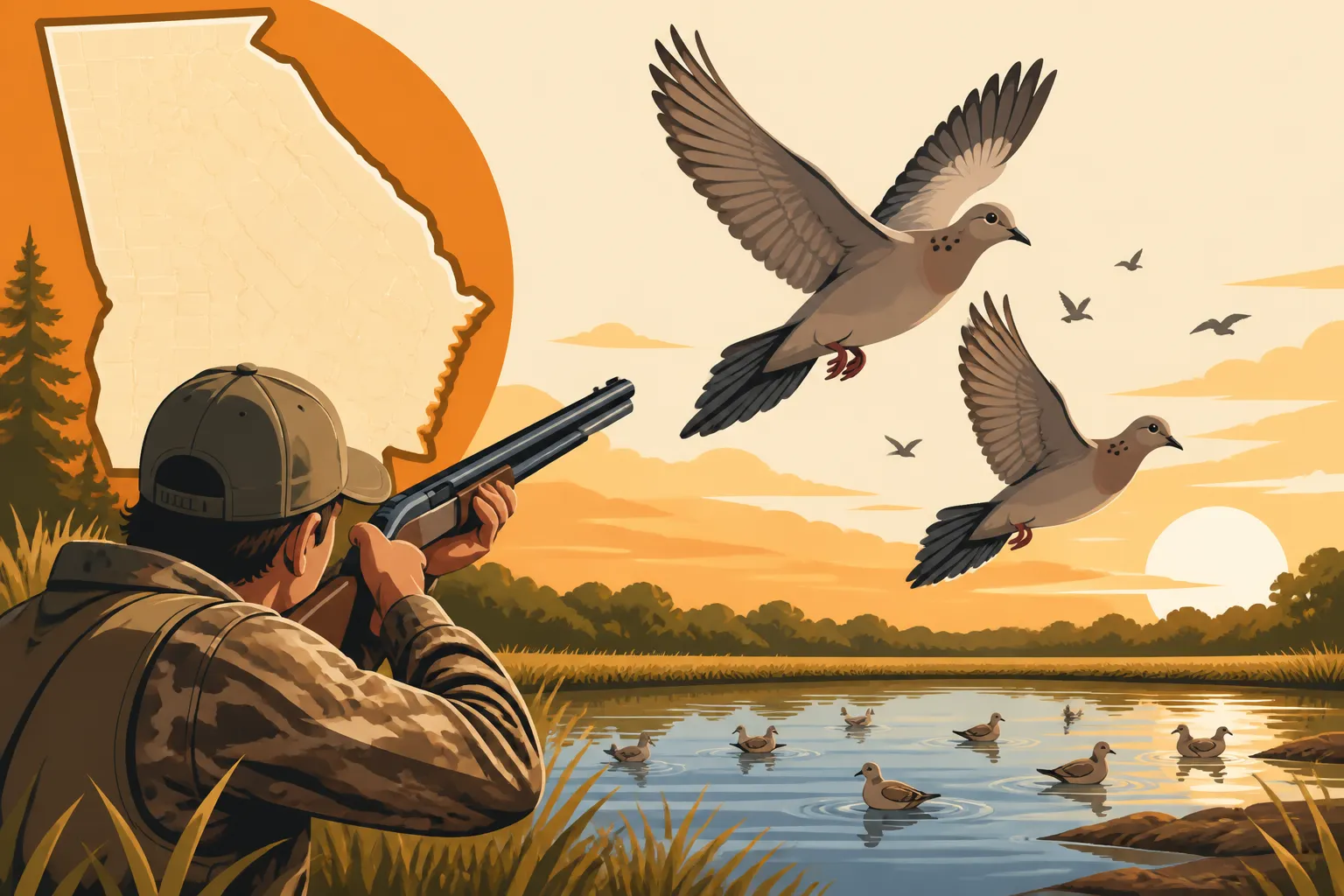
The biggest mistake hunters make when trying to pass-shoot over water is setting up too close to the edge. Doves are incredibly wary, and if they spot anything amiss near their drinking spot, they'll flare instantly. You want to be far enough back – often 30-50 yards from the actual water – to allow them to commit to their approach, but close enough to ensure clean, ethical shots. Consider the sun: always try to have the sun at your back, putting the birds into silhouette against a bright sky and making it harder for them to see you. Wind direction is also crucial; doves, like most birds, prefer to land and take off into the wind. If you can set up so they're flying into the wind as they approach, their speed will be slightly reduced, offering you a better shot opportunity. Watch their flight path during scouting – do they come in from a specific tree line, or follow a certain ditch? Positioning yourself along these established flight corridors, rather than directly on the bank, will increase your shot opportunities significantly. For example, if birds are flying from a distant treeline to a pond, positioning yourself roughly halfway between the two might be ideal, allowing you to intercept them before they're fully committed to the water, but after they've left the distant cover.
Mastering Concealment
Doves have excellent eyesight, so concealment isn't just a suggestion; it's an absolute necessity. A full-blown ground blind can work wonders, especially if you set it up well in advance and brush it in meticulously with local vegetation. This helps it blend seamlessly into the Georgia landscape, whether it's pine straw, kudzu, or field stubble. If a blind isn't feasible, natural cover is your best friend. Look for a thick cluster of bushes, a large oak tree with a wide trunk, or even a rise in the terrain that can break up your silhouette. Remember, it's not just about covering yourself from the front; you need to be hidden from above and the sides too. Wear good camouflage that matches your surroundings. Think greens and browns for most of Georgia, and perhaps lighter tones if you're in a very open, dry field. Even the slightest flash of movement or an unnatural shape can send a flock veering off course. Using a robust mapping tool like GoHunt can help you identify subtle terrain features or dense cover where you can tuck yourself away, providing invaluable intel before you even step foot on the property. Sometimes, just sitting absolutely still against a dark background, like the shadow of a large tree, is all the concealment you need, but patience and discipline are paramount.
Shot Selection and Technique for Pass-Shooting
Pass-shooting doves is an art form, and it takes practice to master. These birds are small, incredibly fast, and their flight can be remarkably erratic. It's a humbling experience for many hunters, but with the right technique, you can improve your success rate dramatically.
Reading the Flight Path and Lead
The biggest challenge with pass-shooting doves is their speed and agility. They aren't flying in a straight line for long; they'll dip, dart, and change direction in a blink. This means you need to develop an instinctive understanding of lead. There are two primary techniques: swing-through and sustained lead. With swing-through, you start behind the bird, swing past it, and pull the trigger when your barrel is ahead, continuing the swing. Sustained lead means you match the bird's speed and maintain a consistent lead ahead of it before firing. Many experienced dove hunters find a hybrid approach works best. The key is to keep your eyes on the bird, not the barrel. Focus on its head and let your body and gun move fluidly. Think of it like throwing a baseball to a moving target – you instinctively aim where it's going to be, not where it is. This kind of muscle memory is best developed by shooting clay targets, which perfectly simulate the erratic flight of doves. Don't be afraid to take longer shots if the birds are flying consistently, but always remember your ethical limits. If a shot feels too far or too difficult, it's better to let the bird pass than to wound it.
Choosing the Right Shotgun and Ammunition
For doves, a lightweight shotgun that swings easily is a huge advantage. Most hunters opt for a 12 gauge or a 20 gauge. The 12 gauge offers a denser pattern and more pellets, which can be forgiving on those fast-moving targets, while a 20 gauge is lighter to carry and still perfectly capable of bringing down doves. For choke selection, an improved cylinder or modified choke is usually ideal for pass-shooting. An improved cylinder provides a wider pattern, great for closer shots or when birds are erratic, while a modified choke offers a slightly tighter pattern, extending your effective range a bit further. When it comes to ammunition, 7.5 or 8 shot size is the standard. These smaller pellets offer a high pellet count, creating a dense pattern that's deadly on doves without excessive penetration that would damage the meat. Brands like Federal Premium, Winchester, and Remington all offer excellent dove-specific loads. Most importantly, you need to pattern your shotgun with your chosen ammunition and choke. This means shooting at a large paper target at various distances (20, 30, 40 yards) to see how your gun spreads the pellets. Every gun and choke combination is a little different, and knowing your effective range is crucial for clean kills.
Here's a quick look at common shotgun setups for dove hunting:
| Gauge | Choke Recommendation | Shot Size Recommendation | Typical Effective Range (yards) | Notes |
|---|---|---|---|---|
| 12 Gauge | Improved Cylinder/Modified | 7.5, 8 | 20-45 | Most popular, versatile, good pattern density for fast birds. |
| 20 Gauge | Improved Cylinder/Modified | 7.5, 8 | 20-40 | Lighter, easier to swing, less recoil, excellent for quick follow-up shots. |
| 28 Gauge | Improved Cylinder/Modified | 8, 9 | 15-35 | Very light, low recoil, ideal for younger shooters or those sensitive to recoil. |
| .410 Bore | Full (often fixed) | 7.5, 9 | 15-25 | Challenging, requires precise shooting; high pellet count in specific loads helps. |
Remember, your specific choke choice will depend on how far the doves are typically flying from you. For closer birds, an improved cylinder for a wider pattern is great. If they're a bit further out, a modified choke will hold a tighter pattern for more pellets on target. Regardless of your chosen setup, getting out there for a round of sporting clays before the season can work wonders for your swing and lead, ensuring you're ready when the Georgia Dove Season Opening Weekend arrives.
Ethical Considerations and Best Practices
Successful dove hunting isn't just about bagging birds; it's about doing so responsibly and respectfully. This includes everything from how you retrieve your birds to how you interact with the environment and other hunters.
Retrieving Birds and Preventing Waste
Doves are small, and they can be incredibly difficult to find in thick cover, especially in the heat of a Georgia day. A good retriever, whether a well-trained dog or a hunting buddy with a keen eye, is invaluable. If you're hunting alone, make it a habit to mark every downed bird as accurately as possible. Pick a tree, a bush, or a distinct clump of grass near where the bird falls, and walk directly to that spot. Don't wait to pick up multiple birds; retrieve each one promptly. This not only prevents lost game but also ensures the meat stays fresh, especially in warm weather. Knowing the importance of Coolers and Game Bags for a Georgia October comes into play here, even for doves. The longer a bird lies in the sun, the faster its meat will degrade. Quickly getting your birds on ice is key to preserving that delicious dove breast.
Respecting the Resource and Other Hunters
Dove hunting is a cherished tradition, and maintaining its integrity means adhering to ethical standards. Always pick up your spent shells. Leaving them scattered across a field or around a water hole isn't just unsightly; it's disrespectful to the landowner and future hunters. Be mindful of the number of birds you're taking and avoid over-pressuring a single water source. If the birds suddenly stop coming in, it's often a sign that you've spooked them, or they've already watered and moved on. Rather than sitting there hoping for a straggler, it might be time to pack up or explore other options. It’s a good practice to check the Georgia Mourning Dove Population Trends to understand the broader conservation efforts. If you're hunting public land, be considerate of others. Don't crowd another hunter's setup, and if you arrive to find someone already hunting a spot, respectfully find an alternative. Hunting a water hole later in the season, during the Hunting the Second Dove Split in October, often means less pressure, but these courtesies still apply. Every hunter also needs to have their Georgia Migratory Bird Certification and understand all local regulations to ensure a sustainable and enjoyable season for everyone. For those new to hunting, remember that taking a Georgia Hunter Education Requirements course provides critical information on ethical hunting practices and safety.
Disclaimer
Please note: Hunting regulations and seasons can change. Always consult the official Georgia Department of Natural Resources (DNR) website or their current hunting regulations guide before heading afield to ensure you are compliant with all state laws.