Spotting a Legal Forty-Eight-Inch Alligator
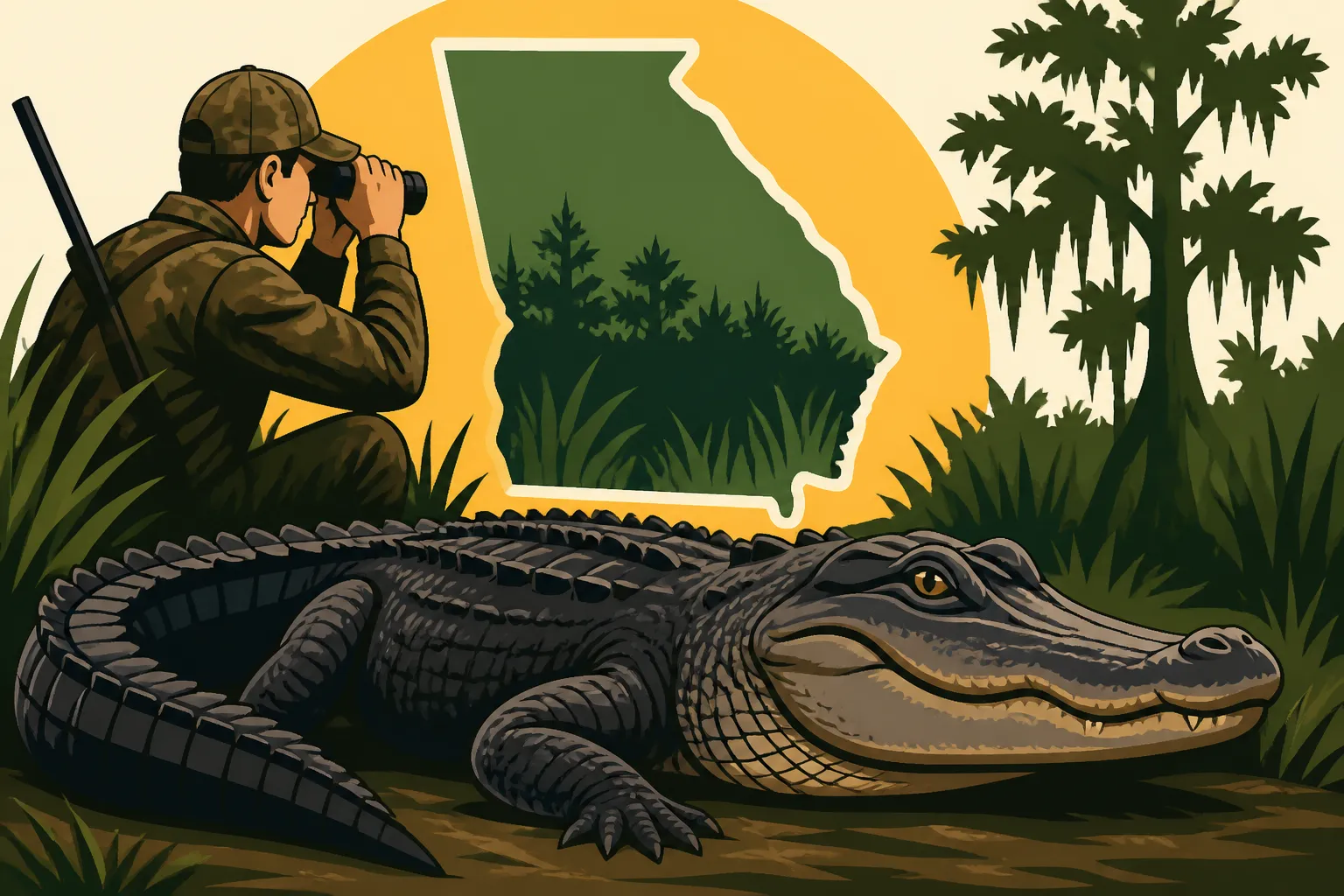
There's nothing quite like the unique thrill of an alligator hunt in Georgia, but that excitement can quickly turn into a nervous sweat when you’re staring at a pair of glowing eyes across the water, trying desperately to determine if that gator is actually legal. The pressure of accurately judging an alligator’s length, especially at night or in murky conditions, is a common hurdle many hunters face. This guide is dedicated to helping you master the practical strategies, essential gear, and careful considerations needed to confidently spot, identify, and harvest a legal 48-inch alligator here in the Peach State.
Understanding Georgia's Alligator Regulations and Your Quota Hunt
Before you even think about hitting the water, a solid understanding of Georgia's alligator regulations is paramount. The Georgia Department of Natural Resources (DNR) works hard to manage our alligator population, ensuring healthy numbers while providing controlled hunting opportunities. Ignoring these rules can lead to serious consequences, and the 48-inch minimum is one of the most critical to get right.
Why the 48-Inch Rule Matters So Much
The 48-inch minimum length requirement for alligators in Georgia isn't just an arbitrary number; it's a carefully considered conservation measure. This rule helps protect juvenile alligators, allowing them to mature, reproduce, and contribute to the overall health and stability of the population. Harvesting smaller gators prematurely could negatively impact future populations. For hunters, this means that making an accurate assessment of length in the field is not just a matter of legality, but also of ethical hunting practice and responsible wildlife management. It places a significant responsibility on the hunter, demanding patience, skill, and good judgment, especially given the limited number of permits issued each year. Failing to identify a legal gator can mean passing up opportunities or, worse, harvesting an illegal animal, which carries hefty penalties.
Permits, Zones, and Season Specifics
Participation in Georgia's alligator hunt is strictly controlled through a quota hunt system. This means you can't just decide to go gator hunting; you have to apply for a permit and be drawn. The state is divided into specific alligator zones, and each zone has its own allocation of permits and specific hunting dates. For instance, the Okefenokee Swamp region or the Altamaha River basin might have different rules and dates than other areas. You'll need to research and apply for a permit in your preferred zone during the designated application period. When you're successful in the draw, you'll receive an alligator harvest tag, which must be immediately affixed to your harvested gator. Keeping up with these specific dates and zone boundaries, perhaps by checking resources on GoHunt, is absolutely crucial for a successful and legal hunt. Remember, the Georgia Alligator Season Opening Date is a highly anticipated event, but it's only for those who've secured a valid permit and understand their specific zone's calendar. Detailed information on Georgia Alligator Quota Hunt Rules and how to go about Applying for an Alligator Quota Permit are vital steps for any aspiring gator hunter.
Practical Techniques for Estimating Alligator Length in the Field
Estimating the length of an alligator accurately, particularly in the low light of night hunting or from a distance, is probably the most challenging aspect of the hunt. It's a skill that improves with practice and experience, but several reliable methods can help you make a confident call on that crucial 48-inch mark.
The Eye-to-Snout Measurement Method
One of the most widely used and reliable methods for estimating an alligator's total length is the eye-to-snout measurement. This technique is based on the general rule of thumb that an alligator's total length in feet is roughly equivalent to the distance in inches from the tip of its snout to the midpoint between its eyes. So, if you can accurately measure, or at least estimate, the distance between the tip of the snout and the eyes as 4 inches, you're looking at a gator that’s approximately 4 feet (48 inches) long.
This method requires a bit of practice and some specialized equipment. You'll need a good spotlight and, ideally, a clear view of the gator's head. When you spot a gator's eyes glowing in the dark, slowly approach until you can clearly distinguish the entire head. Then, using a piece of equipment like a boat paddle or a specific measuring stick that you’ve pre-marked with inch increments, you can try to visually gauge that critical eye-to-snout distance. It's not always easy, especially if the gator is submerged or moving, but with a steady hand and a calm approach, it's remarkably effective. The challenge comes when the gator is only partially visible or behaving evasively. This is where patience becomes your best friend. Wait for the gator to surface fully and present its head clearly. A quality pair of binoculars can also help refine this measurement from a slight distance, allowing for a less intrusive approach.
Visual Cues and Body Proportions
Beyond the scientific eye-to-snout method, experienced gator hunters develop an intuitive sense for size based on various visual cues and body proportions. A 48-inch alligator is still relatively small in the grand scheme of things, but it will have a noticeable thickness to its head and neck compared to smaller juveniles. Look at the width of the gator's head relative to its body. A legal gator will have a more substantial, blockier head, not a slender, pointy one like a hatchling.
Pay attention to the body itself. While much of the gator might be submerged, you can often get glimpses of its back and tail. A 4-foot gator will have a certain heft and girth that a 2-foot gator simply won't. The tail will be thicker at the base and taper gradually, rather than looking like a thin whip. Observe how much of its back is out of the water when it’s cruising. Smaller gators tend to show less back and are often mistaken for logs or debris. Another subtle cue can be the spacing between the eyes. While the eye-to-snout method focuses on the length, the distance between the eyes can also be a rough indicator of overall head size, which correlates with body length. Combine these observations with the eye-to-snout measurement, and your confidence in the estimate will significantly increase.
Using Your Boat as a Reference
Your hunting vessel itself can be an excellent, readily available reference tool for estimating an alligator's length. Before you even head out, take the time to mark your boat with clear, permanent length indicators. Using a tape measure, mark a 48-inch (4-foot) line on the side of your jon boat or airboat, starting from the bow. You might also mark 5-foot and 6-foot increments for comparison. This simple preparation can be a game-changer when you're out on the water in the dark.
When you approach an alligator, try to maneuver your boat parallel to the gator, maintaining a safe and respectful distance that doesn't spook the animal. If the gator surfaces alongside your boat, you can directly compare its length to your pre-marked lines. This method is particularly effective when a gator is lying still on the surface or is only partially submerged but stretched out. It requires a calm approach and steady boat handling, which is easier said than done when the adrenaline is pumping. However, if you can get the gator to hold its position, using your boat as a giant ruler provides a very tangible and accurate way to confirm or deny that 48-inch minimum. Many hunters share tips on GoHunt about how they've customized their boats for this very purpose. For those considering Airboats and Jon Boats for Gator Hunting, keep these marking techniques in mind during your setup.
Essential Gear and Optimal Conditions for Successful Spotting
Spotting a legal alligator isn't just about technique; it's also heavily reliant on having the right gear and understanding how environmental conditions impact visibility. Being prepared can make all the difference between a successful hunt and a frustrating night.
Essential Lighting and Optics
Night hunting for alligators means artificial light sources are absolutely indispensable. Your primary tool will be a powerful spotlight, typically a handheld or mounted unit capable of projecting a tight, intense beam of light across long distances. Look for spotlights with a narrow beam for focusing on distant eyes and a broader floodlight option for illuminating the immediate area around your boat once you've closed the distance. The intense light causes the gator's eyes to glow bright red, making them easy to spot even from afar.
Beyond the main spotlight, consider a red-filtered headlamp for your own use. This preserves your night vision while allowing you to navigate your boat or handle gear without spooking the gators. When it comes to optics, a good pair of binoculars, preferably waterproof and fog-proof, will be invaluable. They allow you to get a clearer, magnified view of a gator’s head and body from a distance, refining your eye-to-snout estimate before committing to a closer approach. Thermal imaging or night vision devices, while an investment, can also significantly aid in spotting gators that might be partially submerged or hidden in vegetation, offering a distinct advantage in challenging conditions. You’ll want durable, reliable equipment that can withstand the humid, wet conditions common to Georgia's swamps and rivers.
Optimal Environmental Conditions for Spotting
Just as important as your gear are the environmental conditions you choose to hunt in. Alligator hunting is often most productive on calm, clear nights. Why? Because calm water provides a smooth surface, making it much easier to spot the tell-tale eye shine of a gator from a distance. Wind-chopped water scatters light, distorts reflections, and makes it incredibly difficult to pick out those subtle red glows. Overcast nights are often preferred over bright moonlit ones because the darker conditions make the gators' eye shine more pronounced and easier to locate. A bright moon can cast enough ambient light to dim the eye shine, effectively camouflaging them more.
Ideal conditions also include moderate temperatures. While gators are cold-blooded, extremely cold nights might make them less active and less likely to surface, staying in deeper, warmer water. Conversely, excessively hot nights might make them too active and skittish. Low humidity is a bonus, as it reduces atmospheric haze and potential fogging of optics, allowing for clearer long-range visibility. Checking the weather forecast for wind speed, cloud cover, and temperature before planning your hunt is a critical step in maximizing your chances of a successful spotting night. The best gator hunters are also excellent meteorologists.
The Role of a Spotter and Teamwork
Alligator hunting is inherently a team sport, and the role of a dedicated spotter cannot be overstated, especially when you're focusing on judging length. While one person might be operating the boat, another needs to be constantly scanning the water with the spotlight. This division of labor allows each person to focus intently on their specific task, reducing fatigue and increasing efficiency.
A good spotter is not just someone who holds a light; they are constantly communicating with the boat operator, calling out directions, identifying potential targets, and providing initial assessments. Once a gator is located, the spotter can then use their knowledge of the Minimum Legal Alligator Length in Georgia and the various measurement techniques to assist the primary hunter. For example, the spotter might hold the spotlight steady on the gator’s head while the boat operator maneuvers to get the boat parallel for a length comparison. Discussing strategy, hand signals, and communication protocols before you even leave the ramp is vital. Effective teamwork minimizes errors, speeds up the process, and, most importantly, enhances safety in the dark. It also allows for multiple sets of eyes to confirm the gator's size, increasing confidence in the decision to harvest.
| Measurement Technique | Description | Pros | Cons |
|---|---|---|---|
| Eye-to-Snout (Inches = Feet) | Measure distance from snout tip to between eyes in inches; that equals length in feet. | Relatively accurate for surface-visible gators. | Difficult if gator is partially submerged or moving. |
| Visual Cues | Assess head width, body girth, tail thickness, overall proportions. | Good for initial, quick assessment from a distance. | Highly subjective, requires experience. |
| Boat Reference Marks | Pre-mark boat with 48-inch increments; compare gator's length to marks. | Tangible and fairly accurate once gator is alongside boat. | Requires precise boat maneuvering and gator cooperation. |
| Combined Methods | Use eye-to-snout, visual cues, and boat marks to cross-reference. | Highest confidence level, reduces errors. | Takes more time and coordination. |
Confirming Your Estimate and Ethical Considerations
Once you've spotted a gator that appears to be of legal length, the work isn't over. The next steps involve meticulously confirming your estimate and approaching the animal ethically and safely. This final stage is where patience and adherence to your hunting principles truly shine.
Confirming Your Estimate Before the Shot
This is the make-or-break moment. You've spotted a gator, and your initial assessment suggests it's 48 inches or longer. Now, you need to be absolutely certain before you make a move. Slowly and quietly approach the gator with your boat. Avoid sudden movements or loud noises that could spook it. Once you are within a reasonable distance, use your spotlight to get a clear, unobstructed view of the gator's head and as much of its body as possible. This is when you deploy the full arsenal of your estimation techniques.
Re-apply the eye-to-snout measurement, perhaps multiple times. Compare its apparent length to your boat's pre-marked references if you can get alongside it. Observe all the visual cues: the width of its head, the thickness of its neck, the girth of its body, and the taper of its tail. Have your spotter do the same, and discuss your findings. It's far better to spend an extra five minutes confirming the length, or even to decide to pass on a gator you're unsure about, than to inadvertently harvest an undersized animal. Remember, once that shot is taken or the hook is set, there's no going back. The decision must be made with utmost confidence and certainty. This meticulous process ensures you are within the regulations and upholds the integrity of the hunt.
Approach and Ethical Considerations
Your approach to the alligator is as critical as your ability to spot and measure it. Once you've confirmed a legal-sized gator, the goal is a calm, controlled, and safe approach that allows for an ethical harvest. Depending on your chosen hunting method – whether it's Bowfishing Tactics for Georgia Alligators or a more traditional hook-and-line approach – your strategy will vary slightly. However, the core principles remain the same: stealth, safety, and a commitment to a swift, humane take.
Maneuver your boat slowly, often under trolling motor power or even poling, to avoid alerting the gator. The aim is to get within an effective range for your chosen method without causing undue stress or prolonged struggle for the animal. Ethical hunting demands that you strive for a quick, clean harvest, minimizing suffering. This means taking the time to position your boat correctly, ensure a clear shot or a solid hook-set, and being prepared for the powerful reactions of a large reptile. If the gator becomes agitated and dives, back off and give it time to resurface and calm down. Rushing the approach only increases the risk of a missed shot, a prolonged fight, or even an unsafe situation for you and your crew. Always prioritize the welfare of the animal and the safety of everyone in the boat. For a smooth operation, ensure you have all your Harpoons and Snatch Hooks for Alligators ready and accessible.
Post-Harvest Protocol and Reporting
Congratulations! You've successfully spotted, identified, and harvested a legal 48-inch alligator in Georgia. But the hunt isn't truly over until you've completed all the necessary post-harvest protocols. This is another area where strict adherence to regulations is key. The most immediate and crucial step is to validate and affix your alligator harvest tag to the animal immediately after retrieval. This tag must remain attached until the gator is processed.
Next, you are required to report your harvest to the Georgia DNR within 24 hours. This can typically be done online or via a phone call, depending on the current regulations. This reporting is vital for the DNR to collect data on alligator harvests, which helps them manage the population and future quota hunts. Be prepared to provide details such as the harvest date, location, the actual length of the gator (measured precisely after harvest), and the zone in which it was taken. Finally, proper handling of the carcass is essential, especially in Georgia's warm climate. Keep the gator cool to preserve the meat and hide. Understand that regulations might restrict Georgia Alligator Tag Transfer Rules or dictate how you move a carcass out of certain zones, so always be informed before you head out. Enjoy the fruits of your labor, but never forget the responsibility that comes with it.
Disclaimer
Always consult the official Georgia Department of Natural Resources (DNR) hunting regulations for the most current and accurate information regarding alligator hunting seasons, rules, and licensing requirements. Hunting regulations can change, and it is the hunter's responsibility to be fully informed and compliant with all state laws.