Binocular Power for Swamp Edge Hunting
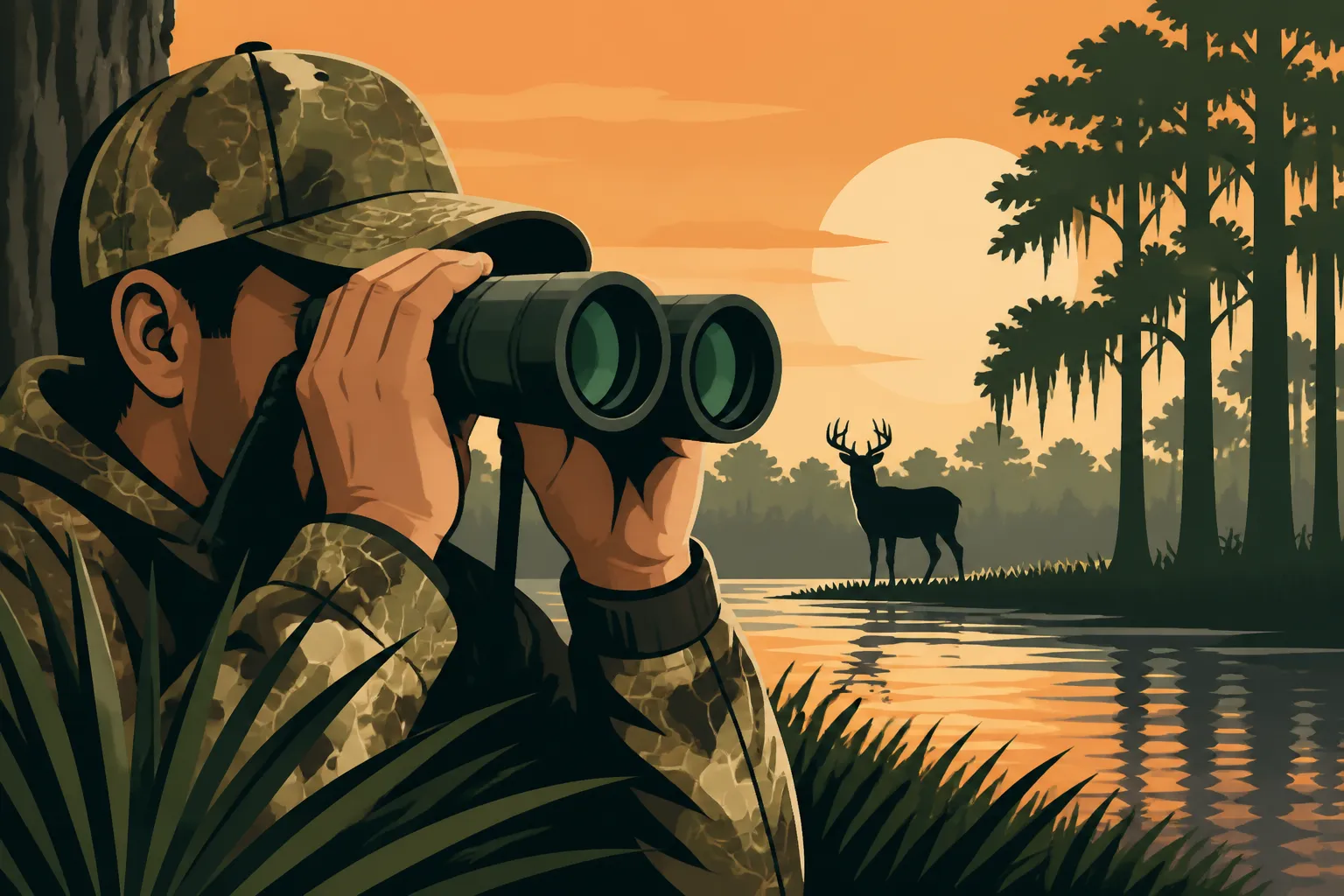
Trying to glass through the dense, shadowy edges of a Georgia swamp can feel like peering into a murky puzzle, especially when you know a big buck might be slipping through the thick palmettos or cypress knees. It’s a frustrating reality for many hunters: you've spent hours getting into position, the perfect funnel is just ahead, but the visual clutter makes it almost impossible to discern a deer from a shadow. This guide is dedicated to cutting through that confusion, helping you understand precisely what binocular power and features will make the difference in those challenging, low-light, high-cover swamp edge hunting scenarios across Georgia.
Understanding the Unique Challenges of Swamp Edge Hunting in Georgia
Georgia’s swamps and river bottoms are incredible ecosystems, teeming with wildlife, but they are also notoriously difficult to hunt, particularly when it comes to visual observation. The environment itself throws up a myriad of challenges that demand specific considerations for your optics. It’s not like glassing a wide-open Western landscape where you’re trying to pick out a speck at a mile. Here, it’s about discerning detail in a claustrophobic, often dim, world.
Dense Cover and Limited Visibility
Imagine standing on the edge of a vast, sprawling cypress swamp, the kind where the trees are so thick they blot out the sun and the undergrowth is a tangled mess of briars, vines, and palmettos. This isn't just a metaphor; it's the daily reality for hunters in places like the Altamaha River corridor or the Okefenokee National Wildlife Refuge fringe. Visibility can shrink to mere yards, making long-range glassing completely irrelevant. Your line of sight is constantly interrupted by trunks, limbs, and dense foliage, creating a "checkerboard" effect of light and shadow.
In these conditions, a binocular that provides a wide field of view becomes far more valuable than one that offers extreme magnification. You're not looking for a distant outline; you're trying to sweep a relatively close area, picking apart the cover for a flick of an ear, a horizontal line that breaks the vertical pattern of trees, or the tell-tale white of a deer’s throat patch. Too much zoom, and you'll find yourself constantly panning, missing the bigger picture, and struggling to quickly locate what caught your eye in the first place. This is especially true when you're Hunting Georgia Swamp and River Bottom Deer, where the deer often move subtly through the heavy cover.
Low Light Conditions and Humidity
Georgia is known for its incredible humidity, and that mugginess often translates into perpetually dim conditions under the dense canopy of a swamp or thick river bottom. Even on a bright, sunny day, the forest floor can be shrouded in deep shadows. Add to that the typically early morning and late evening hours when deer are most active, and you're regularly operating in low-light environments. This challenge is compounded by the thick, moist air, which can make things appear hazy or even cause your optics to fog up at the worst possible moment.
High humidity not only affects visibility but also how light behaves. Moisture in the air scatters light, reducing clarity and contrast. For your binoculars, this means you need optics that can gather as much ambient light as possible and transmit it efficiently to your eye, without losing crucial detail to blur or glare. An objective lens that can pull in more light will be a huge advantage, allowing you to see definition in shadows where a lesser binocular would show only darkness. Good lens coatings are also paramount to combat internal reflections and maintain a crisp, clear image even when the air feels soupy.
The Need for Quick Target Acquisition
When a deer decides to move through the thick cover of a swamp edge, they rarely dally. They might materialize out of the shadows, take a few steps, and then vanish again, all in a matter of seconds. This fleeting movement demands quick target acquisition from your binoculars. You need to be able to raise them to your eyes, find the animal, and assess it—all without fumbling or losing precious time.
A binocular with an overly narrow field of view or one that's difficult to hold steady can make this critical task nearly impossible. If you spend too long trying to "find" the deer in your optic's sight picture, that opportunity could be gone. This is where the balance between magnification and user-friendliness truly comes into play. You want enough power to identify antler points or sex, but not so much that the image is shaky, or your field of view is so restricted that tracking a moving animal becomes a chore. The ability to scan and then lock onto a target swiftly is a hallmark of successful swamp edge hunting.
Deciphering Binocular Magnification and Objective Lens
Choosing binoculars for swamp edge hunting isn't just about picking the biggest numbers you see. It’s about understanding what those numbers mean and how they influence performance in the specific environments you'll encounter in Georgia. The two primary figures you'll see are magnification and objective lens diameter, and together, they tell a crucial story about how light and image size will be handled.
Magnification (e.g., 8x, 10x)
The first number in a binocular's specification, like the "8" in 8×42 or the "10" in 10×42, refers to its magnification power. Simply put, an 8x binocular makes an object appear eight times closer than it does with the naked eye, while a 10x makes it appear ten times closer. On the surface, more magnification seems better, right? You want to see that deer clearer, farther away, count its points.
However, in the context of dense swamp edges, higher magnification comes with significant trade-offs. Firstly, increased magnification amplifies handshake. Even the steadiest hands will experience some tremor, and an object that appears 10 times closer will also appear to shake 10 times more. This can be incredibly frustrating and eye-fatiguing, especially during prolonged glassing sessions or when trying to pick out subtle movements in shadows. Secondly, higher magnification inherently narrows your field of view (FOV). This means you see less of the surrounding area, making it harder to initially locate an animal or track it as it moves through thick cover. Imagine trying to find a deer in a dense thicket with a tiny peephole versus a wider window—the wider window is almost always more effective for initial detection. This is a vital consideration when you're doing something like Reading a Ridge for North Georgia Deer, where a wide view can help you spot movement well before you focus in.
Objective Lens Diameter (e.g., 42mm, 50mm)
The second number, like "42" in 8×42 or "50" in 10×50, indicates the diameter of the objective lenses (the lenses farthest from your eyes) in millimeters. This figure is directly related to the binocular's light-gathering capability. A larger objective lens can collect more ambient light. Why is this important? Because more light equals a brighter, clearer, and often higher-contrast image, especially in dim conditions.
For swamp edge hunting in Georgia, where low light is a constant factor under the heavy canopy and during dawn/dusk, a larger objective lens is generally a significant advantage. It allows you to distinguish details in shadows, helping you spot a deer that might otherwise blend into the dark background. However, larger objective lenses also mean larger, heavier binoculars. A 50mm objective will be noticeably bulkier and heavier than a 42mm. This added weight can contribute to arm fatigue and make the binoculars less comfortable to carry on long treks through muddy, uneven terrain. You have to balance that light-gathering ability with practicality and portability for your specific hunting style.
The Exit Pupil and Low-Light Performance
The exit pupil is a less commonly discussed but critically important specification for low-light performance. It's the diameter of the light beam that exits the eyepiece and enters your eye. You can calculate it by dividing the objective lens diameter by the magnification (e.g., an 8×42 binocular has an exit pupil of 42/8 = 5.25mm). In bright daylight, the human pupil constricts to about 2-3mm. In low light, it dilates to 5-7mm, or even up to 9mm for younger individuals.
For optimal low-light viewing, you want the binocular's exit pupil to be at least as large as your dilated eye pupil. If the binocular's exit pupil is smaller, your eye won't be receiving all the light the objective lens collected, effectively wasting its light-gathering potential. For swamp edges, where you're often hunting in challenging light, an exit pupil of 5mm or greater is highly desirable. An 8×42 (5.25mm exit pupil) generally offers excellent low-light performance. A 10×42 (4.2mm exit pupil) will gather less light and deliver a dimmer image to your eye in twilight conditions, making it harder to pick out details in the deep shadows of a cypress stand. This becomes a crucial factor when you're counting on every bit of available light.
Optimal Binocular Power for Georgia Swamp Edges
When it comes down to making the choice, the "best" binocular power for Georgia swamp edge hunting isn't necessarily the one with the highest numbers. It's about finding the right balance of factors that will enhance your ability to spot game in a challenging environment without hindering your mobility or causing undue fatigue.
The Case for 8x Binoculars
For most Georgia swamp edge hunting scenarios, an 8x binocular, particularly an 8×42 model, is often the sweet spot. The 8x magnification provides enough power to confidently identify deer and even count points at typical swamp-edge distances—which are usually within 100 yards, often much closer. At 8x, the image is significantly more stable than a 10x, reducing eye strain and making it easier to hold steady for prolonged observation. This stability is a huge benefit when you're trying to pick out fine details in a thicket, where subtle movements or textures are key.
Furthermore, 8x binoculars typically offer a wider field of view compared to 10x models with the same objective lens diameter. This wider FOV is invaluable in dense cover. It allows you to scan a broader area more quickly, increasing your chances of detecting movement before an animal is fully in the open. Imagine scanning a dense palmetto patch: with an 8x, you're seeing more of that patch at once, making it easier to locate a deer that might be partially obscured. The larger exit pupil of an 8×42 also means superior low-light performance, which is absolutely critical during those golden hours of dawn and dusk, or when hunting under a heavy swamp canopy. Many experienced hunters find that the enhanced stability and wider field of view of an 8x binocular make them more effective in these close-quarters, high-cover environments.
When 10x Might Be Justified
While 8x often reigns supreme, there are niche situations where a 10x binocular might be considered for Georgia hunting, even near swamp edges. If your hunting setup frequently involves sitting on a high stand or overlooking a larger field or clear-cut that borders a swamp, and you anticipate shots or observation opportunities at longer distances (say, 150-200 yards), then the extra magnification of a 10x might offer a slight advantage in detail. For example, if you’re set up on a high ridgeline overlooking a distant creek bottom funnel.
However, it's crucial to acknowledge the trade-offs. The narrower field of view and increased handshake become more pronounced. You'll need a very steady rest, perhaps a tripod or a solid tree branch, to fully utilize the 10x magnification without excessive image wobble. Without a solid rest, the extra power can actually hinder your ability to hold the image steady enough to resolve fine details, especially in the low light of a swamp. For pure swamp edge hunting, where targets are typically closer and visibility restricted, the benefits of 10x are often outweighed by its drawbacks. It's truly a specialized choice for those specific, longer-range scenarios.
Field of View, Eye Relief, and Steady Hand
Beyond magnification and objective lens, several other factors contribute to a binocular's effectiveness in dense, humid environments. Field of View (FOV) is crucial, as mentioned. It's usually measured in feet at 1,000 yards. A wider FOV (e.g., 380 feet at 1,000 yards for an 8x binocular) means you see more of the landscape, which is essential for quickly locating and tracking game in thick cover.
Eye relief—the distance from the eyepiece to your eye where the full image is visible—is particularly important if you wear glasses. Adequate eye relief (typically 15mm or more) ensures you can see the entire field of view comfortably without removing your spectacles. Lastly, the ability to hold your binoculars steady cannot be overstated. Even the best optics are useless if the image is constantly shaking. An 8x binocular is inherently easier to hold steady than a 10x, a critical advantage when you’re cold, tired, or trying to pick out a detail after a long walk through the woods. When researching various options, remember that platforms like GoHunt often provide detailed specifications that allow you to compare these crucial metrics, helping you make an informed decision based on your specific needs and typical hunting conditions in Georgia.
Brand Mention (GoHunt) and Features
When you're trying to zero in on the perfect pair of binoculars, it's easy to get overwhelmed by the sheer number of brands and models out there. This is where leaning on comprehensive resources becomes invaluable. Many hunters, myself included, spend time researching gear reviews, comparing specs, and even looking at user feedback before making a significant purchase. You might find valuable insights and detailed gear comparisons on platforms like GoHunt, which can help you sift through the marketing jargon and focus on what truly matters for your specific hunting style and local conditions.
When considering features, always prioritize what will genuinely enhance your swamp edge hunting experience. Look for binoculars with high-quality ED (Extra-low Dispersion) glass, which minimizes chromatic aberration (color fringing) and produces a sharper, more true-to-life image. Excellent lens coatings are also non-negotiable; they reduce glare, enhance light transmission, and protect the lenses. Ergonomics play a huge role too; a binocular that feels comfortable in your hands, with intuitively placed focus wheels, will be a joy to use throughout a long day. Even if a particular model isn't listed with specific details on a general hunting resource, understanding these core features allows you to apply that knowledge to any brand you're considering.
Practical Considerations and Field Use
Beyond the technical specifications, there are several practical aspects of binocular use that can significantly impact your success and comfort while hunting Georgia’s challenging swamp edges. These are the details that separate a useful piece of gear from a frustration point in the field.
Weight, Size, and Portability
Hunting in Georgia’s swamps and river bottoms often involves extensive walking through thick underbrush, over uneven terrain, and sometimes even through shallow water. Every ounce of gear counts. A bulky, heavy binocular can become a literal pain in the neck—or shoulders—after just a few hours. While larger objective lenses (like 50mm) gather more light, they also increase the size and weight of the binoculars. For the majority of swamp edge hunting, an 8×42 or 10×42 offers an excellent balance of performance and portability.
Consider how the binoculars will integrate with your existing gear. Will they fit comfortably in your pack? Can you carry them easily around your neck or in a chest harness without them constantly bouncing or getting snagged on branches? A compact, lightweight pair allows for quicker deployment and less fatigue, meaning you're more likely to actually use them throughout your hunt rather than leaving them stashed away because they're cumbersome. Think about those long walks to a good spot, or when you're Still-Hunting South Georgia Pine Flats and needing to keep your movements fluid and quiet. Lighter gear makes a real difference.
Waterproofing and Fog Proofing
Georgia’s humidity is legendary, and it doesn't just make you sweat; it also poses a serious threat to your optics. Sudden temperature changes, common when moving from a cool morning into the rising sun, or simply the pervasive moisture in the air, can cause internal fogging in binoculars that aren't properly sealed. External moisture, whether from dew, rain, or an accidental splash, can also obscure your view.
For swamp hunting, waterproofing and fog proofing are not optional features—they are essential. Look for binoculars that are nitrogen-purged or argon-purged and O-ring sealed. This means the internal air has been replaced with an inert gas, preventing moisture from entering and condensing on the internal lens surfaces. Good external lens coatings also help shed water, making it easier to wipe away raindrops or condensation. Don't underestimate the frustration of having your view ruined by a fogged-up lens precisely when you need it most. Investing in truly weatherproof optics will save you a lot of headaches and missed opportunities.
Harnesses and Accessories
Carrying your binoculars comfortably and securely is just as important as the optics themselves. A traditional neck strap, while functional, often allows the binoculars to swing and bounce, potentially hitting your chest or getting caught on brush. This can create noise, draw attention, and even damage your optics. For extended periods of walking or still-hunting, a good binocular harness is a game-changer.
A chest harness distributes the weight across your shoulders and back, keeping the binoculars snug against your chest, preventing swinging, and making them easily accessible. Many harnesses also offer small pockets for lens cloths or windage dope cards. Additionally, consider lens caps that stay attached to the binoculars, preventing loss and ensuring your lenses are protected from scratches, dust, and moisture when not in use. A small, soft lens cloth is also a must-have for wiping away external moisture or smudges without damaging the lens coatings. These small accessories make a big difference in maintaining your focus on the hunt, not on managing your gear.
Here’s a quick comparison of typical binocular powers for Georgia swamp edge hunting:
| Feature | 8×42 Binoculars | 10×42 Binoculars |
|---|---|---|
| Magnification | 8x (Objects appear 8x closer) | 10x (Objects appear 10x closer) |
| Objective Lens | 42mm (Good light gathering) | 42mm (Good light gathering) |
| Exit Pupil | 5.25mm (Excellent for low light) | 4.2mm (Good, but less optimal for deep low light) |
| Field of View | Wider (Easier to scan and locate game in dense cover) | Narrower (More focused, can be harder to find initial target) |
| Image Stability | More stable (Less handshake, easier to hold steady) | Less stable (More handshake, often requires a rest) |
| Low-Light Performance | Superior (Brighter image in dim conditions) | Good (Slightly dimmer image in deep twilight) |
| Portability/Weight | Generally good, balanced | Generally good, slightly heavier than 8x |
| Best For | Close-range, dense cover, low-light swamp edges | Longer-range observation from a fixed position, some open areas |
Ultimately, choosing the right binocular power for swamp edge hunting in Georgia comes down to understanding the environment and your personal hunting style. While a 10x might offer a bit more reach, the practical advantages of an 8x—its stability, wider field of view, and superior low-light performance—often make it the better companion for navigating and observing in Georgia's thick, shadowy swamp ecosystems. Before you head out, make sure you've also checked out crucial resources like Scouting With the Georgia Outdoors App to get the lay of the land, and always be mindful of Low-Light Performance in a Scope if you're pairing your binos with a rifle. Every piece of gear needs to work together to give you the best chance for success.
Disclaimer
This article is for general informational purposes only and does not constitute professional advice. Laws, prices and regulations vary by location and change over time. Consult a qualified professional for guidance on your specific situation.