Practical Range in Georgia Swamp Timber
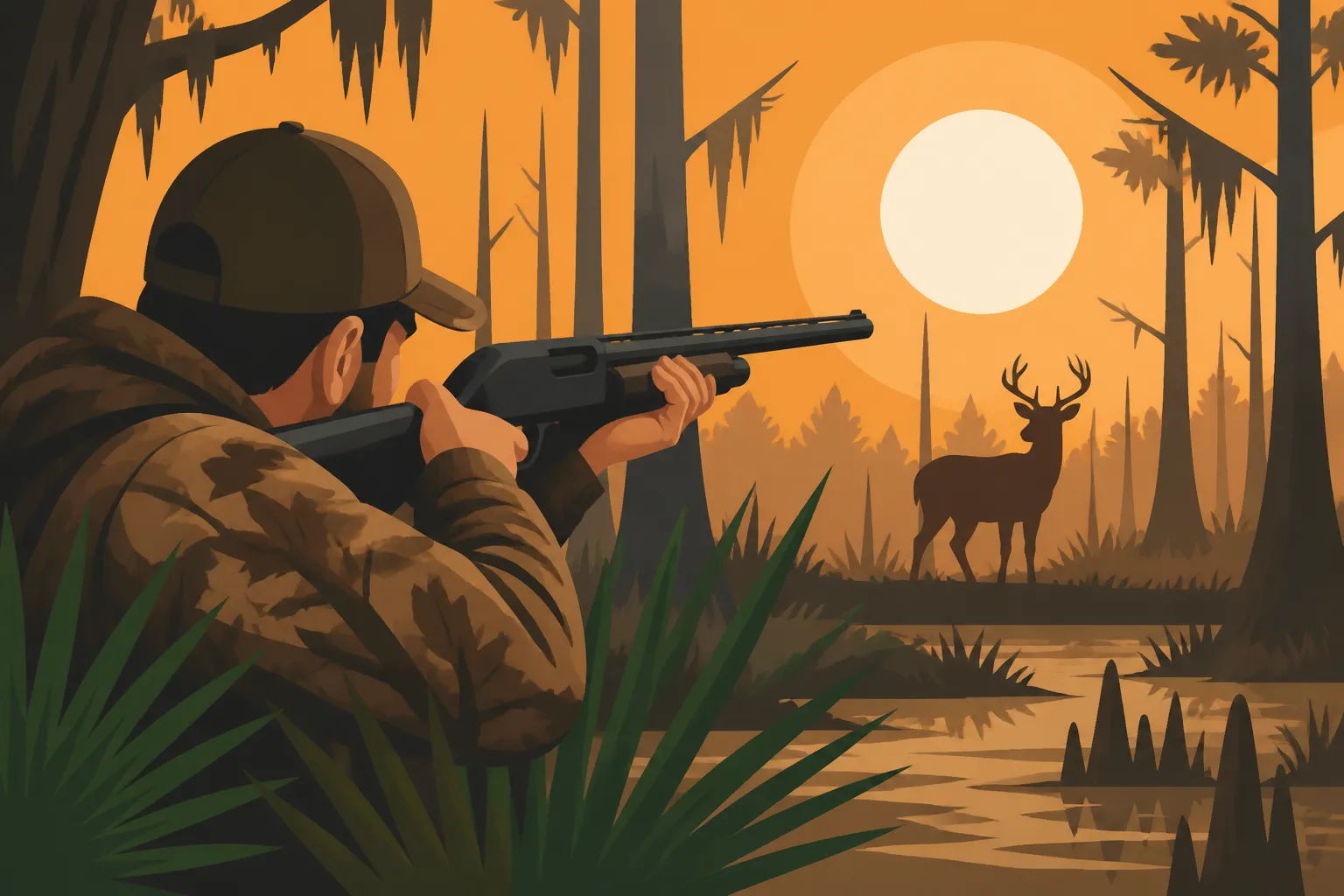
There's nothing quite like the feeling of anticipation when you're deep in Georgia's dense swamp timber, listening to the drip, drip, drip of moisture from the canopy and the squish of your boots in the mud. But that excitement can quickly turn to frustration when a buck ghosts through the impenetrable palmettos at what feels like spitting distance, yet still too far for a clean shot. Hunting in these unique environments presents a completely different set of challenges than open pine flats or even mountain ridges, especially when it comes to understanding your practical shooting range. This guide is all about helping you grasp the real-world limitations and optimal distances for various hunting setups when navigating the demanding habitats of Georgia's swamps and river bottoms.
The Unseen Obstacles of Georgia's Swamp Timber
Swamp timber isn't just "woods" with some water; it's an ecosystem unto itself, designed to be dense, wet, and often visually confusing. For a hunter, these characteristics translate directly into severely limited visibility and unforgiving shooting conditions. You might think you're prepared, but until you've stood knee-deep in murky water, trying to spot movement through cypress knees and tangled vines, you haven't truly experienced it.
Visual Obstruction and Line of Sight
The most immediate challenge in Georgia's swamp timber is simply seeing. Unlike a relatively open hardwood forest where you might spot a deer at 100 yards, a clear line of sight beyond 30 or 40 yards can be a rare luxury in the swamps. Towering cypress and tupelo gums dominate the canopy, but it's the understory that truly chokes visibility. Think about thick palmetto stands, tangled briar patches, privet hedges, and a constant curtain of vines like muscadine and kudzu that cling to everything.
This isn't just about spotting a deer; it's about identifying an ethical shot. You need to clearly see the animal, identify its vitals, and ensure there are no obstructions between you and your target. I've spent countless hours still-hunting through these areas, only to have deer slip away because I couldn't get a clear look for more than a fleeting second or two. Often, you'll hear them long before you see them, splashing through the water or rustling leaves, but getting an actual visual can be agonizingly difficult. Even with a powerful pair of binoculars, the sheer density can make it feel like you're looking through a pinhole.
Dense Undergrowth and Projectile Deflection
Beyond simply blocking your view, the thick vegetation in swamp timber can have a devastating impact on your shot. A rifle bullet, an arrow, or even shotgun slugs are designed for a clear flight path. However, even a small twig, a thin vine, or a blade of saw palmetto can deflect a projectile enough to cause a missed shot or, worse, a wounding shot. This phenomenon is often underestimated by hunters accustomed to more open terrain. What might seem like a minor obstruction can entirely change the trajectory of your projectile.
Consider a broadhead on an arrow. It's designed to cut, but if it hits a branch just before reaching the deer, it can yaw, lose energy, and fly completely off target. The same principle applies to bullets. While a high-velocity rifle bullet might seem unstoppable, even a small deflection can be critical, especially when aiming for a precise vital shot. This means that your "practical range" isn't just about how far your weapon can send a projectile accurately; it's about how far it can do so without encountering a single interfering object in the flight path. This radically shortens what you consider an ethical shot.
Water, Mud, and Unstable Footing
It's not just what's in front of your shot; it's also what's under your feet. Georgia's swamp timber is, by definition, wet. Whether it's standing water, deep mud, or spongy, unstable ground, your footing is rarely solid. This impacts your ability to hold steady for a shot, especially if you're standing rather than in a tree stand or ground blind. Trying to make a precision shot while balancing on a slick cypress knee or sinking into muck is a recipe for inaccuracy.
The constant dampness and humidity also take a toll on gear. Optics can fog up, clothing can become heavy, and metal components can rust. Furthermore, the noise of wading through water or pulling boots from mud can alert game from a considerable distance, often reducing your chances of a close-range shot in the first place. You have to be incredibly deliberate and slow in your movements, which further limits your ability to react quickly to a sudden opportunity. Rubber Boots for Swamp Walking are an absolute necessity, and even then, movement is often loud and slow.
Defining Your Ethical Range by Weapon Type
Given the challenges of swamp timber, your weapon choice significantly influences your practical, ethical range. What works for a wide-open field will be utterly ineffective and irresponsible in the dense, wet confines of a Georgia swamp. Understanding these limitations is paramount for a successful and ethical hunt.
Archery in the Close Confines
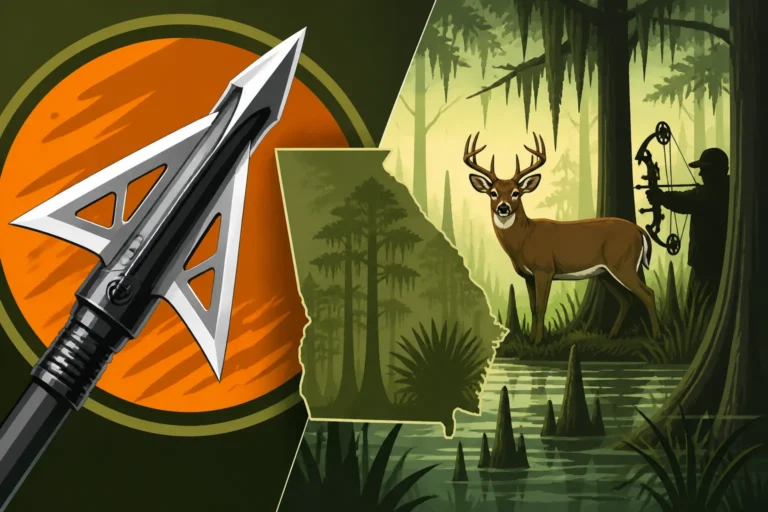
For many, archery is the ideal choice for swamp timber because it forces you to get up close and personal. In these dense environments, archery's typical effective range of 20-40 yards aligns perfectly with the limited sightlines. You simply won't get many 50-yard shots in a true Georgia swamp bottom. You might consider shorter, heavier arrows with fixed blade broadheads, designed for maximum penetration through tough hide and bone, rather than mechanical heads that rely on expansion, which can be hindered by bone or thick muscle if the shot isn't perfect. Bow Sights for Swamp Timber Shots often benefit from simple pin setups, as complex multi-pin systems designed for long range are often overkill.
The key with archery here is patience and precision. You need to wait for a deer to present a broadside or slightly quartering-away shot, often at very close range, sometimes as close as 10-15 yards. Because of the density and deflection risk, it's common for archers to trim shooting lanes around their stands before the season begins. Even then, an animal often appears in an unexpected lane. Fixed Versus Mechanical Broadheads is a crucial discussion for swamp hunters, with many favoring fixed blades for their reliability in hitting small twigs and maintaining their integrity. Remember, in swamp timber, 30 yards can feel like a really long shot.
Shotguns and Muzzleloaders: A Different Ballgame
Primitive weapons, including shotguns loaded with slugs and muzzleloaders, offer a bit more flexibility in swamp timber compared to archery, but they still operate within significantly reduced ranges. A modern shotgun with a rifled barrel and sabot slugs can be surprisingly accurate out to 75-100 yards in open conditions, but in dense swamp timber, you're likely looking at a practical, ethical range closer to 50-70 yards, maybe 80 at the absolute maximum for a perfectly clear lane. The larger, heavier projectile is less prone to minor deflection than an arrow, but it's not immune.
Muzzleloaders, depending on the type and load, generally fall into a similar range category for swamp hunting. They often pack a good punch, but the reloading process is slower, making follow-up shots difficult or impossible. Muzzleloaders Under Georgia Primitive Weapons Rules allow for a unique hunting experience, but demand careful consideration of shot placement and range. For both shotguns and muzzleloaders, clear shooting lanes are still crucial. The power and trajectory are more forgiving than archery, but the visual obstructions remain the primary limiting factor. Often, hunters will choose a relatively simple optic with lower magnification to aid in quick target acquisition in the dim light of the swamp.
Rifles: When and Where They Fit
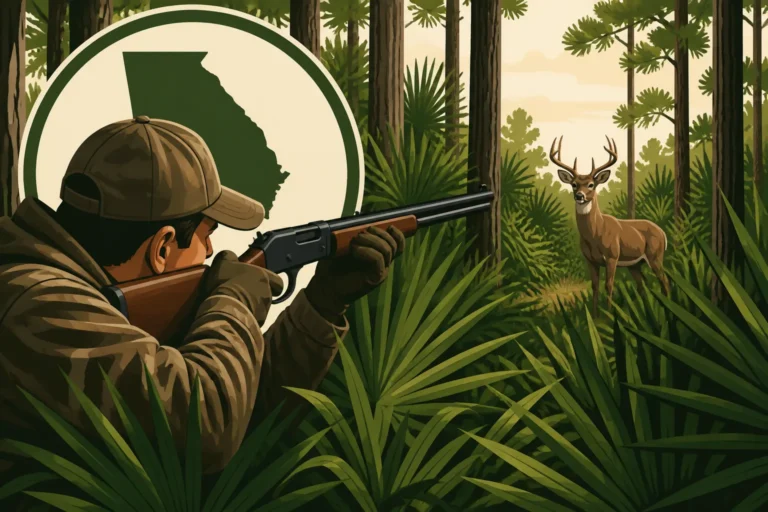
Bringing a high-powered rifle into the deepest parts of Georgia's swamp timber can often feel like bringing a bazooka to a knife fight. While technically capable of 200+ yard shots, the reality is that clear lanes beyond 75 yards are exceedingly rare. Most shots you get will be well within 50 yards, often closer. A common mistake is to assume a rifle's power will "cut through" small branches; it absolutely will not do so reliably for an ethical kill. The risk of deflection is still very real, even for powerful rifle cartridges.
For this reason, if you're specifically targeting swamp timber with a rifle, consider cartridges that offer good knockdown power at closer ranges and through potential minor obstructions, without excessive over-penetration or noise that might spook other game in thick cover. Calibers like a .30-30, .35 Remington, or even a straight-wall cartridge designed for states with specific regulations (though less common in Georgia's swamps) can be effective. However, the best advice for rifle hunting in swamp timber is to still treat it like a very short-range engagement. Focus on getting close, waiting for a perfect shot, and ensuring absolutely no obstructions. A powerful scope is often unnecessary and can even be a detriment by narrowing your field of view too much at close range.
Here's a quick comparison of practical ethical ranges:
| Weapon Type | Ideal Open Field Ethical Range | Practical Ethical Range in Dense Swamp Timber | Primary Limiting Factors in Swamp |
|---|---|---|---|
| Vertical Bow | 20-60 yards | 10-35 yards | Visual obstruction, deflection, human error |
| Crossbow | 20-70 yards | 15-40 yards | Visual obstruction, deflection, human error |
| Shotgun (Slugs) | 50-125 yards | 30-70 yards | Visual obstruction, deflection, footing |
| Muzzleloader | 50-150 yards | 30-80 yards | Visual obstruction, deflection, footing |
| Rifle | 100-400+ yards | 40-100 yards | Visual obstruction, deflection, close quarters |
Strategies for Maximizing Your Effective Range
Just because the swamp limits your range doesn't mean you're entirely at its mercy. Strategic planning, the right gear, and mental preparation can significantly improve your chances of making an ethical shot when the opportunity arises. It's about working smarter, not harder, in these demanding environments.
Scouting and Shot Lane Preparation
Before the season even starts, a hunter's best friend in swamp timber is thorough scouting. This means more than just finding deer sign; it means identifying potential stand locations, natural funnels, and, most importantly, clear shooting lanes. Tools like GoHunt or other mapping applications can help you identify subtle elevation changes, oxbows, and sloughs that might concentrate deer movement. Physically getting into the swamp and walking these areas is irreplaceable.
Once you've identified a promising spot, spend time clearing shooting lanes around your chosen stand site. This isn't about clear-cutting a wide swath; it's about selectively removing small branches, vines, and palmetto fronds that would impede an arrow or bullet. Be mindful of property lines if on private land, and WMA rules if on public land, regarding vegetation removal. Scouting Georgia Public Land Before Season is always important, but nowhere more so than in dense, complex habitats. Every yard of clear vision you create can extend your effective range by precious feet. Remember, deer in these areas are accustomed to moving through dense cover, so they won't necessarily shy away from a small opening you've created.
Opting for the Right Gear
Your gear choices can significantly influence your practical range in swamp timber. For optics, consider binoculars or scopes with lower magnification but excellent low-light performance. The dense canopy often creates perpetual twilight, even in the middle of the day. An 8x or 10x binocular will usually be more than sufficient, and an illuminated reticle on a scope can be incredibly helpful for target acquisition in dark conditions. Don't be tempted by high-magnification scopes; they simply won't be utilized effectively and can make quick target acquisition difficult.
Beyond optics, think about noise. Quiet clothing is essential. Layers that wick moisture and don't rustle when you move through brush or shift in your stand will make a huge difference. A lightweight treestand or saddle setup can be more maneuverable if you're Hunting a Funnel Between Two Swamps or needing to adapt quickly. And, of course, a reliable rangefinder is always helpful, but remember to factor in potential projectile deflection when you get a reading. Sometimes, 25 yards through a thicket is a worse shot than 40 yards in a clear opening.
Mental Preparation and Target Acquisition
Hunting in swamp timber demands a different kind of mental game. You need patience, discipline, and the ability to make split-second decisions under pressure. Expect fleeting opportunities, not long, leisurely looks at deer. When a deer appears, your mind needs to quickly process the distance, identify vital organs, and confirm a clear flight path. This is where practice comes in. Practice shooting at varying, short distances, and even through simulated minor obstructions (safely, of course).
Visualizing various scenarios before the hunt can help. Imagine a deer appearing from behind a cypress tree, walking through a small opening, and what your response would be. Work on your breathing and trigger control, even for those close shots. The adrenaline dump when a big buck steps out at 20 yards in the thick stuff can be just as intense as a 200-yard shot in open country. Staying calm, collected, and relying on your practiced fundamentals is crucial for extending your ethical range, which is always more important than your maximum range.
Real-World Scenarios and Adaptability
The true test of practical range in Georgia's swamp timber comes down to real-world application. No two hunting situations are exactly alike, and the ability to adapt to dynamic conditions is what separates successful swamp hunters from those who consistently struggle.
Hunting From a Stand vs. Still-Hunting
Your hunting method heavily influences your practical range. If you're perched in a tree stand overlooking a known deer trail or a pinch point in the swamp, you've likely had the opportunity to trim shooting lanes, creating predictable, clear shot zones. This pre-planning allows you to maximize your effective range, perhaps pushing an archery shot to 35 yards or a shotgun slug to 70 yards with confidence. The elevated position also helps with visibility over some of the lower undergrowth.
However, still-hunting or stalking through swamp timber is an entirely different beast. Here, you're constantly on the move, and every shot is an improvisation. Your practical range shrinks dramatically because you rarely have a pre-cleared lane. A 20-yard shot might be all you can realistically hope for with a bow, and even a rifle shot might be limited to 50 yards or less, depending on the immediate surroundings. The advantage of still-hunting is that you can cover ground and potentially encounter more deer, but the trade-off is often a more challenging, shorter-range shot opportunity. Still-Hunting South Georgia Pine Flats teaches patience, which is even more critical in the swamps.
Accounting for Shot Angle and Animal Movement
In swamp timber, deer are often moving, sometimes quickly, through dense cover. This makes judging shot angles and leading targets incredibly difficult. A deer might only offer a small window as it navigates a tight spot between trees. You need to be able to quickly assess if the shot is viable, considering the angle and any potential obstacles. A quartering-to shot that might be acceptable in open country with a rifle becomes highly questionable in thick cover with limited visibility.
The angle of your shot from a stand also impacts your ethical range. A steep downward angle shortens the effective distance to the vitals, and you need to be mindful of where your projectile will impact the ground after passing through the animal. Understanding Wind and Thermals on a Mountain Ridge is important, and similarly, understanding how deer move and react to subtle currents in swamp air is crucial for predicting their approach and setting up for an optimal shot. Sometimes, passing on a questionable shot, no matter how close the deer appears, is the most ethical decision you can make.
Post-Shot Tracking Challenges
Even after making a seemingly perfect shot within your practical range, tracking in swamp timber presents its own set of nightmares. Blood trails can be sparse on wet leaves or quickly washed away by standing water. The dense cover that made the shot difficult now makes tracking even harder. A deer might travel only a short distance but bury itself in an impenetrable thicket, making recovery a monumental task. This is why a short, clear, ethical shot is so important; it increases the likelihood of a quick recovery.
Before you even take the shot, identify a landmark near where the deer is standing – a unique tree, a specific log, anything that can help you pinpoint the exact spot after the shot. If you do take a deer, mark the last spot you saw it, and wait a reasonable amount of time before tracking, especially if it wasn't a perfect shot. Having a Blood Trailing After Dark in Georgia plan is a good idea, including powerful headlamps and potentially a tracking dog if permitted and available. Recovering a deer from these environments, particularly from deep water or mud, can be physically exhausting and often requires specialized gear like a game carrier or a sturdy rope to Dragging a Deer Out of a Swamp.
Ultimately, hunting Georgia's swamp timber is an incredible experience that demands respect for the environment and a thorough understanding of your own capabilities and gear. By embracing the challenges and adjusting your definition of "practical range," you can have a highly rewarding and ethical hunt in these unique landscapes.
Disclaimer
This article is for general informational purposes only and does not constitute professional advice. Laws, prices and regulations vary by location and change over time. Consult a qualified professional for guidance on your specific situation.