.30-30 in Thick Coastal Plain Cover
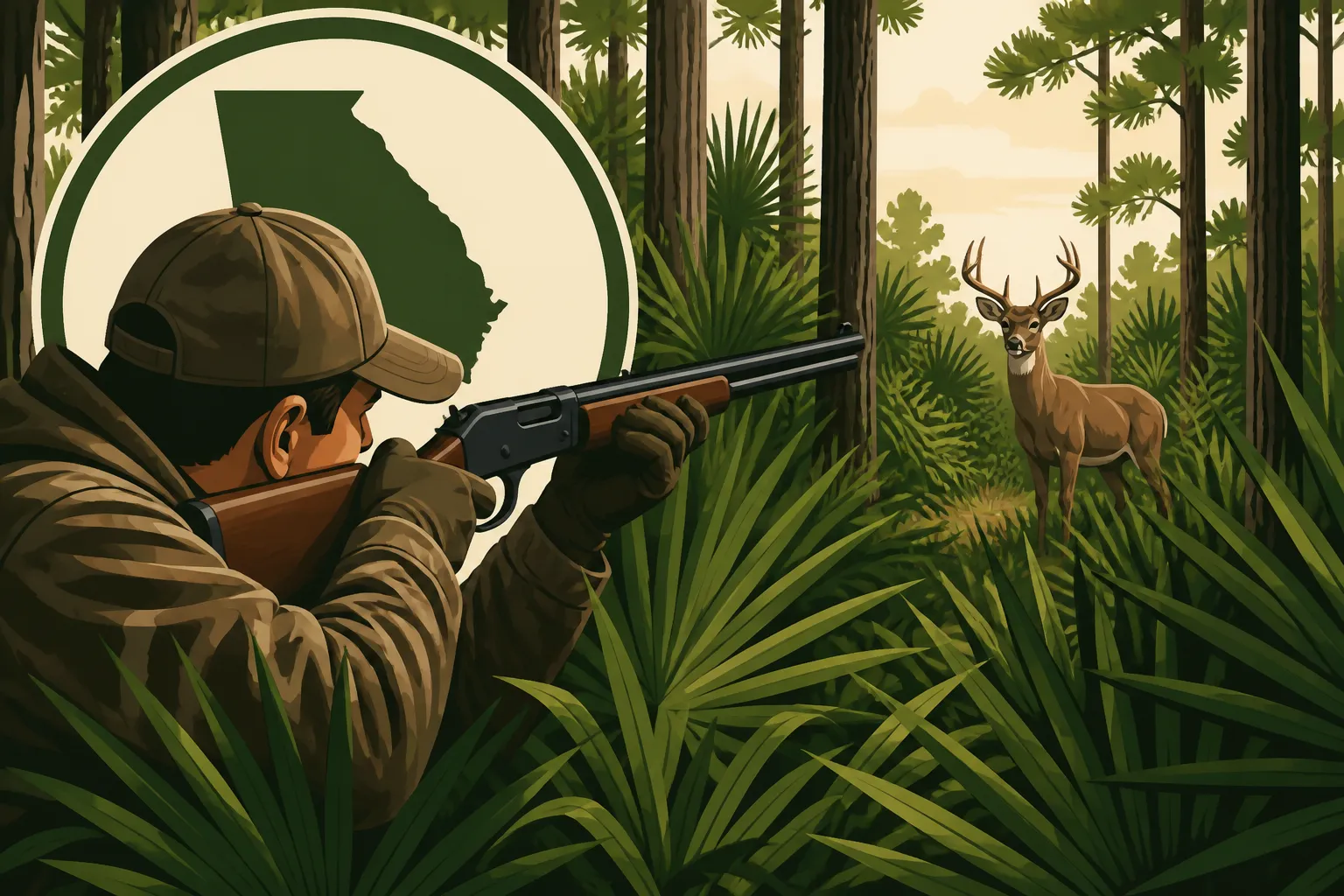
For many Georgia hunters, especially those of us who cut our teeth in the sprawling, often impenetrable thickets of the Coastal Plain, the idea of a long-range magnum rifle can feel… well, a little overkill. When you're facing down deer in dense pine plantations, palmetto stands, or the unforgiving tangles of a river bottom, the problem isn't often distance, but rather getting a clean shot through a wall of green. This guide will delve into why the trusty .30-30 lever action remains a fantastic, reliable choice for harvesting deer in Georgia's thickest cover, offering practical advice for its use.
Why the .30-30 Shines in Georgia's Coastal Plain Cover
The .30-30 Winchester cartridge, paired most often with its iconic lever-action platform, might seem like a relic to some, but it's a workhorse that consistently proves its worth in specific hunting environments. In the sprawling, dense landscape of Georgia's Coastal Plain, where visibility is often measured in tens of yards, not hundreds, the .30-30 isn't just adequate; it often excels. Its design and ballistics are perfectly suited to the close-quarters engagements typical of these habitats.
Quick Handling and Fast Follow-Up Shots
One of the most immediate benefits of a lever-action .30-30 is its incredibly quick handling. These rifles are typically shorter, lighter, and much more compact than many modern bolt-action or semi-automatic hunting rifles. Imagine still-hunting through a dense pine flat, carefully picking your way through saplings and underbrush. A long-barreled magnum can feel like trying to navigate a broomstick through a maze. The .30-30, on the other hand, comes up to the shoulder smoothly and quickly, allowing for rapid target acquisition when a buck suddenly materializes from the shadows.
Furthermore, the lever-action mechanism allows for incredibly fast follow-up shots without removing the rifle from your shoulder or breaking your cheek weld. If you've ever had a deer jump the string or need a second shot on a moving target in thick cover, you know how crucial that rapid re-engagement can be. Unlike a bolt-action where you often have to break your sight picture to cycle the action, a flick of the wrist is usually all it takes to chamber another round with a lever gun. This can make all the difference when a buck bursts from cover and gives you only a fleeting window for a second, ethical shot. In those unpredictable moments common to the Coastal Plain, reliability and speed can save the day.
Adequate Power for Whitetails at Close Range
There's a common misconception that the .30-30 lacks the "power" for deer hunting. Let's be clear: at the ranges it was designed for, the .30-30 is more than capable of cleanly taking down any whitetail in Georgia. Its typical bullet weight, usually around 150 to 170 grains, delivers substantial energy at close to moderate distances. When a deer steps out at 50, 75, or even 100 yards in the thick stuff, that .30-30 slug is carrying plenty of punch to penetrate hide, bone, and vitals.
The key here is "at close range." The .30-30's effectiveness doesn't rely on hyper-velocity or flat trajectories over vast distances, which are simply not a factor in most Coastal Plain hunting scenarios. Instead, it relies on delivering a robust, effective projectile that expands reliably and transfers its energy efficiently within a deer at practical woods distances. Many older hunters swear by the .30-30 for its consistent knockdown power, a testament to its long history of successful deer harvests. It’s not about over-engineering; it’s about practical, proven performance where it counts.
Reduced Concern for Over-Penetration
In densely populated hunting areas, or even just areas with varied terrain and potential for ricochet, the .30-30 offers a subtle but significant advantage: reduced concern for over-penetration. While any bullet can ricochet, the .30-30's ballistics mean its energy dissipates more quickly than faster, more powerful cartridges. This isn't to say it's "safer" in an absolute sense – every shot requires careful consideration of what's beyond your target. However, in areas where shots are typically taken at less than 100 yards and through a lot of intervening brush or varied terrain, the .30-30's more moderate velocity can potentially reduce the risk of a bullet retaining dangerous energy far downrange after passing through a deer, or glancing off hard objects.
This characteristic can give a hunter a bit more peace of mind, especially when hunting on smaller private tracts bordered by other properties, or on public land like some of our Wildlife Management Areas that might have trails or roads nearby. It encourages responsible shot selection, focusing on clean, close-range ethical kills, which is exactly what the Coastal Plain often demands.
Ammunition Choices for Coastal Plain Whitetails
Choosing the right ammunition for your .30-30 can make a difference in its performance, especially when hunting through brush or needing reliable expansion. While the .30-30 has been around for ages, ammunition manufacturers continue to innovate, offering various bullet designs optimized for different situations.
Traditional Jacketed Soft Point Bullets
The classic choice for the .30-30 is the Jacketed Soft Point (JSP) or Round Nose (RN) bullet, typically in 150-grain or 170-grain weights. These bullets are designed for reliable expansion upon impact with game, and their heavier construction often means good penetration. For years, these have been the go-to for hunters using lever actions, and they continue to be highly effective. The blunt nose of the traditional .30-30 bullet is specifically designed for safe use in tubular magazines, preventing accidental primer ignition under recoil.
When hunting in Coastal Plain cover, these traditional bullets offer a balance of expansion and penetration. They're excellent for chest shots on deer at common ranges. The heavier 170-grain bullet can offer a bit more penetration if you anticipate needing to punch through a shoulder bone, for instance, while the 150-grain often provides slightly flatter trajectory for those slightly longer, though still close, shots. Don't underestimate the effectiveness of these tried-and-true designs.
Modern Lever-Action Specific Loads
In recent years, ammunition companies have introduced specialized loads that push the performance envelope of the .30-30. Brands like Hornady's LEVEREVOLUTION line feature pointed polymer-tipped bullets that are safe for tubular magazines. These tips not only improve the ballistic coefficient, offering a flatter trajectory and more retained energy at longer ranges (though "longer" is still relative for a .30-30), but also enhance expansion upon impact.
For a hunter in the Coastal Plain, these modern loads can be quite appealing. The improved ballistics mean that if you do encounter a deer at the upper end of your comfortable .30-30 range, say 150 yards, these bullets will deliver more predictably. The enhanced expansion can also be beneficial, ensuring maximum energy transfer and tissue damage, which is vital for quick, humane kills and easier blood trailing through dense cover. While they might be a bit more expensive than traditional loads, their performance can be worth the investment for the confidence they provide.
Penetration Through Light Brush
One of the long-standing myths about the .30-30 is its ability to "cut through brush" without deflection. Let's be realistic: no bullet is truly "brush-proof." Any bullet, regardless of caliber or design, will be deflected to some degree if it strikes a twig or branch before reaching the target. However, the relatively slower, heavier, and blunter profile of traditional .30-30 bullets can sometimes be less prone to severe deflection than lighter, faster, more pointed projectiles when encountering light brush.
The key phrase here is "light brush." We're talking about small twigs, vines, or wisps of tall grass, not solid limbs or dense saplings. Hunters often report good results with .30-30s in mildly obstructed lanes. The best advice, however, is always to try and pick a clear path to your target. Use tools like the GoHunt app to scout potential shooting lanes from your stand or during a still-hunt. If you must shoot through minor obstructions, heavier, traditional round-nose bullets might offer a slight edge in resisting deflection compared to lighter, faster, more fragile bullets. Ultimately, aiming for a completely clear shot should always be the priority, especially if you're trying to Tracking a Deer Through Georgia Pine Straw in thick cover.
Practical Range and Accuracy Considerations
Understanding the practical limitations and strengths of your .30-30 is paramount to successful hunting, especially in Georgia's diverse terrain. It’s not a rifle designed for shooting across open fields at 300 yards, and trying to force it into that role will only lead to frustration and potentially wounded game.
Effective Range in Dense Cover
For the .30-30 in thick Coastal Plain cover, your effective range is primarily dictated by two factors: bullet drop and visibility.
Bullet drop becomes significant beyond 150-175 yards. While modern loads extend this somewhat, the traditional sweet spot is much closer. In the type of dense environments we're talking about – thick pine regeneration, deep swamp edges, or palmetto flats – you'll be lucky to see a deer clearly at 100 yards, much less have an unobstructed shot. Most shots in these areas are often within 75 yards, if not closer. The .30-30 is absolutely lethal in this range.
Visibility is often the true limiting factor. You might set up a stand overlooking a narrow logging road or a small clearing in the woods. Even then, your shooting lane might only be 60-80 yards before it disappears into the foliage. In these conditions, the .30-30's ballistics are perfectly suited. You zero it for 100 yards, and any shot within that range is essentially point-and-shoot on a deer's vitals, with minimal holdover needed. This simplicity is a huge advantage when a deer steps out quickly and you have only a few seconds to make a decision. Always be realistic about how far you can ethically shoot with your rifle, given your specific setup and the density of the cover.
Choosing the Right Sights: Iron Sights vs. Optics
The choice of sights for your .30-30 in Coastal Plain cover is a personal one, but it should be informed by the conditions you hunt.
Iron Sights: Many traditional .30-30 lever actions come with excellent iron sights. For close-quarters hunting, especially in truly dense cover where shots are under 50 yards, iron sights are fast, rugged, and completely reliable. They don't fog up, break, or run out of batteries. They're fantastic for snap shots and quick target acquisition. If you're still-hunting deep into a cypress swamp, where a shot might be 20 yards through tangled vines, iron sights are hard to beat. They also excel during Deer Drives With Three or Four Hunters where deer might appear close and moving fast.
Low-Power Scopes: For many, a low-power scope (e.g., 1-4x, 2-7x, or a fixed 2.5x or 3x) is an ideal compromise. At 1x or 2x, it functions almost like a red dot sight, offering a wide field of view and quick target acquisition for close shots. When a deer holds up a bit further out, say 75-100 yards, you can crank it up to 4x or 7x for a more precise aiming point. A good quality, low-power scope, especially one with good low-light gathering capabilities, can extend your hunting hours at dawn and dusk, times when deer are often most active in the Coastal Plain. These scopes are also typically compact and don't detract from the rifle's natural balance or quick handling. Using a scope still emphasizes the fact that Rifle Ranges Realistic in Piedmont Woods are often limited, and the same applies to the Coastal Plain.
Red Dot Sights: A growing number of hunters are opting for red dot sights on their .30-30s. These are incredibly fast for close-range target acquisition, often superior to iron sights in low light, and extremely simple to use. They shine in situations where shots are consistently under 100 yards, which describes much of the Coastal Plain. They offer a clutter-free sight picture, making it easy to put that dot on a deer's vitals quickly and precisely. If you're hunting primarily in those super-thick environments, a red dot might be the ultimate choice for speed and simplicity.
| Sight Type | Pros | Cons | Best Use Case |
|---|---|---|---|
| Iron Sights | Rugged, reliable, no batteries, very fast up close | Limited precision at longer ranges, poorer in low light | Deep swamp, thick brush, very close range (<50 yds) |
| Low-Power Scope | Versatile, good for close & moderate range, low light | Can be bulky, susceptible to fogging/damage, battery if illuminated | Mixed cover, logging roads, field edges (<125 yds) |
| Red Dot Sight | Extremely fast, excellent in low light, simple | Battery dependent, less precise for longer shots | Thick cover, quick target acquisition, drives (<100 yds) |
Zeroing for Short to Medium Ranges
When setting up your .30-30 for Coastal Plain hunting, zeroing it for a short to medium range is crucial. A common and effective zero for the .30-30 is 100 yards. With a 100-yard zero, your bullet will typically be a couple of inches high at 50 yards, dead on at 100, and only drop a few inches by 150 yards, depending on the specific load. This "point blank" range allows you to hold dead on the vitals of a deer from essentially muzzle to 150 yards without needing to guess holdover.
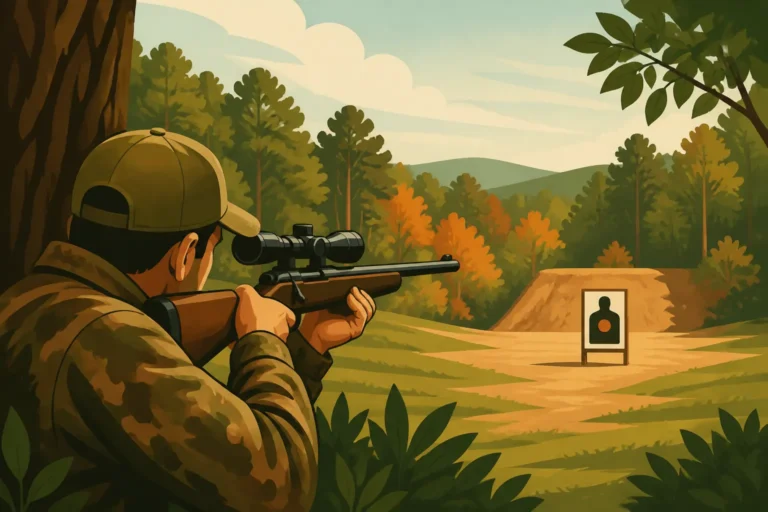
For hunting in dense cover, where 90% of your shots will likely be under 100 yards, this kind of zeroing strategy offers maximum simplicity and confidence. You simply put the crosshairs (or red dot) on the deer's shoulder and squeeze. Spend time at the range ensuring your rifle is consistently accurate at these distances. Practice shooting quickly from various field positions – offhand, kneeling, or braced against a tree. The better acquainted you are with your rifle's point of impact at different close ranges, the more confident and successful you'll be when that Coastal Plain buck steps out.
Field Craft and Tactics for the .30-30 Hunter
Hunting with a .30-30 in Georgia's Coastal Plain isn't just about the rifle; it's about employing specific field craft and tactics that maximize its strengths in a demanding environment. This often means embracing a more active, intentional style of hunting.
Still-Hunting and Tracking in Dense Cover
The .30-30 is a phenomenal tool for still-hunting. Its compact size means you can slip through thick palmettos and pine saplings with less entanglement than with a longer rifle. Still-hunting involves moving slowly and deliberately, taking a few steps, then pausing for several minutes to scan for deer. This technique is particularly effective in areas like Still-Hunting South Georgia Pine Flats or dense cutovers, where deer beds are often only a short distance from feeding areas.
Focus on reading the terrain and looking for subtle signs: a flick of an ear, a patch of brown hide that looks out of place, or the horizontal line of a deer's back in a sea of vertical trees. Your vision is often limited, so focus on small details and listen intently for rustling leaves or snapping twigs. When you spot a deer, the quick-handling .30-30 allows you to bring it to your shoulder smoothly for a shot, minimizing movement that might spook the animal. If you wound a deer, the .30-30's reliable bullet performance often leaves a good blood trail, which is critical when Blood Trailing After Dark in Georgia through dense undergrowth.
Stand Placement for Close Encounters
Even if you prefer to hunt from a stand, the .30-30 influences your placement strategy. Instead of looking for wide-open lanes, focus on pinch points, funnels, and thick cover edges where deer will naturally pass close by. Think about creek bottoms, the transition lines between a thick clear-cut and mature timber, or the edge of a standing crop field next to a dense wood line. These are areas where deer feel secure moving through relatively tight spaces.
A ground blind brushed into a field edge, or a compact treestand placed strategically along a game trail in a swamp bottom, are ideal setups. Remember, you're not trying to shoot across a 300-yard peanut field. You're setting up for that 50 to 80-yard shot where the deer is most vulnerable and your .30-30 excels. Use the terrain to your advantage, identifying natural funnels like those found in Hunting a Funnel Between Two Swamps, forcing deer within your effective range. Tools like GoHunt can be invaluable here, helping you identify property lines, topographic features, and dense cover that create these natural bottlenecks for deer movement.
Deer Drives and Pushing Thick Cover
The .30-30 is arguably one of the best rifles for participating in or organizing deer drives, especially in the Coastal Plain's challenging terrain. Drives are a classic Georgia hunting tradition, particularly useful for getting deer out of otherwise impenetrable swamps, clear-cuts, or palmetto thickets where still-hunting is extremely difficult.
When on a drive, either as a driver or a stander, deer are often moving quickly, and shots can be at close range. The .30-30's quick handling, fast follow-up shots, and adequate power for moving deer make it perfectly suited for this dynamic style of hunting. Standers position themselves along likely escape routes, often logging roads or the edges of more open timber. Drivers push through the thickest cover, attempting to push deer toward the standers. The compact size of the .30-30 is a major asset for drivers who are navigating dense brush. When a deer breaks cover, you need to be able to shoulder your rifle and acquire your target instantly. The .30-30 delivers on that need, proving its mettle during intense moments like those encountered when Posting a Drive Around a Georgia Swamp. Just remember to always be aware of your fellow hunters and your surroundings, practicing strict firearm safety at all times during a drive.
Disclaimer
This article is for general informational purposes only and does not constitute professional advice. Laws, prices and regulations vary by location and change over time. Consult a qualified professional for guidance on your specific situation.