6.5 Creedmoor for Piedmont Field Edges
The rolling hills and mixed landscapes of Georgia's Piedmont region present a unique challenge and opportunity for deer hunters. Often, hunters find themselves wondering if their rifle is truly optimized for the often-variable shot distances found where open fields meet dense woodlands. This guide aims to thoroughly explore why the 6.5 Creedmoor has become such a popular and highly effective cartridge for targeting white-tailed deer specifically along the productive field edges of the Georgia Piedmont, detailing its ballistic advantages, practical application, and how to maximize its performance in this specific hunting environment.
Understanding the Piedmont Landscape and Its Hunting Challenges
The Georgia Piedmont is a captivating region, characterized by its rolling topography, a patchwork of agricultural fields, mature hardwoods, and pine plantations. It's not the vast, wide-open country of the West, nor is it the dense, impenetrable swamp of the deep South. This unique blend creates specific hunting scenarios that demand versatility from both the hunter and their equipment.
The Unique Blend of Open Fields and Woodlines
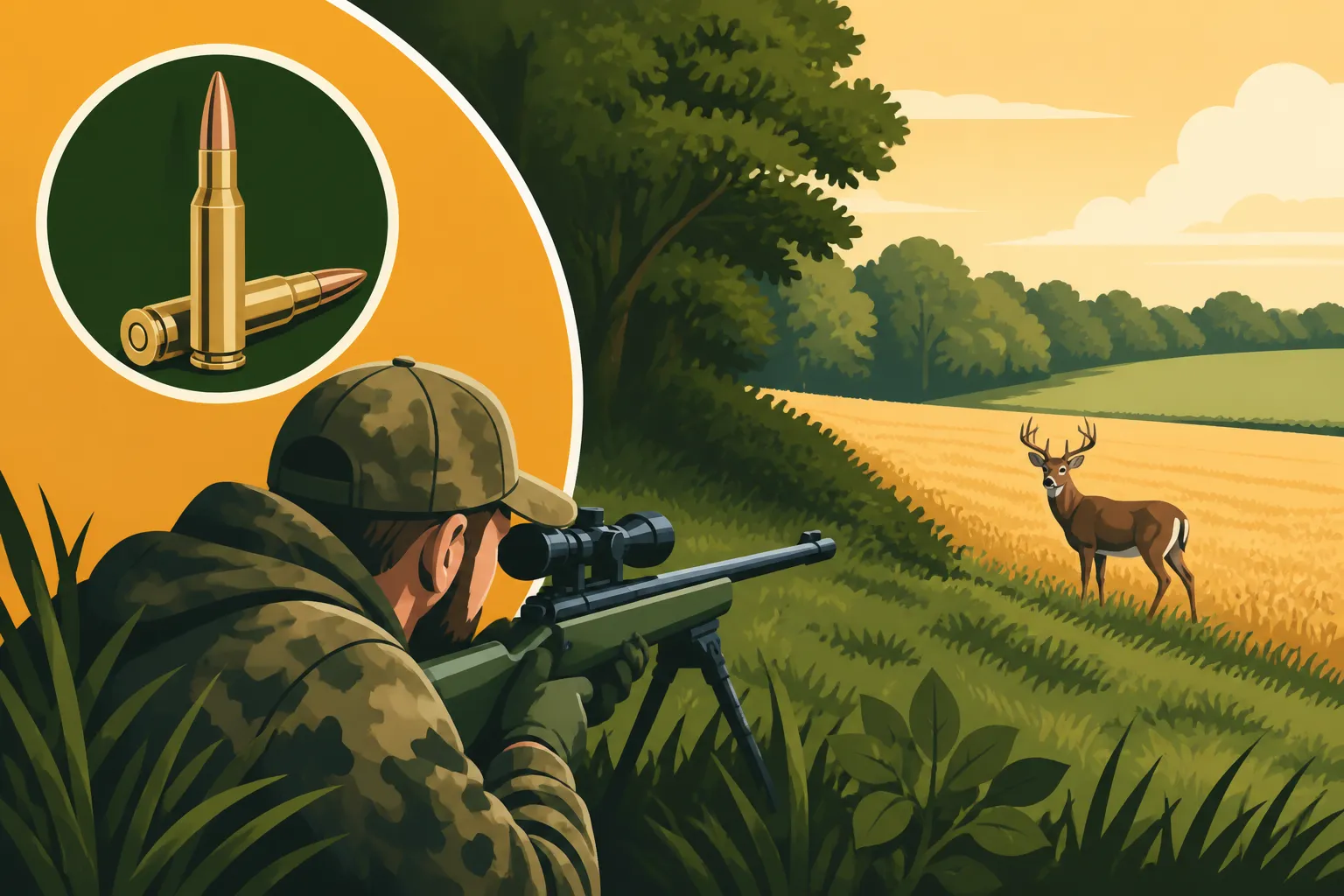
Picture this: you're sitting on the edge of a newly cut soybean field, sun dipping low, casting long shadows across the stubble. To your left, a thick line of mature oaks and pines provides perfect cover, a dark wall against the fading light. To your right, the field stretches for several hundred yards before meeting another woodline. This isn't just a hypothetical; it's a common scene in much of the Georgia Piedmont. Deer thrive in these "edge" environments, utilizing the open fields for prime forage – whether it's acorns dropping from oaks, browse in a timber cut, or waste grain – while having immediate access to the security and cover of the adjacent woods.
This means that while you might be looking across an open field, expecting a longer shot, a trophy buck could just as easily step out of the timber 50 yards away. The transition zones, where field meets forest, are natural travel corridors and staging areas for deer before they commit to feeding in the open. Understanding this dynamic is crucial for effective hunting. You're not always planning for a 300-yard shot, but you also can't rule it out. It's about being prepared for anything from an up-close encounter to a respectable stretch across the open ground.
Common Shot Scenarios on Field Edges
Hunting these Piedmont field edges often involves a diverse array of shot opportunities, each demanding different considerations. You might have a deer emerge from the dense undergrowth and cautiously browse at 75 yards along the woodline, offering a relatively quick, close-range shot. Or perhaps, a majestic buck steps out into the middle of a sprawling pasture, leisurely feeding at 250 yards. On a larger property, you could even encounter a deer moving along the far edge of a field, pushing 300 yards or more, especially if you're positioned for a cross-field shot.
The frustration for many hunters comes from carrying a rifle that's either over-gunned for the closer shots or lacks the precision and flat trajectory needed for those longer opportunities. A cartridge that performs well across this spectrum, minimizing the need for complex holdover calculations and delivering consistent energy, becomes a true asset. When deer are moving between cover and feed, they rarely stand still for long. The ability to make a quick, confident shot, whether at 80 or 250 yards, is paramount. This versatility is where the 6.5 Creedmoor really begins to show its strengths in the context of Georgia's Piedmont hunting.
Why the 6.5 Creedmoor Shines on Piedmont Field Edges
The 6.5 Creedmoor burst onto the scene and quickly captured the attention of hunters for good reason. Its design was a masterclass in balancing ballistic performance with shooter comfort, and these attributes make it particularly well-suited for the varied conditions found along Georgia's Piedmont field edges.
Flat Trajectory and Mild Recoil for Mixed Distances
One of the most appealing characteristics of the 6.5 Creedmoor is its incredibly flat trajectory. This isn't just an academic point; it has real-world implications when you're perched in a stand overlooking a field edge. When a deer steps out, especially at those intermediate ranges of 150 to 250 yards, a flat-shooting cartridge means less guesswork regarding holdover. You're less likely to shoot over or under your target if your range estimation is slightly off, which is a huge confidence booster in the heat of the moment. This "point-blank range" capability simplifies your shot process, allowing you to focus on the target rather than complicated ballistic calculations.
Beyond trajectory, the 6.5 Creedmoor offers remarkably mild recoil. For many hunters, especially those who might be sensitive to the kick of larger calibers, this is a game-changer. Reduced recoil translates directly to several advantages:
- Faster Follow-Up Shots: If a deer doesn't drop immediately, or if another animal presents an opportunity, you can get back on target much quicker.
- Better Shot Observation: With less muzzle jump, you're more likely to see the bullet impact, which is invaluable for tracking and understanding how the shot performed. This is crucial in Georgia's often-thick cover, where a well-placed shot might still lead to a short blood trail into the woods.
- Improved Accuracy: Less flinching and anticipating recoil naturally leads to more consistent and accurate shooting, both on the range and in the field. This consistency is what builds confidence, especially when facing those mixed-distance shots.
Terminal Performance on Georgia Whitetails
When it comes to putting a Georgia whitetail down cleanly, the 6.5 Creedmoor delivers. While some might scoff at its "smaller" caliber compared to traditional deer rounds, its performance is undeniable. The secret lies in its projectiles, which typically boast high ballistic coefficients and excellent sectional density. In plain English, this means the bullets maintain their energy and velocity remarkably well downrange and are designed to penetrate deeply and expand reliably.
For a deer hit squarely in the vitals, the 6.5 Creedmoor creates a devastating wound channel, leading to quick and humane kills. Common bullet weights, typically ranging from 120 to 143 grains, are more than sufficient for the average-sized Georgia whitetail, which might range from 120 to 180 pounds or sometimes more for a mature buck. Whether you're using a controlled expansion bullet designed to hold together for deep penetration or a rapidly expanding bullet for maximum energy transfer, the terminal performance is consistently impressive. This makes it a reliable choice for ethical hunting, ensuring that your deer doesn't run far, even when retreating into the thick Piedmont woods.
Versatility Beyond Deer
While our focus is squarely on deer hunting, it's worth noting that the versatility of the 6.5 Creedmoor extends beyond just whitetails. In the Piedmont, you might encounter other game animals that the cartridge is perfectly capable of handling. Coyotes, for instance, are common predators in Georgia, and the flat trajectory and accuracy of the 6.5 Creedmoor make it an excellent choice for predator control should the opportunity arise. While it might be considered overkill for smaller game like hogs, if you encounter one while deer hunting, it will certainly do the job. This added versatility means you don't necessarily need to swap rifles if your hunting plans slightly broaden, making it a truly practical choice for a Georgia hunter who might pursue more than one species. Coyote Calling in Georgia Farm Country is a great resource if you're interested in pursuing these opportunistic predators.
Optimizing Your 6.5 Creedmoor for Piedmont Hunting
Having the right rifle is only part of the equation; optimizing it with the right ammunition and optics, and then mastering its use, is where the real success lies. For hunting Georgia's Piedmont field edges, a few key considerations will make your 6.5 Creedmoor truly shine.
Choosing the Right Ammunition
The market is flooded with 6.5 Creedmoor ammunition, which is both a blessing and a curse. While variety is good, choosing the right bullet for Georgia whitetails is critical. You'll generally want to look for quality hunting ammunition, not match-grade target rounds, though many companies produce excellent hybrid hunting/match bullets.
Consider bullet types designed for controlled expansion, such as bonded bullets or those with an interlocked core. These bullets are engineered to retain a high percentage of their weight, penetrate deeply through hide, muscle, and bone, and expand consistently to create a wide wound channel. Some excellent options include bullets from manufacturers known for their reliable hunting performance. Bullet weights in the 120-143 grain range are ideal for deer. Heavier bullets (140-143 grain) tend to offer a slightly higher ballistic coefficient, which can be an advantage for longer shots, while lighter bullets (120-129 grain) often provide a bit more velocity, which can be effective at closer ranges. The most important thing is to test several brands and bullet weights with your specific rifle to see what it shoots most accurately. Consistency is paramount.
| Bullet Weight (Grains) | Typical Velocity (FPS) | Recoil (Relative) | Ideal Use Case |
|---|---|---|---|
| 120-129 | 2,800 – 2,950 | Mild | Faster, flatter shooting for mid-range Piedmont deer |
| 130-143 | 2,650 – 2,800 | Very Mild | Excellent ballistic coefficient for longer shots, deeper penetration |
Optics and Zeroing Strategy
For Piedmont field edges, your scope choice and zeroing strategy are just as vital as your rifle and ammunition. Given the mixed distances, a variable power scope in the 3-9x or 4-12x range is often perfect. This allows you to dial down to 3x or 4x for wide field of view and quick target acquisition if a deer pops out close to your stand, then crank up to 9x or 12x for precise aim on a deer across a wider field. Look for scopes with good light-gathering capabilities and clear glass, as those crucial minutes around dawn and dusk are often when deer are most active on the edges. Rifle Scopes for Low-Light Swamp Edges offers more insight into low-light performance, which is equally relevant for Piedmont hunting.
When it comes to zeroing, a common and effective strategy for the 6.5 Creedmoor in this environment is to establish a 200-yard zero. This means your bullet will typically be a couple of inches high at 100 yards and then drop back to zero at 200 yards, remaining within a few inches of your aiming point out to around 250-275 yards depending on your specific load. This creates a generous "point-blank range" where you can aim dead-on for most typical field edge shots without significant holdover or holdunder. For anything beyond that, a rangefinder is an absolute must. Practice with your chosen ammunition at various distances on the range to understand your rifle's ballistic curve thoroughly. Many hunters find resources like Zeroing at 100 Yards for Field Edge Hunting helpful for getting started.
Tools like GoHunt's mapping features can help identify these prime field edge locations and understand the distances involved. You can pre-plan potential shot scenarios by measuring distances from your stand location to various points in the field or along the opposite woodline.
Practical Considerations for Field Edge Stands
Setting up a successful stand on a Piedmont field edge isn't just about finding a good tree. It involves a strategic understanding of deer movement, wind, and access. First, always consider the prevailing wind direction. Deer rely heavily on their sense of smell, and a swirling wind can quickly give away your position. Position your stand so that your scent cone is blown away from where you expect deer to approach or feed.
Entry and exit routes are equally critical. You want to be able to get to and from your stand without spooking deer that might already be in the field or staging in the woods. This might mean taking a longer, roundabout route to approach with the wind in your face or using natural terrain features for concealment. When you're trying to figure out where those field edges funnel deer, mapping tools, including features available through platforms like GoHunt, can be invaluable. They allow you to study aerial photos, identify pinch points where deer are likely to cross, and plan your approach with minimal disturbance. Patience is truly a virtue here. Deer often wait until the last possible moment to enter an open field, making those final minutes of daylight especially crucial.
Field Edge Hunting Tactics with the 6.5 Creedmoor
Successfully hunting deer along Georgia's Piedmont field edges requires more than just a capable rifle; it demands an understanding of deer behavior, meticulous scouting, and precise execution. The 6.5 Creedmoor, with its inherent accuracy and manageable ballistics, complements these tactics perfectly.
Reading the Terrain and Deer Sign
The first step to success on any field edge is understanding how deer use the landscape. Deer, being creatures of habit and security, will often follow the path of least resistance or the routes that offer the most cover. Look for natural pinch points where two woodlines converge, funneling deer movement into a narrower corridor. Creek bottoms, draws, and dense thickets extending into a field can act as natural highways for deer moving between bedding and feeding areas. Reading Aerial Photos for Piedmont Deer can be a huge asset here, allowing you to identify these features before you even step foot in the woods.
Once on the ground, scout for fresh deer sign. Fresh tracks along the field edge, droppings in key areas, and noticeable browse lines on young saplings or bushes indicate consistent deer activity. Look for rub lines and scrapes, especially during the rut, which signal that bucks are actively marking their territory and searching for does. A string of scrapes along a logging road bordering a field edge, for example, is a prime location to set up. These indicators tell you not just that deer are in the area, but how and where they're moving, which is vital for precise stand placement.
Stand Placement and Concealment
Your stand placement is perhaps the most critical tactical decision when hunting field edges. As discussed earlier, wind direction is paramount. Always position yourself downwind of where you expect deer to appear. In the Piedmont, thermals can also play a role, especially in the morning and evening. Air tends to flow downhill in the morning as it cools, and uphill in the evening as it warms. Factor this into your setup, particularly if your stand overlooks a field in a slight valley or on a hillside. Hanging a Stand on a Mountain Saddle highlights how wind and thermals work in more extreme terrain, but the principles apply even in gentler Piedmont hills.
Concealment is equally important. Whether you're in a treestand or a ground blind, you need to break up your silhouette. In a treestand, use the natural cover of the tree to your advantage, or consider adding some natural vegetation to your stand. If using a ground blind, brush it in thoroughly to blend it seamlessly with the field edge. Brushing In a Blind on a Field Edge offers excellent tips for this. Remember, deer are constantly scanning open areas before entering them. A well-placed, well-camouflaged stand or blind drastically increases your chances of going undetected.
Mastering the Shot Opportunity
When a deer finally steps out, the 6.5 Creedmoor gives you the precision to master the shot opportunity. With its mild recoil and flat trajectory, you can focus on making an ethical, clean shot. Always aim for the vital organs – the heart and lungs. Wait for the deer to offer a broadside or quartering-away shot, as these present the largest target for a humane kill. Avoid straight-on or quartering-to shots if possible, as these reduce your margin for error and might not allow for sufficient penetration to the vitals.
The 6.5 Creedmoor's inherent accuracy means that if you do your part, the bullet will go where you aim it. Don't rush. Take a deep breath, control your crosshairs, and squeeze the trigger smoothly. If you've zeroed your rifle properly for a 200-yard point-blank range, you should be able to hold dead-on for most shots up to 250 yards without significant worry. For longer distances, use your rangefinder and know your bullet's drop. Imagine you're scouting a new piece of public land in the Piedmont, identifying potential field edges and transition zones. Using tools like GoHunt, you can overlay aerial imagery with property lines, making it easier to pinpoint exactly where you want to set up your stand or ground blind, and even practice measuring theoretical shot distances. This kind of preparation ensures that when that buck finally steps into view, you're ready to make it count.
Disclaimer
This article is for general informational purposes only and does not constitute professional advice. Laws, prices and regulations vary by location and change over time. Consult a qualified professional for guidance on your specific situation.