Prescribed Burns and Georgia Hunting Closures
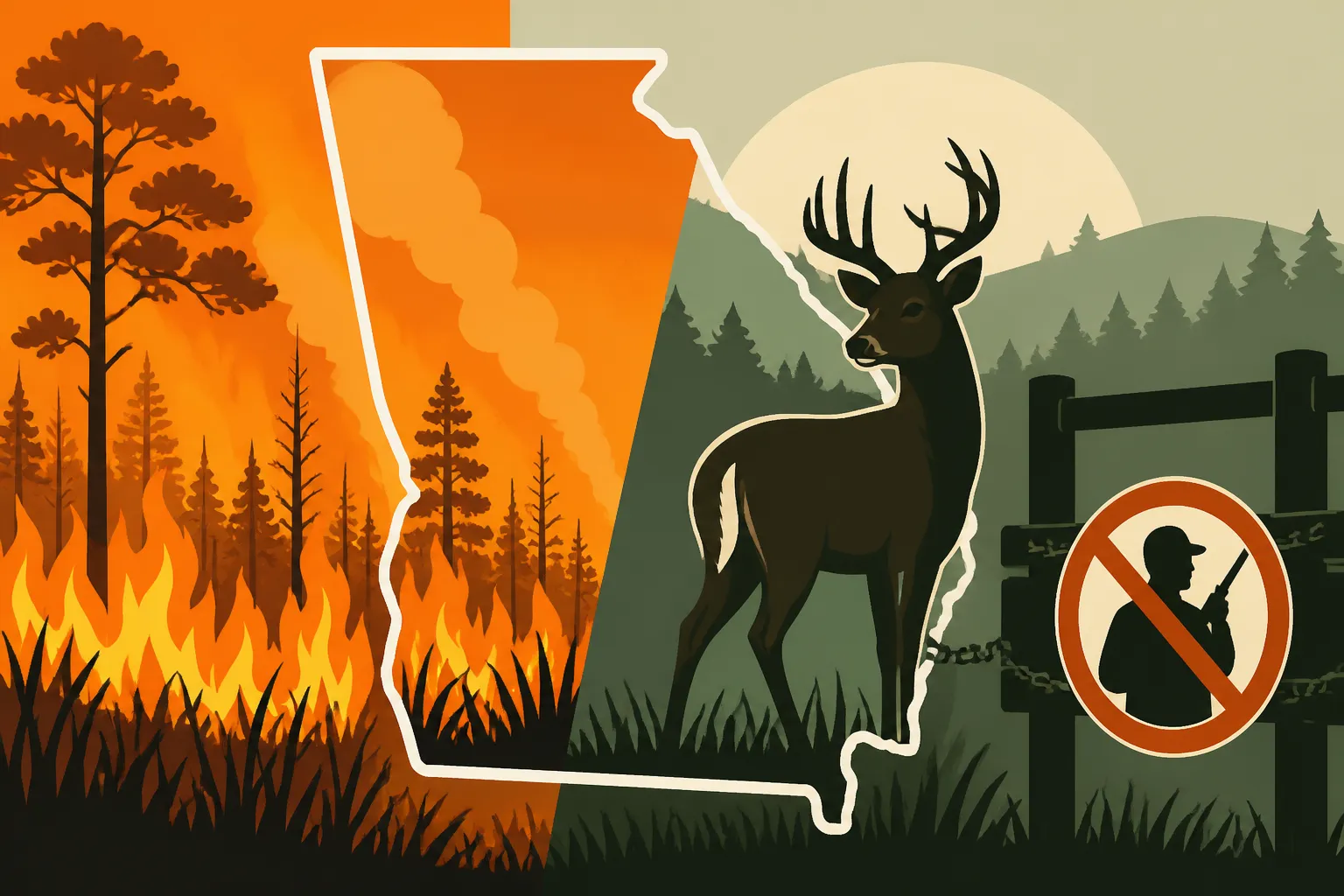
There's nothing quite as frustrating as planning a long-anticipated hunting trip to your favorite Georgia public land spot, only to arrive and find it closed off due to a prescribed burn. It's a common scenario that can throw a wrench in even the best-laid plans. This guide is here to shed some light on why these burns happen, how they impact hunting access, and crucially, how you can stay informed and even adapt your hunting strategies to these dynamic landscapes.
Understanding Prescribed Burns in Georgia's Ecosystem
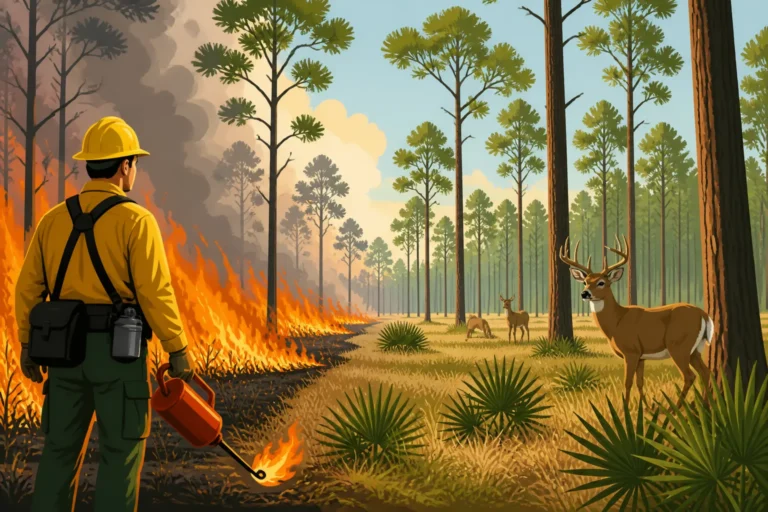
For those of us who spend a lot of time in Georgia's wild places, "prescribed burn" is a term we hear often. It's not just a random fire; it's a carefully planned and executed tool used by wildlife managers to maintain and improve habitat. While it might seem counterintuitive to set a fire to help wildlife, it’s actually an ancient practice that mimics natural processes and is absolutely vital for the health of our forests and game species.
Why Fire is Essential for Georgia Wildlife Habitat
Georgia's natural landscapes, particularly across the Coastal Plain with its vast longleaf pine ecosystems, are fire-adapted. Historically, natural wildfires, often sparked by lightning, would sweep through these areas, clearing out underbrush and promoting new growth. Without this natural disturbance, many of our native plant communities and the wildlife that depend on them simply wouldn't thrive. Think about the iconic longleaf pine forests: they need fire to clear competing hardwoods and allow their seedlings to establish. The thick, spongy layer of pine straw that accumulates can also be reduced through burning, preventing catastrophic, intense wildfires by taking care of smaller, controlled ones.
For our beloved game species, this means a healthier, more diverse larder. Deer, for instance, benefit immensely as burns reduce dense, old vegetation and stimulate a flush of tender, nutritious new shoots and forbs, making food sources more accessible and palatable. Turkeys find it easier to navigate, forage for insects, and brood their poults in more open understories. Even small game like Bobwhite Quail in Georgia rely heavily on these open, grassy conditions that prescribed fire helps create and maintain. It's a cyclical process that keeps the ecosystem vibrant and productive, providing critical browse, cover, and nesting sites. Without prescribed fire, habitats can become overgrown, less diverse, and more susceptible to destructive wildfires that are far less predictable and manageable.
Types of Prescribed Burns and Their Objectives
Not all prescribed burns are created equal; they're tailored to specific objectives based on the time of year and the desired outcome. Understanding these differences can give you a better idea of what to expect and how long an area might be affected. Dormant season burns, often conducted in late winter or early spring before green-up, are typically done to reduce fuel loads and prepare the ground for new growth. These fires are generally cooler and can be easier to control. They’re excellent for clearing out heavy leaf litter and woody debris, setting the stage for a burst of fresh forage as temperatures rise.
Then there are growing season burns, which happen later in the spring or summer when plants are actively growing. These are often used for specific ecological goals, such as controlling invasive species that are less fire-tolerant, or promoting the growth of specific native grasses and forbs that thrive with summer fire. While these burns can sometimes look more intense, they are still carefully managed and targeted. For hunters, knowing the type of burn can influence how quickly an area recovers. A cooler dormant season burn might see a rapid flush of greens, attracting deer quickly. A more intense growing season burn might take a bit longer for significant forage to return, but it can create excellent long-term habitat by suppressing undesirable vegetation and opening up the understory for years to come. Ultimately, each burn is a calculated effort to enhance the overall health and resilience of the forest for future generations of wildlife and hunters.
How Prescribed Burns Lead to Hunting Closures
While prescribed burns are undeniably good for wildlife and habitat in the long run, they do come with immediate implications for hunters. The primary reason areas are closed is straightforward: safety. It's not just about the fire itself, but the entire operation and the immediate aftermath.
Safety Concerns and Public Access Restrictions
Imagine walking through the woods and suddenly encountering active fire lines, heavy equipment like dozers or tractors, or worst of all, an unexpected shift in wind pushing smoke and flames your way. It’s a recipe for disaster. Wildlife agencies, whether it's the Georgia Department of Natural Resources (DNR) managing a Georgia Wildlife Management Areas or the U.S. Forest Service overseeing areas like the Chattahoochee-Oconee National Forest Hunting, prioritize public safety above all else. During a burn, firefighters, heavy machinery, and support personnel are actively working in the area. Allowing public access would not only put hunters at risk but also impede the fire crews’ ability to safely and efficiently conduct the burn. Smoke can also drastically reduce visibility, making navigation dangerous, especially in areas with uneven terrain or hidden obstacles.
The closure isn't just for the duration of the active burning either. Post-burn, there can still be smoldering stumps, hot spots, and weakened trees that could fall unexpectedly. Even the ash can be tricky to walk through, especially if it conceals holes or uneven ground. These closures are temporary but absolutely necessary to ensure everyone goes home safe and the burn achieves its ecological objectives without incident. Always respect closure signs and directives from wildlife personnel; they are there for your protection.
Temporary Closures and Rehabilitation Periods
The duration of a hunting closure due to a prescribed burn can vary significantly. Some areas might only be closed for a day or two during the active burn and immediate cooling period, especially smaller, more contained burns. Larger burns, or those in more remote or challenging terrain, might require closures extending for several days or even a week to ensure all hot spots are out and the area is safe for public re-entry. It's not just about the fire being out; it’s about making sure the ground is stable, the air is clear, and any lingering hazards are addressed.
The good news is that wildlife, especially deer and turkeys, are incredibly resilient and often return to burned areas surprisingly quickly. The initial days might see animals displaced to adjacent unburned areas, but as soon as tender new growth begins to sprout from the ash-enriched soil, they'll be back. This "rehabilitation" period for the habitat itself is surprisingly rapid in many cases. Within weeks, you can often see a green-up, and within a few months, the area can be teeming with new forage. Savvy hunters understand that these "rehab" periods are actually opportunities. While you can't hunt during the closure, it’s a perfect time to do some post-burn scouting from a distance or mentally mark these spots for later in the season when they become prime feeding areas.
Finding Out About Burn-Related Closures
One of the biggest headaches for Georgia hunters is showing up to a prime spot only to find it taped off. Luckily, there are ways to avoid this disappointment by staying informed about prescribed burn schedules and potential closures. A little proactive research can save you a lot of time and frustration.
Official Sources for Burn Notifications
The best way to get accurate, up-to-date information about prescribed burns and closures is to go straight to the official sources. For state-managed lands, like Georgia's Wildlife Management Areas, the Georgia DNR website is your first stop. They often have dedicated sections for WMA alerts, news releases, or even interactive maps that show planned and active burns. Many WMAs also have specific contact information for their regional offices; a quick phone call can often get you the latest details. For national forest lands, such as the Chattahoochee National Forest Deer Ground or Oconee National Forest Deer Ground, you'll want to check the U.S. Forest Service website for the Chattahoochee-Oconee National Forest. These sites will usually have alerts, forest orders, and press releases regarding prescribed burn operations, sometimes even listing specific tracts or compartments.
It's also a good idea to pay attention to local news sources or social media pages affiliated with these agencies, as they often post real-time updates. Subscribing to email newsletters or text alerts, if available, can also be a game-changer for staying current. Don't underestimate the value of checking these resources the day before you plan to head out, as plans can change rapidly due to weather conditions.
Using Mapping Tools to Identify Burned Areas
Beyond official websites, modern mapping tools have become invaluable for hunters trying to navigate the complexities of public land, including understanding prescribed burns. Platforms like onX Hunt have layers that can show public land boundaries, property ownership, and even recent satellite imagery which, while not real-time, can often reveal larger burn scars from previous seasons. While onX Hunt might not provide immediate closure notifications, it can certainly help you identify areas that are prone to burning or show you the extent of a burn that has already occurred. This can be crucial for planning future hunts.
Another great option for general research and understanding habitat management strategies is a tool like GoHunt. While not specific to Georgia burns, it emphasizes data-driven hunting, and by extension, understanding habitat. Though it may not offer specific burn closure maps, it encourages a deeper dive into how land is managed, which can help you predict where burns might occur in areas managed for specific game species. While these apps may not tell you a burn is tomorrow, they empower you to understand the landscape contextually. For instance, if you see a large section of public land with a strong presence of longleaf pine identified on a map, it's a good bet that prescribed fire is part of its management strategy. By combining official notifications with these powerful mapping aids, you can approach your hunt with much greater confidence and fewer unwelcome surprises.
Hunting After a Prescribed Burn: Tactics and Opportunities
While a prescribed burn might temporarily displace game and close off access, it also creates incredible hunting opportunities once the smoke clears and the land reopens. Smart hunters know that a recently burned area can become a magnet for deer, turkeys, and other game, offering fresh food sources and altered cover. It's all about understanding how animals react and adapting your strategy accordingly.
Scouting the Post-Burn Landscape
Once a burned area reopens, your first step should always be thorough scouting – even if it’s just with your eyes from a distance initially. The landscape will look drastically different, and this offers unique advantages. Start by looking for the first signs of green-up. As soon as tender new forbs and grasses begin to push through the ash, deer will be drawn to these highly palatable and nutritious sprouts. Ash can also expose mineral-rich soil that deer might lick. Identifying these fresh food sources is paramount. Look for tracks and scat in the soft ash, which can be much easier to spot than in dense pine straw or leaf litter. Every step an animal takes will leave a clear imprint.
The burn will also reveal new travel corridors and hidden features. Creeks, ditches, and terrain changes that were previously obscured by thick undergrowth will now be visible. This can expose pinch points, funnels, and natural crossings that deer will utilize as they move between unburned bedding cover and new feeding areas. Don't forget to examine any standing timber for rubs or old scrapes that are now more obvious. It's like the forest has had a fresh haircut, revealing its true structure and opening up new possibilities for stand placement. Spend time walking the edges of the burn, especially where it transitions into unburned timber or thickets – these transition zones are often high-traffic areas.
Adapting Your Strategy for Burned Areas
Hunting a recently burned area requires a shift in tactics from your usual approach. Since dense cover has been removed, visibility is often dramatically improved, which can be both a blessing and a curse. You can see further, but the deer can see you too! This means scent control and stealth become even more critical. Consider your entry and exit routes carefully, utilizing terrain features or remaining unburned pockets of cover to stay concealed.
Treestand placement might need adjustment. Instead of tucking deep into thick cover, you might focus on stands overlooking the edges of the burn, especially those near water sources or unburned food plots, or within a few yards of the fresh regrowth where deer will feed. The open understory also makes ground blinds an excellent option, especially if you can brush them in effectively with any remaining debris or natural vegetation. Focus your efforts during low-light periods – early morning and late evening – when deer feel most comfortable moving into these open, recently burned areas to feed. Remember that a fresh burn can expose acorns or other hard mast that was previously buried under leaf litter, offering another tempting food source for deer and Wild Turkeys in Georgia. Always be ready for action, as deer might move quickly through these areas, hitting the freshest forage before retreating to thicker cover.
Here’s a quick comparison of how things change after a prescribed burn:
| Feature/Condition | Before Prescribed Burn | After Prescribed Burn |
|---|---|---|
| Vegetation Density | Thick underbrush, dense pine straw, high fuel load | Open understory, exposed ground, ash layer |
| Forage Availability | Older, less palatable browse, some mast buried | Flush of new, nutritious growth, exposed mast |
| Visibility for Hunters | Limited, dense cover provides concealment | Increased, but also makes hunters more visible |
| Deer Travel Patterns | Follows established trails through dense cover | Utilizes new corridors, edges, and fresh browse |
| Tracking Conditions | Difficult on hard ground or thick leaf litter | Easier in soft ash, tracks highly visible |
| Stand Placement Focus | Deep in cover, along heavy trails | Edges of burn, near new growth, exposed funnels |
| Hunting Pressure | Typically consistent unless disrupted by natural events | Can be high immediately after reopening, then tapers |
| Long-Term Habitat | Potentially stagnant, less diverse | Enhanced, more diverse, improved for game |
Georgia DNR biologists and foresters understand the vital role fire plays, and while closures are a temporary inconvenience, the long-term benefits for the habitat and the quality of your future hunts are immeasurable. So, stay informed, adapt your tactics, and embrace the dynamic changes that prescribed burns bring to Georgia's hunting grounds. Scouting Georgia Public Land Before Season is always important, but even more so after a fire.
Disclaimer
This article is for general informational purposes only and does not constitute professional advice. Laws, prices and regulations vary by location and change over time. Consult a qualified professional for guidance on your specific situation.