Food Plots on Georgia Private Land
For many Georgia hunters, especially those with access to smaller private tracts, the dream of consistently pulling in quality deer or coaxing a big gobbler out of the woods can feel like a constant uphill battle. Natural food sources can be fickle, drawing game away one season and leaving you scratching your head the next. That’s where food plots come in. This guide isn't just about throwing some seed on the ground; it's about understanding how to strategically plant, nurture, and manage food plots on your Georgia private land to create an irresistible magnet for the game you love to pursue.
Why Food Plots Work Wonders in Georgia
Let's face it, one of the biggest frustrations for hunters on private land is the game disappearing right when the season opens. You've scouted, you've seen the sign, then poof! They're gone, often to greener pastures, literally. Food plots directly address this by offering something natural forage simply can't always provide: consistency and concentrated nutrition.
The Allure of Consistent Nutrition
In Georgia, our natural landscape is rich, but it's also highly variable. One year, you might have an absolute bumper crop of acorns, and the deer are practically swimming in them. The next, a late freeze or a drought can decimate the acorn crop, sending deer scrambling for whatever browse they can find, often leading them off your property. Soft mast like persimmons or muscadines also comes and goes. This unpredictability means deer and turkeys are constantly on the move, chasing the next meal.
Food plots change that equation entirely. They offer a reliable, consistent food source that animals can depend on, day in and day out, season after season. Deer quickly learn where these nutritional havens are located. The psychological draw of a predictable, high-quality meal is incredibly powerful for them, especially during the lean times of late winter or the peak stress periods of the rut. A well-maintained food plot can become the central hub for deer activity on your property, drawing them in from surrounding areas where food might be scarcer or less appealing.
Turkeys also benefit immensely from food plots. They're drawn to the tender greens, the seeds from grains like wheat or oats, and the insects that thrive in healthy plot environments. You'll often see turkeys strutting and foraging in plots, especially in spring and fall. These plots can become vital areas for hens to bring their poults to feed on bugs, offering both food and a sense of open security against ground predators.
Boosting Game Health and Antler Growth
Beyond simply attracting animals, food plots play a crucial role in improving the overall health of your game herd. For deer, protein and mineral intake are paramount, particularly for does nursing fawns and bucks growing antlers. Our native browse, while important, doesn't always provide the concentrated levels of nutrition needed for optimal development, especially on poorer soils or during times of stress.
Food plots, when properly managed and fertilized, can deliver a powerhouse of nutrients. High-protein forage like clover, alfalfa, or soybeans provides the building blocks for robust body condition, healthy fawn production, and impressive antler growth. Imagine a young buck that consistently has access to top-notch forage from its first year of life. That sustained nutrition can make a significant difference in its antler development over several seasons compared to a buck that's constantly struggling to find enough to eat.
However, simply planting isn't enough. The true magic happens when your soil is optimized. This means understanding and adjusting your soil's pH and nutrient levels to ensure the plants can actually absorb and deliver those vital proteins and minerals to the deer. Without proper soil health, even the best seed mixes will only perform marginally, turning your investment into a missed opportunity rather than a game-changer.
Planning Your Georgia Food Plot for Success
Alright, so you're convinced. Food plots are the way to go. But before you rush out with a bag of seeds and a tiller, successful food plotting in Georgia requires thoughtful planning. This isn't just about where you want a plot; it's about where a plot will actually thrive and serve your hunting goals best.
Site Selection: Sun, Soil, and Water
Choosing the right location is the single most critical decision for your food plot's success. It's a three-legged stool: sunlight, soil, and proximity to water and cover. Neglect any one, and your plot will struggle.
First, sunlight is non-negotiable for most food plot crops. Cereals, brassicas, and legumes all need significant sun exposure. Aim for at least 6-8 hours of direct sunlight per day. If you're looking at a deeply shaded area under a dense canopy, that's likely a non-starter for most conventional plots. Clovers might tolerate a bit more shade, but even they perform best with ample sun. Walk your property and observe which areas get morning sun, afternoon sun, or full-day sun. Look for natural clearings, old logging decks, or areas that could easily be opened up with some strategic timber work.
Next, consider the soil. You don't need perfect, black loam, but you do need decent drainage. Low-lying areas that stay waterlogged for extended periods after rain are plot killers. Observe how water drains on your property. Are there areas that consistently hold standing water? Avoid those. While a full soil test is essential later, you can get a preliminary feel by digging a small hole. Is it hard clay, loose sand, or something in between? Also, think about existing fertility. An old agricultural field, even if fallow, might have better residual nutrients than a patch of clear-cut woods. For identifying good plot locations and understanding topography, tools like onX Hunt can be incredibly helpful. You can use their satellite imagery to spot potential clearings, analyze elevations for drainage, and even identify subtle changes in vegetation that might indicate different soil types or past land use.
Finally, think about proximity to water and cover. Deer and turkeys need both water and security cover. A plot that's close to a reliable water source (creek, pond, swamp edge) and dense bedding cover (thick woods, brushy clear-cuts, pine thickets) will naturally see more activity. You want to create a travel corridor that funnels deer from their bedding areas, past a water source, and into your plot. Consider how far a deer would have to travel to feel secure after leaving the plot. The more comfortable they are, the more they’ll use it during daylight hours. Reading Aerial Photos for Piedmont Deer can really help visualize these relationships.
Understanding Your Soil: The Foundation of Any Plot
I can't stress this enough: soil testing is not optional; it's foundational. Without knowing what's in your soil, you're just guessing with lime and fertilizer, and that's a surefire way to waste money and get subpar results. Your soil isn't just dirt; it's a living ecosystem that directly impacts the nutrient availability to your plants.
A proper soil test will tell you your soil's pH level (how acidic or alkaline it is) and the levels of key nutrients like nitrogen (N), phosphorus (P), and potassium (K). Most food plot crops thrive in a slightly acidic to neutral pH range (around 6.0 to 7.0). If your soil is too acidic (common in many parts of Georgia), plants can't efficiently take up nutrients, no matter how much fertilizer you throw down. That's where lime comes in to raise the pH.
Taking a soil sample is easy:
- Grab a clean bucket and a trowel or soil probe.
- Take 10-15 random samples from different spots within the plot area. Go about 6 inches deep for each sample.
- Mix all the samples thoroughly in the bucket.
- Remove any rocks or debris, then fill a pint-sized Ziploc bag with the mixed soil.
- Label the bag clearly with your name and plot identification.
- Send it off to your local extension office or a reputable soil testing lab. They'll provide a detailed report with recommendations.
Once you get your results, you'll know exactly how much lime and fertilizer you need. Don't just dump it; spread it evenly according to the recommendations. This targeted approach ensures your plants get what they need to flourish, maximizing their nutritional value for the game animals you're trying to attract.
Here's a quick look at ideal pH ranges for some popular Georgia food plot crops:
| Food Plot Crop | Ideal pH Range | Notes |
|---|---|---|
| Clovers | 6.0 – 7.0 | Excellent protein, highly attractive. |
| Alfalfa | 6.5 – 7.5 | Requires higher pH, very high protein. |
| Soybeans | 6.0 – 7.0 | High protein, good browse tolerance. |
| Cowpeas | 5.8 – 7.0 | Tolerant of poorer soils, good summer food. |
| Oats | 5.5 – 7.0 | Fast growing, early attraction, tolerant. |
| Wheat | 5.5 – 7.0 | Good early and late season forage. |
| Rye | 5.0 – 7.0 | Very cold tolerant, grows in poor soil. |
| Brassicas | 6.0 – 7.0 | High protein, excellent late-season food. |
| Corn | 6.0 – 7.0 | Energy source, great for doves/turkeys. |
| Chicory | 6.0 – 7.0 | Drought tolerant, high protein, perennial. |
Plot Design and Size Considerations
When it comes to food plot design, bigger isn't always better, especially on smaller private tracts. A small plot that's well-maintained and strategically placed will always outperform a large, neglected plot. Focus on quality over quantity. For deer, a quarter-acre to an acre can be incredibly effective, depending on your total acreage and local deer density. For turkeys, even smaller plots can be very attractive.
Consider the shape of your plot, especially if you plan to hunt over it. Rectangular plots are efficient for planting but can be less than ideal for hunting. L-shaped, hourglass, or bow-tie designs create natural pinch points and shooting lanes, forcing deer to present better shot opportunities. These shapes also allow you to see more of the plot without exposing yourself. Think about how deer will enter and exit, and how you can position your stand or blind for optimal wind advantage and concealment. Setting Up on a Piedmont Field Edge highlights the importance of this.
Crucially, design your plot with your entry and exit routes in mind. Nothing spooks deer faster than walking right through their bedding area or across the main trail leading to the plot. Plan a discreet approach, perhaps along a creek bottom, a logging road, or using terrain features for cover. Incorporate existing trees or strategically plant screening cover like Egyptian wheat or fast-growing conifers to hide your approach. You want to make it as easy as possible for deer to feel safe using the plot during daylight hours, and as difficult as possible for them to detect your presence. This might mean brushing in a ground blind along an edge or hanging a treestand with a clear, concealed path to and from.
What to Plant and When: Georgia-Specific Strategies
Georgia's climate offers a wide window for food plotting, allowing for both cool-season and warm-season options. Understanding what to plant and when is key to providing year-round forage and maximizing your hunting opportunities.
Cool-Season Annuals and Perennials
These are your bread and butter for fall and winter hunting in Georgia. They provide crucial nutrition when natural browse is declining or after the acorn drop has been depleted.
Cereal Grains (Oats, Wheat, Rye): These are perhaps the easiest and most reliable cool-season plots. They establish quickly, grow vigorously, and are highly attractive to deer and turkeys.
- Oats: A fast-grower, often preferred by deer in the early fall. They provide excellent early-season browse and can be planted from late August through October in most of Georgia.
- Wheat: Also a very reliable choice, often holding up better to heavy browsing than oats. It remains palatable throughout the cooler months and can provide good forage even into early spring. Plant at the same time as oats.
- Rye (Cereal Rye): Extremely cold-tolerant and will grow in poorer soils. It's a great choice for late planting or for areas where you want hardy winter forage. Deer might prefer wheat or oats initially, but they'll hit rye hard as winter progresses, especially if other food sources diminish.
These grains offer quick protein and energy, making them magnets during the archery, primitive weapons, and firearms seasons. For example, if you're dealing with Hunting After a Poor Acorn Year, a lush plot of wheat and oats can be absolutely dynamite.
Brassicas (Turnips, Rape, Kale): These members of the mustard family are phenomenal late-season food sources. They boast high protein content and become incredibly palatable after a few hard frosts convert their starches to sugars.
- Turnips: Deer will eat both the tops and, later in the season, dig up the bulbs.
- Rape and Kale: Provide abundant leafy forage that can withstand significant cold.
Plant brassicas from late August through October. They need time to establish before the really cold weather hits. Initially, deer might ignore them, but once the temperatures drop and the frost sweetens them up, they can be an absolute magnet through December and January, drawing deer out of thick cover.
Clovers (Ladino, Crimson, White): Clovers are workhorses. They are perennials, meaning they can come back year after year with proper management, reducing the need for annual planting. They are also nitrogen fixers, improving your soil over time.
- Ladino and White Clover: Excellent protein producers and highly palatable to deer. They tolerate browsing well and provide consistent forage throughout much of the year, even into summer if conditions aren't too dry.
- Crimson Clover: An annual, but a beautiful and effective one, often used in mixes for its quick establishment and strong early-season appeal.
Clovers are best planted in early fall (September-October) or early spring (February-March). They require a well-limed soil (pH 6.0-7.0) to thrive. A well-established clover plot can be an absolute hub for deer and turkey activity.
Warm-Season Options for Year-Round Appeal
While cool-season plots get a lot of attention for hunting season, warm-season plots are vital for providing nutrition during the spring and summer stress periods, contributing to overall herd health and carrying capacity.
Legumes (Soybeans, Cowpeas): These high-protein powerhouses are fantastic for summer nutrition. They offer both lush green forage and, if left unbrowsed long enough, high-energy pods in the fall.
- Soybeans: Highly attractive, offering substantial protein for antler growth and fawn development. However, they can be heavily browsed, especially in smaller plots or areas with high deer density. Consider planting a larger plot or using an exclusion cage to allow them to get established.
- Cowpeas (Iron & Clay, Whippoorwill): Often more browse-tolerant than soybeans and can grow well in slightly poorer soils. They provide excellent forage and then later, pods that deer and turkeys absolutely love.
Plant soybeans and cowpeas from April through July, after the last frost. They are warm-season crops and need consistent moisture to get going. A large, thriving soybean or cowpea plot can dramatically improve the nutritional plane of your herd throughout the summer.
Corn and Sunflowers: While primarily thought of for doves, these can be very effective for deer and turkeys too, providing high-energy food sources, particularly in the fall.
- Corn: A classic. It provides a dense energy source that deer and other wildlife will hammer, especially as winter approaches. It also provides excellent cover.
- Sunflowers: Primarily for doves, providing seed heads they adore. Planting sunflowers can make for an incredible Working a Dove Field on Opening Day. Deer and turkeys will also pick up fallen seeds.
Plant corn and sunflowers in late spring, after the danger of frost has passed. They require fertile soil and good moisture for optimal growth.
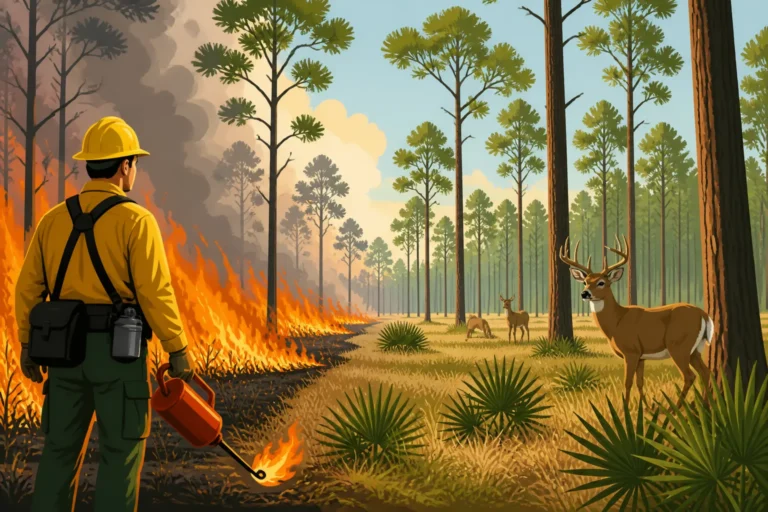
Remember, it's not always about planting exotic new varieties. Sometimes, enhancing native forage is just as effective. Thinning timber to allow more sunlight to reach the forest floor, or prescribed burns, can stimulate the growth of beneficial native plants that deer and turkeys already prefer. Integrating these practices alongside your planted food plots creates a truly holistic habitat management plan.
Here's a comparison of some popular Georgia food plot crops:
| Crop Type | Planting Time (GA) | Primary Season Attractant | Protein Content | Sun Needs | Maintenance (pH/Fert.) |
|---|---|---|---|---|---|
| Oats | Late Aug – Oct | Fall | Medium-High | Full Sun | Moderate |
| Wheat | Late Aug – Oct | Fall – Winter | Medium-High | Full Sun | Moderate |
| Cereal Rye | Late Aug – Nov | Fall – Winter | Medium-High | Full Sun | Low – Moderate |
| Brassicas | Late Aug – Oct | Late Fall – Winter | High | Full Sun | Moderate – High |
| White Clover | Sep – Oct or Feb – Mar | Year-round | High | Full Sun | Moderate – High |
| Crimson Clover | Sep – Oct or Feb – Mar | Fall – Spring | High | Full Sun | Moderate – High |
| Soybeans | Apr – Jul | Summer – Fall | Very High | Full Sun | High |
| Cowpeas | Apr – Jul | Summer – Fall | High | Full Sun | Moderate |
| Corn | Apr – May | Fall – Winter | Low – Medium | Full Sun | High |
| Chicory | Sep – Oct or Feb – Mar | Year-round | High | Full Sun | Moderate |
Maintenance, Management, and Common Pitfalls
Planting the seed is just the first step. To get the most out of your food plots and ensure they consistently attract game, ongoing maintenance and smart management are absolutely essential. It’s also important to anticipate the common problems that can arise.
Essential Maintenance Tasks
Once your food plot is established, don't just walk away. It requires a commitment to ongoing care to maximize its potential.
Weed Control: Weeds are the arch-nemesis of a food plot. They compete for sunlight, water, and nutrients, choking out your desired forage. This is why proper seedbed preparation, including herbicide application before planting, is so crucial. After germination, you'll likely need to use selective herbicides (like grass-specific sprays in a broadleaf plot, or vice versa) to keep weeds in check. Mowing is another tool, especially for clover plots, to knock back weeds and stimulate fresh, tender growth. The timing is important; mow clovers before weeds go to seed, or before they get too tall and shade out the clover.
Fertilization (Top-Dressing): Your initial soil test gives you a starting point, but plants are constantly drawing nutrients from the soil. Perennial plots, like clover or chicory, especially benefit from a light application of fertilizer (often just phosphorus and potassium, or a balanced blend depending on soil re-tests) every year or two to maintain vigor. Annual plots usually need all their fertilizer upfront, but sometimes a small boost can help if growth is lagging. Keep an eye on your plants; yellowing or stunted growth can indicate a nutrient deficiency.
Protecting New Plots from Over-Browsing: This is a heartbreaking problem for many plotters. You plant a beautiful, lush new plot, and a hungry deer herd wipes it out before it even has a chance to establish. This is particularly common with small plots or highly palatable plants like soybeans in areas of high deer density.
- Temporary Fencing: For small, critical plots, a temporary electric fence can be a lifesaver. You can remove it once the plants are mature enough to withstand browsing pressure.
- Plot Size: Planting larger plots helps spread out the browsing pressure, making it less likely any single plant gets completely decimated.
- Diversion Plots: Sometimes, planting a less-preferred plot (like clover) nearby can act as a diversion, drawing initial browsing pressure away from a more delicate plot (like young brassicas or soybeans).
Integrating Food Plots with Hunting Strategy
Food plots aren't just for growing food; they're powerful tools for shaping deer movement and enhancing your hunting strategy.
Stand Placement: Your stand or blind location relative to the food plot is critical. Always consider the prevailing wind direction, sun angles (morning vs. evening hunts), and thermal currents, especially in hilly terrain. You want your scent to blow away from the plot and from where deer are likely to approach. Wind and Thermals on a Mountain Ridge provides insight into how these factors influence game movement. Position your stand to offer clear shooting lanes into the plot but also along the likely entry and exit trails. This gives you opportunities even if deer don't commit fully to the plot.
Funneling Deer: Use your food plot in conjunction with natural terrain features to create funnels. If you have a creek bottom, a fencerow, or a narrow strip of woods connecting two larger blocks of cover, place your plot nearby. Deer will often use these natural funnels to travel, and a food plot nearby will encourage them to linger or pass through during daylight. Hunting a Funnel Between Two Swamps is a prime example of how natural funnels dictate deer movement. You can also create artificial funnels by planting strategic screening cover or even hinge-cutting trees to direct movement.
Avoiding Over-Pressuring Plots: This is a common mistake. You've worked hard on your plot, and you want to hunt it. But if you hunt it too often or at the wrong times, you'll educate the deer, especially mature bucks, and they'll become nocturnal or simply avoid the plot during daylight.
- Strategic Hunting Times: Save your prime plot hunts for ideal conditions – a cold front, a post-rain evening, or during the peak of the rut when bucks are less cautious.
- Alternate Stands: Have multiple stand locations for different wind directions and pressure levels.
- In and Out Cleanly: Always approach and exit your stand as quietly and discreetly as possible, ensuring you don't bump deer out of the plot. If you know you'll struggle to get in undetected, perhaps you should be Brushing In a Blind on a Field Edge to minimize your visibility.
Troubleshooting Common Food Plot Problems
Even with the best planning, things can go wrong. Understanding common pitfalls can help you identify and fix problems quickly.
Poor Germination: You planted, but nothing grew! This could be due to several factors:
- Bad Seed: Always buy fresh, quality seed from a reputable dealer. Check expiration dates.
- Too Dry: Seeds need moisture to germinate. If you planted and then had a prolonged dry spell, your seeds might not have sprouted.
- Planting Depth: Planting too deep or too shallow. Different seeds have different ideal depths. Small seeds often just need to be broadcast and culti-packed, while larger seeds need to be covered.
- Seed-to-Soil Contact: If your seedbed isn't firm, and there's not good contact between the seed and soil, germination will be poor. A culti-packer or even driving over it with an ATV can help.
Over-Browsing Before Establishment: As mentioned before, deer can destroy a young plot. If you see your plants being nipped back to nothing shortly after sprouting, you have a browsing pressure issue. Consider temporary fencing, planting larger plots, or choosing more browse-tolerant crops.
Weed Takeover: If your plot looks more like a weed patch than a food plot, it's likely a lack of herbicide use or poor seedbed preparation. Pre-emergent herbicides can be very effective, but ensure you're using the correct type for your chosen crop. If weeds are already dominant, you might need to spray and replant, or at least use selective post-emergent herbicides.
Remember, resources are available! Your local Georgia Department of Natural Resources (DNR) office, or even online platforms like GoHunt, often provide guidance and resources specific to your region. Don't be afraid to ask for advice or consult agricultural extension agents who have deep knowledge of local soils and conditions. With persistence and a willingness to learn, your Georgia private land food plots can become a truly effective habitat and hunting enhancement. Hunting a Green Field Planted for Deer can be one of the most rewarding experiences.
Disclaimer
This article is for general informational purposes only and does not constitute professional advice. Laws, prices and regulations vary by location and change over time. Consult a qualified professional for guidance on your specific situation.