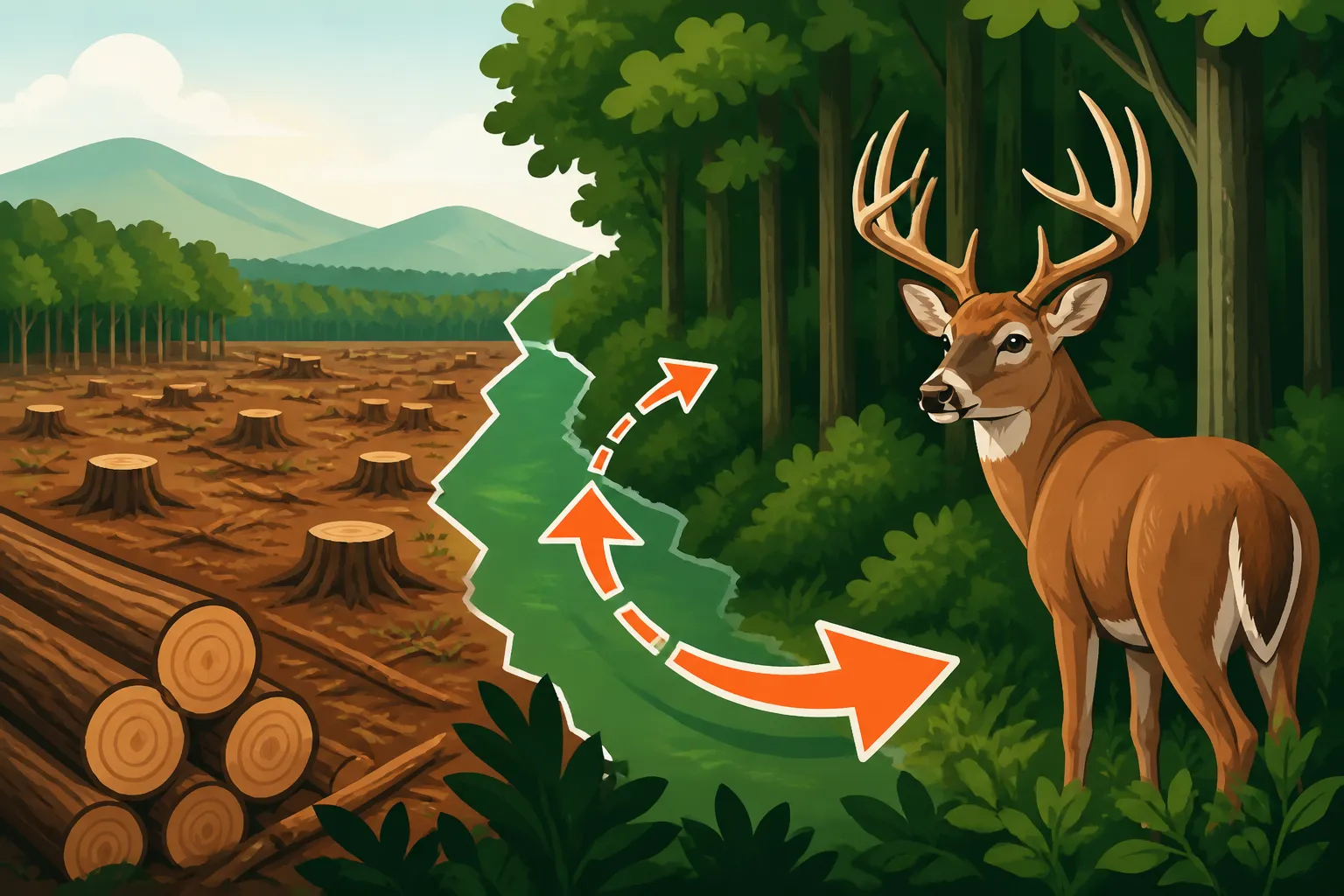
Timber Cuts and Where Deer Move After
It's incredibly frustrating when you've patterned deer in an area, only for timber operations to come through and completely change the landscape. That familiar stand location suddenly feels useless, and the deer sign you relied on seems to have vanished overnight. This guide is all about understanding how those timber cuts impact deer behavior and, more importantly, how you can adapt your hunting strategies to stay on top of their movements in these altered environments.
The Immediate Impact of Timber Operations on Deer Habitat
When the chainsaws start humming and heavy machinery rolls in, it's a monumental change for deer. Their world, which might have been stable for years, is suddenly transformed. Understanding the different types of timber cuts and the immediate reactions of deer is crucial for any hunter hoping to succeed in these areas.
Understanding Different Types of Timber Cuts
Not all timber cuts are created equal, and each type will have a distinct effect on deer habitat and movement patterns. What you see on the ground—or even from an aerial map—can tell you a lot about what to expect.
A clear-cut is perhaps the most dramatic. This is where almost all trees in a given area are harvested, leaving behind a relatively open landscape, often with piles of slash (limbs, tops, non-merchantable wood). While it looks desolate at first, this radical change is often a long-term boon for deer. The immediate effect is a massive loss of cover, pushing deer out of the area temporarily. However, once the sun hits the forest floor, a vibrant explosion of early successional plants, forbs, and berries begins to grow, creating incredible new food sources and eventually, dense bedding cover.
Thinning operations are less severe. These involve removing a percentage of trees, usually to promote the growth of the remaining, higher-quality timber. Often, this is done in pine plantations where trees are too dense. For deer, thinning can initially improve visibility and allow more sunlight to reach the forest floor, encouraging a flush of undergrowth. It can create better browse and make movement through the timber easier, potentially attracting deer back quicker than a clear-cut. However, if thinned too heavily, it can reduce security cover.
Select cutting (or selective logging) involves removing only specific trees, often mature, high-value timber, while leaving the rest of the forest intact. This is the least disruptive type of cut. Deer might hardly notice it beyond the initial noise and human activity. The canopy remains largely closed, so the impact on understory growth is minimal, but it can open up small pockets for browse and travel. These areas might still hold deer, especially if pockets of dense cover or established food sources are nearby. Each of these cuts represents a different stage in a forest's life cycle, and deer, being adaptable creatures, will respond to each in their own way.
Initial Disruption and Deer Reaction
When a timber crew moves in, deer aren't going to stick around for the show. The immediate impact is intense: the roar of machinery, the crash of falling trees, and the constant presence of human activity. Deer, being creatures of habit and security, will almost always vacate the immediate area. They’ll seek refuge in the nearest secure cover, which might be an adjacent block of unlogged timber, a dense swamp bottom, or even a neighboring property that offers peace and quiet. This initial displacement isn't usually permanent, but it's a critical phase to understand.
During this period, deer are looking for safety. They'll use established travel corridors to move away from the disturbance, often opting for the thickest, most secluded routes. If you're hunting an area where logging is active, don't expect to see deer right in the middle of it. Instead, focus on the periphery—the transition zones where the cutting meets untouched timber. These edges become critical escape routes and temporary holding areas. It's a tough pill to swallow when your favorite hunting spot is torn up, but think of it as a temporary inconvenience that often leads to vastly improved hunting opportunities a season or two down the road. Patience and good scouting during this phase are key.
Short-Term Deer Movement: The First Few Seasons Post-Cut
The initial shock of a timber cut quickly gives way to a fascinating period of ecological recovery, and deer are quick to capitalize. The short-term, generally the first one to two years after a cut, is all about new opportunities for food and cover emerging from the once-shaded forest floor.
New Food Sources Emerge
One of the most immediate and significant impacts of a clear-cut or even a heavy thinning is the sudden influx of sunlight to the forest floor. Where a dense canopy once blocked vital light, now warmth and sun drench the ground. This stimulates an incredible burst of plant growth, creating a smorgasbord of new food sources for deer. You’ll start to see early successional plants like blackberry, honeysuckle, sumac, ragweed, and various forbs flourishing. These plants provide highly nutritious browse that deer absolutely crave.
Think about a clear-cut in the Piedmont region. Before the cut, it might have been mostly mature pines, with sparse undergrowth. After the cut, that same area becomes a buffet line. Deer will move into these areas specifically to feed on the fresh growth. If the timber cut involved hardwoods, the exposed soil can also lead to a flush of young oak or other desirable saplings, providing both future mast and immediate browse. These new growth areas are often some of the most overlooked hunting goldmines, especially in areas where native browse was previously limited. Identifying these new food sources is paramount to understanding where deer are now focusing their activity. For more on late-season browse, you might find Late-Season Food Sources for Georgia Whitetails helpful.
Adapting Bedding and Security Cover
While the initial clear-cut might look barren, it doesn't take long for dense young regrowth to provide excellent bedding and security cover. Within a season or two, those quickly growing plants, especially brambles and thick woody stems, create an almost impenetrable tangle. This "thicket stage" offers fantastic thermal cover in cold weather and invaluable hiding spots from predators and hunters alike. Deer will often bed right in the middle of these dense patches, feeling incredibly secure.
However, they rarely bed exclusively in the clear-cut, especially during the first year or so. More commonly, deer will utilize the dense regrowth for midday bedding and then move to adjacent, uncut timber blocks for additional security, especially when human pressure is high. These uncut timber blocks, often referred to as "leave strips" or "buffer zones," become critical sanctuaries. The transition zone between the young, thick regrowth of the cut and the mature, open timber becomes a prime area for deer movement. They'll stage in the thickets, then move towards the mature timber to feed, or vice-versa. Understanding this dynamic interplay between the two cover types is vital. Don't underestimate the small, unlogged pockets within a large cut either; these can become secret bedding havens.
Travel Corridors and Edge Habitat
Timber cuts, particularly clear-cuts, fundamentally alter the existing travel corridors and create new ones. Old trails that once wound through open timber might become impassable or simply irrelevant. Deer, however, are efficient creatures and will quickly establish new routes based on the changed landscape. They will heavily utilize the edges of the cut—the interface between the young regrowth and the mature timber. These edges act as natural funnels, providing both food opportunities (from the new growth) and immediate security (from the mature trees).
Furthermore, new access roads, skid trails, or even old logging roads that have been reopened can become primary travel routes, especially if they offer easy passage or connect different food and cover areas. Deer will use these paths to move from bedding to feeding and back again. When you're scouting, pay close attention to where deer are entering and exiting the cut, and how they're navigating through it. Use mapping apps like onX Hunt to overlay aerial photos from before and after the cut, or even use its historical imagery feature if available, to pinpoint these new edge relationships and potential funnels. These maps can literally save you hours of guesswork on the ground. Also, if you're exploring How Far to Walk From a Forest Road, remember that these new logging roads might mean you don't have to go quite as deep to find fresh sign.
Long-Term Habitat Evolution and Deer Behavior (Years 2-5+)
As the initial flush of growth matures, the clear-cut or thinned area continues to evolve. What was once a food plot in the making becomes an impenetrable fortress, and deer behavior shifts once more to align with these changes. This long-term perspective is crucial for sustained success.
Maturing Regrowth as Prime Bedding and Browse
After a couple of years, the young growth within a cut-over area transforms into what hunters often call the "thicket stage." This is typically the sweet spot for deer habitat. The dense, woody regrowth becomes incredibly thick, offering unparalleled security cover that is almost impossible for humans to navigate quietly. Deer feel incredibly safe bedding down in these areas, knowing they can hear or see a predator long before it reaches them. This thick cover also provides excellent thermal regulation, keeping them warm in winter and shaded in summer.
Beyond just cover, these maturing thickets continue to be a significant source of browse. While some of the earliest successional plants might get outcompeted, other species, like certain shrubs and saplings, persist and continue to provide nutrition. In a mature clear-cut, deer might spend a significant portion of their day inside these thickets, moving very little, especially during high-pressure hunting periods. Hunting these areas requires different tactics, often focusing on the very edges or finding small, natural openings or deer trails within the dense growth. If you’re looking at Hunting a Clear-Cut Regrowth Edge, this is exactly the kind of situation you’ll be dealing with.
Shifting Food Preferences
As the regrowth matures, deer's food preferences can subtly shift. The initial explosion of tender, highly palatable forbs might diminish as taller, tougher woody plants take over. However, this doesn't mean the area becomes devoid of food. Instead, deer adapt to what's available. They might focus more on browse from specific shrubs, or on new soft mast crops if berry-producing plants have colonized the area. The diversity of plant life within the cut-over area becomes crucial. A mix of species ensures a consistent food supply throughout the year.
Furthermore, deer will still supplement their diet from surrounding habitats. They might move from the dense cover of the clear-cut into adjacent mature hardwoods for acorns in the fall, or to planted food plots. This creates predictable movement patterns that hunters can exploit. Understanding what specific plants are growing in your timber cut and when they are most palatable will give you a significant edge. Scouting the edges and looking for specific browse lines on certain plants is a good way to gauge what the deer are currently eating.
Impact on Established Travel Routes and Patterns
Over time, a clear-cut will completely redefine travel routes. The old, familiar deer trails you once relied on might disappear under a sea of new growth or become so thick as to be impassable. New, more efficient routes will emerge within and around the maturing cover. Deer will naturally find the paths of least resistance, often creating new trails along the edges of the cut, around particularly dense patches, or utilizing any natural opening or old logging road that remains accessible.
It's important not to assume old patterns will hold. Fresh scouting is key. What looks like an impenetrable wall of briars from the outside might have a subtle, well-used tunnel through it that deer rely on. Using tools like GoHunt or onX Hunt to regularly review satellite imagery can help you spot these changes from afar, identifying new funnels, pinch points, and natural openings that weren't there before. The deer will tell you where they're moving if you know how to read the signs in these evolving landscapes.
Strategies for Hunting Timber Cut Areas
Hunting timber cuts requires a flexible mindset and a willingness to adapt your approach. What worked in mature timber won't necessarily work in a regenerating clear-cut. But with the right strategies, these areas can be incredibly productive.
Scouting Smart After a Cut
This cannot be stressed enough: scouting is your number one tool after a timber cut. The landscape has changed, and so have the deer patterns. Don't rely on old knowledge. Start fresh. Begin by pulling up aerial imagery on your preferred mapping app, whether it's onX Hunt or another tool. Look for the distinct lines of the cut, the areas of new growth, and how they relate to surrounding timber, water sources, and potential food plots. Identify new edges, funnels created by remaining timber, and any new access roads or skid trails. This is where Reading Aerial Photos for Piedmont Deer or Scouting Georgia Public Land Before Season becomes invaluable.
Once you have a rough idea from the map, hit the ground. Walk the edges of the cut, paying close attention to where deer are entering and exiting. Look for fresh tracks, rub lines, and scrape lines along these transition zones. Penetrate the edges of the thick regrowth, looking for those subtle deer tunnels that provide security. Don't be afraid to get a little uncomfortable; the thickest parts of the cut might be holding the biggest bucks. Focus on where the cut meets different habitat types—a swamp, a hardwood ridge, a standing field—as these interfaces are often hotspots of activity.
Stand and Blind Placement Considerations
The altered landscape of a timber cut demands a rethink of your stand and blind placements. Traditional treestands might be challenging in areas where all mature trees have been removed.
- Edges and Transition Zones: This is your bread and butter. Place stands or blinds along the interface where the dense regrowth of the cut meets mature timber, especially near pinch points or natural funnels. Deer will use these edges for security and travel.
- Internal Openings: Look for small openings within the dense regrowth, perhaps an old logging deck that wasn't replanted, or a natural clearing. Deer might use these spots to stage before moving into thicker cover or out to open areas.
- Elevation for Visibility: If hunting a clear-cut that's only a year or two old, you might have limited options for hanging a traditional treestand. However, if there are scattered mature trees left or adjacent timber, getting elevated can give you the much-needed visibility over the shorter, dense regrowth. Consider saddle hunting or using climbing sticks and a portable stand for maximum flexibility.
- Ground Blinds in Thickets: As the regrowth matures, ground blinds become incredibly effective. Brush them in meticulously along the edges of the thickets or even inside the thicker cover if you can find a suitable spot. The dense vegetation will provide natural camouflage, allowing you to get much closer to deer moving through the cover. For tips on setting up a blind, you might want to review Brushing In a Blind on a Field Edge or Using a Ground Blind on Georgia Public Land.
Adapting Your Hunting Approach
Hunting timber cuts often means changing more than just your stand location; it means adapting your overall hunting approach.
- Still-Hunting and Spot-and-Stalk: In areas with good visibility (early-stage clear-cuts or thinned timber), still-hunting can be highly effective. Move slowly, using the residual timber and new growth for cover, and constantly scan for deer. As the regrowth gets taller and denser, spot-and-stalk can be challenging, but moving slowly along the edges and pausing frequently to glass can still pay off.
- Rattling and Grunt Calls: The dense cover of a regenerating clear-cut is perfect for rattling and grunt calls, especially during the rut. The sounds carry well through the thickets, and deer often feel secure enough to investigate, believing another deer is nearby. The dense cover also helps mask your presence as they approach. If you're looking for more tips on calling, Rattling Volume in Thick Pine Cover or Grunt Calls in Mature Georgia Hardwoods can offer additional insights.
- Understanding Wind and Thermals: Timber cuts drastically alter wind patterns and thermals. Where a dense canopy once buffered the wind, now an open expanse can create swirling conditions. On ridges or hills, the removal of timber can change how thermals rise and fall. Always be hyper-aware of your scent and how the air currents are moving. This is especially true if you are trying to understand Wind and Thermals on a Mountain Ridge.
- Deer Drives (Ethical Considerations): In very dense, large clear-cuts, deer drives can be effective, particularly on private land where it can be done safely with a group. However, this requires careful planning, communication, and adherence to safety protocols. It's not a tactic for every hunter or every situation.
- Patience and Persistence: Hunting timber cuts can be challenging because deer are often tucked away deep in the new growth. Be patient, sit longer, and trust your scouting. The rewards, often in the form of mature bucks utilizing these secure areas, can be well worth the effort.
By understanding how deer react to and utilize timber cuts through their various stages, you can transform a seemingly ruined hunting ground into one of your most productive spots.
Disclaimer
This article is for general informational purposes only and does not constitute professional advice. Laws, prices and regulations vary by location and change over time. Consult a qualified professional for guidance on your specific situation.