How Many Acres the National Forest Covers in Georgia
Finding quality public hunting land in Georgia can sometimes feel like searching for a needle in a haystack, especially if you're not familiar with the sheer scale of the opportunities available. Many hunters might feel overwhelmed by maps or simply unaware of just how much ground is out there. This guide aims to clear up one of the biggest questions about Georgia's public hunting areas: precisely how much acreage the National Forest system covers, and what that means for your next hunting adventure.
The Scope of Georgia's National Forests: A Hunter's Perspective
When we talk about the National Forest system in Georgia, we're primarily referring to the Chattahoochee-Oconee National Forests. These aren't just patches of woods; they represent a truly significant portion of public land in our state, offering incredible hunting opportunities that range from the rugged mountains of North Georgia to the rolling hills and river bottoms of the Piedmont. Understanding the sheer size of these areas is the first step in unlocking their potential for your hunting pursuits.
Unpacking the Chattahoochee-Oconee National Forest Acreage
The Chattahoochee-Oconee National Forests combined span an impressive approximately 867,000 acres. Let that number sink in for a moment. That's nearly a million acres of public land, managed for multiple uses including wildlife conservation and recreation like hunting. To put it in perspective, that's more than half the size of the entire state of Rhode Island! This vastness is what makes Georgia's National Forests such a treasure for hunters looking for challenging terrain, solitude, and the chance to chase a variety of game.
This massive expanse isn't just one contiguous block; it's a collection of parcels spread across numerous counties, mainly in the northern and central parts of the state. It encompasses a diverse range of habitats, from towering pine stands and dense rhododendron thickets in the mountains to mature hardwood bottoms and open understories in the Piedmont. For a hunter, this means endless possibilities to explore, scout, and find areas that might see less pressure than smaller, more accessible tracts. You can truly get lost in the good sense, immersing yourself in the wild.
Why the Numbers Matter for Your Hunt Planning
Knowing the acreage isn't just a fun fact; it's crucial for effective hunt planning. On a small, private parcel, you might know every tree and every deer trail. But with 867,000 acres, that's simply not possible. This vastness forces a different approach. It means you can often find unpressured pockets of habitat, areas where deer, bear, and turkeys can live out their lives with less human disturbance. The sheer scale allows for truly remote hunting experiences, especially in the more rugged mountain sections of the Chattahoochee.
For instance, if you're after a mature buck, the ability to put miles between yourself and the nearest road can significantly increase your odds. Deer, especially older bucks, quickly learn where human activity is concentrated and will gravitate towards less disturbed areas. How Far to Walk From a Forest Road is a common question, and with this much land, your legs are often your best tool. Conversely, if you're planning a multi-day trip or setting up a primitive camp, the National Forest provides ample space for these extended adventures, something rarely found on smaller public areas. It empowers you to think big and plan accordingly, whether that's scouting vast drainages for bear sign or identifying remote turkey roosts.
Diving Deeper into the Chattahoochee National Forest
The Chattahoochee National Forest is arguably the crown jewel for many Georgia hunters, especially those drawn to the challenges and rewards of mountain hunting. It represents the bulk of the National Forest acreage and is home to some of the state's most iconic wildlife populations.
The Mountainous Expanse for Deer and Bear
Located predominantly in North Georgia, the Chattahoochee National Forest covers roughly 750,000 of the total 867,000 acres. This is where you'll find significant elevation changes, steep ridges, deep hollows, and dense, mature timber. This rugged terrain is a natural sanctuary for a variety of game. White-tailed deer thrive in the mix of hardwoods and pines, often using the steep slopes for bedding and escape cover. Black bears are also abundant here, with the North Georgia Mountains being one of the state's primary bear hunting zones. Hunting the North Georgia Mountain Bear Zone is a prime example of how this vastness directly impacts specific hunting opportunities.
Turkey hunting in the Chattahoochee can be incredibly rewarding but equally challenging. Gobblers often roost in the tallest pines and hardwoods along ridges, and their calls can echo through the valleys, making triangulation tricky. The expansive, contiguous timber means that run-and-gun tactics can be effective, allowing you to cover significant ground until you strike a bird. However, getting to those birds often involves strenuous hikes up and down steep inclines. The sheer amount of ground here makes it possible to find areas where other hunters might not venture, increasing your chances of an undisturbed hunt.
Practical Hunting Implications of Its Size
The vastness of the Chattahoochee National Forest offers both unique opportunities and significant challenges. On one hand, you have the potential for true wilderness hunting, far from the sounds of traffic or other hunters. This is where you can practice skills like still-hunting through massive timber blocks, patiently covering ground and reading subtle changes in topography and sign. Understanding how deer use contour lines, saddles, and drainages in such a large, complex environment is key. For example, Reading a Ridge for North Georgia Deer becomes an essential skill when you have miles of ridges to navigate.
On the other hand, navigating this immense landscape requires careful preparation. Cell service is often nonexistent in the deeper hollows and on remote ridgelines, making reliance on GPS units or mapping apps with downloaded offline maps absolutely critical. Brands like onX Hunt have become invaluable for hunters here, allowing you to mark waypoints, track your movements, and understand property boundaries even without a signal. Packing adequate water, food, and emergency supplies is also more important when you're miles from the nearest road. Always let someone know your general hunt plan and expected return time, especially when venturing deep into the backcountry.
Exploring the Oconee National Forest
While smaller than its mountainous counterpart, the Oconee National Forest, located in Central Georgia, offers a distinct and equally rewarding public land hunting experience. Its character is very different from the Chattahoochee, reflecting the rolling hills and diverse habitats of the Piedmont region.
Piedmont Forests and Bottomland Hardwoods
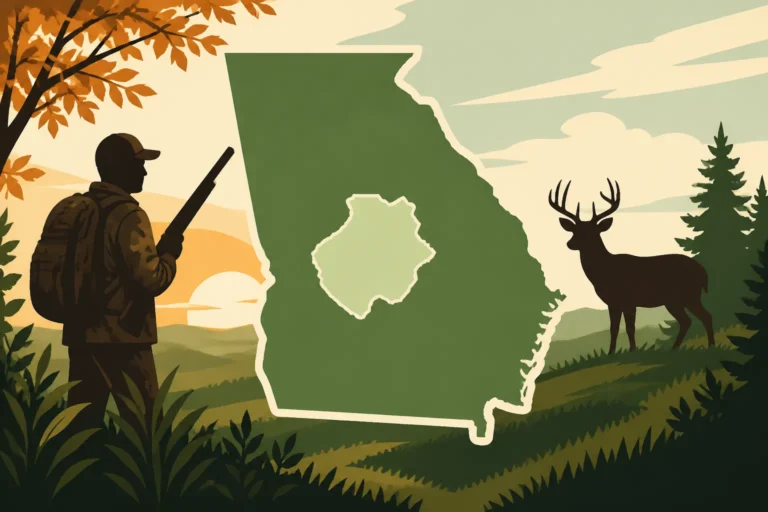
The Oconee National Forest comprises roughly 117,000 acres, scattered in more fragmented blocks than the Chattahoochee. These tracts are primarily situated in Greene, Jasper, Jones, and Putnam counties, among others. Unlike the steep climbs of the north, the Oconee features more gently rolling hills, extensive pine plantations, and rich bottomland hardwood forests along major river systems like the Oconee River. This blend of habitats makes it an excellent choice for deer, turkey, and feral hog hunting. Hunting Georgia's Piedmont Region often centers around these types of diverse landscapes.
The mix of pine and hardwood stands provides excellent cover and food sources. You'll find areas of young, thick pine regeneration that offer dense bedding for deer, alongside mature hardwood ridges that drop acorns in the fall. The river bottoms, with their nutrient-rich soils and consistent water sources, act as major travel corridors and feeding grounds. This variety allows for more diverse hunting tactics, from setting up on a Piedmont Field Edge to still-hunting through a mature oak flat. Hogs are particularly prevalent in these bottomland areas, offering year-round hunting opportunities.
Leveraging the Oconee's Scale for Diverse Hunting
The Oconee National Forest's acreage, though less than the Chattahoochee, still provides significant public hunting access. Its fragmented nature means that some areas are smaller and might be surrounded by private land, requiring careful attention to boundaries. However, the larger blocks, especially those connected to river systems, offer substantial room to roam. The diversity of cover types—from dense clear-cuts to open hardwoods—means you can adapt your strategy based on the season and game you're pursuing.
For deer hunters, understanding the mosaic of habitats is crucial. During the early archery season, you might focus on edges between thick cover and acorn-producing oaks. Later in the season, when food sources become scarcer, focusing on standing timber near water can be productive. Turkey hunters will find gobblers using both the pine plantations and the hardwood bottoms, often roosting near water or along high points. Using detailed mapping tools, like those offered by GoHunt, can help you pick apart these diverse habitats from home, identifying potential travel corridors or hidden pockets of cover before you ever step foot in the woods. This foresight can be invaluable when navigating the large, yet sometimes broken, landscape of the Oconee. Hunting Oconee River Bottomland Deer offers specific insights into targeting these prime areas.
Maximizing Your National Forest Hunting Experience
Hunting Georgia's National Forests, with their combined acreage, is an incredible experience that demands preparation and smart strategies. It’s not just about showing up; it’s about understanding the lay of the land, using the right tools, and planning your hunt effectively.
Essential Tools for Navigating Big Woods
Given the immense size and often remote nature of the Chattahoochee-Oconee National Forests, reliable navigation is paramount. A good GPS unit or a robust mapping application on your smartphone is no longer a luxury but a necessity. Platforms like onX Hunt provide detailed property lines, topo maps, and satellite imagery that can be downloaded for offline use—a lifesaver when you're deep in a hollow with no cell signal. Trust me, losing your bearings in 800,000+ acres of woods is not a situation you want to find yourself in. Using Georgia Outdoors Without Cell Service highlights this critical need.
Beyond digital tools, never underestimate the value of traditional navigation. A physical compass and a paper map serve as invaluable backups, especially if your electronics fail due to battery drain or damage. Knowing how to read a topographic map can help you identify subtle terrain features like saddles, benches, and drainages that funnel game, even when satellite imagery isn't perfectly clear. Think of it as having multiple layers of assurance when you’re pushing deep into these expansive public lands.
Planning and Scouting for Success
The vastness of the National Forests means you can't just stumble upon success. It requires diligent planning and scouting, both remotely and on the ground. Start by studying aerial maps and topographic features from the comfort of your home. Identify potential access points, remote ridges, creek bottoms, and areas with varied cover that might hold game. Look for pinch points, funnels, and natural travel corridors that animals might use. This pre-scouting phase is where you start to break down those hundreds of thousands of acres into manageable, huntable sections.
Once you have some target areas identified, the real work begins. Physical scouting on the ground, before the season opens, is critical. Look for fresh sign like tracks, rubs, scrapes, and droppings. Evaluate potential stand locations, consider wind directions, and plan your entry and exit routes. Pay attention to food sources—whether it's an oak flat dropping acorns or a clear-cut producing new browse. Scouting Georgia Public Land Before Season is not just a recommendation; it’s the secret weapon for consistent success on large public tracts. The more legwork you put in upfront, the better your chances of connecting with game in these sprawling, wild places.
Here's a quick overview of the key differences between the two main components of Georgia's National Forests for hunters:
| Feature | Chattahoochee National Forest | Oconee National Forest |
|---|---|---|
| Location | Predominantly North Georgia | Central Georgia |
| Primary Terrain | Mountains, steep ridges, deep hollows | Rolling hills, river bottoms, flatter plains |
| Dominant Cover | Mature hardwoods, rhododendron, pine | Pine plantations, mature hardwoods, swampy bottoms |
| Key Game Species | Deer, Bear, Turkey, Small Game | Deer, Turkey, Hogs, Small Game |
| Hunting Style | Backcountry, remote, challenging hikes | More accessible, varied, some fragmented parcels |
| Typical Challenge | Ruggedness, navigation, finding unpressured game | Understanding habitat mosaic, navigating property lines |
Conclusion
The Chattahoochee-Oconee National Forests offer nearly 867,000 acres of incredible public hunting land, a truly immense resource for Georgia's hunters. This vast acreage translates into opportunities for solitude, challenging hunts, and the pursuit of diverse game species, from mountain bucks and bears in the Chattahoochee to Piedmont deer and hogs in the Oconee. Understanding the sheer scale of these forests is your first step towards unlocking their potential. By leveraging modern mapping tools like onX Hunt and GoHunt, dedicating time to pre-season scouting, and preparing for the unique demands of hunting big woods, you can significantly enhance your experience and truly appreciate the wild expanses Georgia has to offer. So, grab your gear, study your maps, and get ready to explore the endless possibilities of our National Forests.
Disclaimer
This article is for general informational purposes only and does not constitute professional advice. Laws, prices and regulations vary by location and change over time. Consult a qualified professional for guidance on your specific situation.