Hunting Small Woodlots Near Suburban Atlanta
Suburban Atlanta small woodlots require managing limited acreage under twenty acres and heavy neighborhood pressure to successfully hunt whitetails.
Close the distance.
Archery, muzzleloader, and firearm techniques — calling, stand placement, still-hunting, spot-and-stalk, and the weapon rules that change at the state line.

Suburban Atlanta small woodlots require managing limited acreage under twenty acres and heavy neighborhood pressure to successfully hunt whitetails.

Georgia fencerows offer thermal cover and scarce natural browse, serving as secure travel routes and hideouts for late-season deer.

Decoy placement strategies for Georgia farm pond duck hunting help waterfowl hunters turn frustrating fly-bys into committed drops.
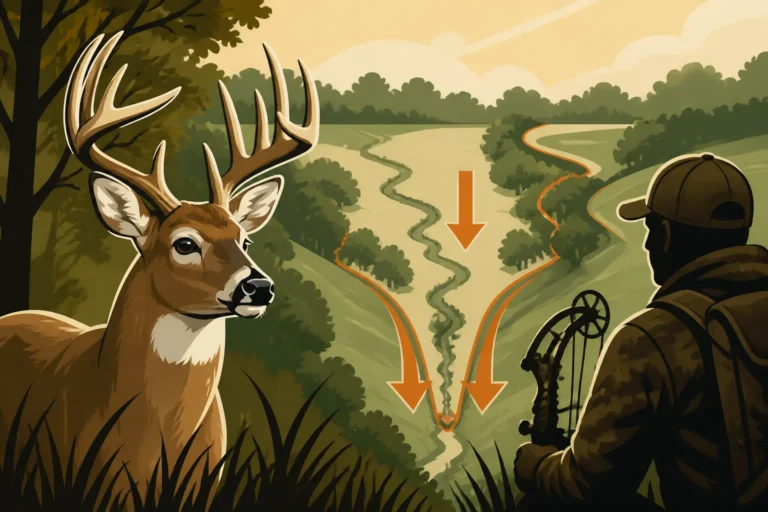
Georgia Piedmont creek bottom funnels concentrate deer movement through dense cover, water sources, and natural travel corridors.

Chattahoochee National Forest mountain deer hunting requires specialized scouting strategies, physical conditioning, and knowledge of steep elevation corridors.

Okefenokee Swamp fringe deer hunting strategies, habitat features, and water dynamics help hunters find success in Georgia wetlands.
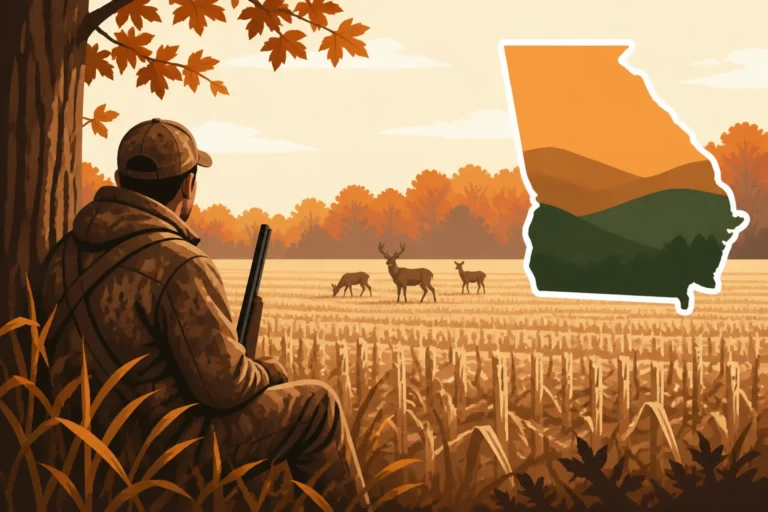
Georgia field edges become vital deer feeding areas during winter months as natural food sources in the woods completely disappear.
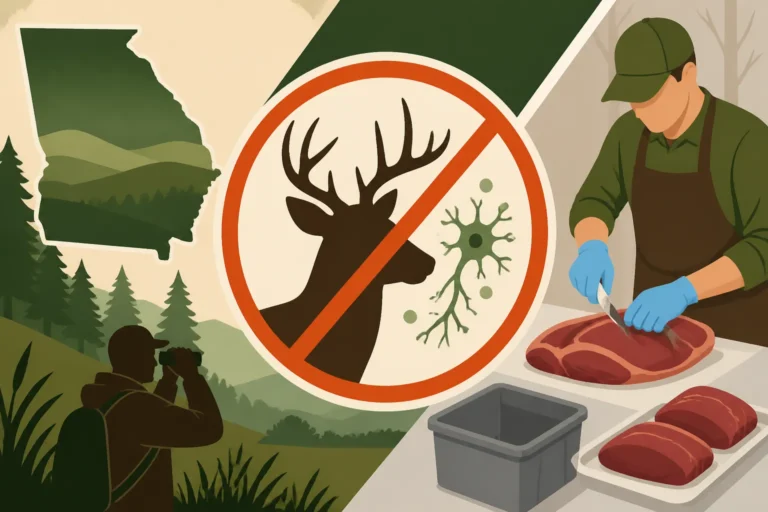
Georgia hunters harvesting deer in the Chronic Wasting Disease management area must follow specific wildlife department rules.

Online Georgia deer harvest reporting is a legal requirement that hunters must complete within twenty four hours of the kill.
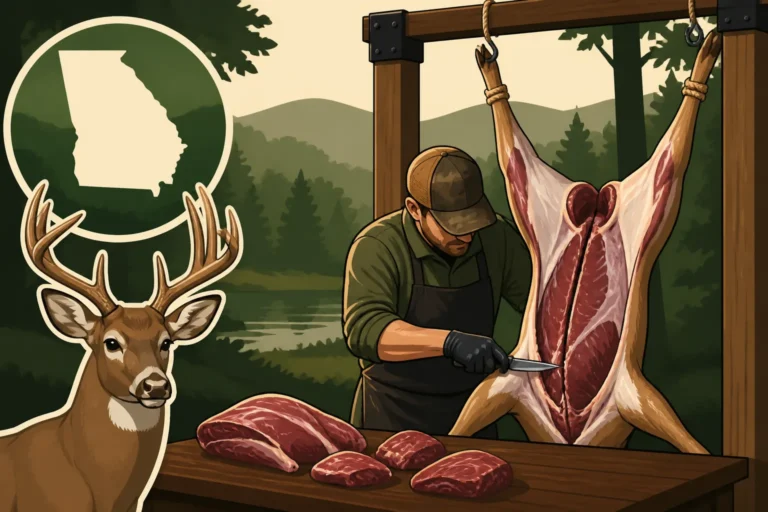
Deer butchering at a rustic camp provides practical steps to transform harvested game into clean, freezer-ready venison cuts safely.