Georgia Bison Before European Settlement
It’s easy to look out across Georgia’s landscapes today and imagine it’s always been this way – dense forests, rolling hills, and vast farmlands. But dig a little deeper, and you uncover a truly fascinating past, one where giants roamed. Many people are surprised to learn that Georgia, the Peach State, was once home to magnificent American bison, long before European settlers ever carved out the first towns or plantations. This guide will take you on a journey back in time, exploring the often-forgotten history of bison in Georgia, their ancient presence, the habitats they favored, and the complex reasons behind their eventual disappearance from our state.
A Forgotten Giant: Unpacking Georgia's Bison History
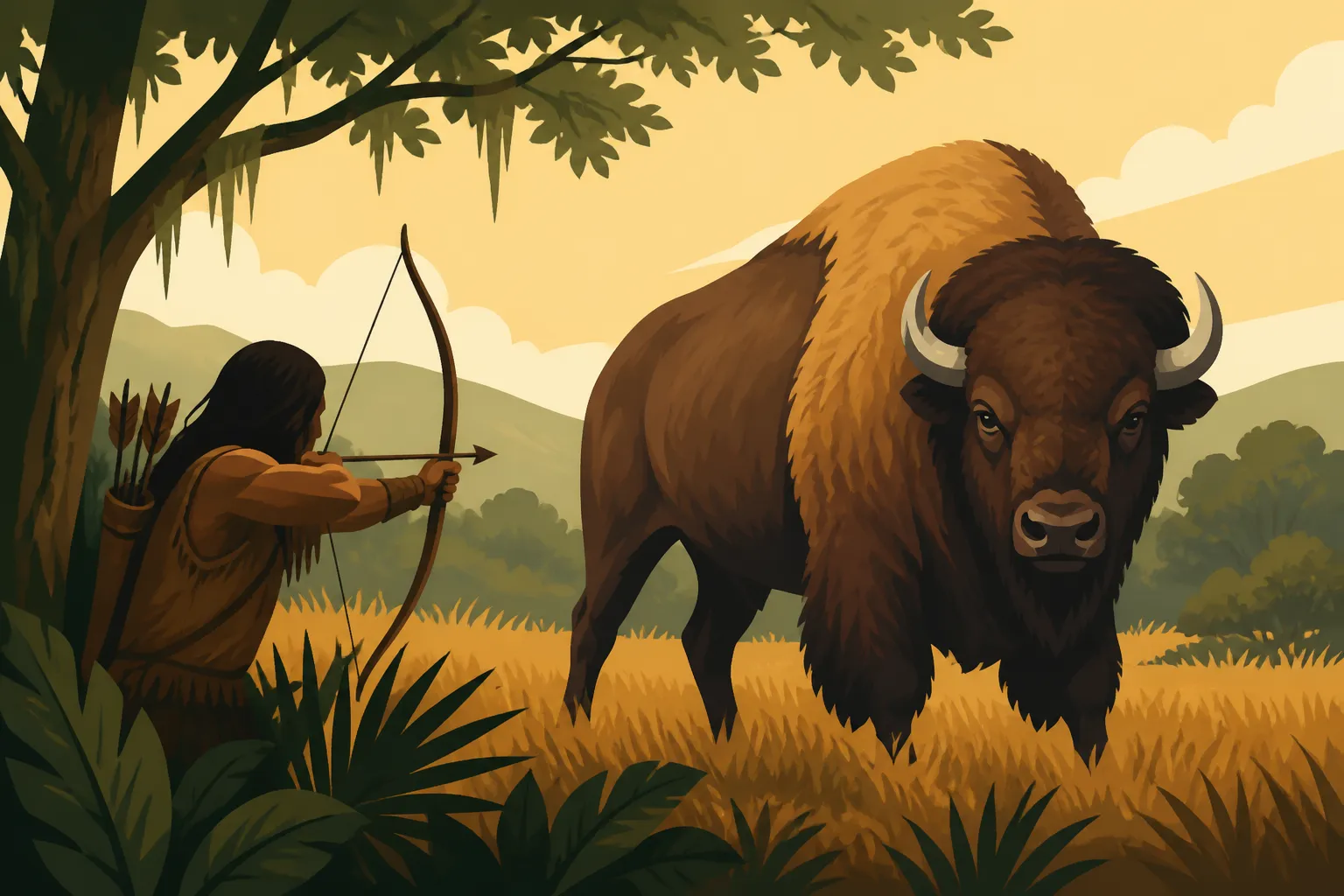
Imagine driving through what is now bustling Atlanta or the serene farmlands of the Piedmont. Picture instead herds of shaggy, powerful beasts, the American bison, moving through open woodlands and vast cane fields. It might sound like something out of a Western movie, but archaeological findings and early historical accounts confirm that these impressive animals were indeed a part of Georgia's natural heritage. This isn't just a quaint footnote; understanding their presence fundamentally changes how we view Georgia's pre-settlement ecology.
The Ghost of the Southeastern Prairies
For generations, the image of bison has been strongly tied to the Great Plains, conjuring images of vast, treeless expanses in states like Kansas or Montana. However, that narrow view obscures a much broader historical range. The southeastern United States, including Georgia, once supported significant populations of these massive grazers. These were not simply stray individuals, but established herds that played a vital role in shaping the region's ecosystems. They were an integral part of the megafauna that inhabited North America for millennia.
The ecosystems of the Southeast, while often depicted as primarily forested, included extensive open areas. These open areas were maintained by natural disturbances like fire, floods, and the grazing pressure of large herbivores, including bison. Without these processes, many of the unique plant communities we associate with Georgia today would have been very different. The presence of bison suggests a more dynamic and open landscape than we often visualize when thinking of primeval Georgia. It makes you wonder how different our hunting opportunities would be if these magnificent animals still roamed freely.
Dispelling the Myth: Bison in the Deep South
It's common to encounter skepticism when mentioning bison in Georgia, simply because it contradicts the popular narrative. But the evidence is clear. Early European explorers and settlers, often writing journals or letters, made mention of "wild cattle" or "buffalo" encountered in various parts of the Southeast. These weren't domesticated animals, but wild bison thriving in a different ecological setting than their western cousins. Their presence suggests a historical continuity with other large game species found across the state, such as white-tailed deer. White-Tailed Deer Across Georgia provides a look at a species that adapted and thrived alongside bison for centuries.
Furthermore, archaeological digs have uncovered bison remains in Georgia, offering tangible proof of their existence here. These bone fragments and teeth often date back thousands of years, confirming their long-term residency. Native American tribes, who lived in harmony with the land for millennia before European arrival, undoubtedly hunted bison and used their hides, meat, and bones, just as other tribes did across the continent. Their oral traditions and ancient campsites sometimes offer subtle clues to the presence of these animals, painting a picture of a richer, more diverse wildlife tapestry than we see today.
Tracing Their Ancient Footsteps: Georgia's Bison Range and Habitat
Understanding where bison lived in Georgia isn't just about drawing lines on a map; it's about understanding the specific types of habitats that sustained them. Unlike the vast, treeless plains, Georgia offered a mosaic of environments, and bison were adaptable enough to thrive within them. Their movements shaped these landscapes, creating and maintaining the very features they relied upon.
Rivers, Canebrakes, and Open Woodlands
In Georgia, bison weren't necessarily living on wide-open grasslands in the same way they did further west. Instead, their preferred habitats were likely a mix of open woodlands, canebrakes, and riparian zones along major river systems. The river floodplains, with their rich soils, supported lush growth, including extensive cane stands (a type of native bamboo). These canebrakes provided excellent forage and cover, and bison were known to carve out trails through them, creating natural clearings that benefited other wildlife.
Open woodlands, maintained by frequent low-intensity fires set by lightning or Native Americans, offered grasses and forbs between widely spaced trees, providing both food and shelter from the intense summer sun. These fire-maintained landscapes were far more widespread historically than they are today. Imagine Hunting South Georgia Plantation Country with these open, park-like forests, but with bison grazing amongst the longleaf pines. Areas of the Piedmont and Coastal Plain, particularly where river systems created fertile bottoms and natural clearings, would have been prime bison territory.
Archaeological and Historical Clues
Our knowledge of Georgia's bison past comes from a combination of scientific study and historical records. As mentioned, archaeological excavations occasionally unearth bison bones, particularly in areas near ancient Native American settlements or natural features like salt licks. These discoveries provide direct physical evidence, confirming their presence and sometimes offering insights into their diet and health. These findings are often curated by state museums and universities, offering a window into a truly lost world.
Beyond the dirt, historical documents from the early colonial period often provide the most vivid, albeit brief, accounts. Explorers, missionaries, and early settlers traversing the interior of Georgia sometimes wrote of encountering these large "buffalo." While these accounts might lack the scientific rigor we'd expect today, their consistency across different regions and time periods strengthens the case for a significant bison presence. These historical mentions often describe them in conjunction with other large game, such as Georgia Elk History and Extirpation, painting a picture of a North American wilderness teeming with impressive animals that are now largely gone.
The Vanishing Herd: Factors Leading to Extirpation
The disappearance of bison from Georgia, and indeed much of the eastern United States, was a complex tragedy driven by a combination of factors. It wasn't a single event but a cumulative effect of human activity and environmental change that slowly but surely erased these magnificent animals from the landscape. This story offers a sobering lesson in ecological vulnerability.
Early European Impact and Disease
One of the most immediate and devastating impacts of European arrival was the introduction of new diseases. Just as Native American populations were decimated by unfamiliar pathogens, so too were some wildlife species. While direct evidence specific to bison in Georgia can be hard to isolate, it's widely accepted that diseases carried by European livestock, such as anthrax or various bovine illnesses, could have jumped to wild bison herds, for which they had no natural immunity. A widespread epidemic could have quickly reduced numbers, weakening herds and making them more vulnerable to other pressures.
Beyond disease, early hunting practices played a significant role. While Native Americans had hunted bison sustainably for thousands of years, European settlers brought different motivations and technologies. The desire for hides, meat, and even sport hunting led to increased pressure on herds. Unlike later western hunts, eastern bison weren't targeted on an industrial scale for hides alone, but persistent hunting by a growing human population, combined with new diseases, made their numbers dwindle steadily. This early, unregulated hunting contrasts sharply with today's carefully managed game seasons, which aim to sustain populations.
Habitat Loss and Fragmented Landscapes
Perhaps the most enduring impact was habitat loss. As European settlements expanded, forests were cleared for agriculture, towns, and roads. The open woodlands and canebrakes that bison depended on were converted into fields for crops like cotton and corn. This not only directly destroyed their habitat but also fragmented what remained, isolating smaller herds and making it impossible for them to roam freely or find sufficient forage. Such fragmentation can lead to inbreeding and reduced genetic diversity, further weakening a population.
The suppression of natural fire regimes also contributed to habitat change. Fire, as mentioned, was crucial for maintaining the open character of many southeastern ecosystems. As settlers began to extinguish wildfires to protect their property, forests grew denser, and cane fields were replaced by less desirable vegetation, reducing the quality and quantity of bison forage. This ecological shift was gradual but relentless, creating a landscape that could no longer support the needs of a large, wide-ranging grazer like the bison. Understanding these historical changes helps us appreciate current conservation efforts in areas like Georgia Wildlife Management Areas which strive to restore and maintain diverse habitats.
Echoes in the Landscape: Lasting Legacies and Modern Understanding
Though American bison no longer roam wild in Georgia, their historical presence has left subtle, yet significant, marks on our understanding of the state's natural history. From linguistic clues to ecological insights, the ghost of the Georgia bison continues to inform our appreciation of the past and our efforts for the future.
Place Names and Oral Histories
While not as common as in some other states, a few place names in Georgia might subtly hint at the former presence of bison. "Buffalo Creek," "Buffalo River," or similar names, even if they refer to domestic cattle or are simply descriptive, could in some cases be echoes of where these wild bovines once watered or roamed. These linguistic relics serve as small, tantalizing clues to a forgotten past. Native American oral traditions, though often fragmented or lost, may also contain stories or references to these majestic animals, passed down through generations. These stories, if they exist, would be invaluable windows into the deep history of Georgia's wildlife.
The memory of such large animals also underscores the historical richness of Georgia's game species, which today are primarily represented by white-tailed deer and wild turkeys. Wild Turkeys in Georgia and Georgia's Twelve-Deer Bag Limit highlight the robust populations we have now, but these thrive in a different ecological configuration than the one that sustained bison. The sheer scale of pre-settlement biodiversity, including megafauna like bison and elk, was truly awe-inspiring.
The Ecological Hole Left Behind
The extirpation of bison left an undeniable ecological void in Georgia. As large grazers, they played a critical role in nutrient cycling, seed dispersal, and maintaining open habitats. Their grazing patterns influenced plant communities, creating a mosaic of different successional stages that benefited a wide range of other species, from insects to birds to smaller mammals. Their wallows, created by rolling in the dirt, could become temporary ponds, offering micro-habitats for amphibians and aquatic invertebrates.
The loss of this keystone species changed the trajectory of Georgia's ecosystems. Forests became denser, certain plant species that benefited from grazing or disturbance declined, and the overall structure of many habitats shifted. While other species, like deer, certainly fulfilled some browsing roles, none could fully replicate the broad ecological impact of a herd of bison. The current landscape, even in its wilder corners like the Chattahoochee-Oconee National Forest Hunting areas, is a shadow of its pre-settlement self. Understanding this "ecological hole" helps modern conservationists appreciate the interconnectedness of species and the vital importance of protecting and restoring entire ecosystems, not just individual species. It also reminds us that while we manage current populations, like those highlighted in Georgia Deer Population Estimate, the ecological conditions that shaped them have changed dramatically over time.
| Species | Estimated Pre-Settlement Status in Georgia | Primary Habitat | Ecological Role |
|---|---|---|---|
| American Bison | Present, though patchy but significant | Open woodlands, cane-brakes, river floodplains | Grazing, seed dispersal, habitat creation via wallows/trails |
| Elk | Present, likely in northern mountainous regions | Forests, clearings, high elevation meadows | Browsing, forest shaping, minor grazing |
| White-tailed Deer | Abundant, widespread | Diverse, adaptable to nearly all habitats | Browsing, seed dispersal, selective herbivory |
| Feral Hogs | Absent (Introduced Post-Settlement) | N/A | N/A (Modern invasive species with destructive impact) |
Disclaimer
This article is for general informational purposes only and does not constitute professional advice. Laws, prices and regulations vary by location and change over time. Consult a qualified professional for guidance on your specific situation.