Gray Versus Fox Squirrels in Georgia
Hunting squirrels in Georgia often brings up a common question among seasoned hunters and newcomers alike: are you chasing gray squirrels or fox squirrels today? While both are fantastic game animals that offer a challenging and rewarding hunt, they have distinct characteristics and preferred habitats that can drastically change your approach. This guide will help you understand the differences between these two beloved Georgia bushy-tails, from their appearance and behavior to where you're most likely to find them and how best to hunt them, so you can tailor your strategy for a more successful day in the woods.
The Eastern Gray Squirrel: Georgia's Nimble Forest Dweller
The Eastern Gray Squirrel (Sciurus carolinensis) is probably the squirrel you think of first when someone mentions these bushy-tailed rodents. They are incredibly common across Georgia, from the deep woods to urban parks, and they represent a true staple of small game hunting. They're fast, agile, and always seem to be one step ahead, making them a thrilling target.
Identifying the Elusive Gray
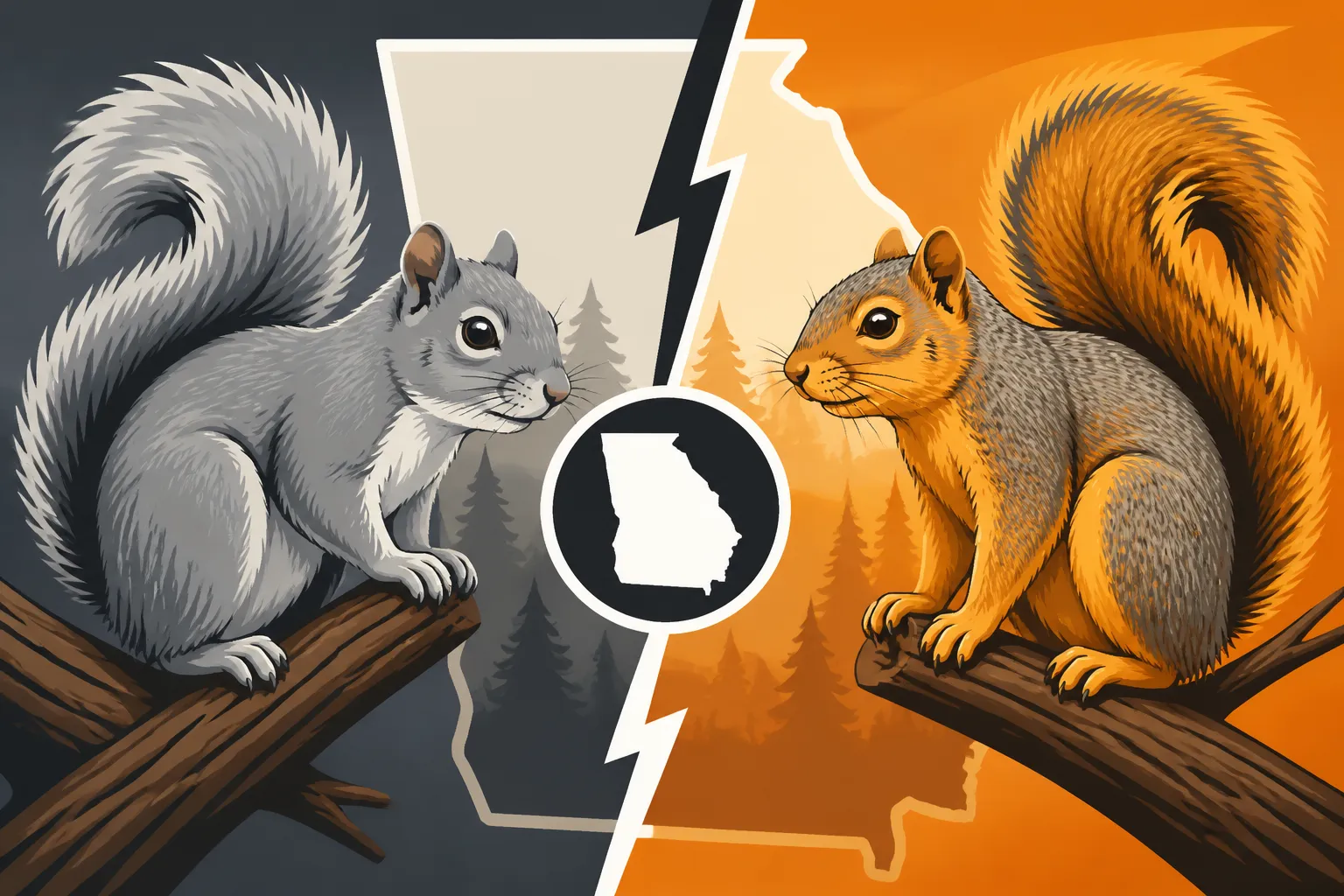
Grays are generally smaller and more slender than their fox squirrel cousins. Their fur is typically a grizzled gray on the back, often with reddish-brown tinges on their sides, heads, and feet. Their undersides are usually white or light gray. The most distinguishing feature, beyond their size, is their tail: it's full, bushy, and often has a white fringe, which they use extensively for balance, communication, and even as a bit of a sunshade or umbrella. An adult gray squirrel will typically weigh less than a pound and measure around 18 inches from nose to tail tip.
Their behavior is often characterized by a nervous energy. You'll see them scampering up and down tree trunks with incredible speed, making daring leaps from branch to branch. When alarmed, a gray squirrel will often "bark" with a series of chattering calls, alerting other squirrels and sometimes even deer to your presence. They are highly arboreal, meaning they spend most of their lives in trees, nesting in tree cavities or building leaf nests, called dreys, high in the canopy.
In terms of diet, gray squirrels are opportunistic foragers, but they have a strong preference for nuts, especially acorns, hickory nuts, and pecans. You'll find them active year-round, burying nuts for later retrieval, which plays a vital role in seed dispersal and forest regeneration. This constant search for food keeps them moving, making them a dynamic target.
Hunting Considerations for Grays
Hunting gray squirrels is a fantastic way to sharpen your woodsman skills and get some quality time afield, especially before or after big game seasons. The season for squirrels in Georgia is generous, often running from late summer through late winter, giving you plenty of opportunities. They have a liberal bag limit, so you can often fill your game bag with a successful hunt.
Still-hunting or stalking is a very effective tactic for grays. This involves moving slowly and quietly through the woods, pausing frequently to scan the trees and listen for their distinctive chattering or the rustle of leaves as they forage. Focusing on areas with mature hardwoods, especially oak or hickory stands, can be particularly productive. When you spot one, try to get a clear shot before it can disappear around the back of a tree. They can be incredibly frustrating to pin down once they decide to play hide-and-seek.
For equipment, a .22 caliber rifle is a popular choice, offering quiet operation and precise shot placement crucial for headshots, which many hunters prefer for meat preservation. Shotguns, typically in 20-gauge or .410, loaded with small shot like 6s or 7½s, are also excellent, especially for fast-moving targets in dense cover. Remember, persistence is key; a gray squirrel that seems to have vanished often reappears a few minutes later if you stay still. Consider using a mapping tool like GoHunt to pinpoint promising stands of mast-producing trees on public land before you head out.
The Fox Squirrel: Georgia's Larger, More Colorful Cousin
The Fox Squirrel (Sciurus niger) is Georgia's largest tree squirrel, and encountering one is always a treat. They might not be as numerous as grays in many areas, but their impressive size and stunning variations in coloration make them stand out.
Distinguishing the Striking Fox Squirrel
Fox squirrels are substantially larger and heavier than gray squirrels, often weighing between 1.5 to 2.5 pounds and measuring up to 26 inches long, including their impressive tail. Their coloration is incredibly diverse, much more so than the gray squirrel. You can find them in various shades: some are predominantly grizzled gray with rusty-red undersides, while others might be nearly black with white noses and ear patches (often called "black squirrels"). Still others sport vibrant combinations of orange, tan, and brown, making them truly striking to behold. No matter the color, their tail is long and bushy, often with a reddish tint, hence their name.
Their behavior differs significantly too. Fox squirrels are generally slower, more deliberate, and often more terrestrial than gray squirrels. While they can climb trees with ease, they spend a considerable amount of time foraging on the ground, often in open, park-like settings. They are also typically more solitary than gray squirrels, which often gather in small groups. When startled, a fox squirrel might run up a tree and flatten itself against a branch, relying on its camouflage rather than frantic escape.
Their preferred habitats lean towards more open pine forests, pine-oak woodlands, and agricultural edges rather than dense, continuous hardwoods. They thrive where there's a mix of mature trees for nesting and escape, but also plenty of open ground for foraging. Longleaf pine ecosystems, common in South Georgia, are classic fox squirrel territory. They also enjoy agricultural fields like corn or pecans, where they can find abundant food sources.
Hunting Considerations for Fox Squirrels
Hunting fox squirrels demands a slightly different mindset than hunting grays. Their lower density in some areas and their less frantic behavior means you might not get as many shots, but the reward of bagging one of these magnificent squirrels is immense. Like grays, they fall under the general squirrel season and bag limits, which are usually quite generous, although check local regulations as there can sometimes be regional variations.
A spot-and-stalk approach is particularly effective for fox squirrels due to their often more deliberate movements and ground-foraging habits. Focus on areas with mature pine stands, especially those with an open understory, or the edges of agricultural fields adjacent to timber. You might spend more time glassing an area with binoculars, slowly scanning the ground and tree trunks for movement or their distinctive forms. Patience is a virtue here; a fox squirrel might spend a long time feeding in one spot before moving on. Walking old logging roads or clear-cut edges can be productive, as they offer good visibility and access to diverse habitat types. Using a tool like GoHunt can help you identify these specific habitat types on public lands, such as areas managed for longleaf pine or those with suitable mixed timber stands.
Similar to gray squirrels, a .22 rifle is an excellent choice for fox squirrels, especially when they are foraging on the ground or sitting still in a tree. The larger body mass of a fox squirrel means good shot placement is still paramount. Shotguns can also be effective, particularly for those quick shots when a squirrel finally decides to bolt for safety. Remember, while they are less frenetic than grays, they are still wild animals and can move surprisingly fast when they need to.
Key Differences and Overlap: Why It Matters to Hunters
Understanding the distinctions between gray and fox squirrels isn't just about identifying them; it's about becoming a more effective and knowledgeable hunter. Their differing preferences dictate where you should spend your time, how you should move, and even the type of equipment that might give you an edge.
Habitat Preferences and How They Inform Scouting
The biggest takeaway for hunters is the habitat difference. If you're busting through dense bottomland hardwoods or a mature oak stand, you're most likely encountering gray squirrels. They thrive in those thick canopies and depend on the consistent mast crops. Conversely, if you're walking through more open pine woods, especially those with controlled burns or scattered hardwoods, and notice squirrels on the ground, you're probably in fox squirrel territory. Squirrel Hunting Georgia Bottomland Hardwoods provides some great insights into targeting grays in those specific environments.
Using detailed mapping applications, such as the Georgia Outdoors app or GoHunt, becomes invaluable here. You can scout digitally before you ever step foot in the woods, looking for the specific timber types and ecological features that attract each species. Identifying these distinct ecological niches allows you to tailor your scouting and hunting efforts, maximizing your chances of success. For example, if your mapping app shows extensive mature hardwoods, you'd plan for a gray squirrel hunt. If it reveals large sections of open pine savanna, you'd target fox squirrels.
Behavior and Hunting Strategy Adjustments
The behavioral differences also demand a shift in tactics. Gray squirrels require quick reflexes and the ability to track fast-moving targets. They're often "bushy-tail blurs" that challenge your marksmanship. Your movement should be slow and deliberate, but your reaction to a spotted squirrel needs to be swift. You might even find success with small game drives on private land or with a couple of hunting buddies on public land, pushing squirrels towards each other, though this is less common for squirrels than for other small game like rabbits. For those interested in other small game, reading up on Rabbit Hunting Georgia Fencerows can provide some crossover tactical ideas.
Fox squirrels, being more stately and often less prone to panic, allow for a more patient, methodical hunt. You can often watch them for a few minutes, observing their routine, before attempting to get into a shooting position. Their habit of freezing or "hugging" a tree allows for more time to set up a stable shot. This is where mastering still-hunting or spot-and-stalk techniques truly pays off. If you're on public land, remember to check Georgia Public Land Hunting Hours to ensure you're hunting within legal times.
Conservation Status and Management
Both gray and fox squirrel populations in Georgia are generally robust, offering ample hunting opportunities. However, like all wildlife, their numbers can fluctuate based on habitat availability, mast crop success, and other environmental factors. Georgia's wildlife management efforts, often supported by hunting license fees, play a crucial role in maintaining healthy populations and habitats.
Understanding habitat management, such as prescribed burns in pine forests which benefit fox squirrels, or selective timber harvesting that maintains diverse hardwood stands for grays, can give you clues as to where the best hunting might be. It's always a good idea to stay informed about current wildlife trends and any potential disease concerns by consulting resources like Georgia Wildlife Disease Monitoring. The annual Georgia Squirrel Harvest Numbers can also offer insight into population health and hunting success rates across the state.
| Feature | Eastern Gray Squirrel | Fox Squirrel |
|---|---|---|
| Size | Smaller (avg. 1 lb, 18 inches) | Larger (avg. 1.5-2.5 lbs, up to 26 inches) |
| Coloration | Mostly grizzled gray, white belly, white-fringed tail | Highly variable (gray, red, black, tan, orange); reddish tint on tail |
| Behavior | Very agile, fast, arboreal, chattery, often social | Slower, more deliberate, more terrestrial, often solitary |
| Primary Habitat | Dense hardwood forests (oak, hickory) | Open pine forests, pine-oak mixes, agricultural edges |
| Vocalization | Frequent chattering and "barks" | Less vocal, often quieter |
| Alarm Response | Frantic escape up trees, hiding on far side | May freeze, flatten against tree, or slowly move away |
Enjoying the Hunt and the Harvest
Squirrel hunting is often considered an entry point into hunting, but it offers deep satisfaction for hunters of all experience levels. It’s a chance to connect with nature, hone your skills, and put delicious wild game on the table.
Ethical Hunting Practices for Squirrels
Regardless of which squirrel species you are pursuing, ethical hunting practices are paramount. This includes knowing and adhering to all Georgia hunting regulations, including season dates and bag limits. Always strive for a quick, clean kill, which often means waiting for a clear shot at the head or vitals. Using the appropriate firearm and ammunition for the job, as well as practicing your shooting, will help ensure humane harvests. Remember, obtaining a Georgia Resident Hunting License Options is the first step, and if you're new to hunting, completing your Georgia Hunter Education Requirements is essential not just for legal compliance but for safe and ethical practices.
Respecting the land, whether public or private, is also a critical part of ethical hunting. Pack out everything you pack in, leave no trace, and always be aware of your surroundings, especially if other hunters or outdoor enthusiasts are in the area. Scouting Georgia Public Land Before Season is not only about finding game but also about understanding the terrain and potential interactions with others.
Field Care and Culinary Delights
After a successful hunt, proper field care ensures the best possible table fare. In Georgia's often warm climate, especially during early seasons, cooling your game quickly is important. Many hunters simply gut the squirrel and place it in a cooler with ice, or in a game bag to allow for airflow, immediately after the retrieve.
Squirrel meat is lean, flavorful, and incredibly versatile. It can be prepared in countless ways, from classic fried squirrel and gravy to slow-cooked stews, pot pies, or even barbecue. The meat is mild, often described as a cross between rabbit and dark-meat chicken, making it palatable even for those less accustomed to wild game. It’s a testament to the rewards of small game hunting, offering both an enjoyable pursuit and a delicious meal. Whether you prefer grays or fox squirrels, the experience of harvesting and preparing your own food from Georgia's woods is one that truly defines the hunting tradition.
Disclaimer
This article is for general informational purposes only and does not constitute professional advice. Laws, prices and regulations vary by location and change over time. Consult a qualified professional for guidance on your specific situation.