Red Wolves in Coastal Georgia History
For many of us who cherish Georgia's wild places, there's a certain fascination with the creatures that once roamed our woods and wetlands, long before our time. We often talk about deer, bears, and turkeys, but what about the ghosts of predators past? This guide delves deep into the fascinating, albeit tragic, history of red wolves in coastal Georgia, helping us understand their ecological impact and what their disappearance means for today's wildlife landscape.
The Historical Presence of Red Wolves in Georgia
It's easy to look at Georgia's modern landscape and imagine it's always been as it is today. But rewind a few centuries, and the natural world here was profoundly different. Among the most striking differences was the presence of the red wolf, a truly magnificent and enigmatic canine that once played a crucial role in the state's ecosystems, particularly along its extensive coastal regions. Their story is intertwined with the wildness of Georgia itself.
Tracing Their Ancestry and Range
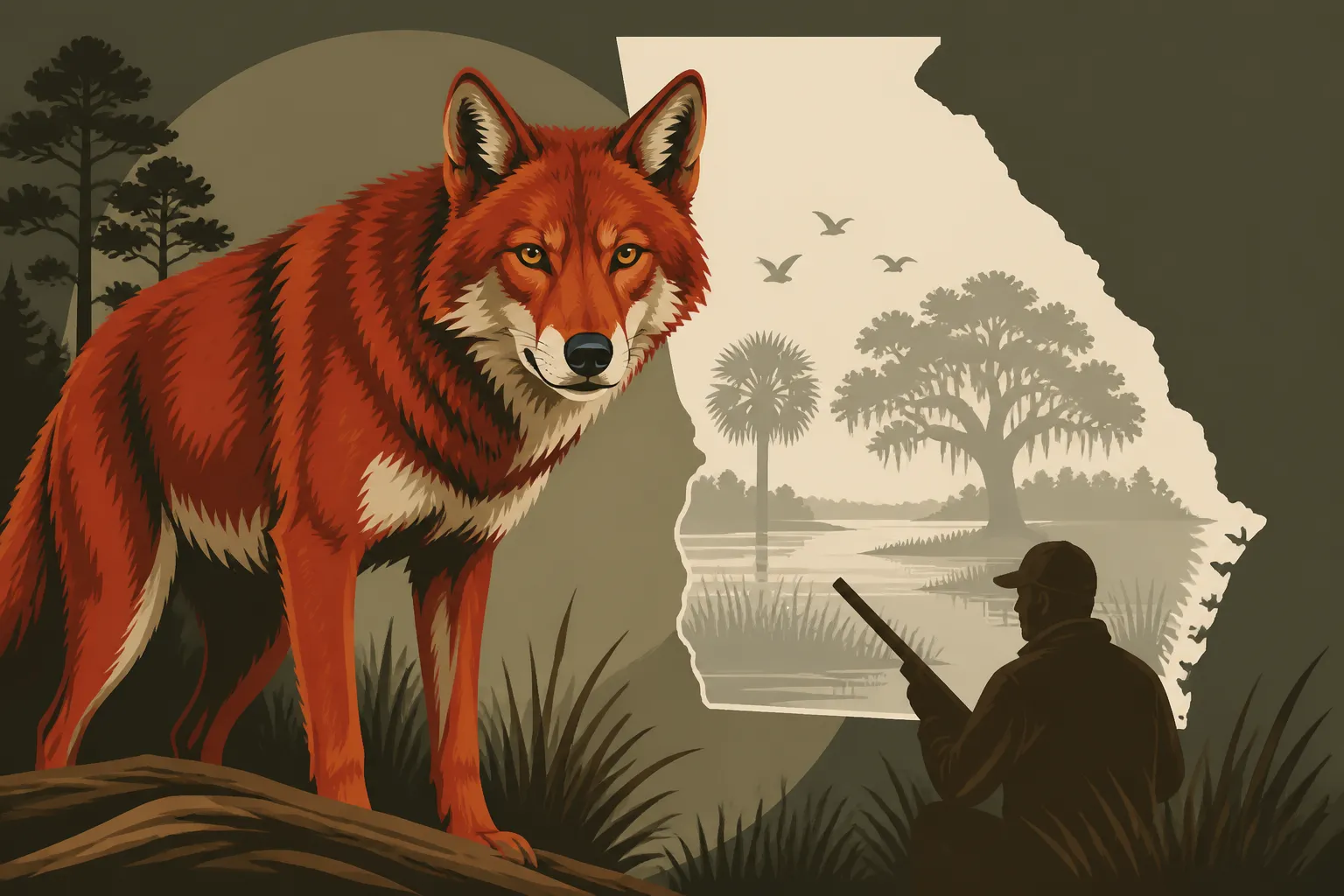
The red wolf, Canis rufus, is a truly North American species, distinct from its larger gray wolf cousins. Historically, their range was vast, stretching across the southeastern United States from Texas to Florida, and north into the Ohio River Valley. In Georgia, their primary stronghold wasn't necessarily the dense northern mountains, but rather the sprawling coastal plain, the pine forests, and particularly the rich, biodiverse environments of the coastal regions and barrier islands. Imagine the deep swamps, the longleaf pine savannas, and the maritime forests of places like the Okefenokee and the Altamaha River basin – these were prime red wolf territories. They were adaptable animals, capable of navigating everything from dense bottomland hardwoods to open pinewoods, thriving on the abundance of prey found in these diverse habitats. Understanding their historical distribution is key to appreciating the interconnectedness of Georgia's historical ecosystems. Tools like GoHunt can help modern hunters visualize historical ranges by comparing current game distribution with historical ecological data, though for red wolves, this requires looking at pre-settlement maps.
Their genetic lineage is a subject of ongoing scientific study, but it's widely accepted that red wolves are distinct, not simply hybrids of coyotes and gray wolves, but a unique species with a long history on this continent. Their physical characteristics reflected their environment: a leaner build than gray wolves, typically reddish-brown fur, and an intermediate size that allowed them to effectively hunt medium-sized prey without needing the sheer power of a pack of large gray wolves. This made them perfectly suited for the rich but often dense habitats of the Southeast, where speed and agility were just as important as brute force.
The Ecosystem Role of a Top Predator
Every ecosystem functions like a complex machine, and predators like the red wolf are critical gears in that machinery. In coastal Georgia, red wolves were apex predators, meaning they sat at the top of the food chain. Their primary prey included white-tailed deer, which were abundant, but they also took advantage of smaller mammals like rabbits, raccoons, and even wild turkeys. This dietary diversity allowed them to maintain a stable presence, adapting to what was most readily available in a given season or year. Their hunting strategies, often involving small family packs, were highly effective at keeping herbivore populations in check.
The absence of an apex predator like the red wolf creates a ripple effect throughout the ecosystem, a phenomenon known as a trophic cascade. Without these natural controls, populations of deer and other herbivores can increase unchecked, leading to overbrowsing. This damages vegetation, impacts plant diversity, and can even degrade the habitat for other species that rely on specific plant communities. Think about how a healthy forest thrives with a balanced ecosystem; the red wolf was a key player in maintaining that balance in Georgia's historical landscape. Their presence influenced where deer browsed, how often they moved, and even their overall health, as wolves would naturally target the weak or sick, contributing to a stronger, more resilient prey base. This natural selection pressure is vital for the long-term health of any game species.
Factors Leading to the Red Wolf's Decline
The story of the red wolf in Georgia, much like across the rest of the Southeast, is a sobering tale of human expansion and misunderstanding. What was once a thriving population gradually succumbed to pressures that, by the mid-20th century, pushed the species to the very brink of extinction. It wasn't a single event but a cumulative effect of several interconnected factors that sealed their fate.
Habitat Loss and Human Encroachment
As European settlers moved into Georgia and began to transform the landscape, the red wolf's natural habitat began to shrink dramatically. Vast tracts of longleaf pine forest were cut for timber, swamps were drained for agriculture, and coastal areas were developed. This wasn't just about losing trees; it was about the loss of entire ecological communities that provided food, shelter, and breeding grounds for the wolves and their prey. Imagine the dense, wild cover of the Altamaha River bottoms, now crisscrossed by roads and dotted with farms. This fragmentation of habitat isolated wolf populations, making them more vulnerable to other threats.
The growth of human settlements also brought with it an increase in livestock farming. Where wolves saw deer, farmers saw cows and chickens, leading to direct conflicts. Wolves, being opportunistic predators, sometimes preyed on domestic animals, which quickly put them at odds with a growing human population. This proximity led to a widespread perception of wolves as pests or threats, intensifying efforts to eradicate them. The sheer scale of development, from urban sprawl around places like Savannah and Brunswick to the agricultural expansion across the coastal plain, left fewer and fewer refuges where red wolves could exist undisturbed. This long-term habitat destruction is a major theme in the history of many game species in Georgia, including the significant decline of wild bobwhite quail populations.
The Impact of Predator Control Programs
The perceived threat of red wolves to livestock and, in some cases, to human safety (though documented attacks were incredibly rare), fueled widespread and often brutal predator control programs. These efforts were not just localized but often sanctioned and even encouraged by state and federal governments. Trapping, poisoning, and indiscriminate shooting became common practices. Hunters, farmers, and even government agents participated in these campaigns, often with bounties offered for wolf pelts or carcasses. This relentless persecution was incredibly effective, perhaps too effective, in reducing wolf numbers.
These programs didn't just target specific problem animals; they aimed for total eradication across broad areas. The idea was to eliminate the species from the landscape entirely, seen as a way to "tame" the wilderness and protect human interests. Unfortunately, the understanding of ecological balance and the crucial role of predators was limited at the time. The focus was purely on removal, without considering the long-term consequences for the ecosystem. The effectiveness of these campaigns, combined with habitat loss, meant that by the mid-20th century, the wild red wolf population in Georgia was effectively extirpated. Their numbers dwindled to such an extent that finding a pure red wolf in the wild became virtually impossible, a stark contrast to the robust population of Coyotes and Predators in Georgia we see today.
Hybridization with Coyotes
As red wolf populations became severely fragmented and isolated, another insidious threat emerged: hybridization with coyotes. Coyotes, a species historically found in the American West, began expanding their range eastward in the early 20th century, filling the ecological void left by the disappearing red and gray wolves. Being smaller and more adaptable, coyotes could thrive in landscapes increasingly modified by humans.
When coyote populations met dwindling red wolf populations, particularly lone wolves or small, isolated groups, interbreeding became inevitable. With limited options for finding their own kind, red wolves bred with coyotes, leading to a dilution of the red wolf gene pool. This genetic swamping meant that even if a wolf-like animal was spotted, it was increasingly likely to carry coyote DNA, making it less of a pure red wolf and more of a hybrid. This wasn't necessarily a hostile takeover by coyotes but a consequence of the red wolf's extreme rarity and isolation. The ability to distinguish between a pure red wolf, a coyote, and a hybrid became increasingly difficult for researchers and conservationists, further complicating efforts to save the species. It's a key reason why efforts to understand How Many Coyotes Georgia Has and their distribution are so important for modern wildlife management.
Failed Reintroduction Efforts and Conservation Challenges
By the time the scientific community fully understood the dire situation of the red wolf, it was almost too late. Intense efforts began in the latter half of the 20th century to save the species, but the road to recovery was, and continues to be, fraught with immense challenges. While Georgia wasn't the primary site for initial reintroduction attempts, its historical range and unique ecosystems made it a significant consideration, highlighting the difficulties inherent in bringing an apex predator back from the brink.
Early Conservation Attempts and Setbacks
In the 1970s, the U.S. Fish and Wildlife Service embarked on a radical plan: capture the last remaining pure red wolves from the wild, mostly from coastal Texas and Louisiana, to begin a captive breeding program. This desperate measure was successful in establishing a foundational population for future reintroductions. From this captive stock, the first experimental reintroduction occurred in North Carolina's Alligator River National Wildlife Refuge in 1987. This was a landmark event, marking the first time a top predator had been reintroduced to its historical range.
While some initial reintroductions showed promise, especially in North Carolina, the challenges quickly mounted. One of the biggest hurdles was, again, the issue of hybridization with coyotes, which continued to be a problem even in managed reintroduction areas. Wolves would disperse outside protected areas, encounter coyotes, and breed. Human tolerance also remained a significant issue; some landowners were resistant to having wolves on or near their property, leading to illegal killings and political pressure. This public perception and conflict mirror some of the challenges faced in managing other large animals, such as Georgia's Black Bear Population. Despite incredible dedication from conservationists, these early efforts faced an uphill battle against deep-seated historical prejudices and biological complexities.
The Difficulties of Reintroducing a Wild Canine
Reintroducing any species is incredibly complex, but for a top predator like the red wolf, the challenges are magnified. First, there's the sheer space requirement. Red wolves need large, interconnected landscapes with abundant prey and minimal human disturbance to thrive. Finding such expansive, suitable habitat in the increasingly developed southeastern U.S. is incredibly difficult. While Georgia boasts vast areas of Public Hunting Land in Georgia, including large tracts of national forest and wildlife management areas, these are often not contiguous enough or face sufficient human activity to support a free-ranging, wild wolf population without constant conflict.
Then there's the genetic purity. Ensuring that reintroduced wolves remain genetically distinct from coyotes requires intensive management, including trapping and sterilizing coyotes within the reintroduction zones, and sometimes even removing hybrid offspring. This level of intervention is costly, labor-intensive, and often controversial. Social challenges are equally profound. Educating the public about the ecological benefits of wolves and fostering coexistence is a long-term endeavor. Without strong community support and a commitment to protecting these animals, reintroduction efforts are prone to failure. The historical animosity towards predators, rooted in centuries of folklore and perceived threats, doesn't disappear overnight. Understanding these human dimensions is as crucial as understanding the biology of the species itself. GoHunt, with its mapping and landowner contact features, indirectly highlights the challenges of finding truly wild, undisturbed land for such species.
| Characteristic | Red Wolf (Historical) | Coyote (Modern Georgia) | Gray Wolf (Western US) |
|---|---|---|---|
| Size | Medium-large | Medium | Large |
| Weight | 45-80 lbs | 20-50 lbs | 70-120+ lbs |
| Coloration | Reddish-brown, tawny | Gray, tan, rusty, black | Gray, black, white |
| Snout | Moderately broad | Narrow, pointed | Broad |
| Ears | Proportionately larger than gray wolf, rounded | Large, pointed | Rounder, shorter |
| Tail | Bushy, often black tip, held low | Bushy, often black tip, held low | Bushy, often held high |
| Historical Range | Southeastern US | Western/Central US, now widespread East | Northern US, Canada, Alaska |
| Primary Prey | Deer, small mammals | Small mammals, deer, scavenge | Large ungulates |
Lessons Learned and Future Hopes for Canine Conservation
The narrative of the red wolf in coastal Georgia, from its dominant historical presence to its extirpation and the struggles of its recovery, offers profound lessons for wildlife conservation. It highlights the delicate balance of ecosystems, the far-reaching consequences of human actions, and the complex interplay between science, public perception, and policy. While the physical return of red wolves to Georgia remains an aspiration rather than a current reality, their story continues to shape our approach to managing other wild canids and preserving biodiversity.
Shifting Focus to Other Apex Predators
The challenges faced by the red wolf reintroduction program have prompted conservationists and wildlife managers to re-evaluate strategies for other apex predators. In Georgia, this means a renewed focus on species like black bears and bobcats, both of which are making heartening comebacks in various parts of the state. For instance, understanding Georgia's Recovering Bobcat Population offers valuable insights into how native predators can rebound when habitat is protected and human persecution is reduced. The emphasis has shifted from trying to bring back an extirpated species to strengthening and expanding populations of species that are currently present.
This approach involves not just managing populations but also managing landscapes. Programs to restore longleaf pine ecosystems, protect wetland habitats, and establish wildlife corridors benefit a host of species, including potential prey for predators. Educating the public about the ecological value of predators, rather than just their perceived threats, is also paramount. When people understand that coyotes, for example, play a role in controlling rodent populations or that black bears are integral to forest health, they are more likely to support conservation efforts. While red wolves might not roam Georgia's coasts freely today, the lessons from their historical struggle are directly applied to the ongoing efforts to protect and manage our current wildlife, ensuring a healthier future for all. This includes continuous monitoring for diseases, as seen in efforts like Georgia Wildlife Disease Monitoring, which is crucial for overall wildlife health.
The Legacy of the Red Wolf in Georgia's Wilds
Even in its absence, the red wolf leaves an undeniable legacy in Georgia's wild places. Its story serves as a powerful reminder of what we've lost and what we stand to lose if we don't act as responsible stewards of our natural heritage. The void left by the red wolf's departure was largely filled by the expanding coyote population, changing the dynamics of predator-prey relationships in ways we are still learning to understand. Understanding When Georgia Coyotes First Arrived is directly linked to the decline of the red wolf.
For those of us who hunt or simply enjoy Georgia's outdoors, the red wolf's history offers a valuable perspective. It underscores the importance of thoughtful wildlife management, respecting the role of every species in an ecosystem, and striving for balance. It reminds us that wilderness isn't just about what is there, but also about what was there and what could be there again. The red wolf's ghost continues to haunt the longleaf pine savannas and cypress swamps, a symbol of resilience, loss, and the enduring hope for true wilderness in the Peach State. Perhaps, one day, with evolving science and greater human tolerance, a return might not be just a dream, but until then, their story inspires us to protect what remains. Even for those pursuing species like White-Tailed Deer Across Georgia, understanding historical predator dynamics can offer insights into deer behavior and population health.
Disclaimer
This article is for general informational purposes only and does not constitute professional advice. Laws, prices and regulations vary by location and change over time. Consult a qualified professional for guidance on your specific situation.