Georgia Dove Field Baiting Rules
There’s nothing quite like the thrill of a dove hunt on opening day here in Georgia. The buzz in the air, the camaraderie, the rapid-fire action – it's a Southern tradition that runs deep. But let's be honest, there's also a nagging worry that hangs over many hunters: "Is this field legal?" The rules around baiting can feel incredibly complex and confusing, making you second-guess every decision. This guide aims to clear up that confusion, diving deep into Georgia's dove field baiting rules so you can hunt with confidence and stay on the right side of the law.
Understanding the Legalities of Dove Field Baiting
The world of dove hunting regulations, especially concerning baiting, can feel like a minefield. Many hunters, even seasoned ones, find themselves scratching their heads, wondering what constitutes a legal field versus an illegal one. It’s not just about what you see on the ground; it's about the intent and the method behind how that food source got there. Let’s break down the fundamental definitions and the spirit of these laws.
Defining "Baiting" Under Georgia Law
At its core, "baiting" for migratory birds like doves means placing, exposing, depositing, distributing, or scattering shelled, shucked, or unshucked corn, wheat, oats, or other grain, salt, or other feed that could attract birds to an area where hunters are attempting to take them. The key here is the artificial attraction. If someone has intentionally created an unnatural concentration of feed specifically to lure doves within shooting range, that's baiting, plain and simple.
This isn't about whether the doves are eating it; it's about the act of placement. A field that looks perfectly normal to the casual observer might actually be illegally baited if, for example, a tractor dropped a fresh pile of cracked corn in a strategic spot. The law casts a wide net, recognizing that hunters might not even be aware a field is baited, but the responsibility to ensure legality still falls on them.
Why the Rules Are So Strict
You might wonder why these rules are so incredibly stringent. It really boils down to two main principles: fair chase and conservation. Historically, unregulated baiting practices led to unsustainably high harvest rates, putting significant pressure on migratory bird populations. Imagine a scenario where doves, migrating thousands of miles, find an endless, easily accessible food buffet that humans have provided. They'd congregate in massive numbers, making them incredibly easy targets. This goes against the very idea of fair chase, where the animal has a reasonable chance of escape.
Furthermore, it ensures that hunting remains a challenge, demanding skill, knowledge, and ethical practice. The rules are designed to prevent situations where birds are effectively "trapped" by an artificial food source, turning hunting into little more than target practice. These regulations, primarily stemming from the federal Migratory Bird Treaty Act, apply not just in Georgia but nationwide, reflecting a collective commitment to protecting these cherished migratory species for future generations. It’s a delicate balance between providing hunting opportunities and safeguarding the populations themselves.
Legal Versus Illegal Practices in Dove Fields
This is where the rubber meets the road, and where much of the confusion lies. What separates a legal, huntable field from one that will get you in serious trouble? It often comes down to the origin and method of the feed. The law isn't designed to stop doves from eating natural foods in agricultural settings; it's designed to stop hunters from creating artificial feeding stations.
Normal Agricultural Operations
The good news is that doves love agricultural fields, and legal hunting on these fields is entirely permissible. So, what counts as "normal agricultural operations"? This includes practices like planting, harvesting, storing, or feeding livestock on grains. Think of a farmer who's just harvested a corn field, and some kernels naturally fell to the ground. That's fine. Or a peanut field where leftover peanuts are still in the soil after harvest – perfectly legal.
Another common scenario involves planting crops specifically for wildlife, such as millet, sunflowers, or wheat, and then manipulating that crop to make the seeds available. For example, broadcasting wheat directly onto the ground as part of a normal planting schedule is fine. Bush hogging a standing field of sunflowers or millet to drop the seeds is also a legitimate agricultural practice. The key differentiator is that these activities are part of a regular farming cycle, not an attempt to create a "hot spot" with extra, non-agricultural feed. Many land managers use tools like GoHunt to analyze aerial maps and understand the history of agricultural use on specific parcels, which can be invaluable in confirming a field's legitimacy.
Manipulating Natural Vegetation
This area often causes the most head-scratching. "Manipulating natural vegetation" might sound like baiting, but it can be perfectly legal under certain conditions. For instance, doves are big fans of various wild seeds. If you have a field full of native weeds that produce desirable seeds, you can legally mow, disc, or burn that vegetation to make the seeds more accessible to the birds. This is considered making natural food sources available, not introducing artificial ones.
However, the line gets crossed if you bring in other grains or seeds and mix them in after manipulating the natural vegetation. For example, if you mow a patch of natural ragweed and then scatter a few bags of corn on top, that's baiting. The crucial distinction is whether the seeds attracting the doves were grown on that specific site as part of a normal agricultural or land management practice, or if they were brought in from an external source.
Specific Prohibitions: What is Absolutely Not Allowed
Let's get specific about the "don'ts." These are the actions that unequivocally constitute illegal baiting and will land you in hot water.
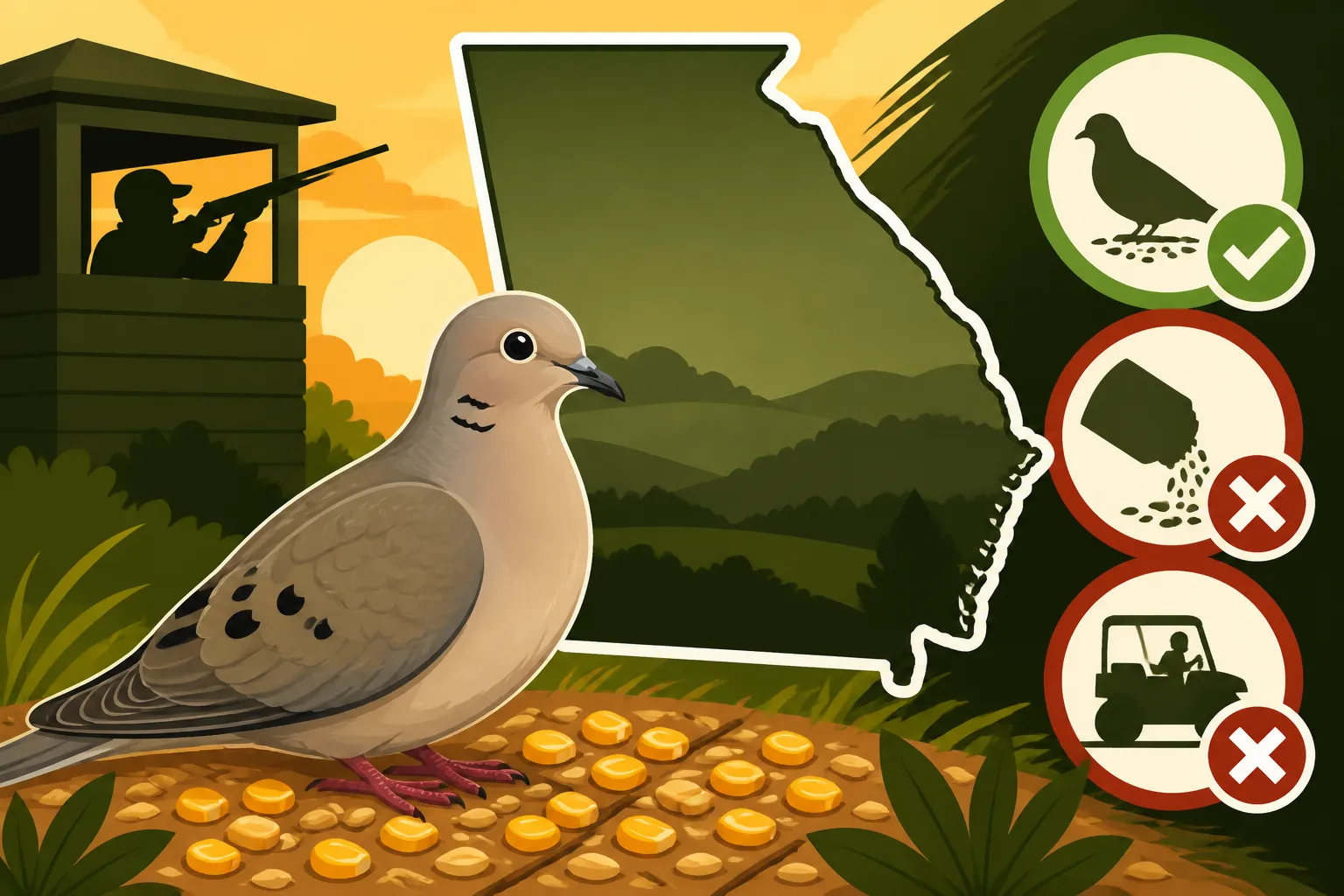
- Scattering Grain: This is the most obvious. If you take a bag of corn, milo, wheat, or any other grain and simply scatter it on the ground in a dove field, that's baiting. It doesn't matter if it's a little or a lot; the act of scattering the feed outside of normal agricultural operations is prohibited.
- Shelling Corn or Spreading Processed Feed: Taking whole ears of corn and shelling them in the field, or spreading cracked corn, livestock feed, or commercial bird seed is strictly illegal. These are concentrated food sources designed to draw birds, not the natural byproduct of farming.
- Adding Grain to Standing Water: This is particularly relevant for migratory waterfowl, but it's important to understand for any migratory bird. Adding any grain or feed to an area of standing water is illegal.
- Creating "Bait Piles": Any intentional concentration of grain or feed beyond what would naturally occur from legitimate agricultural harvesting or planting is forbidden. This includes creating small piles or lines of grain to draw birds into specific shooting lanes.
When you're out scouting, pay close attention to the way the food sources are presented. Are there unnaturally uniform lines of grain? Are there piles where there shouldn't be? Is the grain exceptionally clean, without any chaff or dirt that would typically be present after a natural harvest? These are all red flags. It’s critical to remember that Georgia Dove Field Baiting Rules are designed to protect the integrity of the hunt and the health of the dove population, which ties into understanding Georgia Mourning Dove Population Trends.
| Practice | Legal/Illegal | Explanation |
|---|---|---|
| Broadcasting seed | Legal | If done as part of normal agricultural planting (e.g., planting wheat for future harvest). |
| Mowing standing crops | Legal | Mowing sunflowers, millet, corn to make seeds available if grown on that site. |
| Disc’ing natural weeds | Legal | If done to make naturally grown seeds accessible to birds. |
| Hunting over harvested fields | Legal | Where grain has been removed and only scattered leftovers remain from normal harvest operations. |
| Scattering bagged grain | Illegal | Spreading any grain, salt, or feed that was not grown on that site, or in unnatural concentrations. |
| Shelling corn in the field | Illegal | Removing corn from the cob and scattering kernels to attract birds. |
| Adding commercial feed | Illegal | Introducing processed feeds, birdseed, or livestock feed. |
| Creating "bait piles" | Illegal | Any intentional concentration of feed beyond natural agricultural scattering. |
Practical Tips for Hunting a Legal Dove Field
So, you’ve got a handle on the rules. Now, how do you put that knowledge into practice to ensure your dove hunt is always legal and ethical? It's all about doing your homework, asking the right questions, and being observant. The responsibility falls squarely on the hunter’s shoulders to know if a field is baited, even if you weren’t the one who put the bait there.
How to Identify a Legal Field: Your Due Diligence
Before you ever step foot into a field with your shotgun, you need to conduct some serious due diligence. The best-case scenario is hunting a field you know intimately because you or your family manage it, ensuring all practices are above board. If you're hunting someone else's property, or even public land, the effort intensifies.
First, ask directly. If hunting private land, talk to the landowner or lease manager. Ask them exactly what agricultural practices have been performed. Specifically inquire about any grain distribution that might fall outside normal harvesting or planting. A clear, honest conversation upfront can save a lot of heartache later.
Second, scout thoroughly. Walk the field. Look for anything that seems out of place. Are there perfectly clean piles of grain? Are there strips of a different type of grain than what was planted? Is there an unusually high concentration of corn in a specific area that wasn't harvested? Be suspicious of anything that looks "too good to be true." If a field looks like someone just dumped a truckload of milo, it probably means it's illegal. Modern mapping tools, like the GoHunt app, can give you detailed aerial views of fields, helping you identify distinct areas or patterns that might suggest abnormal activity. You can often see historical satellite imagery to track changes in a field over time, which can be a valuable indicator. Additionally, a detailed map can help you with Scouting With the Georgia Outdoors App, another good resource.
Working a Dove Field Ethically and Safely
Once you’ve confirmed a field is legal, the next step is to execute your hunt ethically and safely. Dove hunting is often a social affair, but that doesn't mean safety takes a back seat. When you're Working a Dove Field on Opening Day, spread out safely to avoid accidental shootings. Always know where other hunters are located, and maintain safe shooting lanes. Communication is key, especially if you're on a larger property with multiple groups.
Beyond safety, consider the ethical side of the harvest. Even in a legal field, you want to ensure you're taking clean shots and minimizing lost birds. A good retrieve dog can be invaluable, especially in thicker cover. Remember your Georgia Dove Season Opening Weekend often coincides with warm weather, so having appropriate gear for retrieving and cooling your birds is essential.
Utilizing Modern Tools for Scouting and Compliance
In today's hunting world, technology can be a huge asset in ensuring compliance. Beyond just looking for bait, apps like GoHunt offer detailed property line information, overlaying public and private land boundaries. This is crucial for avoiding trespass issues and ensuring you're legally accessing your chosen hunting spot. You can also identify natural funnels, water sources, and roosting areas that doves use, all of which are fair-game considerations when choosing your setup location.
These apps also often provide weather data, which can influence dove movement. Understanding wind direction is crucial for setting up your stand or Using a Ground Blind on Georgia Public Land to position yourself in the flight path without spooking birds. While no app can explicitly tell you if a private field is baited (that’s still on you to verify!), they empower you with information to make informed decisions about where to focus your scouting efforts and what legitimate features might attract birds. It helps you focus on natural advantages rather than relying on artificial attractions.
Consequences of Violating Baiting Laws
Let's not sugarcoat it: violating baiting laws is a serious offense, and the repercussions can be severe. It's not just a slap on the wrist; these are federal and state laws designed to protect migratory bird populations. Understanding the potential consequences is another strong incentive to ensure every field you hunt is 100% legal.
Federal and State Penalties
Because doves are migratory birds, baiting violations fall under both federal and state jurisdiction. This means you could face charges from the Georgia Department of Natural Resources (DNR) and the U.S. Fish and Wildlife Service.
At the federal level, the Migratory Bird Treaty Act (MBTA) carries hefty penalties. Violations can result in significant fines, potentially reaching thousands of dollars, and even imprisonment for serious or repeat offenses. These aren't just for the person who put out the bait; any hunter found hunting over a baited field can be cited, regardless of whether they knew it was baited. This underscores the critical importance of your due diligence we discussed earlier.
In Georgia, state laws align with federal regulations. Penalties typically include fines, court costs, and possible restitution to the state for the value of wildlife involved. More importantly, you could face the suspension or revocation of your hunting privileges. This means losing your license and the ability to hunt for a set period, sometimes for years. Imagine missing multiple seasons of deer, turkey, or Georgia Waterfowl Hunting on Coast and Swamp because of a dove field baiting infraction. It’s a harsh reality, but it's designed to be a strong deterrent.
Loss of Hunting Privileges and Reputation
Beyond monetary fines, the loss of your hunting license can be devastating for passionate sportsmen and women. Hunting is more than a hobby; it’s a lifestyle, a connection to nature, and often a cherished family tradition. Having those privileges stripped away can be a profound personal blow. When you consider the cost of a Georgia Resident Hunting License Options or the Georgia Nonresident Hunting License Options, losing it due to an avoidable mistake is truly a tough pill to swallow.
Furthermore, a baiting conviction can severely damage your reputation within the hunting community. Ethical hunting is highly valued, and being associated with illegal practices can lead to ostracization. Hunters rely on trust and shared values, and a violation like this can erode that trust. This isn’t just about legal consequences; it's about your standing as a responsible conservationist. No amount of dove hunting action is worth risking your reputation or your ability to enjoy the outdoors legally.
Impact on Conservation Efforts
Finally, and perhaps most importantly, illegal baiting undermines broader conservation efforts. Wildlife management agencies, like the Georgia DNR, work tirelessly to set season dates, bag limits, and other regulations based on scientific data to ensure sustainable populations. When these rules are circumvented, it disrupts that careful balance.
Unregulated harvest, particularly through baiting, can lead to localized depletion of dove populations. It can also create an unfair advantage that skews data on population health, making it harder for biologists to accurately assess numbers and manage the resource effectively. Every ethical hunter contributes to conservation, and respecting baiting laws is a fundamental part of that contribution. It ensures that the tradition of dove hunting remains vibrant for our children and grandchildren, and that the thrill of Dove Hunting Georgia Opening Weekend continues for generations to come.
Disclaimer
The information provided in this guide is for general informational purposes only and does not constitute legal advice. Hunting regulations, including those pertaining to baiting, can change. It is the individual hunter's responsibility to consult the most current regulations published by the Georgia Department of Natural Resources (DNR) and the U.S. Fish and Wildlife Service before hunting. Failure to do so could result in legal penalties.