Georgia Northern Zone Bear Firearms Dates
It can be incredibly frustrating trying to keep up with Georgia’s diverse hunting seasons, especially when you're focused on a specific game animal in a particular region. Bear hunting in the North Georgia mountains is an amazing experience, but the exact firearms dates for the Northern Zone can feel like a moving target if you don't know where to look. This guide is here to untangle all that confusion and give you the definitive lowdown on when you can legally pursue black bears with a firearm in Georgia's beautiful but rugged northern reaches.
Official Georgia Northern Zone Bear Firearms Season Dates
Alright, let's cut straight to the chase because planning your hunt hinges on these critical dates. The Georgia Department of Natural Resources (DNR) sets specific, often very limited, windows for firearms bear hunting in the Northern Zone. This isn't like deer season where you have months; bear season is tightly controlled to manage the population effectively.
Historically, the Northern Zone bear firearms season typically consists of two distinct periods:
- An early to mid-October period: This is usually a short, concentrated window, often a few days or a single weekend, perfectly timed to coincide with the early fall acorn drop in the mountains. Bears are actively feeding, packing on calories before winter denning, making them more visible.
- A mid-December period: This second, even shorter window, might be just a single weekend. By this time, many bears are already starting to den up, but some are still out foraging, especially if the acorn crop was good and warm weather persists. This later season offers a different kind of challenge, often requiring hunters to navigate colder temperatures and potentially snow in the highest elevations.
It is absolutely crucial to consult the Georgia DNR's official Hunting Regulations each year. While these general periods are consistent, the exact start and end dates can shift slightly from one year to the next based on population data, harvest goals, and calendar alignment. Don't rely on last year's memory or anecdotal information; always grab the current year's regulatory guide. Many hunters use digital tools like the GoHunt app to quickly verify these dates and any specific WMA regulations while they're in the field, which can be a lifesaver when you’re dealing with spotty cell service.
Here's a quick reference table to give you a general idea, but again, always verify for the current year!
| Season Segment | General Timeframe | Typical Duration | Key Hunter Considerations |
|---|---|---|---|
| Early Season | Mid-October | 1-3 Days | Bears active, acorn-focused, warmer weather possible |
| Late Season | Mid-December | 1-2 Days | Colder weather, bears denning, potential snow, fewer active bears |
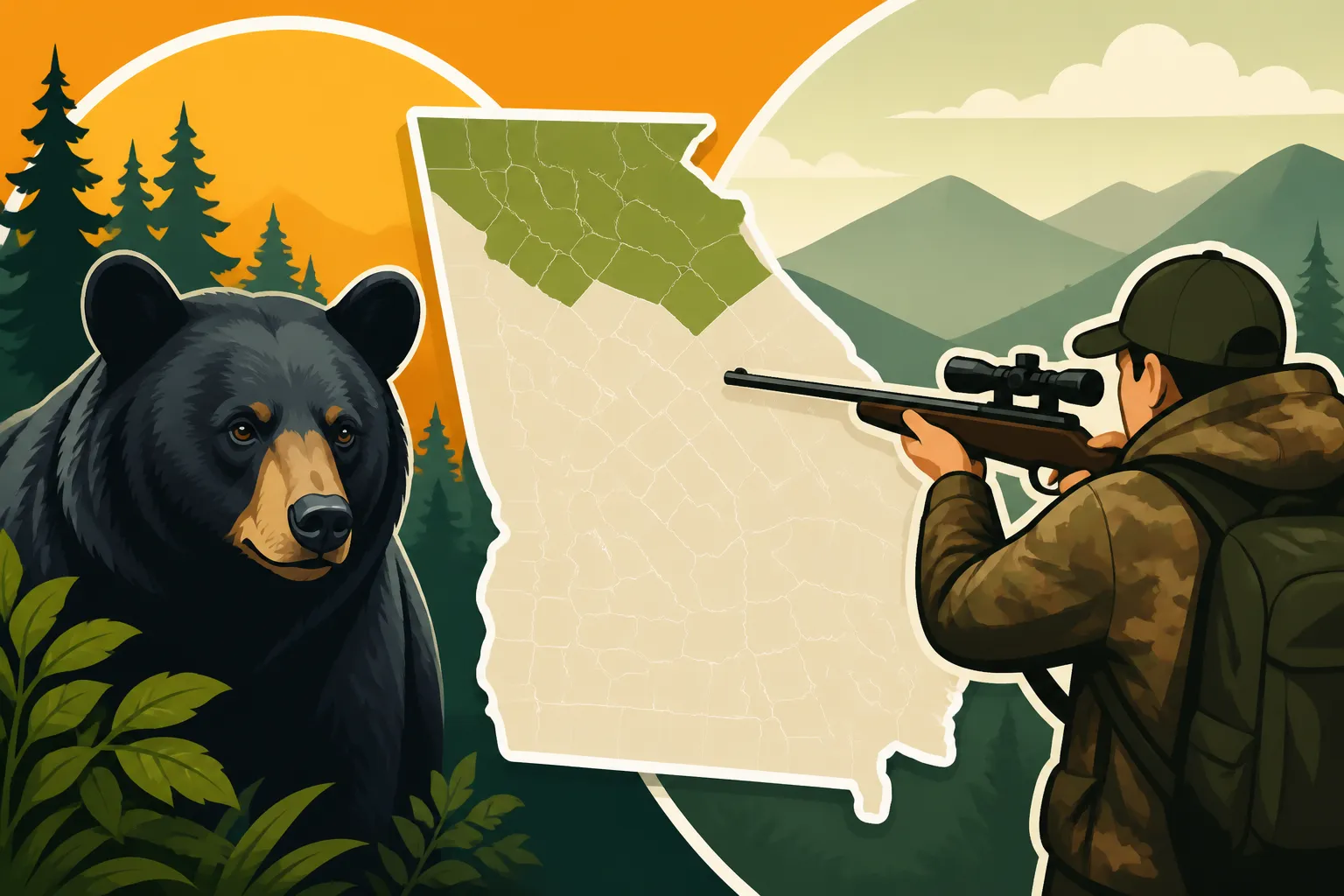
The Northern Zone encompasses a significant portion of Georgia's mountainous terrain, primarily within the Chattahoochee-Oconee National Forest. Knowing these specific firearms dates is your first step in planning a successful and legal bear hunt in this beautiful region.
Understanding Georgia's Northern Zone Bear Management
You might wonder why bear hunting in the Northern Zone is so restricted compared to other game. It really boils down to science-based wildlife management designed to maintain a healthy and sustainable black bear population in Georgia. Georgia's Three Bear Hunting Zones each have unique characteristics and management strategies, but the Northern Zone is special because it holds the densest bear population in the state.
The North Georgia mountains, particularly the vast expanses of the Chattahoochee National Forest, provide ideal bear habitat. Think about it: massive tracts of contiguous forest, diverse food sources like acorns, berries, and insects, and plenty of secluded areas for denning. This habitat quality is a major reason Why the Northern Zone Holds the Most Bears. Because of this robust population, the DNR aims to provide hunting opportunities while carefully controlling the harvest to prevent over-exploitation, especially of breeding sows.
The short, concentrated firearms seasons are a key component of this strategy. Here's why:
- Population Control: While the Northern Zone has a healthy bear population, unrestricted hunting could quickly deplete local numbers. Short seasons allow the DNR to control the overall harvest, ensuring that enough bears remain to sustain future generations. It's a fine balance between recreation and conservation.
- Preventing Overharvest of Sows: Female bears, or sows, are critical for population growth. Short seasons help to limit the number of sows harvested, especially during periods when they might be more vulnerable. This is vital for the long-term health of the bear population.
- Focus on Natural Food Sources: The timing of the early October season often aligns with the peak of the acorn fall. Bears are highly opportunistic foragers, and a good mast crop means they are often more active and concentrated in areas with abundant food. This makes for more predictable hunting opportunities centered around natural behavior, rather than artificial attractants. Hunting bears over natural food in the mountains requires a different scouting approach than what you might use for deer.
- Hunter Opportunity vs. Pressure: By offering limited seasons, the DNR provides a unique and challenging hunting experience. It also manages hunter pressure. Imagine if the season were open for weeks; some areas would quickly become overcrowded, potentially leading to safety concerns and decreased success rates. These limited windows spread out hunter effort.
- Data Collection: Every bear harvested in Georgia must be reported, providing crucial data points for the DNR. These figures, which you can often see reflected in Georgia Bear Harvest Trends, help biologists understand population dynamics, success rates, and the impact of their management strategies.
So, while those brief seasons might feel frustratingly short, they are a deliberate and effective part of Georgia's commitment to managing this incredible resource. It's about ensuring that future generations can also experience the thrill of hunting black bears in the beautiful North Georgia mountains.
Essential Preparations for Your Firearms Bear Hunt
Hunting black bears with a firearm in the Northern Zone requires a blend of physical preparedness, precise gear selection, and a deep understanding of the local environment. This isn't a casual stroll in the woods; it's a dedicated pursuit in challenging terrain.
Licensing and Regulatory Compliance
Before you even think about stepping into the woods, ensure all your paperwork is in order. You'll need a valid Georgia hunting license, and a big game license. These can be purchased easily online through the Georgia DNR’s Go Outdoors Georgia portal. You can also pick them up from authorized license vendors across the state. It's always a good idea to confirm if a specific bear tag is required for the Northern Zone in the current regulations, as rules can occasionally change. Also, don't forget your Georgia Hunter Education Requirements; if you were born on or after January 1, 1961, you'll need proof of hunter education or an apprentice license.
While you're checking regulations, it's smart to look up specific rules for any Wildlife Management Areas (WMAs) you plan to hunt within the Northern Zone. Some WMAs might have additional restrictions or quota hunts. The GoHunt app can often provide quick access to WMA maps and regulations, which is incredibly helpful when you're planning or already on site.
Gear Selection for Mountain Bear Hunting
Your gear needs to be robust and reliable for the North Georgia mountains.
- Rifle and Ammunition: A powerful and accurate rifle is paramount. Common calibers for black bear include .270, .30-06, .308, and 7mm Rem Mag. You want a caliber that delivers sufficient energy for a clean kill at typical mountain ranges, which can often be shorter due to dense cover but sometimes longer if you catch a bear crossing a clear-cut or saddle. Be sure your rifle is sighted in perfectly. For more detailed advice, you might want to check out Rifle Setups for Georgia Deer Hunting, as many principles apply.
- Optics: Good binoculars (8×42 or 10×42 are excellent choices) are indispensable for spotting bears in thick timber or at a distance. A reliable scope on your rifle, ideally with good low-light performance, is also crucial, especially during those early morning or late evening hours when bears are most active.
- Clothing: North Georgia weather in October and December can be unpredictable. Layers are your best friend. Start with moisture-wicking base layers, add insulating mid-layers, and top it off with a waterproof and windproof outer shell. Comfortable, sturdy hiking boots are a must, and many hunters opt for snake boots for added protection, even in cooler weather. Don't forget a blaze orange vest or hat to meet Georgia Blaze Orange Requirements and enhance safety, particularly during the firearms season.
- Navigation and Safety: The mountains can be disorienting. A reliable GPS unit or a mapping app like GoHunt on your phone (with downloaded offline maps!) is essential. A compass and paper map are excellent backups. Carry a first-aid kit, a headlamp, extra batteries, and sufficient water and snacks. Bear spray is also a wise addition, though rarely needed.
Scouting and Strategy
Bears are not like deer; they are often much more solitary and range over larger areas. Effective scouting is your biggest asset.
- Pre-Season Reconnaissance: Start well before the season. Look for bear sign: tracks (large, flat-footed impressions, sometimes with claw marks), scat (often containing berries, nuts, or insect parts), claw marks on trees (especially on oak or beech trees where they climb for nuts), and overturned rocks or logs where they've foraged for grubs. Focus on areas with abundant natural food sources like oak ridges for acorns or thickets for berries. Scouting Georgia Public Land Before Season offers general advice that's highly applicable here.
- Habitat Hotspots: Bears often frequent dense thickets, remote drainages, and areas near water sources. Ridgelines and saddles can be travel corridors. Look for areas with a mix of cover and food.
- Patience and Persistence: Bear hunting is often a game of patience. Still-hunting slowly through likely areas, sitting quietly on a well-used trail, or ambushing a feeding area are all viable tactics. Be prepared to put in long hours and cover a lot of ground.
Navigating Regulations and Ethical Hunting in the Northern Zone
Beyond just knowing the dates, understanding the nuances of the regulations and upholding ethical hunting practices are paramount when pursuing black bear in Georgia’s Northern Zone. This isn't just about avoiding a fine; it’s about respecting the animal, the land, and the hunting tradition.
Specific WMA Regulations and Harvest Reporting
While the statewide Northern Zone firearms dates give you the broad picture, individual Wildlife Management Areas (WMAs) within this zone might have their own specific regulations. Always, and I mean always, check the WMA-specific rules in the Georgia Hunting Regulations book for the current year. Some WMAs might have different season lengths, permit requirements, or even specific hunt types like quota hunts. These details are critical to avoid accidentally violating regulations, and again, digital tools like the GoHunt app are fantastic for getting quick access to this information on the fly.
Once you’ve successfully harvested a bear, mandatory harvest reporting is required. You must report your kill through the Georgia Game Check system, either online or via phone, within 24 hours of harvest. This data is vital for DNR biologists to monitor the bear population, assess the effectiveness of current management strategies, and make informed decisions for future seasons. Failing to report a harvest is a serious violation, so make sure it's part of your post-hunt routine. Georgia Bear Checking Requirements outlines this process in detail.
Ethical Hunting Practices and Safety
Ethical hunting goes beyond legalities; it's about responsible stewardship and respect for the game.
- Shot Placement: Your goal should always be a quick, humane kill. This means knowing your rifle and your limitations, practicing regularly at the range, and aiming for the vital organs (lungs and heart). Avoid questionable shots that could result in a wounded animal and a difficult, potentially unsuccessful, recovery.
- Game Recovery: Bears are tough animals, and even a well-placed shot can lead to a significant tracking job, especially in dense mountain cover. Be prepared to track your bear meticulously, even if it means staying late or returning the next morning. Mark the spot where you shot, note the direction of travel, and look for blood, hair, or broken branches. A good quality headlamp is invaluable for tracking after dark.
- Respecting Private Property: Much of the Northern Zone is public land, but private parcels are interspersed throughout. Always be aware of your location and respect property boundaries. Using a GPS app with property lines, like those offered by GoHunt or similar services, can prevent accidental trespass, which is a major concern for hunters. If you need to retrieve a downed bear from private land, always obtain permission from the landowner first.
- Hunter Safety: The mountains can be rugged, and you’re often hunting alone or in small groups. Always inform someone of your hunting plans, including your location and estimated return time. Carry emergency supplies and be prepared for sudden changes in weather. Blaze orange requirements during firearms season are not just a rule; they are a critical safety measure, ensuring you are visible to other hunters.
By adhering to these ethical guidelines and regulatory requirements, you contribute to a positive public perception of hunting and help ensure that bear hunting opportunities in Georgia’s Northern Zone continue for generations to come.
Disclaimer
Please remember that hunting regulations can change frequently. Always refer to the most current official Georgia Department of Natural Resources (DNR) hunting regulations guide before planning or engaging in any hunting activities. This article is intended for informational purposes only and should not be considered a substitute for the official legal guidelines.