Layout Blind Hunting a Cut Cornfield
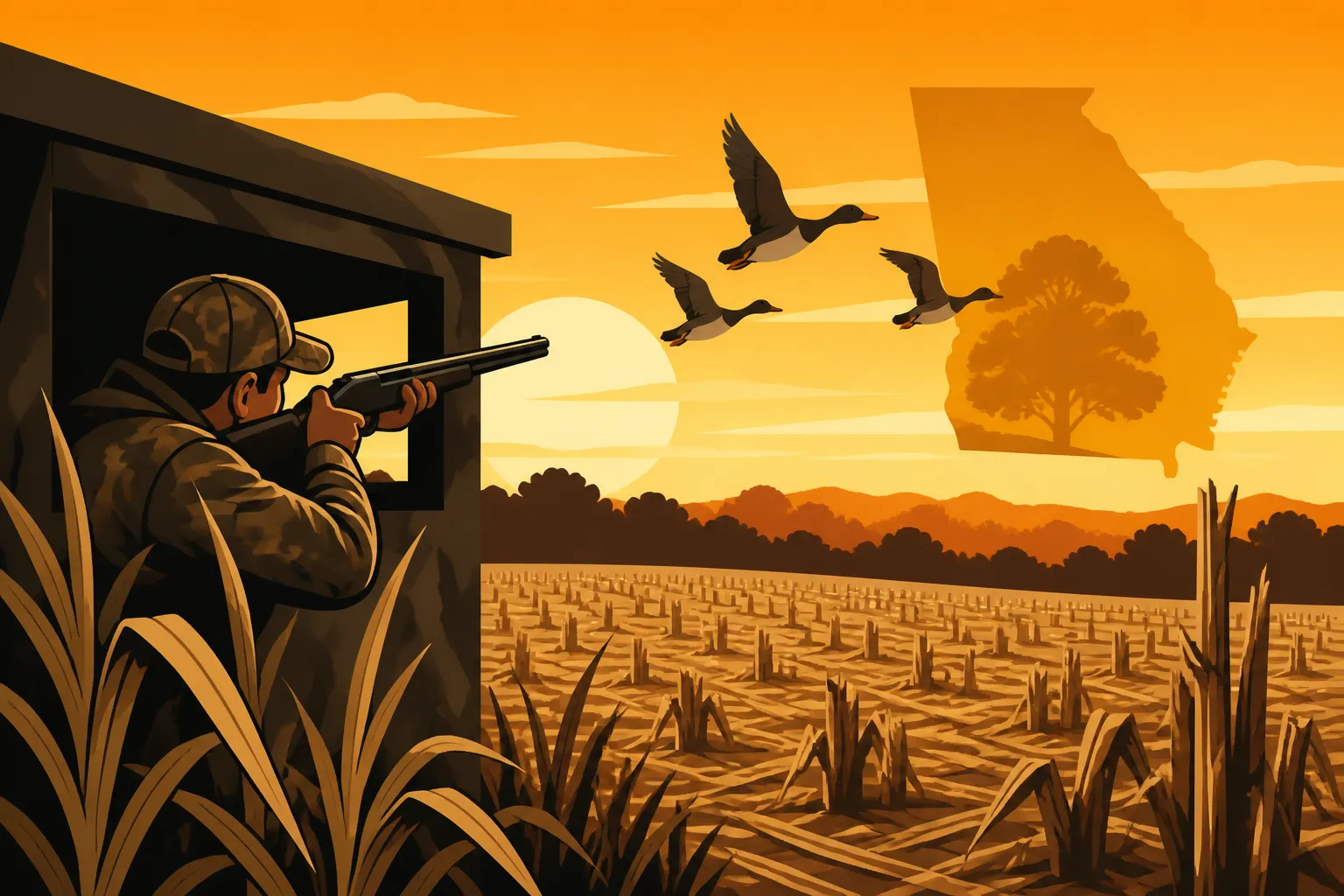
The wide-open expanse of a freshly cut cornfield can feel intimidating to a waterfowl hunter. Many experienced hunters struggle to disappear into such an exposed landscape, often watching ducks and geese circle cautiously, only to flare at the last minute because of a poorly concealed blind or a tell-tale silhouette. But when done right, hunting these agricultural goldmines from a layout blind can be one of the most exciting and productive ways to fill your strap in Georgia. This comprehensive guide will walk you through the nuances of setting up, concealing, and effectively hunting cut cornfields, ensuring you become a ghost in the stubble.
Why Cut Cornfields are Prime Duck and Goose Habitat
There’s a reason why waterfowl, particularly Canada geese, specklebelly geese, and various dabbling ducks like mallards and pintails, are consistently found in agricultural fields, especially after the harvest. These fields are literal buffets for migrating and wintering birds. Understanding why they are so attractive is the first step to successfully hunting them.
The Allure of Leftover Grain
Think about the sheer energy demands of a duck or a goose. They migrate thousands of miles, endure harsh winter weather, and need readily available, high-calorie food sources to fuel their bodies. Cut cornfields, even after the combines have made their passes, are absolutely packed with leftover grain. A combine isn't 100% efficient, and countless kernels get knocked loose or dropped during the harvest. These scattered remnants represent a huge, concentrated food source that’s easy for birds to access.
This attraction intensifies even further after a good rain or a few days of frost. Rain can soften the soil, making kernels that were partially buried easier to extract. Frost can break down some of the tougher stalks and husks, exposing more food. While the birds might loaf and rest on nearby ponds or rivers, they’ll almost always make their way to these fields for a crucial feeding session, often twice a day during peak migration. Their highly developed eyesight and instinct guide them to these prime feeding grounds, and once they find a reliable source, they'll often return day after day until the food supply dwindles.
Identifying Productive Fields
Not all cut cornfields are created equal, and simply picking one at random is a recipe for a slow morning. The real secret to success begins with meticulous scouting. You need to become a detective, looking for signs of recent bird activity. Start by driving county roads at dawn and dusk, especially in known waterfowl flyways or near major rivers like the Altamaha or Flint. Look for birds flying into or out of specific fields.
Once you’ve identified potential candidates, get out of your truck and walk the field edges (with permission, of course, if it’s private land). Look for actual physical evidence: a heavy concentration of droppings, distinctive tracks in muddy spots, and shed feathers. These are undeniable proof that birds are actively feeding there. Binoculars or a spotting scope can be incredibly useful for observing from a distance without disturbing the birds. You might even use a platform like GoHunt to analyze aerial photos, looking for patterns like low spots where water might collect or proximity to major water bodies. A strong Scouting Georgia Public Land Before Season approach emphasizes this kind of diligent observation, which translates perfectly to private agricultural fields.
Pay close attention to any water features adjacent to or within the field. Ducks and geese will often land in small puddles, drainage ditches, or even flooded low spots within a field before waddling off to feed. Fields that have been recently worked for a second crop, like winter wheat or ryegrass, can also attract birds, offering both food and some green browse. The more specific and recent the sign, the better your chances of a successful hunt.
Essential Gear for Layout Blind Success
Once you’ve scouted your field and secured permission, it’s time to think about gear. Hunting from a layout blind is a specialized approach that requires specific equipment to maximize your chances of success. It's not just about hiding; it's about being comfortable, warm, and utterly invisible to even the wariest of birds.
Choosing the Right Layout Blind
Your layout blind is your mobile fortress, and choosing the right one can make or break your hunt. There's a wide variety available, from brands like Avery, Final Approach, and Rogers, each offering different features. The most critical aspect is concealment. You want a blind with a low profile that allows you to truly disappear into the stubble. Consider whether you prefer a more traditional coffin-style blind or a slightly larger, more comfortable model.
Beyond concealment, think about comfort and durability. Georgia weather can be unpredictable, with damp mornings and sudden downpours. A good layout blind should have a waterproof bottom to keep you dry from the ground up. Padded headrests and back supports are luxuries you’ll appreciate during long waits. Look for easy entry and exit, especially when birds commit and you need to quickly sit up to shoot. Flag ports are also a nice feature, allowing you to use a goose flag to simulate movement and attract birds without having to expose yourself. Always consider how quickly and quietly you can set up and brush in the blind – a critical factor when the sun is just peeking over the horizon.
Decoy Spreads and Motion Devices
Decoys are your silent partners in the field, speaking directly to the birds' instincts. For goose hunting, large full-body decoys tend to be the most realistic and effective, especially for wary Canada geese. However, adding a good number of shell decoys or even silhouettes can greatly increase the visual impact and perceived size of your flock, which can be crucial for attracting birds from a distance. The key isn't just quantity, but arrangement. Think about creating natural-looking "family groups" of 3-5 decoys clustered together, rather than spreading them out in a rigid, military-like formation. Leave plenty of open space, mimicking a landing strip, right in front of your blinds.
For duck hunting in cut corn, mallard and pintail decoys are your bread and butter. Again, a natural spread with some open pockets works best. Motion decoys, such as spinning-wing or flapping-wing models, can be incredibly effective at grabbing attention from afar, but they can also flare exceptionally wary birds. Use them judiciously, especially on blue-sky days or when hunting heavily pressured waterfowl. Sometimes, a subtle, battery-powered agitator in a water-filled low spot can add just enough natural ripple to convince birds. Remember, variety and realism in your spread are paramount. While a different setup might be used when Hunting Coastal Georgia Marsh Waterfowl, field hunting demands a spread that looks natural and inviting on dry land. The timing of Georgia Waterfowl Migration Timing can also influence how wary birds are; early season birds are often less pressured than late-season flocks.
Mastering the Art of Concealment and Calling
Once your gear is ready, the true artistry of layout blind hunting comes down to two things: becoming one with the landscape and speaking the birds' language. Many hunts are lost, not by a lack of birds, but by a failure in these critical areas.
Blending into the Landscape
This is arguably the single most important aspect of successful layout blind hunting. Your blind absolutely must disappear. You’d be amazed at how well birds can spot something out of place, even from hundreds of feet up. The trick is to use natural vegetation from the field itself. Corn stalks, stubble, loose dirt clods, and any weeds growing in the field are your best friends. Don't be afraid to take your time and completely cover your blind. Tuck stubble into all the loops and straps. Break up the hard lines and shadows of the blind.
A common mistake is to overdo it with too much green material if the field is primarily brown or tan. Your blind needs to match the ambient color and texture of its surroundings perfectly. Once you think you’ve got it, step away from your setup. Walk 50-100 yards out and look back from different angles, just as a duck or goose would. If you can see your blind, the birds will definitely see it. Pay attention to any shiny spots or contrasting colors. The goal is to make your blind so much a part of the environment that even a seasoned hunter would have trouble spotting it from a distance. This painstaking attention to detail is what separates a successful hunter from one who constantly sees birds flare.
Effective Calling Strategies
Calling is an art, not a science, and it takes practice and a keen ear to master. For Canada geese, you’ll want a range of calls: deep honks to get their attention, clucks and moans to simulate feeding, and perhaps some excited comeback calls if they start to drift away. For ducks, a good mallard call is essential, capable of producing greeting calls, basic quacks, and feeding chuckles. You might also incorporate a pintail whistle or a gadwall grunt if those species are prevalent.
The golden rule of calling is read the birds. If they’re locked up, coming straight in, and committed to your spread, stop calling. Let the decoys do the work. Overcalling can easily spook birds that are already convinced. If they’re circling, hesitant, or passing by, then it’s time to call more aggressively, trying to draw their attention and give them a reason to turn. Experiment with volume and cadence. Sometimes, less is more, especially on highly pressured birds that have heard every call in the book. A quality call, such as those from Zink Calls or Rich-N-Tone, can make a difference in tone and realism, but ultimately, your technique is what truly matters. Practicing calling with a partner can help create a more realistic, conversational sound that is far more convincing than a single, monotone caller. In Georgia, understanding the different Georgia Duck Zone Boundaries can even influence your calling choices as certain species might be more prevalent in specific regions.
| Decoy Type | Best For | Pros | Cons | Tips for Georgia Fields |
|---|---|---|---|---|
| Full-Body | Geese, Large Ducks | Most realistic, visible from afar | Expensive, bulky to transport, heavier | Use in primary landing zones; mix in different poses. |
| Shell | Geese, Ducks | Lighter, easier to transport, more #'s | Less realistic profile, can look flat | Good for adding bulk to a spread; place around full-bodies. |
| Silhouette | Geese | Very lightweight, portable, cheap | Flat profile, looks unnatural from some angles | Excellent for adding numbers on field edges; place facing the wind. |
| Floating (Waterfowl) | Ducks, Geese | Essential for puddles/ditches | Limited to water features | Carry a few for any wet spots; add motion if possible. |
Safety and Regulations in Georgia Cut Cornfields
Waterfowl hunting, even in a seemingly tame environment like a cut cornfield, carries inherent risks. Beyond that, adhering to Georgia's specific hunting regulations is not just about avoiding fines; it's about being a responsible, ethical hunter and contributing to the conservation efforts that make our sport possible.
Blaze Orange and Other Safety Considerations
While you’ll be hidden in your layout blind, certain safety precautions are always paramount. When walking to and from your hunting spot, especially on private roads, shared access points, or on public land where other hunters may be present, it's wise to adhere to Georgia Blaze Orange Requirements. While not always legally mandated while actively hunting migratory birds, wearing blaze orange or blaze pink when traveling to and from your blind ensures you are highly visible to others, dramatically reducing the risk of accidental shootings. Once you're in your blind and brushed in, you can typically remove your outer layer of orange, but always keep it handy.
Always confirm the location of your hunting partners. Communication, whether through hand signals or low-volume radios, is key. Before any birds come into range, identify your shooting lanes and ensure you have a safe backdrop. Never shoot at low-flying birds if there's any risk of hitting livestock, farm equipment, buildings, or other people beyond the field. Clear any obstructions around your blind before the hunt begins, so you don't trip or snag your firearm when sitting up quickly. It's also a good practice to inform a non-hunting contact of your plans, including your location and expected return time, especially if you're hunting alone.
Georgia Waterfowl Hunting Regulations
Staying informed about current regulations is non-negotiable. The Georgia Department of Natural Resources (DNR) sets specific season dates and bag limits for various waterfowl species, and these can change annually. Before heading out, always check the latest Georgia hunting regulations. Pay close attention to the shooting hours, which are typically from one-half hour before sunrise to sunset.
Crucially, all waterfowl hunters in Georgia must possess a valid Georgia hunting license, a Georgia Migratory Bird Stamp (or "HIP certification"), and a Federal Duck Stamp. The Georgia Migratory Bird Certification is free but mandatory to ensure accurate harvest data collection. The Federal Duck Stamp, often purchased through the U.S. Fish and Wildlife Service, is vital for funding wetland conservation efforts across the country. Be absolutely certain that the field you intend to hunt has not been illegally baited. Baiting is a serious federal offense with severe penalties. If you suspect a field has been baited (e.g., unusually high concentrations of grain not consistent with normal agricultural practices), do not hunt it and report it to the DNR. Information regarding specific WMAs can also be found on the Go Outdoors Georgia website, a fantastic resource for everything from purchasing licenses to checking regulations. Understanding the intricacies of Georgia Waterfowl Hunting on Coast and Swamp is different from field hunting, but core regulations remain the same.
Remember, rules regarding Layout Blinds and Marsh Boats and other specific gear might vary slightly between public and private land, so always double-check. For example, some public lands may have restrictions on leaving blinds overnight. Being a knowledgeable and compliant hunter ensures the sport remains healthy for generations to come.
Disclaimer
Please note: Hunting regulations and seasons can change. Always consult the official Georgia Department of Natural Resources (DNR) website or their current hunting regulations guide before heading afield to ensure you are in compliance with all state and federal laws.