Hunting Feral Hogs Over Bait at Night
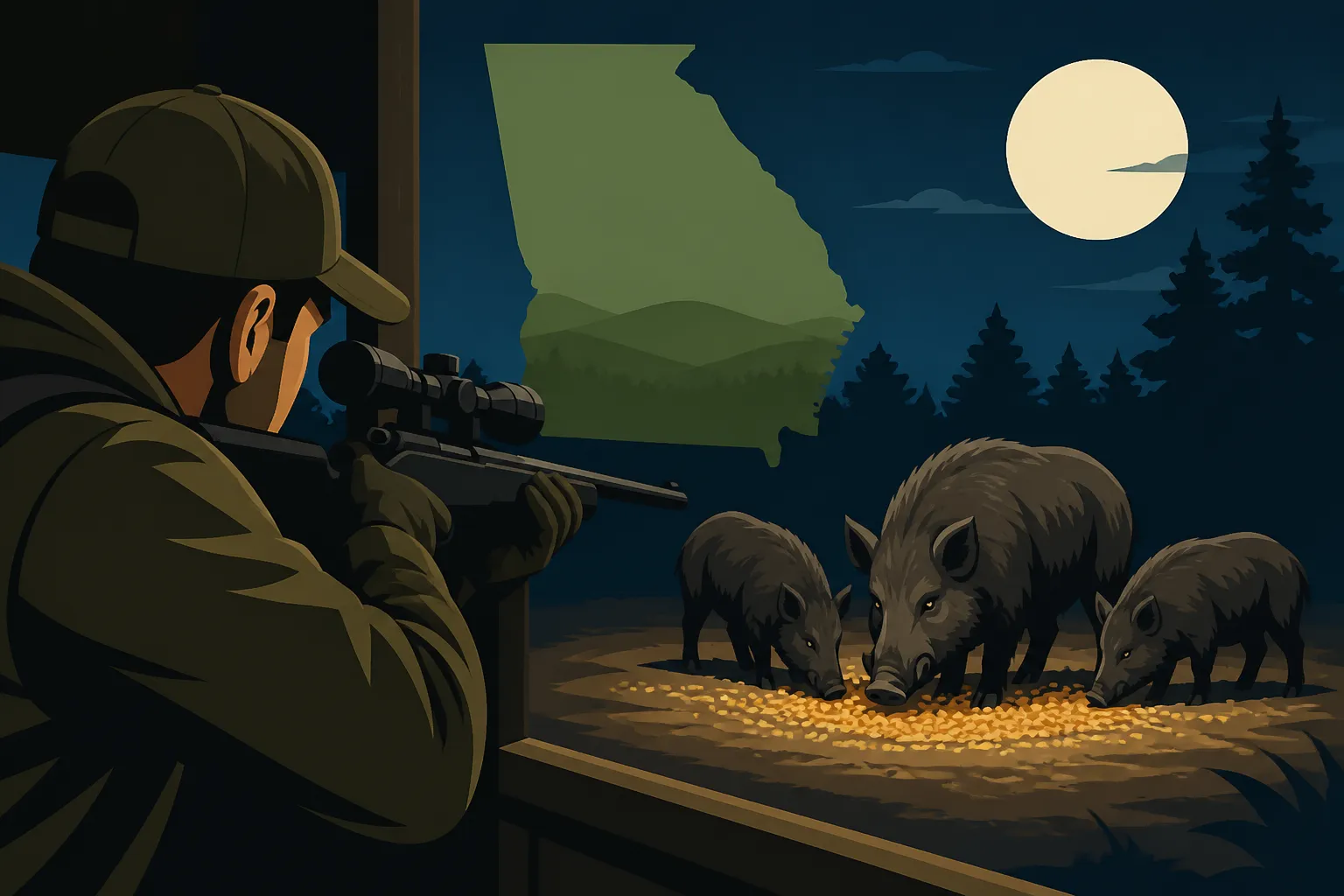
If you're a landowner, farmer, or simply a hunter frustrated by the relentless damage feral hogs inflict across Georgia, you know that traditional daytime hunting often feels like bailing water with a sieve. These intelligent, prolific animals are nocturnal by nature, rapidly adapt to pressure, and can decimate crops, food plots, and natural habitats almost overnight. This guide dives deep into one of the most effective, albeit specialized, strategies for getting ahead of the problem: hunting feral hogs over bait at night. We'll explore the legalities, essential gear, and proven tactics to help you reclaim your property and manage these destructive invaders.
The Unrelenting Challenge of Georgia's Feral Hogs
Feral hogs are not just a nuisance; they're an ecological and economic disaster across much of Georgia. Their presence is felt deeply by farmers, forest managers, and even deer hunters who see their meticulously cultivated food plots churned into muddy messes. Understanding the scope of the problem is the first step in appreciating why specialized tactics like night hunting over bait are not just effective, but often necessary.
Why Hogs are Such a Problem in Georgia
Georgia's mild climate, abundant food sources, and expansive forests and agricultural lands create a perfect breeding ground for feral hogs. These aren't just a few stragglers; the Georgia Feral Hog Population Estimate suggests numbers are significant and widespread. Hogs breed year-round, with sows capable of having multiple litters annually, each producing an average of 4-6 piglets. This incredible reproductive rate means that if you're only removing a small percentage of the population, you're not making a dent; they're literally breeding faster than you can hunt them.
The damage they cause is staggering. They root up fields, destroying row crops like corn, peanuts, and soybeans, often just days before harvest. This isn't just a minor inconvenience; it can mean tens of thousands of dollars in lost income for a farmer. Beyond agriculture, their rooting behavior compacts soil, destroys native vegetation, and contaminates water sources. They compete with native wildlife, including deer and turkeys, for crucial food resources like acorns and mast crops. When you see a stand of mature hardwoods with every acorn turned over and gone, you're looking at the work of a sounder of hogs. Their destructive nature means that many landowners are desperate for any method that can bring relief, and that's where effective, targeted hunting strategies come into play.
The Limitations of Daytime Hunting
While a thrilling experience, conventional daytime hunting, whether still-hunting or using dogs, often falls short of truly controlling feral hog populations. Hogs are incredibly wary animals, especially after experiencing hunting pressure. They quickly become almost entirely nocturnal, bedding down in the thickest cover during the day and only venturing out under the cloak of darkness. This means that even with extensive scouting and ideal conditions, you might only encounter a handful of hogs during daylight hours, making it nearly impossible to remove enough animals to impact their booming numbers.
Another significant limitation is the terrain itself. Georgia offers a diverse landscape, from dense pine plantations and impenetrable swamps to sprawling agricultural fields. Many of these areas provide excellent cover for hogs, allowing them to evade hunters with ease during the day. Trying to track them through thick briar patches or navigate deep cypress swamps can be exhausting and unproductive. Even on open private lands, the sheer acreage and the hog's ability to disappear into the nearest treeline make consistent daytime success a challenge. This is precisely why hunters and landowners turn to night hunting over bait: it capitalizes on the hog's natural nocturnal habits and feeding patterns, offering a more predictable and often more successful approach to population reduction. You're bringing the hogs to you, on your terms, when they are most active.
Navigating Georgia's Rules for Night Hunting Hogs
Before you even think about setting up your first night bait station, it's absolutely crucial to understand the rules and regulations governing feral hog hunting in Georgia, particularly when it comes to night hunting and baiting. Georgia's approach to feral hogs is unique because they are classified as a nuisance species with no closed season or bag limits on private land, but there are still important stipulations to follow, especially after dark. Ignoring these rules can lead to serious legal trouble and reflect poorly on the hunting community as a whole.
Understanding Legalities for Baited and Night Hunting
Good news first: in Georgia, hunting feral hogs over bait on private land is explicitly legal, and there's no closed season or bag limit. This means you can pursue these animals year-round, whenever and wherever you have permission on private property. This flexibility is a direct response to the immense agricultural and ecological damage these animals cause. However, this freedom comes with responsibility. You need to ensure you have clear permission from the landowner to hunt their property, and if you're on public lands, the rules are entirely different. Public land often has specific rules regarding baiting and night hunting, so always check with the individual Wildlife Management Area (WMA) or Chattahoochee-Oconee National Forest regulations before planning a hunt. For the purposes of night hunting over bait, this strategy is almost exclusively practiced on private lands.
The law regarding Night Hunting Rules for Georgia Coyotes often gets conflated with hog hunting, but it's important to differentiate. While certain conditions apply to coyotes, the regulations for hogs are generally more permissive due to their nuisance status. One critical point for all night hunting, however, is the use of lights. Georgia law states that on private land, you can use artificial lights, including spotlights, infrared, and thermal imaging devices, to hunt feral hogs at night. This is a game-changer for effective night hunting. Always confirm the most current regulations through the Georgia Department of Natural Resources (DNR) website or their annual hunting regulations guide, as laws can change.
Permissible Equipment for After-Dark Operations
When it comes to hunting hogs at night, your equipment choices are key to both success and legality. Georgia is quite clear that you can use a wide range of firearms, archery equipment, and even knives for feral hogs. For night hunting specifically, the game changes dramatically with the allowance of advanced optics.
This is where gear like thermal imaging scopes and night vision devices become invaluable. Thermal optics detect heat signatures, allowing you to easily spot hogs in total darkness, even through light cover. Night vision amplifies ambient light, painting the landscape in shades of green. Both are legal and incredibly effective. You can attach these to your rifle or use them as handheld scanning devices. Additionally, dedicated hunting lights, often green or red, can be mounted on firearms. These colored lights don't spook hogs as easily as white light, and they significantly extend your visibility.
However, a word of caution: while these tools are legal for hogs, they might be restricted or have different rules for other game species, so be vigilant about what you're targeting. Your firearm choice is also important. Many hunters prefer AR-style platforms chambered in calibers like .223/5.56, 6.5 Grendel, or .300 Blackout for their capacity and ease of mounting optics. These calibers offer sufficient power for hogs and allow for quick follow-up shots on sounders. Shotguns with slugs are also effective at closer ranges. The critical takeaway is to invest in reliable gear, understand its limitations, and practice extensively with it before heading out into the dark. Don't forget that using a suppressor can make a massive difference in reducing recoil and preserving your hearing, which is perfectly legal for hunting in Georgia.
| Feature | Night Vision | Thermal Imaging | Colored Hunting Light |
|---|---|---|---|
| Detects | Amplifies ambient light | Heat signatures | Reflects off targets |
| Visibility | Requires some ambient light (moon/stars) | Works in total darkness (fog, smoke, light cover) | Requires direct line of sight |
| Identification | Good for shape/outline, harder for fine detail | Excellent for detecting presence, harder for fine detail at distance | Good for direct identification |
| Cost | Moderate to High | High to Very High | Low to Moderate |
| Battery Life | Moderate | Moderate | Good |
| Hog Reaction | Minimal, especially Generation 3 | None, as it's passive | Low, especially red/green |
Crafting Your Effective Night Bait Site
The success of night hunting over bait hinges almost entirely on the quality of your bait station. It's not enough to just dump some corn in a field and expect hogs to show up; you need a strategic approach that considers location, bait type, and how you'll monitor their activity. This is where patience, observation, and a little technology truly pay off.
Selecting the Ideal Location and Bait Strategy
Choosing the right location for your bait site is paramount. Hogs prefer areas with dense cover nearby where they can bed down during the day and feel secure moving to and from the feeding area. Think about creek bottoms, swamp edges, thick pine regeneration, or overgrown fencerows adjacent to agricultural fields. These spots offer natural travel corridors and escape routes. Look for existing hog sign – fresh rooting, tracks, or rubs on trees – which indicates they are already frequenting the area. When scouting, consider how you will approach the stand unnoticed and how the wind will typically blow. You'll want an entry and exit route that keeps your scent away from the bait.
As for the bait itself, corn is king. It's affordable, widely available, and hogs absolutely love it. You can simply broadcast it on the ground, but for a more sustained attraction, consider using a hog feeder. Feeders, whether gravity-fed or automatic, protect the corn from other animals (to a degree) and ensure a consistent supply. Fermented or soured corn works wonders; the strong smell carries farther and seems to drive hogs into a frenzy. Some hunters mix in an attractant, like cherry or vanilla extract, or commercial hog attractants such as those offered by Wildgame Innovations or Evolved Habitats. The key is consistency. Once you start baiting, try to keep the supply constant so hogs develop a dependable pattern of visiting your site. Think about how you Baiting a Feral Hog Trap Site; the principles of consistent attraction are very similar for a hunting stand.
Preparing the Site for Optimal Success
Once you've identified your prime location and chosen your bait, it's time to prepare the site for actual hunting. This involves more than just dumping corn. First, clear a shooting lane. While hogs are often taken at close range, having a clear line of sight, free of small branches and obstructions, is crucial for an ethical shot, especially in low light conditions. Clear a lane roughly 20-30 yards wide in the direction you expect shots to occur. This also allows your thermal or night vision optics to work more effectively without visual clutter.
Next, consider your stand placement. A sturdy treestand or a well-brushed-in ground blind offers concealment and a stable shooting platform. For night hunting, especially with thermal, a ground blind can be very effective as it breaks up your silhouette entirely. Ensure your stand offers a clear view of the entire bait area without giving away your position. Trim any branches that might impede your shot or make noise if you shift position. Finally, create a quiet entry and exit route to and from your stand. This might involve raking leaves or trimming underbrush along a specific path that you will use to avoid spooking hogs on your way in or out. Remember, hogs have an incredible sense of smell and hearing, so minimizing your disturbance is critical.
Using Technology to Monitor Activity
This is where modern technology truly shines in night hunting over bait. Trail cameras, especially those with infrared flash (no visible light), are your best friend. Set them up to monitor your bait site around the clock. Position cameras to capture clear images of the hogs visiting the bait, noting their size, the number of individuals in a sounder, and most importantly, their patterns of arrival and departure. Do they show up at 10 PM sharp, or is it closer to 2 AM? Are they coming from a particular direction? This intelligence is invaluable for planning your actual hunt.
Many trail camera apps, like those used with cellular cameras such as Tactacam Reveal or Spypoint, can send images directly to your phone. This means you can monitor your site from home and know exactly when the hogs are active, saving you countless hours of unproductive sitting. A good data plan or a subscription for cellular trail cams might seem like an extra cost, but the time and frustration it saves are well worth it. You can see when they start showing up consistently, which gives you the confidence to commit to an all-night sit. Using the mapping features in hunting apps like GoHunt can also help you mark camera locations, bait sites, and potential travel corridors, allowing for better strategic planning and observation of patterns. This systematic approach, leveraging technology, transforms a hit-or-miss activity into a much more calculated and successful endeavor.
Your Gear Checklist for a Successful Night Hunt
Night hunting feral hogs over bait demands specialized gear. You're operating in low light, often in challenging terrain, and the margin for error is smaller. Having the right tools won't just increase your success rate; it'll ensure your safety and comfort during long, dark hours.
Optics and Illumination: Thermal, Night Vision, and Lights
Without a doubt, the most critical pieces of gear for night hunting are your optics and illumination devices. This category generally breaks down into three main options, each with its own advantages:
- Thermal Imaging Devices: These are the pinnacle of night hunting technology. Thermal scopes, binoculars, or monoculars detect heat signatures, making hogs glow like beacons against a cool background. They work in absolute darkness, fog, and even light brush, revealing animals that would be invisible to the naked eye or even traditional night vision. While a significant investment, a quality thermal imager, like those from Pulsar or ATN, drastically increases your ability to locate, identify, and take accurate shots on hogs. You can scan wide areas with a thermal monocular and then switch to a thermal rifle scope for the shot. Remember to practice identifying hogs versus other animals, as details can be less defined than with traditional optics.
- Night Vision Devices: Night vision amplifies existing ambient light (moonlight, starlight). Digital night vision devices are becoming more affordable and offer clear images. They provide a more natural, albeit green-tinted, view of the world. While not as effective as thermal in total darkness or heavy cover, they are excellent for target identification and navigation once you've spotted an animal. Again, dedicated night vision scopes or clip-on systems that attach to your daytime scope are available.
- Colored Hunting Lights: Often green or red, these lights mount to your rifle or headband. Hogs are less sensitive to these specific wavelengths of light, making them less likely to be spooked than with a bright white light. They are a much more budget-friendly option than thermal or night vision and can be surprisingly effective for close-range shots. Just be mindful of how you turn them on – a sudden burst of light can send hogs scattering. A dimmer switch or a slow, deliberate activation is often best. Many hunters carry a colored light even if they have thermal or night vision, as a backup or for recovery.
Many hunters will use a combination: a thermal scanner for initial detection, and then a weapon-mounted thermal or night vision scope for the shot. Understanding the capabilities and limitations of each device is crucial for effective Thermal Hunting Georgia Hogs at Night.
Firearms and Ammunition Choices for Night Hunting
Your choice of firearm and ammunition is critical for clean, ethical kills, especially when operating in low light. Reliability and adequate stopping power are paramount.
- Rifles: AR-platform rifles are incredibly popular for night hog hunting due to their modularity, capacity, and ease of mounting optics. Common calibers include:
- .223 Remington/5.56 NATO: Highly effective with quality projectiles, especially for body shots on smaller hogs or headshots. Its low recoil allows for quick follow-up shots on a sounder.
- 6.5 Grendel or 6.8 SPC: These offer more downrange energy and better ballistic performance than the .223, making them excellent choices for larger hogs or slightly longer shots.
- .300 Blackout: Designed for suppressors, the .300 Blackout, particularly with subsonic loads, offers minimal noise and recoil, which is a huge advantage at night. With supersonic loads, it delivers punch comparable to a .30-30.
- Larger Calibers: For hunters preferring more traditional bolt-action rifles, calibers like .308 Winchester or 6.5 Creedmoor are also excellent choices, especially when pairing with thermal or night vision scopes.
- Ammunition: Focus on expanding bullets designed for reliable terminal performance. Soft points, ballistic tips, or bonded bullets that hold together and transfer energy effectively are ideal. Avoid full metal jacket (FMJ) ammunition, which is designed to punch through without expanding and can lead to wounded animals. For headshots, a high-velocity, frangible round can be very effective, but headshots require extreme precision.
- Shotguns: While not as common for dedicated night hunting over bait, a shotgun loaded with slugs can be devastating at close range. If your bait site is very tight and shots will be under 50 yards, a 12-gauge or 20-gauge with slugs is a viable option.
Regardless of your choice, practice extensively with your setup in various lighting conditions. Knowing your firearm's point of impact with your chosen ammunition and optics is non-negotiable.
Essential Comfort and Safety Items
Spending hours in the dark requires more than just shooting gear. Comfort and safety items are often overlooked but are vital for a successful and enjoyable hunt.
- Warm-Weather Clothing for Georgia Hunters: Even at night, Georgia can be humid and warm, especially in the early fall. Dress in layers that wick moisture away from your body. Lightweight, breathable long-sleeved shirts and pants will protect you from mosquitoes, ticks, and briars. As the night progresses, a light jacket or vest might be welcome.
- Bug Protection: Mosquitoes, gnats, and ticks are relentless in Georgia. Use a good quality insect repellent containing DEET or permethrin (on clothing, not skin). A thermacell can also be a lifesaver in a ground blind or stand.
- Snake Boots for Georgia Swamp Ground: Always a wise choice in Georgia, even when sitting. Hogs often frequent areas where venomous snakes like rattlesnakes and cottonmouths are common.
- First-Aid Kit: A compact first-aid kit with bandages, antiseptic wipes, pain relievers, and any personal medications is essential for any hunt, especially one conducted in the dark and potentially remote locations.
- Reliable Headlamp/Flashlight: Even if you're using thermal or night vision, a traditional headlamp with a red or green light option is crucial for navigating to and from your stand, setting up, and most importantly, for blood trailing and recovery. Always carry spare batteries.
- Hydration and Snacks: Long sits can lead to dehydration and hunger. Bring enough water and quiet snacks to sustain you through the night.
- Portable Charger: For your phone, GPS, and other electronic devices. Apps like GoHunt, which can help with mapping and marking spots, are battery-intensive.
- Two-Way Radio or Cell Phone: For communication with hunting partners or in case of an emergency. Ensure your phone is fully charged before you leave home.
- Comfortable Seat: If using a ground blind or just sitting on the ground, a comfortable, quiet cushion or small chair can make a world of difference during a long sit.
Being prepared with these items ensures that your focus can remain on the hunt, rather than on discomfort or unforeseen issues.
Executing Your Night Hunt Over Bait
With your bait site established, monitoring in place, and gear checklist complete, it's time for the moment of truth: the actual night hunt. This phase requires patience, precision, and an understanding of how to manage the unique challenges of hunting in the dark.
Strategic Approach and Shot Placement Under Pressure
Getting to your stand without spooking the hogs is critical. Review your trail camera footage to pinpoint the typical arrival times. Plan to be in your stand at least an hour or two before the hogs are expected, giving the woods time to settle after your disturbance. Approach slowly and quietly, using your designated entry route. A red or green headlamp can aid navigation while minimizing your visual impact. Check the wind meticulously; even with night vision or thermal, hogs will still smell you.
Once settled in your stand, patience is your greatest virtue. Scan the bait area and surrounding cover frequently with your thermal monocular or night vision. When hogs appear, resist the urge to immediately raise your rifle. Observe them. Let them feed and settle down. Identify the target animal carefully. With a sounder, you'll often want to take multiple hogs if possible. Prioritize larger, older sows, as removing them has the greatest impact on future reproduction.
Shot placement at night is paramount. While a headshot is often preferred for hogs, especially to drop them immediately and minimize disturbance to the rest of the sounder, it's a small target, and precision is reduced in the dark. A more forgiving and highly effective shot is behind the shoulder, aiming for the vitals (lungs and heart). If using thermal, clearly identify the heat signature of the vitals. If using night vision or a colored light, ensure you have a clear, unobstructed view of the kill zone. Squeeze the trigger smoothly, just as you would during a daytime hunt. After the shot, be prepared for more shots if other hogs in the sounder present opportunities, and remember the importance of filling Ten Antlerless Tags in a Season to truly impact the population.
Recovering Hogs in the Darkness
After the shot, don't immediately jump out of your stand. Hogs that are not instantly incapacitated may run. Give them time, usually 15-30 minutes for a good body shot, to expire before you begin tracking. This minimizes the risk of pushing a wounded animal farther and losing it in the dark.
Tracking a hog at night can be incredibly challenging, even with a strong blood trail. This is where your headlamp with a powerful white light (once you're sure there are no other hogs around to spook) and perhaps a partner can be invaluable. Look for blood, broken branches, or disturbed earth. Hogs, especially if shot poorly, can cover significant ground quickly and hide in the thickest cover. If the blood trail peters out, switch to a grid search pattern. Thermal imaging can be a massive asset here; a recently deceased hog will still emit a heat signature, making it much easier to locate. The same applies for blood trailing after dark in Georgia.
If you hit a hog and cannot find it after a thorough search, mark your last known blood or sign, and return at first light. The cool night air can help preserve the meat, but swift recovery is always best. Always approach a downed hog with caution; a wounded hog can be extremely dangerous. Once you've located it, dispatch it humanely if necessary and begin the process of field dressing, which can be done on site or back at camp.
Safety Considerations After Dark
Hunting at night brings an added layer of safety considerations. Visibility is dramatically reduced, and the potential for accidents increases if you're not vigilant.
- Know Your Backstop: Always, always know what's beyond your target. In the dark, this is harder, so choose your shot angles carefully. Be absolutely certain of your target and what lies behind it before pulling the trigger.
- Communicate with Partners: If hunting with others, maintain clear communication. Use two-way radios or pre-arranged signals. Let someone know your exact location and expected return time, especially if hunting alone.
- Weapon Handling: Treat all firearms as if they are loaded. Keep your finger off the trigger until you are ready to shoot. Unload your firearm when moving to and from your stand, especially when navigating uneven or unfamiliar terrain in the dark.
- Navigation: Use a GPS device or a mapping app like GoHunt on your phone to mark your stand location and your path. This is invaluable for finding your way in and out, particularly if you have to track a hog through unfamiliar territory. Always have a backup plan for navigation, such as a compass and map, in case electronics fail.
- Environmental Awareness: Be aware of your surroundings beyond just hogs. Other nocturnal animals, uneven ground, water features, and dense vegetation are all hazards that are amplified in the dark. Move slowly and deliberately.
- Respect Property Lines: In the dark, it's easy to get disoriented. Be absolutely sure you are on land where you have permission to hunt. Reviewing GoHunt property lines on your mapping app before the hunt is crucial.
Prioritizing safety ensures that your night hunt is not only successful in terms of hog removal but also incident-free for you and your hunting partners.
Maximizing Your Efforts: Beyond a Single Hunt
Hunting feral hogs over bait at night is an incredibly effective tactic, but it's rarely a one-and-done solution. Due to their rapid reproduction and adaptability, true hog management requires a sustained, multi-faceted approach. A single successful night hunt is a victory, but it's also a stepping stone to ongoing control.
Continuous Control and Population Management
One successful night hunt, where you take out several hogs from a sounder, might give you a temporary reprieve, but it won't eliminate the problem long-term. Hogs will quickly reproduce and fill the void, and other sounders from adjacent properties may move in. The key to effective population management is continuous pressure. This means repeatedly baiting your sites, monitoring with trail cameras, and hunting whenever the opportunity arises. Treat it like a year-round commitment, not just a seasonal activity, which aligns perfectly with the fact that there are no closed seasons for feral hogs in Georgia.
Consider the concept of "maintenance" at your bait sites. Keep the bait consistent, even if you're not actively hunting every night. This maintains the hog's reliance on your site as a food source, making them predictable for future hunts. Regularly checking your trail cameras for patterns will reveal when new sounders move in or when existing ones become active again. Think of it as a chess match – you're constantly adapting to their movements and habits. Sometimes it's about taking one or two hogs at a time; other times, you might have the opportunity to take several from a larger sounder. The goal is to keep their numbers suppressed to mitigate their destructive impact on your land. This consistent effort is a crucial part of any landowner's long-term strategy against the rampant spread of feral hogs.
Integrating Other Methods for Comprehensive Impact
While night hunting over bait is highly effective, it's even more powerful when combined with other management strategies. A multi-pronged approach attacks the problem from different angles, increasing your overall success in reducing hog numbers.
- Trapping: For sheer numbers, nothing beats hog trapping. Setting up large panel traps or traditional snare traps near your bait sites can capture entire sounders at once. Often, you can use the same bait you use for hunting to lure hogs into traps. You can learn more about this by checking out tips on Hog Traps Worth the Investment and how to effectively run Baiting a Feral Hog Trap Site. Combining trapping with night hunting means you're not just taking individual animals, but removing whole family units.
- Daytime Spotting and Stalking: Even though hogs are primarily nocturnal, you might encounter them during the day, especially in thick cover or during cooler weather. Don't pass up these opportunities. A quick stalk through a dense pine thicket or a patient sit overlooking a known bedding area can yield results.
- Running Dogs: In many parts of Georgia, running dogs on feral hogs is a popular and effective method, particularly for locating and baying hogs in dense cover. If it's a practice you're interested in, consider looking into Running Dogs on Georgia Feral Hogs.
- Hunting Hogs Alongside Any Other Georgia Season: Another advantage of Georgia's hog regulations is that you can hunt them concurrently with other open seasons. While you might be deer hunting, if a sounder of hogs comes through, you're legally able to take them. This opportunistic hunting adds to your overall efforts.
- Habitat Modification: While a longer-term strategy, modifying habitat to make it less appealing to hogs can also help. This might include planting cover crops that are less desirable to hogs or installing fencing in key areas to protect sensitive crops or food plots.
By integrating these methods, you create a comprehensive defense against feral hogs. Night hunting over bait becomes one powerful tool in a larger arsenal, allowing you to maximize your impact and work towards truly significant population control on your property. It's about being flexible, persistent, and using every legal and ethical means at your disposal.
Disclaimer
Please note that hunting regulations are subject to change. Always consult the Georgia Department of Natural Resources (DNR) official website or their current hunting regulations guide before engaging in any hunting activity. This content is for informational purposes only and does not constitute legal advice.