Bug Repellent That Holds Up in a Tree Stand
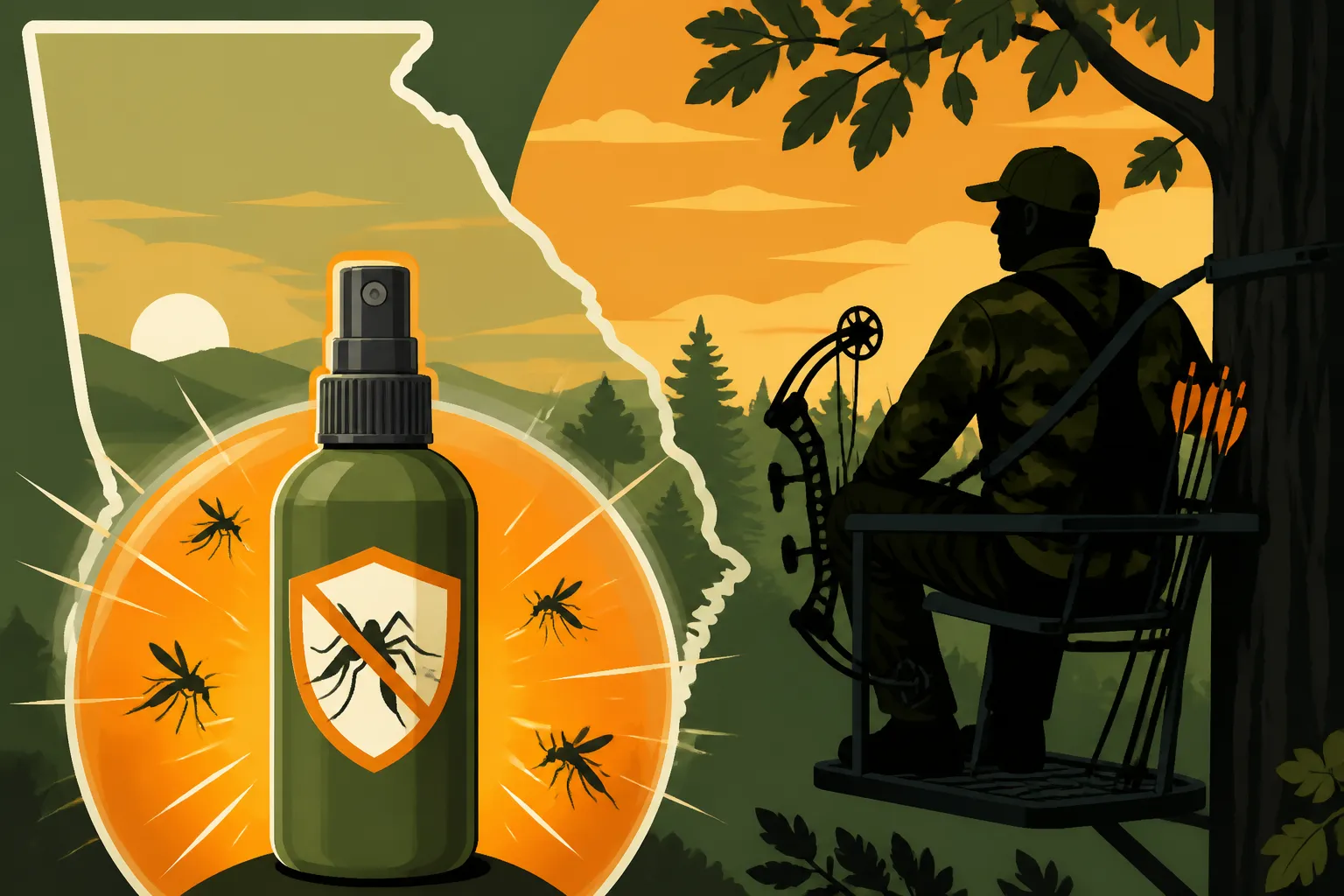
If there's one thing that can absolutely ruin a perfectly planned, eagerly anticipated hunt in a Georgia tree stand, it's the relentless assault of biting bugs. Whether it's mosquitoes droning in your ear, gnats swarming your face, or ticks looking for a ride, these tiny terrors can quickly turn a peaceful sit into an unbearable ordeal, forcing you out of your stand far too soon. This guide is dedicated to helping you find and effectively use bug repellents that truly hold up against Georgia's formidable insect population, ensuring your focus stays on the woods, not on the itch.
Why Georgia's Bugs Are So Unbearable in a Tree Stand
Let's be honest, Georgia is beautiful, but it's also a paradise for biting insects. The mild climate and abundant water sources create an ideal breeding ground, and when you combine that with sitting still in a tree stand, you become an irresistible, stationary target. Understanding why they're so bad helps us understand how to fight back.
Humidity and Heat: The Perfect Breeding Ground
Georgia's notorious humidity isn't just uncomfortable for us; it's a five-star resort for mosquitoes and gnats. These insects thrive in moist environments, and the warm, often stagnant air found in many of our hunting areas—especially around low-lying creek bottoms or thick timber—provides exactly what they need to flourish. When the air is thick with moisture, your scent disperses less, making you easier for them to pinpoint, and the lack of a strong breeze offers little relief. This is especially true during the archery season when temperatures can still feel like summer.
Consider those early September mornings when you climb into your stand before dawn, the air heavy and still. As the sun begins to creep over the horizon, the humidity rises, and suddenly, the buzzing starts. It's not just annoying; it's a constant distraction that pulls your attention away from scanning for movement or listening for that tell-tale rustle of leaves. Trying to sit through a morning hunt in these conditions without proper protection is a lesson in misery, and one that far too many Georgia hunters have learned the hard way.
Early Season Archery Challenges
The early archery season in Georgia, usually starting in September, presents a unique challenge. While we're excited to finally get back into the woods, the weather often hasn't cooled down significantly. Days can still be scorching, and nights are muggy, meaning insect activity remains high. You might find yourself wanting to wear lighter clothing to avoid overheating, but that exposes more skin to bites. This overlap of high insect pressure and warmer temperatures makes repellent selection and application absolutely critical.
Picture yourself, bow in hand, perched quietly in your stand, hoping for that first velvet buck. You've done your scouting, found a great pinch point, and meticulously set up your stand. But then, ten minutes into legal shooting light, a cloud of gnats descends on your face, crawling into your eyes and nose, making it impossible to hold still. Or a mosquito lands on your neck, sending a sharp prick through your concentration. These aren't just minor irritations; they're deal-breakers that can blow a hunt or make you regret even coming out. That's why having a bug repellent that really performs under these conditions is non-negotiable for Bowhunting Georgia's Early Archery Season.
Swamp and River Bottom Concentrations
If you've ever hunted Georgia's low-country swamps or dense river bottoms, you know these areas are legendary for their bug populations. The standing water, dense vegetation, and lack of air movement create prime habitat for mosquitoes, biting flies, and even some particularly aggressive gnats. These are the places where a cheap, weak repellent simply won't cut it. You need serious protection if you plan to spend any significant time in these incredibly productive, yet bug-infested, environments.
Imagine slipping into a stand overlooking a slough in the Altamaha River bottom, hoping to catch a big swamp buck moving through the thick cover. The air is thick, and the moment you stop moving, you can feel the pressure of the insects. Without a heavy-duty repellent, you'd be swatting constantly, creating movement and noise that would instantly alert any wary deer. Hunters who target these areas often rely on a multi-pronged approach to keep the bugs at bay, understanding that a single spray isn't going to be enough for a full morning or evening sit. Hunting Georgia Swamp and River Bottom Deer demands robust bug defense.
Types of Bug Repellents and How They Work
When it comes to bug repellent, it's not a one-size-fits-all solution. Different active ingredients work in different ways and offer varying levels of protection. Understanding your options is the first step to choosing what's best for your Georgia hunts.
DEET-Based Formulas
DEET (N,N-diethyl-meta-toluamide) is perhaps the most well-known and widely used insect repellent, and for good reason: it works. DEET doesn't kill insects, but it interferes with their ability to detect the carbon dioxide and lactic acid that we exhale and secrete, essentially making you invisible to them. The concentration of DEET in a product dictates how long its protection lasts, not necessarily how effectively it repels bugs at the moment of application. Higher concentrations, say 25-30% or more, offer longer-lasting protection, which is crucial for those long hours in a tree stand.
Many hunters have a love-hate relationship with DEET. It can have a strong odor, and it's known to damage certain plastics, synthetic fabrics, and painted surfaces, so you need to be careful where you spray it – definitely not on your scope lenses or expensive rangefinder. However, for sheer effectiveness against mosquitoes, ticks, and biting flies in Georgia's most bug-ridden spots, a good DEET product is often the go-to. It's the kind of protection you trust when you're deep in the woods during prime bug season.
Picaridin: A Gentler Alternative
Picaridin is another highly effective repellent that has gained popularity in recent years, especially among those who find DEET too aggressive or dislike its oily feel. It's a synthetic compound derived from the black pepper plant and works similarly to DEET by disrupting insects' ability to find you. Picaridin is effective against mosquitoes, ticks, biting flies, and chiggers. Its main advantages include being odorless, non-greasy, and it won't damage plastics or synthetic materials, making it safer for your gear.
While often perceived as "weaker" than DEET, Picaridin in concentrations of 20% or more offers comparable protection time, often lasting 8-12 hours. This makes it an excellent choice for a tree stand hunter who needs long-lasting defense but wants to avoid the potential drawbacks of DEET. It's an ideal option if you're concerned about preserving your expensive hunting apparel or optics, or if you simply prefer a more pleasant application experience. Many hunters who've switched to Picaridin swear by its effectiveness without the harshness.
Permethrin for Clothing and Gear
Permethrin isn't a repellent for your skin; it's an insecticide specifically designed to be applied to clothing and gear. Unlike DEET or Picaridin, permethrin actually kills insects that come into contact with treated fabric. You spray it on your hunting clothes, boots, tent, and even your backpack before you go into the woods, allowing it to dry completely. Once dry, it bonds to the fibers and can remain effective through multiple washes, providing long-lasting protection. It's completely odorless once dry and doesn't rub off onto your skin.
This is a game-changer for tree stand hunting. By treating your outer layers, you create an invisible bug-killing barrier around yourself. Imagine walking through tall grass or sitting among thick brush; ticks and chiggers that would normally latch onto your clothes and crawl up to your skin are stopped dead in their tracks. When combined with a skin-applied repellent like DEET or Picaridin, permethrin offers a formidable two-pronged defense. It’s an essential part of the arsenal for any serious Georgia hunter, especially when dealing with ticks that carry diseases. You can easily find permethrin sprays from brands like Sawyer or GoHunt's gear treatment line, and it's highly recommended for Warm-Weather Clothing for Georgia Hunters.
Natural and Botanical Options
For those looking for alternatives to synthetic chemicals, a variety of natural and botanical repellents are available. These often contain essential oils such as citronella, lemon eucalyptus, oil of lemon eucalyptus (OLE), peppermint, cedarwood, and geraniol. Many people prefer these due to concerns about chemical exposure, and some can be quite effective, especially in lower insect pressure situations. Oil of lemon eucalyptus (OLE) is recognized by some health organizations as an effective repellent, offering protection comparable to low concentrations of DEET.
However, a critical consideration for tree stand hunting in Georgia is that natural repellents generally don't last as long as their synthetic counterparts. They often require more frequent reapplication, which can be inconvenient and create unwanted movement in your stand. While a pleasant scent is nice for a backyard barbecue, strong herbal smells might not be ideal for masking your human odor in a hunting scenario. For deep woods or high-pressure situations like early season in a swamp, relying solely on natural repellents might leave you vulnerable to Georgia's aggressive bug populations.
Repellent Comparison Chart
Here's a quick look at the main characteristics of popular bug repellent types for hunters:
| Repellent Type | Primary Action | Skin Application | Clothing/Gear Application | Lasts (Approx.) | Odor | Damaging to Plastics | Key Benefits |
|---|---|---|---|---|---|---|---|
| DEET | Repels by masking | Yes | No (can damage) | 6-10+ hours | Strong | Yes | Highly effective, long-lasting |
| Picaridin | Repels by masking | Yes | Yes (safe for most) | 8-12 hours | Low/None | No | Effective, non-greasy, gear-safe |
| Permethrin | Kills on contact | No | Yes (clothing/gear only) | Weeks/Washes | None (when dry) | No | Excellent tick/chigger barrier, long-lasting |
| Oil of Lemon Eucalyptus (OLE) | Repels by masking | Yes | No | 4-6 hours | Herbal | No | Natural option, good effectiveness for its type |
| Other Botanicals | Repels by masking | Yes | No | 1-4 hours | Varies | No | Natural, pleasant scent (often) |
Applying Repellent for Maximum Tree Stand Effectiveness
Having the right repellent is only half the battle; knowing how to apply it effectively for a silent, scent-conscious hunt is just as important. In a tree stand, every move counts, and you want your repellent to last.
Strategic Application Areas
When applying skin-based repellents like DEET or Picaridin, focus on exposed skin, but do so strategically. Don't just spray wildly. Start with your neck, face (spray into hands first, then apply to face, avoiding eyes and mouth), wrists, and the back of your hands. If you're wearing short sleeves, cover your forearms. Pay extra attention to your ankles and the cuffs of your pants, as ticks and chiggers love to crawl up from the ground. Many hunters find that applying repellent a good 15-30 minutes before heading to the stand allows the product to dry and the scent to dissipate somewhat, minimizing detection by wary deer.
Remember, you're trying to create a protective barrier. Don't leave gaps. That tiny patch of exposed skin behind your ear or at your sleeve cuff is exactly where a mosquito will find its way in. For your clothes, if you're using permethrin, apply it thoroughly days in advance, letting it dry completely outdoors. This pretreatment creates an invisible shield that works tirelessly without you having to reapply in the field. When scouting with tools like the GoHunt app, you might be traversing dense areas, and having your clothes pre-treated is invaluable for preventing ticks from hitching a ride.
Reapplication Considerations
The duration of effectiveness for any repellent isn't endless. While higher concentrations or certain active ingredients can last for many hours, factors like sweating, rain, or rubbing against vegetation can reduce their lifespan. For a long sit in a Georgia tree stand, especially on a warm, humid day, you might need to reapply. The key is to do it sparingly and thoughtfully. If you start to feel bugs landing on you or hearing that dreaded buzz, it’s a sign.
Carry a small, travel-sized bottle of your preferred skin repellent in your pack. When it's time to reapply, do it slowly and quietly. Again, focus on those high-exposure areas. Try to do it during a lull in animal movement, perhaps when it's particularly windy or when you hear another hunter moving in the distance, providing some cover noise. If you're using an odorless Picaridin, the disturbance will be minimal. But reapplying DEET can sometimes create a temporary strong scent, so be mindful of wind direction and any deer in the immediate vicinity.
Combining Methods for Synergy
For the most robust protection against Georgia's persistent insect populations, a layered approach is often the most effective. Think of it as building multiple lines of defense. The synergy of combining different methods creates a protective bubble that's hard for bugs to penetrate.
A common and highly recommended strategy involves pretreating your outer hunting clothing (pants, shirt, hat, and boots) with permethrin. This creates a lasting barrier against ticks, chiggers, and other crawling insects. Then, on the morning of your hunt, apply a good quality DEET or Picaridin product to all exposed skin. This combination covers both crawling and flying insects, maximizing your protection. You can even use your GoHunt app to mark areas where bug pressure was particularly high during scouting, reminding you to be extra diligent with your repellent strategy. This dual approach means fewer worries about bites and a much more enjoyable, focused hunt in your tree stand.
Beyond Repellent: Other Strategies for Bug Control
While repellents are your primary weapon, a holistic approach to bug control will significantly improve your comfort and success in a tree stand. Sometimes, the best defense isn't just a spray; it's a combination of smart choices.
Clothing Choices and Coverage
What you wear plays a huge role in bug prevention. Lightweight, breathable clothing that provides maximum coverage is ideal. Long sleeves and long pants, even in warm weather, offer a physical barrier against bites. Look for fabrics with a tight weave that mosquitoes can't easily penetrate. Some hunting clothing even comes pre-treated with permethrin or features integrated bug-repellent technology. While it might seem counterintuitive to wear long sleeves in September, it's often more comfortable than constantly swatting at bugs on bare arms.
Consider wearing a head net, especially during early morning or late evening sits when gnats and mosquitoes are most active around your face. A lightweight mesh head net, often integrated into a hood or worn separately, can make an enormous difference in comfort and the ability to remain still. Gloves, even thin shooting gloves, also protect your hands from bites and help minimize human scent transfer. For those tackling challenging areas like the Okefenokee, full coverage, treated with permethrin, is truly a must.
Thermacell and Area Repellents
Thermacell devices have become incredibly popular among hunters for their ability to create a small, localized zone of protection against mosquitoes and other flying insects. These devices use a small butane cartridge to heat a mat infused with allethrin, a synthetic version of a natural repellent found in chrysanthemum flowers. The heat releases the allethrin into the air, creating a scent-free (to humans) repellent barrier that can be surprisingly effective in a still tree stand.
Many hunters swear by their Thermacell, especially in high mosquito areas or during early season hunts. It’s important to note that their effectiveness can be diminished by strong winds, as the active ingredient is dispersed too quickly. However, on calm mornings or evenings, a Thermacell can provide a remarkable level of comfort, allowing you to focus on your hunt. It's an excellent addition to your gear, complementing your skin and clothing repellents by creating an invisible protective bubble around your immediate area in the stand.
Tree Stand Placement and Timing
Sometimes, the best bug control strategy starts even before you climb into the stand. Smart stand placement can naturally reduce your exposure to insects. When scouting, pay attention to air movement. Stands placed in areas with a consistent, light breeze will naturally have fewer bugs than those in stagnant, sheltered pockets. Consider ridge tops or open hardwood flats over dense, swampy bottoms if possible, especially during early season.
Timing your hunts can also make a difference. Mosquito activity often peaks at dawn and dusk. While these are prime hunting times, understanding the bug pressure might influence how long you sit or how diligently you apply your repellent. Later in the season, as temperatures drop, insect pressure naturally diminishes, making hunts much more comfortable. Paying attention to these environmental factors, perhaps even noting them on your GoHunt scouting maps, can help you plan more enjoyable and bug-free experiences in the Georgia woods.
Disclaimer
This article is for general informational purposes only and does not constitute professional advice. Laws, prices and regulations vary by location and change over time. Consult a qualified professional for guidance on your specific situation.